How to Boost Cannabis Yields Indoors — Light, Training, and Feed

Indoor yield is mostly a systems result: genetics that can produce, a flat canopy that catches light, enough photons without heat stress, bloom-focused nutrition, and airflow that keeps dense flowers healthy. The practical levers are seed choice, plant support, SOG and ScrOG-style training, lighting, and feed. Get those right and grams per square foot rise without gimmicks or miracle additives.
Start with genetics that match the room
Training cannot invent production a cultivar does not have. For heavier indoor harvests, many growers prefer photoperiod feminized plants they can veg until the footprint is full. Autos can still yield well per day and per tent height, and they fit low rooms, but the largest single-plant hauls usually come from photos with enough veg time and strong light.
When shopping packs:
- Read yield notes, stretch behavior, and flowering time on each product page
- Match plant height to your tent (squat indica-leaners vs. taller hybrids)
- Use high yield seeds or yield-focused category filters when production is the goal
- Remember Kind Seed Co is a reseller—pack performance varies by phenotype and your environment
Seed appearance (size, color, mottling) is only a rough quality cue. It does not guarantee harvest weight. Store seeds cool and dry, and follow solid germination practice so you do not waste tent time on weak starts.
If you are limited by plant count, fewer large photoperiods under a screen often beat a crowded jungle. If you can run many small plants, a SOG-style flip may produce more turns per year.
Support plants before colas snap
High light and strong bloom feed can load branches past their strength—especially on lankier hybrids. Indica-leaning plants often hold themselves; stretchier plants may need help by mid flower.
Support options:
- Bamboo or plastic stakes placed early, while stems are still flexible
- Soft ties (prefer synthetic twine that will not rot mid-cycle)
- A screen or trellis that both spreads and holds branches
- Yo-yo supports or garden clips for individual heavy colas
Add support before flowers get heavy. Fixing a split branch in week six costs yield and invites infection. Walk the room weekly after stretch and catch leaning sites early.
Training methods that raise usable bud sites
Sea of Green (SOG)
SOG packs many small plants, vegged briefly, then flipped to 12/12. Growers often lollipop lower growth so each plant drives a main cola. It suits compact, faster photoperiods and maximizes harvest cycles in a fixed footprint. Plan even spacing and uniform pots so the canopy stays level—uneven SOG tables waste light on tall outliers and starve short ones.
SOG asks for good clones or uniform seed starts. Mixed vigor makes the sea choppy.
Screen of Green (ScrOG)
ScrOG uses fewer plants under a horizontal screen. Top and weave shoots through the mesh during late veg and early stretch to create a flat table of sites. Every cola gets similar light, which improves consistency and total usable flower versus one giant top and larfy bottoms. Use a durable synthetic screen; natural fiber can degrade in humidity.
ScrOG takes more hands-on time but shines when plant counts are limited and lights are strong.
Shared training rules
- Top or FIMing only while plants still have recovery time
- Avoid heavy high-stress training on autos late in their short veg
- Keep the canopy even—tall spears shade neighbors and waste photons
- Remove weak interior growth that will never see intense light
- Change one major training method per run so you can learn what worked
Low-stress training (LST) alone—bending and tying without cuts—already improves many beginner yields by opening the plant to the fixture.
Light: the biggest dial after genetics
Plants convert photons into biomass. Underpowered lights cap yield no matter how good the soil or coco is.
Practical lighting notes:
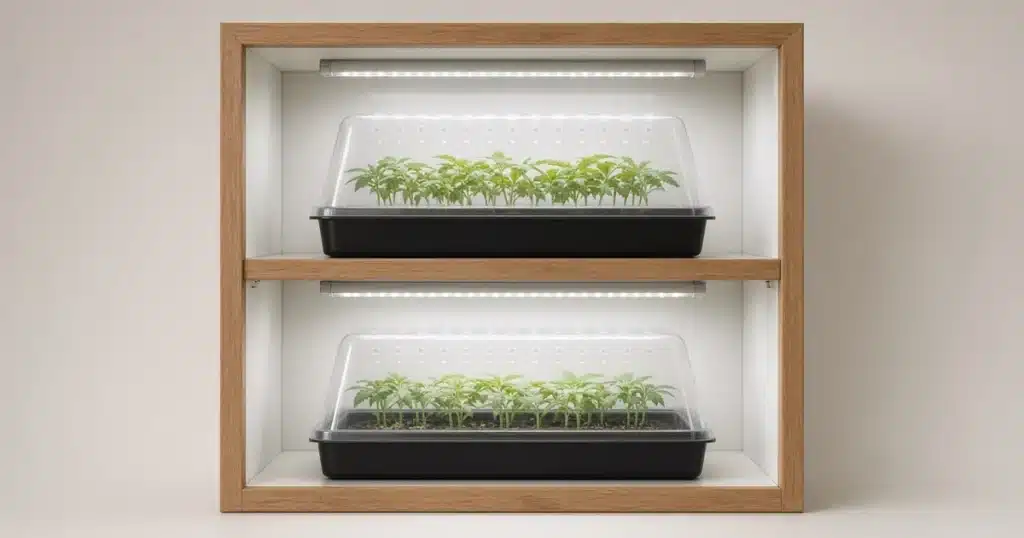
- Seedlings: keep stronger LEDs farther away at first; move closer as plants toughen
- Veg to flower: many LED canopies finish around 12–18 inches from the tops—always follow your fixture’s map and watch leaf temperature
- Planning: use manufacturer PPFD charts when possible; rough home-grow LED planning often lands near 100–200 W of quality LED draw per square foot of canopy, depending on fixture efficiency and how hard you push
- HIDs: run hotter; they need more hanging height, thoughtful ducting, and respectful clearance from buds
- Spectrum: full-spectrum LEDs cover most needs; classic advice pairs bluer veg light with redder flower light
More intensity demands more water, feed, and cooling. Turn one knob at a time. If you raise PPFD 30% overnight without adjusting irrigation, expect crispy edges.
Uniformity beats a bright hot spot. Raise or dim fixtures so edges are not starving while centers bleach.
Nutrients and environment that protect yield
- Veg: adequate nitrogen for leaf area (your solar panels)
- Flower: higher phosphorus and potassium emphasis so energy shifts into buds
- Calcium and magnesium: common gaps under LED intensity—watch for spots and interveinal issues
- Airflow: moving air thickens stems and reduces microclimates where mold starts
- Humidity: lower late flower to protect dense colas without turning the room into a desert
- CO₂: optional advanced tool in sealed rooms once light and climate are already strong
Deficiencies, lockout, or chronic overwatering quietly erase training gains. Keep root-zone pH in a soil-friendly band (often ~6.0–7.0) or the correct hydro/coco range, and let pots dry back appropriately. A plant that cannot drink or breathe will not fill flowers.
Harvest timing also protects “yield quality.” Cutting too early leaves weight and density on the table; waiting forever invites mold in fat colas. Use trichome and cultivar notes, not only a calendar.
Choosing packs for indoor production
For photoperiod production runs, browse feminized high-yielding strains and the wider range of indoor seeds. Auto growers can compare high-yielding autoflower seeds. Yield numbers on marketing copy assume dialed rooms—treat them as directional, not a promise.
Family lines known for production can be a useful browse path via family strain collections, then filter for indoor height and flowering time.
A realistic indoor yield checklist
Before the next run, confirm:
- Fixture PPFD is adequate and even across the canopy
- Plants are trained to a consistent height
- Irrigation matches the higher light intensity
- Bloom nutrition is dialed without chronic burn
- Airflow reaches through the canopy, not only across the tops
- Harvest and dry/cure plans will not throw away weight to mold or harsh drying
Small improvements stacked together usually beat one dramatic change. Track dry grams per square foot each cycle so you know which tweak mattered.
Packs / shop
Kind Seed Co lists over 1900 White Label and branded options as a reseller. Start with high yield seeds, refine in indoor seeds, and keep a germination plan handy via how to germinate cannabis seeds. Build the canopy, then let light and bloom nutrition do the heavy lifting.
FAQ
What increases indoor cannabis yield the most?
Usually genetics + even light on a trained canopy. Feed and CO₂ help after those basics are solid. Fancy additives rarely fix a dim, uneven tent.
Is SOG or ScrOG better for indoor yield?
SOG favors many small plants and fast flips. ScrOG favors fewer plants spread under a screen. Pick based on plant count limits, veg time, and how much training you want to manage.
How close should LED grow lights be for bigger yields?
Follow your model’s PPFD chart. As a broad pattern, seedlings stay farther; flower canopies often sit about 12–18 inches from quality LEDs if heat is controlled. Watch for tacoing, bleaching, or foxtailing from excess intensity or heat.
Can autoflowers produce large indoor yields?
Yes for their size and speed, especially under strong light in airy soil or coco. The largest single-plant indoor hauls still tend to come from photoperiods with longer veg—but autos can win on grams per day and simplicity.