Albino Weed: Does It Exist?

True albino cannabis is rare, and it rarely survives past the seedling stage. Most of what people call albino weed is something else: variegation, light bleaching, a frosty coat of trichomes, or simply a strain with “albino” or “white” in its name.
This guide explains what albino means in plants, how to tell true albinism from plants that look similar, what to do if a seedling comes up white, and what names like Albino Kush really mean.
What albino means in plants
In plants, albino means the tissue has little or no chlorophyll. Chlorophyll is the green pigment that captures light and turns it into food. NDSU Extension puts it plainly: “Chlorophyll is a green pigment that plants use to produce their own food through the process of photosynthesis. This means that white leaf tissue doesn’t produce any food for the plant.”
Without chlorophyll, white leaf tissue can’t photosynthesize normally, and that holds growth back. A seed carries a small store of energy, so an all white seedling can sprout and even open its first leaves. Once that stored energy runs out, the seedling has no way to feed itself. That is why a fully albino cannabis plant almost never reaches maturity.
So does albino weed exist? Yes, briefly. A true albino seedling can appear, but it rarely lives long enough to flower. You will not find a healthy, all white cannabis plant producing buds.
Variegation vs true albinism
Variegation is far more common than true albinism. It’s usually what growers are looking at when they post photos of a white streaked plant. A variegated plant has a mix of green areas and white or pale areas on its leaves.
UF/IFAS explains that a common cause is a chimera, “a plant composed of two or more genotypes in the layers that make up the shoot tip.” In plain terms, some cells in the growing tip carry the normal green trait and some do not. As the plant grows, leaves can come out green, white, or a mix of both, often in streaks or patches.
The green parts keep feeding the plant, so a variegated cannabis plant can live, grow and flower. It usually grows slower than a fully green plant, since less of each leaf is making food. The pattern can also shift from one branch to the next.
Genetic variegation is built into the plant and keeps showing in new growth. Stress such as low temperature, very strong light or nutrient problems is a separate thing and can cause temporary paling. When the cause is stress, new growth often returns to normal green once conditions improve. When the cause is genetic, the pattern tends to stay.
If you want to know which kind you have, compare new growth over two or three weeks. Stress related paling usually fades as fresh leaves come in green, while a chimera keeps putting out streaked or split leaves on the same branches. Some branches may even grow fully green or fully white. A fully white branch cannot feed itself, so it depends on the green parts of the plant to stay alive.
Light bleach and yellowing: possible causes that are not albinism
Not every white or pale patch is genetic. Two common causes look alarming, but neither has anything to do with albinism.
Light bleaching shows up as white or very pale tops on the buds or leaves closest to a grow lamp. The plant is otherwise green, and the white is concentrated where light is most intense. This points to possible light stress. Moving the lamp up or lowering its power often stops it from spreading to new growth, though already bleached tissue will not turn green again.
Yellowing is different. When leaves turn yellow starting with the older, lower leaves and moving up, possible causes include feeding problems, pH that is off, or overwatering and underwatering. This is a care issue, not a genetic trait, and it usually improves when you fix the root cause.
Plants That Look Similar
Several things can make a cannabis plant look white or silvery. Use this table to tell them apart.
| Plants That Look Similar | What you see | How to tell |
|---|---|---|
| Powdery mildew | White powder on leaf surfaces | It wipes off with a finger |
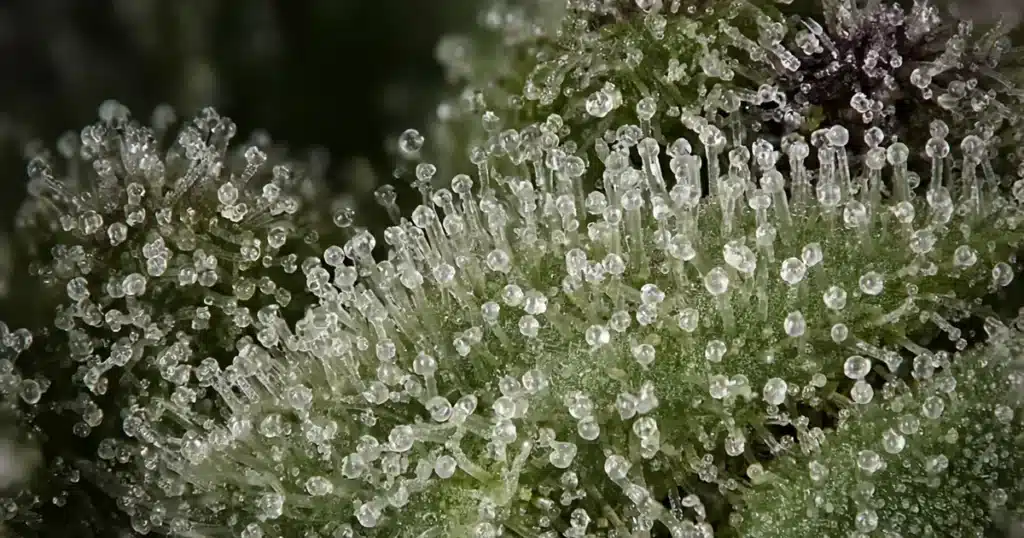
| Dense trichomes | Frosty glands on buds and sugar leaves | The rest of the plant stays green |
| Light bleach | White tops nearest the lamp | Only the parts closest to the light |
| Variegation | Streaks or patches, often uneven | The rest of the plant is green |
Powdery mildew is the one to deal with fast. It’s a fungus, and it can spread. Dense trichomes are normal and are what make some buds look frosty or sugar coated. If you want to learn more about why cannabis can show purple, pink or pale colors, our guide at https://kindseed.com/the-secrets-behind-cannabiss-vibrant-colors/ covers the pigments involved.
What about Albino Kush and other white named strains?
A lot of people searching for albino weed are really after a strain. Names like Albino Kush, White Widow or other “white” strains are marketing names chosen by breeders. They usually refer to how frosty the buds look, a parent strain, or just a catchy brand, not to a plant that lacks chlorophyll.
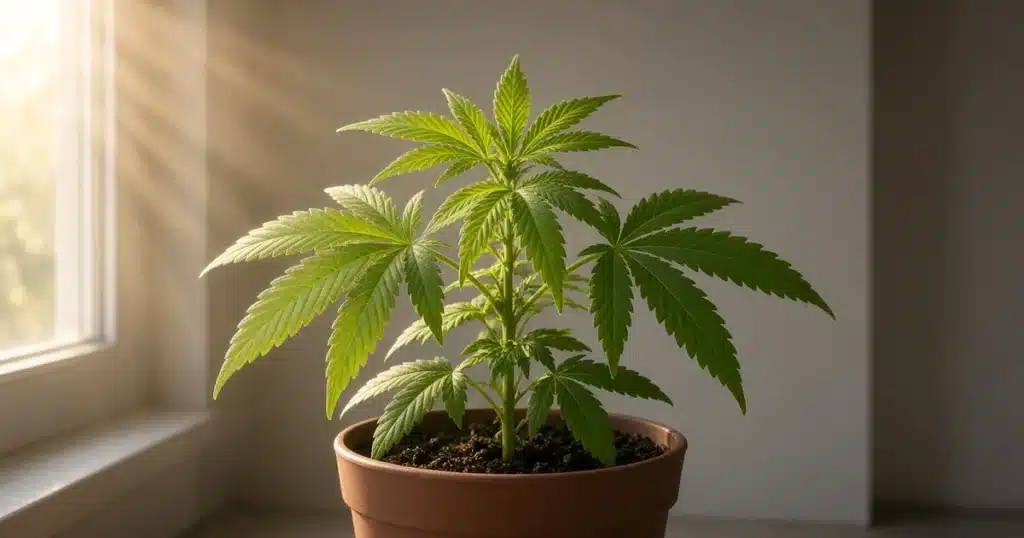
A plant grown from a strain called albino will normally grow green like any other cannabis plant. Do not expect white leaves unless the breeder clearly says the strain has a variegated trait. When you shop, read the breeder’s own description for growth details, and remember that effects vary from person to person regardless of the name.
What to do if a seedling or leaf comes up white
If you spot white on a young plant, these steps help you figure out what you are dealing with.
- Check whether the whole seedling is white or only part of it.
- If the whole seedling is white, it rarely survives once seed energy runs out, so plan to start a new seed as well.
- If only part is white, keep the plant and watch new growth.
- Check the light distance. Bleached tops close to the lamp point to possible light stress rather than albinism.
- If leaves yellow from the bottom up, possible causes include feeding, pH or watering. Check those before assuming anything else.
- Take photos week by week so you can tell a stable pattern from a passing stress.
Photos are the best tool here. A genetic pattern stays roughly the same as new leaves form. A stress pattern usually fades in new growth once you fix the problem.
Troubleshooting
| Sign | Likely cause | What to do |
|---|---|---|
| Whole seedling is white | No chlorophyll, so it does not photosynthesize normally | It rarely survives, start a backup seed |
| White streaks on some leaves | Variegation (chimera) | Keep growing, expect slower growth |
| White buds or leaves right under the light | Possibly light bleaching | Raise the light or lower intensity, then watch new growth |
| Yellowing from older leaves up | Possible causes: feeding, pH or watering (not albinism) | Check feed, pH and watering one at a time |
| Strain named albino grows green | It is a name, not a trait | Normal, no action |
| White powder on leaves that wipes off | Possibly powdery mildew | Isolate the plant and look up mildew control from Extension sources |
Change one thing at a time when you troubleshoot. If you raise the light and change your feed on the same day, you will not know which fix worked.
Should you keep a variegated plant?
A variegated plant can be worth keeping. Some growers like the look, and the plant can still flower if enough of each leaf is green. Expect slower growth and possibly a smaller harvest, because less leaf area is making food.
If you’re chasing the biggest yield, a fully green plant is the better bet. If you’re curious or just like unusual plants, give the variegated one good light, steady feeding and some patience. For more seed and grow guides, visit the Kind Seed blog at https://kindseed.com/seed-bank-blog/.
FAQ
Does albino weed exist?
A true albino cannabis seedling can appear, but it is rare and rarely survives past the seedling stage. Without chlorophyll it cannot make its own food once the energy stored in the seed runs out. Most plants called albino are actually variegated or light bleached.
Is white cannabis more potent?
There is no evidence that white or pale cannabis is more potent. White patches from variegation or bleaching are areas that make less food for the plant, not extra potency. Effects vary from person to person and depend on the strain and how it was grown.
What is Albino Kush?
Albino Kush is a strain name. Like other white named strains, the name is chosen by the breeder and usually refers to frosty looking buds or the strain’s background. Plants grown from it normally grow green like other cannabis.
Can I breed for albino cannabis?
It is not practical. A fully albino plant rarely lives long enough to flower, so it cannot pass the trait on in a normal way. Variegated plants can sometimes be kept and grown, but the pattern is often unstable and hard to reproduce.
What should I do if a seedling comes up white?
Check whether the whole seedling is white or only part of it. A fully white seedling rarely survives, so start a backup seed. If only part is white, keep growing it and watch the new leaves. Also check your light distance and take weekly photos.
Sources: NDSU Extension, Dakota Gardener: Plant variegation (https://www.ag.ndsu.edu/news/columns/dakota-gardener/dakota-gardener-plant-variegation). UF/IFAS Plant Propagation, Genetic Chimeras (https://propg.ifas.ufl.edu/03-genetic-selection/04-genetic-chimera.html).