The Secrets Behind Cannabis’s Vibrant Colors

Cannabis turns purple, red or blue mainly because of genetics. Plants bred for color make pigments called anthocyanins, and those pigments show more as green chlorophyll fades in late flower. Cooler nights and strong light can help in some plants, but they are not a guaranteed trigger. Color does not mean stronger buds. A purple bud is not automatically stronger than a green one.
The pigments behind cannabis color
Every cannabis plant is green for most of its life because chlorophyll covers up the other pigments. Wisconsin Horticulture Extension explains that two pigment groups give plants their bright colors: “carotenoids and anthocyanins.” As a plant nears the end of its season and chlorophyll breaks down, those other colors can show through.
| Pigment | Colors it gives | Notes |
|---|---|---|
| Chlorophyll | Green | Dominant for most of the grow, fades late in flower |
| Anthocyanins | Purple, red, blue | Depend on genetics, can be boosted by cool temperatures and strong light |
| Carotenoids | Yellow, orange | Often show as leaves age and chlorophyll fades |
Research on hemp has looked at which anthocyanins are present. A 2024 study in Plant Direct, which studied leaf color in colorful cannabis varieties, identifies “cyanidin-3-rutinoside as the major anthocyanin in hemp-type Cannabis.” That is the same family of pigments that colors many purple fruits and flowers.
Leaves often show color before buds. Fan leaves can turn purple, red or yellow in late flower, and leaf color varies with genetics and conditions. That is often normal, not always a sign of a problem.
Genetics come first
When it comes to cannabis color, the single biggest factor is genetics. A plant can only make anthocyanins if it carries the genes to do so. Growing conditions can bring out color the plant already has, but they cannot create color the plant lacks.
That explains why two plants grown side by side in the same tent can end up looking completely different. One may turn deep purple in late flower while the other stays bright green. Even within one strain, individual plants, called phenotypes, can show different amounts of color.
If color matters to you, start by choosing a strain described as purple, pink or colorful. To learn more about our feminized seeds, see https://kindseed.com/feminized-seeds-facts/. Check each strain listing for color notes before you buy.
Temperature and late flower
University of Missouri Extension notes that anthocyanins “are stimulated by lowering temperatures and high light levels.” Mild drought can also stimulate red pigments in plants. In cannabis, this is why color often deepens in the last weeks of flower, especially outdoors as fall nights cool.
Research also suggests color and yield do not respond to temperature in the same way. A 2025 study in the Journal of Cannabis Research is titled “Anthocyanin accumulation, inflorescence dry weight and total cannabidiol content have different temperature optima.” Those results came from specific cultivars under test conditions, so they are not a rule for a home grow. They do suggest that the temperature best for color is not always the one best for harvest weight.
In cooler regions, outdoor grows can show more color in some plants. Timing your planting so late flower falls in cooler weather can help, see https://kindseed.com/when-to-plant-cannabis-seeds-outdoors/.
Light, feeding and harvest timing
Missouri Extension’s note about high light levels points to a simple rule: a plant that gets strong, healthy light through flower is in a better position to show the color it carries. Many indoor growers use full spectrum LEDs for this reason, though light alone will not create color.
Feeding matters in a quieter way. A balanced feed keeps the plant healthy enough to finish well. Starving a plant or pushing nutrients hard in hopes of color tends to cause stress and leaf damage instead, which can look like color but is really a sign of trouble.
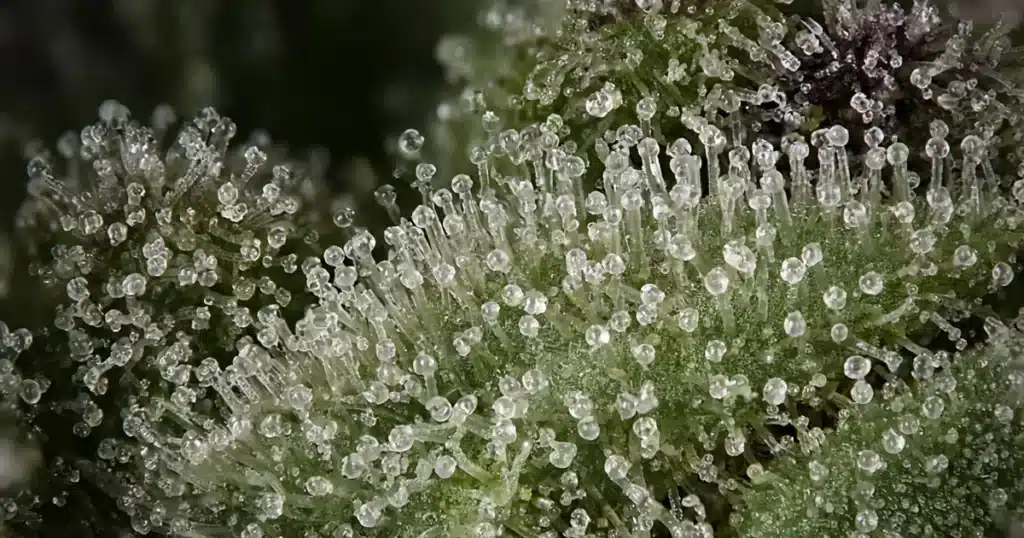
Harvest timing also changes how buds look. Color often deepens in the final weeks, so a plant harvested early may not show its full range. Harvest based on trichomes and plant maturity, and treat any color as a bonus.
Why growers love colorful buds
Colorful cannabis turns a grow into something fun to watch. Seeing a plant shift from green to purple or red in late flower adds anticipation to each run, and colorful buds stand out in the jar. Just keep expectations simple. Color is about looks and genetics. A good dry and cure still matter far more to the final result than any shade of purple.
Keep notes on night temperatures, light and harvest dates for each strain. Over a few runs, you will learn which plants color up in your space and which stay green.
Myths about cannabis color
Phosphorus. Purple stems are often blamed on low phosphorus. Sometimes a nutrient problem is involved, but purple stems on a healthy plant are usually genetics or cool temperatures. Do not change your feeding just because you see purple.
Cold shock. Some growers try to force color by dropping temperatures sharply or putting plants in very cold conditions near harvest. Harsh cold mainly stresses the plant. If the plant lacks the genes for color, it will stay green no matter how cold it gets.
Soil pH. In some trees, leaf sap chemistry can change the shade of fall colors. That does not carry over as a reliable way to change cannabis color. Keep your pH in the right range for healthy nutrient uptake, not for color.
How to grow for color, step by step
- Pick a strain described as purple, pink or colorful, and check its listing for color notes.
- Grow normally through early flower, since color usually shows late.
- In late flower, some growers run slightly cooler nights than days if the strain is known for color. Avoid harsh cold stress, because cold is not a guaranteed color trigger.
- Keep light strong and healthy, and do not starve the plant to force color.
- Judge buds by smell and trichomes, not color.
Color depends on genetics first, so some plants stay green even in the right conditions. That is normal, not a failure.
If you want to try cooler nights, make small changes and watch the plant closely. A modest gap between day and night temperatures in the last weeks of flower is a gentle approach. If leaves start to droop, curl or yellow quickly, the plant is under stress, so ease back. Outdoors, cooler fall nights often do this work for you without any effort, which is one reason outdoor plants sometimes show more color than the same strain grown in a warm tent.
Troubleshooting: purple leaves or stems vs genetics, cold stress, or nutrient issues
| Sign | Likely cause | What to do |
|---|---|---|
| Purple stems on a healthy plant | Usually genetics or cool temps, not proof of phosphorus deficiency | Check overall growth, leaf symptoms, roots and conditions before diagnosing a nutrient issue |
| No color in a purple strain | Phenotype or genetics | Color depends on genetics first. Try a strain bred for color. Cool nights are not a guaranteed trigger. |
| Leaves purple and dying early | Deficiency, not pigment | Use the deficiency guide |
The key difference is plant health. Purple from pigment shows up on a plant that is otherwise growing well, with firm leaves and steady new growth. Purple that comes with curling, spotting, crisp edges or early leaf drop points to a problem. Compare the symptoms with our guide at https://kindseed.com/how-to-spot-8-common-cannabis-plant-deficiencies-by-leaf-symptoms/.
Sources: Wisconsin Horticulture Extension, Leaf Color Change in Autumn (https://hort.extension.wisc.edu/articles/leaf-color-change-autumn/). University of Missouri Extension G5010 (https://extension.missouri.edu/publications/g5010). Plant Direct, 2024 (https://pmc.ncbi.nlm.nih.gov/articles/PMC11588432/). Journal of Cannabis Research, 2025 (https://doi.org/10.1186/s42238-025-00311-w). Leafly.
FAQ
What makes cannabis turn purple?
Genetics that produce anthocyanin pigments, plus conditions that let those pigments show through as chlorophyll fades in late flower. Without the genetics, cool nights alone will not turn a green plant purple.
Does colorful cannabis mean stronger buds?
No. Leafly notes that "purple strains are not necessarily more potent than their green relatives." Strength depends on the plant's chemistry and harvest timing, not on color.
Does cold make weed purple?
Cool temperatures can help bring out anthocyanins in plants that carry the genes for them. Cold is not a guaranteed trigger, and harsh cold mainly stresses the plant.
Can you make any strain purple?
No. Growing conditions can only bring out color a plant already has the genes for. If a strain is not bred for color, expect it to stay mostly green.
Are purple stems a problem?
Usually not. On a healthy plant, purple stems are often genetics or cool temperatures. Check overall growth, leaf symptoms, roots and conditions before deciding it is a nutrient issue.
Does purple mean stronger?
No. Color comes from pigments, so a purple bud is not automatically stronger than a green one. Check cannabinoid content, not color.