
CBD Oil for Cats: How Does It Work?
CBD oil has been gaining popularity among cat owners. We see the growing interest in CBD oil for cats, and we want to give you plain information. We believe in more research and talking with a veterinarian first.
What Is CBD Oil and Its Origin?
CBD, or cannabidiol, is one of the many cannabinoids found in cannabis plants. Unlike THC or tetrahydrocannabinol, another well-known cannabinoid, CBD does not have psychoactive properties. It does not produce the “high” typically associated with marijuana use.
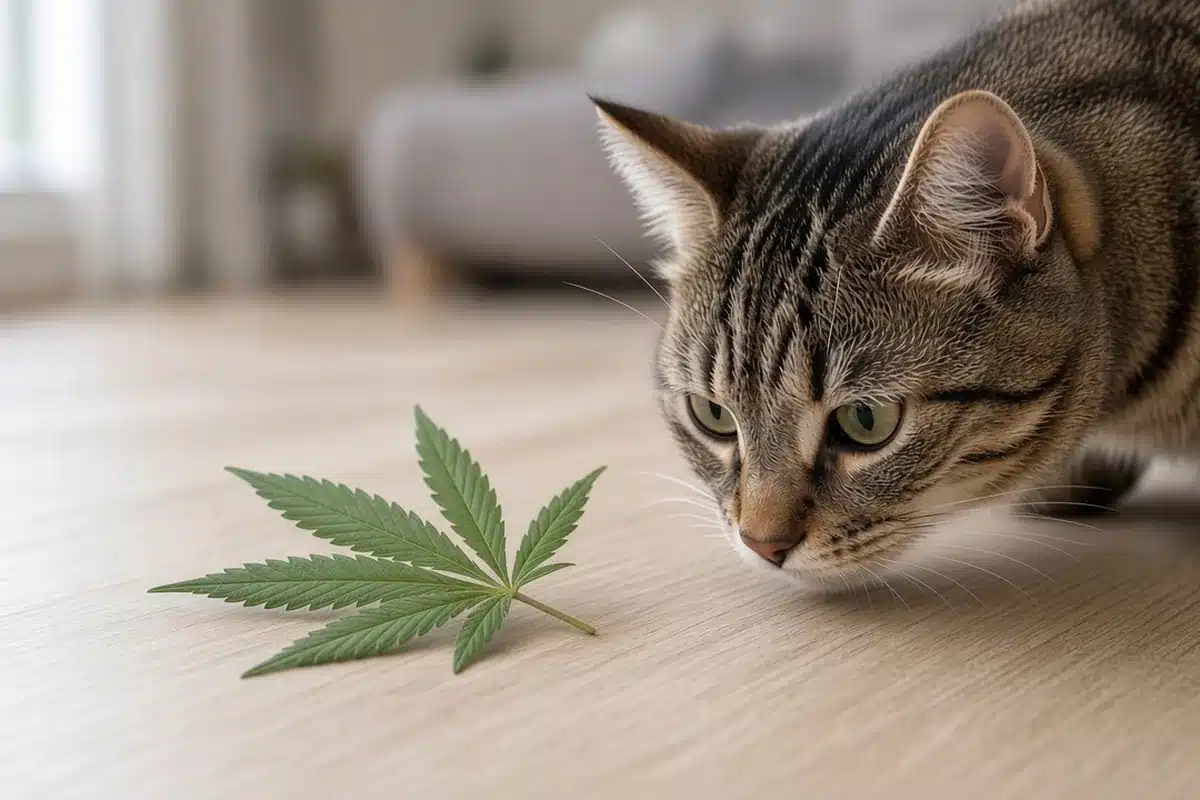
While it’s commonly associated with the marijuana plant, CBD oil is primarily extracted from the hemp variety of the cannabis family. Hemp generally has low THC, but CBD legality depends on the product and local law.
The extraction process involves removing the CBD from the plant matter and diluting it with a carrier oil such as coconut or hemp seed oil. Researchers are exploring this plant-derived substance for various health questions, including in cats.
The Science Behind CBD Oil for Cats: How Does It Work?
Cats have an endocannabinoid system (ECS), a complex cell-signaling system. The ECS is involved in functions such as sleep, mood, appetite, and immune signaling.
The ECS comprises two types of cannabinoid receptors: CB1 and CB2. While CB1 receptors are primarily located in the brain, the CB2 receptors are commonly found in the immune system. Cannabinoids like CBD interact with these receptors to produce their effects.
Unlike THC, which directly interacts with the cannabinoid receptors, CBD influences these receptors indirectly. This is why CBD does not induce the “high” that THC does. Researchers think CBD may lead the body to use more of its naturally produced cannabinoids.
Because the ECS is involved in pain, inflammation, and anxiety, these are the areas researchers are studying in cats.
Why Cat Owners Are Interested
An increasing number of cat owners are curious about CBD oil for their feline friends.
What Owners and Vets Report
Some pet owners report changes in their cats’ pain, inflammation, and anxiety after using CBD oil. These are personal reports, not proof. Researchers are also looking at arthritis and epilepsy in pets.
Nausea and appetite in sick or senior cats are other areas of interest.
Seizures in cats are a serious medical issue and need a vet’s care.
The Importance of Ongoing Research
Cats respond differently, and much more research is needed before anyone can say what CBD does for them. Ongoing studies in veterinary medicine should give pet owners and veterinarians clearer answers.
Potential Side Effects of CBD Oil in Cats
Pet owners need to be aware of possible side effects. As with anything new, individual response to CBD oil can vary, and it’s always wise to closely monitor your pet’s behavior and well-being when introducing a new substance into their regimen.
Some cats may experience side effects from CBD oil, which could include sleepiness, changes in appetite, or mild stomach upset. Do not assume a reaction will resolve on its own. Contact your veterinarian if your cat seems unwell.
Consulting a Veterinarian
Before introducing CBD oil to your cat’s routine, you should consult with a knowledgeable veterinarian. A vet who has experience with CBD can provide you with professional guidance, helping you decide whether CBD is appropriate for your cat. This matters most for cats with ongoing health conditions or those on other medications.
Any use of CBD oil in a cat should be under a veterinarian’s supervision. Your cat’s well-being comes first.
Guide to Choosing Quality CBD Oil for Cats
Not all CBD oils are created equal, so it’s essential to select a product that is high-quality, safe, and effective.
Choosing High-Quality CBD Oil
High-quality CBD oil typically originates from organically grown hemp, uses safe extraction methods like CO2 extraction, and undergoes third-party lab testing. These tests verify the actual cannabinoid content and look for possible contaminants like heavy metals or pesticides.
Choose a CBD oil made specifically for pets. Human-grade CBD oil may contain ingredients like xylitol, which can be harmful to cats.
Tips for Selecting the Best CBD Oil for Cats
Some CBD oils are full or broad-spectrum, and others are CBD isolate. Full and broad-spectrum oils contain a range of other cannabinoids and terpenes, which some people believe work together in what is known as the “entourage effect.”
Next, check the potency of the oil, which is usually listed in milligrams (mg). Also note that full-spectrum products can contain small amounts of THC, so ask your vet which type is appropriate.
Lastly, while flavored CBD oil can be enticing, cats may prefer a natural or catnip-flavored version as opposed to those with artificial flavors.
No Agreed Dose
There is no agreed-upon dose of CBD oil for cats. Ask your veterinarian whether CBD is appropriate for your cat.
Do not give CBD to your cat without your vet’s advice. Tell your vet about any changes you notice.
Talk to Your Vet First
Research on CBD oil for cats is still early. You should consult with a knowledgeable veterinarian before introducing CBD oil into your cat’s routine. Your vet can help you decide whether to use it and what to watch for.
At Kind Seed Co, we sell cannabis seeds, and we want to give you reliable information. We want to help you make informed decisions with your vet.
Related reading: Cannabis for Dogs, How to Keep Cats and Dogs Out of Your Cannabis Garden, THC and CBD: What’s The Difference? and What’s The Difference Between Hemp Seed Oil And CBD Oil?.
FAQ
Is CBD oil safe for every cat?
Not automatically. Talk with a veterinarian before giving any cannabis product to a pet.
Can cats have THC?
THC can be dangerous for pets. Pet products should be clearly tested and appropriate. Never share your stash.
Who should guide pet CBD use?
A veterinarian. Use only a product made for animals, because human products can differ.
What is a red flag on a pet CBD label?
No lab tests, vague milligrams, or added essential oils that may be unsafe for cats.


