
Hemp Pollen Drift: How Far Cannabis Pollen Travels
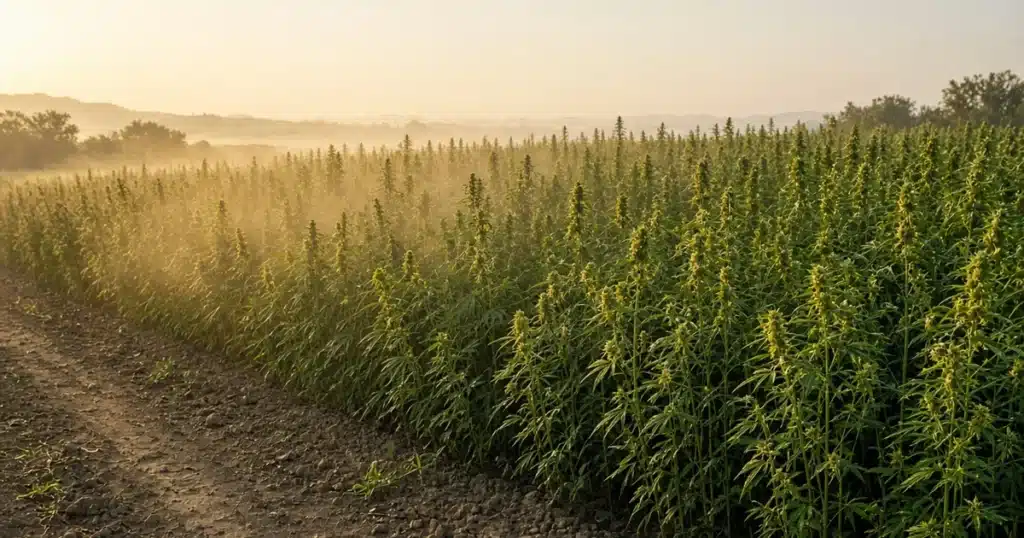
Hemp pollen drift is wind carried pollen from hemp or male cannabis plants that can seed an outdoor cannabis crop. In one Canadian field study at a single Ottawa site, pollen density fell below 1 percent of field levels at 100 meters, yet pollen still reached much farther, and downwind deposition there was about six times upwind.
What Is Hemp Pollen Drift?
Cannabis is wind pollinated. Male plants release large amounts of fine pollen, and the wind carries it to female flowers. Hemp fields and wild or stray male plants both release pollen, and it does not stop at a fence line. When it lands on a female cannabis plant in flower, the plant puts energy into seeds. Small and Antle, writing for Agriculture and Agri-Food Canada, note that cannabis pollen is spread by wind in large amounts and over long distances (Small and Antle 2003).
How Far Does Cannabis Pollen Travel?
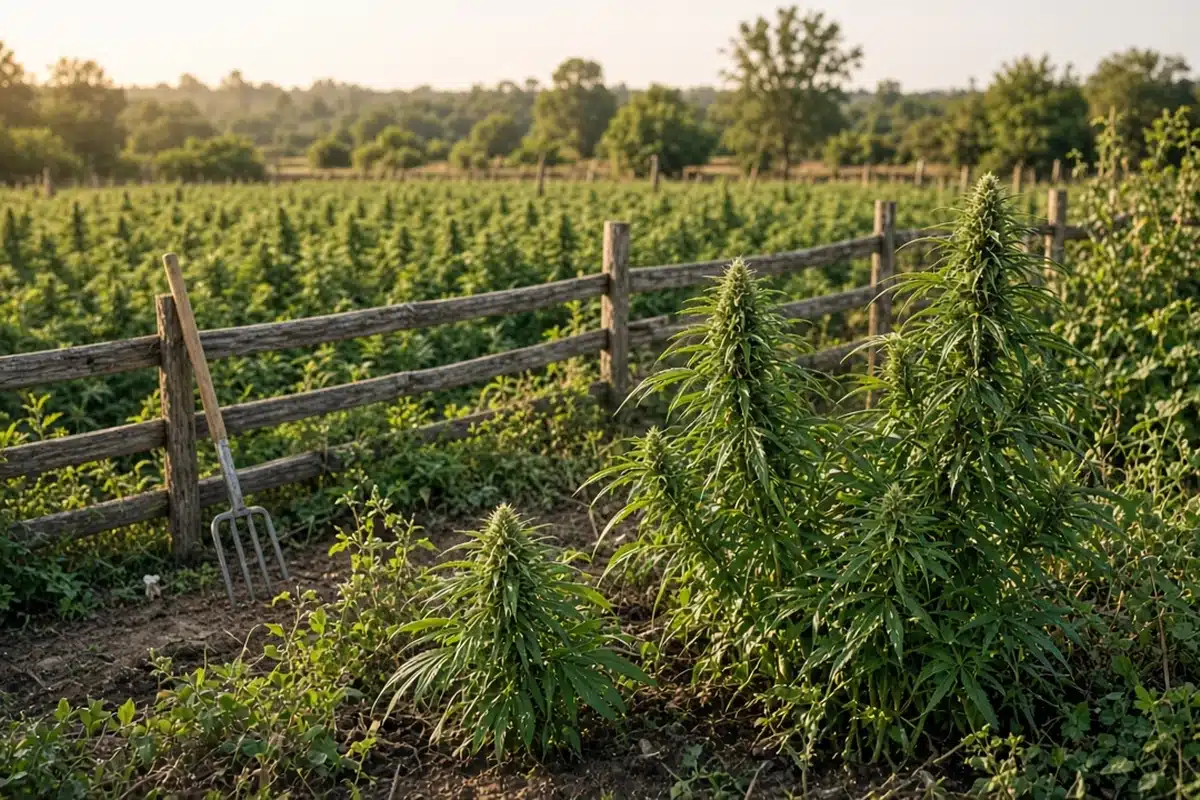
Most of it lands close by, but some goes a long way. In the Ottawa field study, pollen density at 100 meters from the hemp field fell to less than 1 percent of the density inside the field, but it then dropped off more slowly with distance (Small and Antle 2003). Seed rules also use large distances. Europe and Canada require 5 km of isolation for the highest classes of hemp seed. That is a minimum standard for certified seed, not a safe distance for any garden.
Hemp pollen drift findings from a Canadian field study
Source: Small and Antle 2003, Journal of Industrial Hemp 8(2). Hemp field findings at one site in Ottawa. The 0.9 km value is the authors’ derivation from the six times ratio, not a measurement.
| Finding | Value | Source |
|---|---|---|
| Pollen density at 100 m from the field | Less than 1 percent of in-field density | Small and Antle 2003 |
| Downwind against upwind pollen | About six times as much downwind, at one Ottawa site | Small and Antle 2003 |
| Upwind distance the authors derived as matching 5 km downwind | About 0.9 km, derived from the six times ratio, not measured, and not a safe buffer | Small and Antle 2003 |
| Minimum isolation distance for top hemp seed classes, Europe and Canada | 5 km | Small and Antle 2003 |
Does Wind Direction Change Pollen Risk?
At one site, yes. The Ottawa study found about six times as much pollen deposited downwind as upwind. From that ratio, not from a separate measurement, the authors worked out that 5 km of isolation downwind would match about 0.9 km upwind at that site (Small and Antle 2003). That 0.9 km figure was not measured and is not a safe buffer for any garden. If a hemp field sits upwind of your garden during its flowering weeks, your risk is higher than if it sits downwind.
How Can Outdoor Growers Reduce Pollination Risk?
You cannot control a neighbor’s field, but you can lower your own risk. Learn to spot and remove male plants in your garden, using our guide to identifying plant sex. Know which way the wind usually blows in late summer. Check flowers often, and use our guide to signs of pollination to catch it early. If seeds do show up, our post on buds with seeds explains what it means for your harvest.
Starting with feminized seeds cuts down on male plants in your own garden, though feminized plants can still sometimes make pollen. Browse our feminized seeds.
Sources
Some sources below studied hemp or other crops rather than drug-type cannabis. Their findings are reported as results for those crops or settings.
A single Canadian hemp field study underlies this pollen drift page, so Kind Seed Co frames it as general information.
FAQ
Can a neighbor's hemp field seed my plants?
It can. Cannabis pollen travels on the wind, and a field study found some pollen well beyond 100 meters, with much more traveling downwind. If a hemp field flowers at the same time as your plants and sits upwind, the risk is real. Distance, wind direction and timing all change how likely it is.
What isolation distance do hemp seed growers use?
In Europe and Canada, a standard isolation distance of 5 km is required for the highest classes of pedigreed hemp seed, according to Small and Antle. That is a minimum for certified seed production, not a guarantee of safety. A field study at one Ottawa site found about six times as much pollen downwind as upwind.
Do feminized seeds stop pollination?
No. Feminized seeds grow female plants, which cuts down on male plants in your own garden, though a stressed plant can sometimes make pollen. They do not stop pollen from outside reaching your flowers. If a hemp field or a stray male nearby releases pollen while your plants are in flower, feminized plants can still be pollinated and set seeds.
How do I know my buds were pollinated?
Pollinated flowers often show pistils that dry and darken early, and small seed pods swell inside the bud over the following weeks. Our guide to signs of pollination shows what to look for. Catching it early lets you plan your harvest, and our post on buds with seeds explains what seeded flower means.


