
Growing Cannabis by the Moon: Tradition, Phases and a Simple Planner
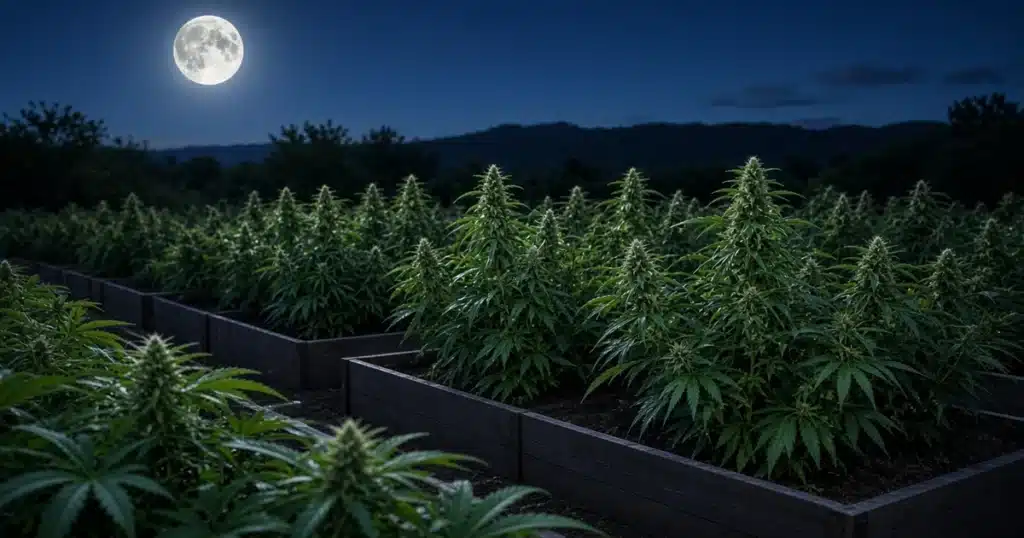
Quick answer: Growing cannabis by the moon is a garden tradition, not a growth law. Lunar calendars pair the waxing moon with above-ground crops and the waning moon with roots, weeding and pruning. A review of over 120 scientific references, cited by Washington State University Extension, found no reliable evidence that moon phases change plant physiology. Cannabis responds to day length, temperature and care. A moon calendar can still be a handy planner if you like the rhythm.
What Does Growing Cannabis by the Moon Mean?

Growing cannabis by the moon means timing garden jobs to the phases of the moon. You sow, transplant, prune or rest on days a lunar calendar suggests. WSU Extension describes gardening by the moon as “an ancient practice” that began in early farming societies in Mesopotamia, Egypt and ancient Rome.
Those early farmers believed the moon’s pull moved soil moisture and sap much as it moves the ocean tides. That belief shaped the planting rules that still appear in almanacs today. The Farmers’ Almanac, as WSU notes, has published a planting calendar for over 200 years that uses the phases and the position of the moon to suggest garden tasks.
For a cannabis grower, the more useful question is not whether the tradition is old. It is whether it changes anything you can see in the garden.
Moon Phases in Lunar Gardening Tradition
Here is what the tradition says for each part of the cycle. Read this as folklore and habit, not as a set of results.
- New moon. Tradition marks it as a sowing day, because it was thought that seeds take up water well around the new and full moon.
- Waxing moon (new toward full). The time, in lunar lore, to plant above-ground crops and leafy plants, since the pull was thought to draw moisture upward.
- Full moon. Another traditional sowing and transplant marker.
- Waning moon (full toward new). In the tradition, the time to plant root crops, weed and prune, since moisture was thought to sink back down.
Different calendars add their own layers, such as the moon’s position against the constellations. That is why two calendars can sometimes give different days for the same job.
What the Research Says
WSU Extension reports that University of Illinois Extension, in 2022, cited a 2020 review of “over 120 scientifically supported references” on the moon and plants. According to WSU, the review found the moon’s gravity is far too weak to have a meaningful influence on plant physiology or on sap movement in stems. Full moonlight was found to be about 128,000 times weaker than sunlight and not significant for photosynthesis or plant life cycles.
The review found no reliable science-based evidence for a link between lunar phases and plant physiology that could justify farming by the moon. It also called for more research, given how widespread these traditions are.
WSU Extension horticulturist Linda Chalker-Scott offers a simple way to test any garden folklore. Ask whether “the rationale behind the practice make[s] sense given our current scientific understanding,” and then ask whether the practice makes a real difference. Moon gardening has a hard time with the first question, and you can test the second one in your own garden.
What Cannabis Actually Responds To
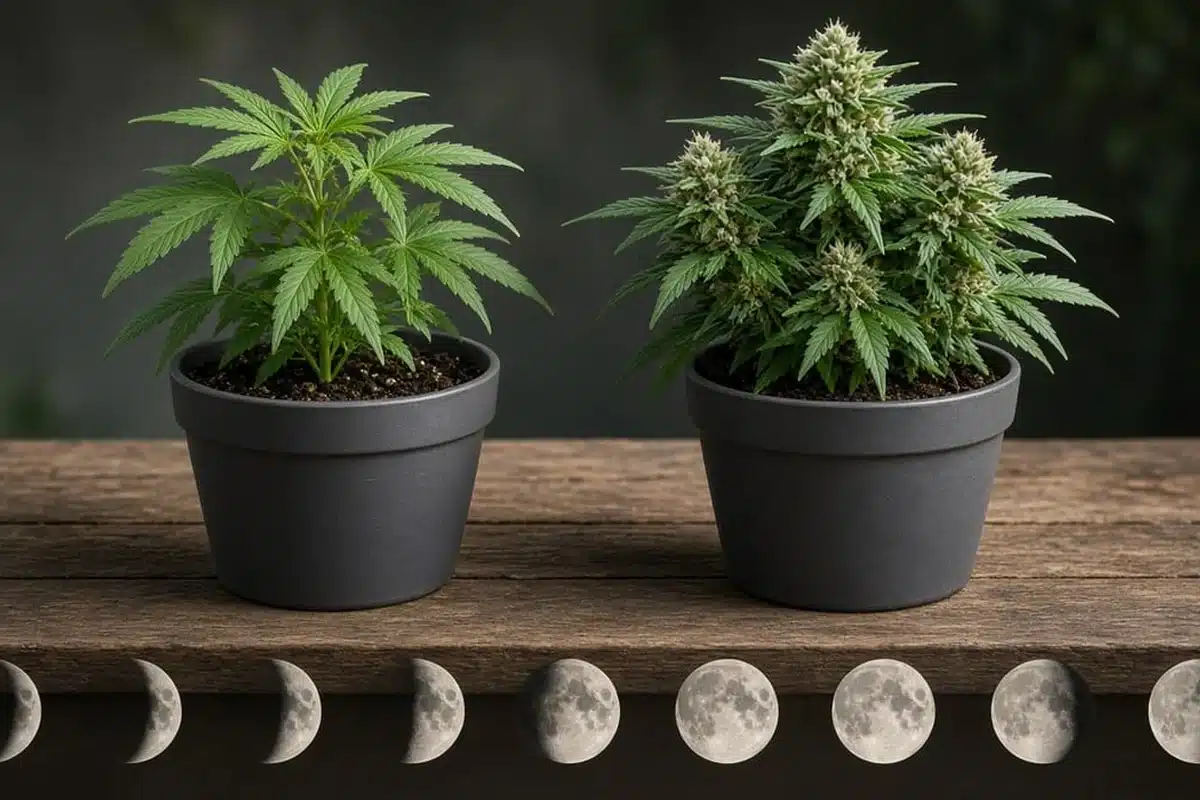
Cannabis runs on day length. Utah State University Extension explains that cannabis is a short day plant that starts to flower when day and night lengths are about equal. Indoors, growers control that with a timer, and our guide to the cannabis light cycle covers the schedules.
Outdoors, the season and the weather set your options. WSU notes that even the Almanac’s own authors say local soil temperature and frost dates matter more than calendar days. Our page on when to plant cannabis seeds outdoors covers outdoor timing.
Artificial light near the garden at night is a separate topic from moonlight, and our guide to night lighting and outdoor cannabis covers it.
How to Use a Moon Calendar as a Planner
If you enjoy the ritual, a moon calendar can help you show up on time. Use it like this.
- Pick one calendar. Choose one moon calendar for the season and stick with it so your notes stay consistent.
- Set the hard limits first. Before you plant cannabis outdoors, check your state’s home grow law. Then note your local frost dates and soil temperature, which come before any moon date.
- Mark your chores on moon days. Use the phases as reminders for jobs you already plan, such as sowing, potting up, setting a trellis or walking the garden for pests.
- Keep the light schedule. Indoors, your timer runs the plant. The moon calendar only reminds you to check it.
- Let the plant overrule the chart. If a plant needs water or a pest check on a rest day, do it anyway.
- Keep a log. Write down the date, the phase, the task and what you saw a week later.
- Grow a comparison plant. Start one plant on a non-moon day with the same seed, soil and care, then compare the two.
Troubleshooting
The moon date falls on a cold snap. Skip it. Soil temperature and frost come first. Pick the next suitable day, moon or not.
Your autoflowers are on a moon calendar. Autoflowers flower by age, not by the calendar or day length. Use the chart for chores only. Our comparison of autoflowering and photoperiod plants explains the difference.
Results differ between phases. One season with a few plants is not enough to tell. Check your log for other changes, such as weather, watering or seed lot, before crediting the moon.
Calendars disagree on the same day. Different calendars use different rules. Stick with one for the whole season so your log compares like with like.
A chore gets delayed while you wait for the right phase. Do not wait. A late transplant or a missed water does more harm than an off phase day.
Frequently Asked Questions
Does the moon cycle affect cannabis growth?
A review of over 120 scientific references, cited by WSU Extension, found no reliable evidence that moon phases change plant physiology. Cannabis responds to day length, temperature, water and care. Utah State University Extension notes that cannabis starts to flower when day and night lengths are about equal, which has nothing to do with the moon’s phase.
Where did the idea of growing plants by the moon come from?
WSU Extension traces gardening by the moon to early farming societies in Mesopotamia, Egypt and ancient Rome. Farmers then believed the moon’s pull moved soil moisture and sap the way it moves the tides. The Farmers’ Almanac has carried the tradition for over 200 years in its planting calendar.
What is biodynamic moon gardening?
Biodynamic calendars are a farming practice that some growers follow with care. They assign garden jobs to days based on the moon’s phase and its position against the constellations. It is a tradition and a way of organizing work, not proof that the sky controls plant growth.
Should indoor growers follow a moon calendar?
Only as a planner. Indoors, your timer, climate and feeding run the room. If a moon calendar helps you remember chores, it can be useful, but it should never replace your light schedule or a needed water.
How do I keep a simple log when growing cannabis by the moon?
Use one notebook or spreadsheet for the season. For each entry, note the date, the moon phase, the job you did and what you saw a week later. Add the weather and watering. Compare a plant started on a moon day with one started on another day.
Sources
- Washington State University Extension, Yakima County, Gardening by the Moon?: https://extension.wsu.edu/yakima/2026/08/22/gardening-by-the-moon/
- Washington State University Puyallup, Linda Chalker-Scott, The Myth of Folklore Gardening (PDF): https://wpcdn.web.wsu.edu/wp-puyallup/uploads/sites/403/2015/03/horticultural-lore.pdf
- Utah State University Extension, Ten Frequently Asked Questions About Growing Cannabis: https://extension.usu.edu/crops/research/ten-frequently-asked-questions-about-growing-cannabis


