
Light Pollution and Plants: Night Lighting Near Cannabis
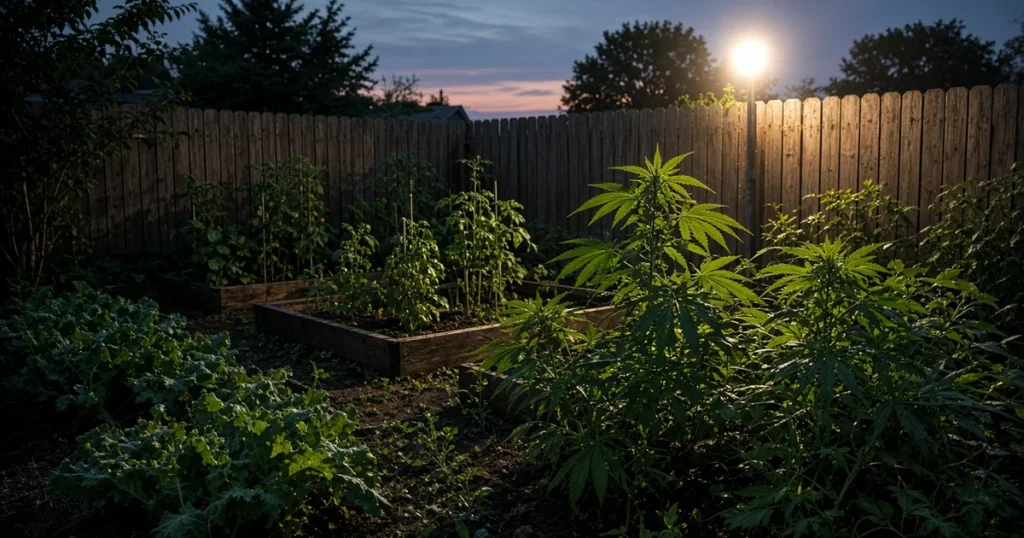
Outdoor cannabis gardens share the night with street lights, porch lights and security lights. Purdue University Extension says excessive night lighting is now recognized as a form of pollution with the potential to damage some trees. Washington State University Extension notes that, outside of specialty flowering plants, the effects of artificial lighting on plants are rarely considered. The focus here is stray outdoor light only. You will learn how night lighting reaches plants, why even dim light can matter, which kinds of lamps matter most and what you can do with shielding, timing and placement. How cannabis itself responds to day and night length is explained in Kind Seed Co’s posts on how cannabis plants measure time and the cannabis light cycle.
How night lighting reaches plants
Purdue Extension explains that outdoor lighting has grown for safety, security, advertising and looks, and that light pollution has become a vexing problem. Much of that light is so bright and poorly directed that its use has negative effects. Purdue cites an estimate that 30 percent of the electricity generated for outdoor lighting is wasted by being misdirected into the sky.
The sources point to the kinds of fixtures most likely to reach a garden:
- Street lights. WSU Extension notes that street trees exposed to extended light periods can show the effects most clearly.
- Security lights. WSU names security lights alongside street lights as high-intensity sources to consider.
- Uplighting and long throws. Purdue warns against lights aimed upward and lights that shine over great horizontal distances.
Purdue also notes that glare from poorly shielded fixtures is common enough that some roads are so brightly lit that visibility is actually reduced.
Why even dim light can matter
It is easy to assume a little stray light is harmless. Purdue Extension explains why that is not always true. Plants depend on three aspects of light: quality (wavelength or color), intensity (brightness) and duration over a 24-hour period, known as photoperiod. Purdue adds that it does not matter to a plant whether light comes from the sun or from an artificial source, as long as the needed wavelength, intensity and duration are there.
The key is how little light it takes to trigger a day length response. Purdue gives these figures:
- Most trees need about 1,000 microeinsteins per square meter per second for photosynthesis.
- Photoperiod responses can be set off by as little as 0.06 to 3 microeinsteins, a small fraction of that.
- Indoor light good enough for reading is about 4.6, and full moonlight is about 0.004.
- A 100-watt incandescent bulb gives about 5 microeinsteins at 5 feet away.
In other words, Purdue says, most night lighting is not strong enough to affect photosynthesis, but it can affect plants that are sensitive to day length.
Why darkness matters
Purdue Extension explains that since the 1940s it has been known that the length of uninterrupted darkness in a 24-hour cycle governs processes such as dormancy, shoot growth and flowering in trees. A pigment called phytochrome senses the length of day and night by absorbing red or infrared light. Purdue notes that even a momentary flash of light during the dark period can create the condition caused by a short night.
Purdue also explains that plants are classed as short-day, long-day or day-neutral by how they respond to day length. WSU Extension adds that an uninterrupted dark period is critical for flower bud initiation in certain plants, and that artificially prolonged light periods can interrupt flowering cycles and delay winter dormancy. WSU illustrates the point with poinsettias, where a greenhouse crop was ruined after lights were turned on by mistake and flowering was delayed past the holiday season.
What stray light does to plants
The sources describe these effects in trees and landscape plants:
- Continued growth. Purdue says light rich in red to infrared wavelengths extends the day length, can change flowering patterns and can keep trees growing so they do not develop the dormancy that helps them survive winter.
- Delayed leaf drop. WSU explains that leaves and buds nearest a street light perceive an endless summer and keep growing. In autumn, affected leaves stay green while others change color, then die at the first frost.
- Larger, more stressed leaves. Purdue notes that foliage under continuous lighting may be larger and more susceptible to air pollution and water stress, because leaf pores stay open longer.
- Wider strain. WSU says the loss of resources puts a small but repeated strain on a tree, and plants in marginal sites with poor soil are more likely to suffer other stresses.
Purdue adds that sensitivity varies widely among woody plants, and that young, vigorous trees are more likely than mature trees to suffer cold injury from growth prolonged by artificial light.
Which lamps matter most
Not all lamps are equal. Purdue Extension explains that different light sources give off different colors of light, and that the red and infrared wavelengths matter most for day length responses. It rates their potential effect on trees:
- High pressure sodium lamps emit high intensities rich in red and infrared. Potential effect: high.
- Incandescent bulbs are high in red and infrared. Potential effect: high.
- Fluorescent lamps are high in blue and low in red. Potential effect: low.
- Mercury vapor lamps emit mainly violet to blue. Potential effect: low.
- Metal halide lamps emit green to orange. Potential effect: low.
WSU Extension agrees that high-intensity sources such as high pressure sodium lamps have the greatest impact on delaying leaf drop and dormancy in landscape trees. Purdue notes that increased injury to woody plants has been reported since high pressure sodium lamps came into wide use.
Shielding and aiming lights
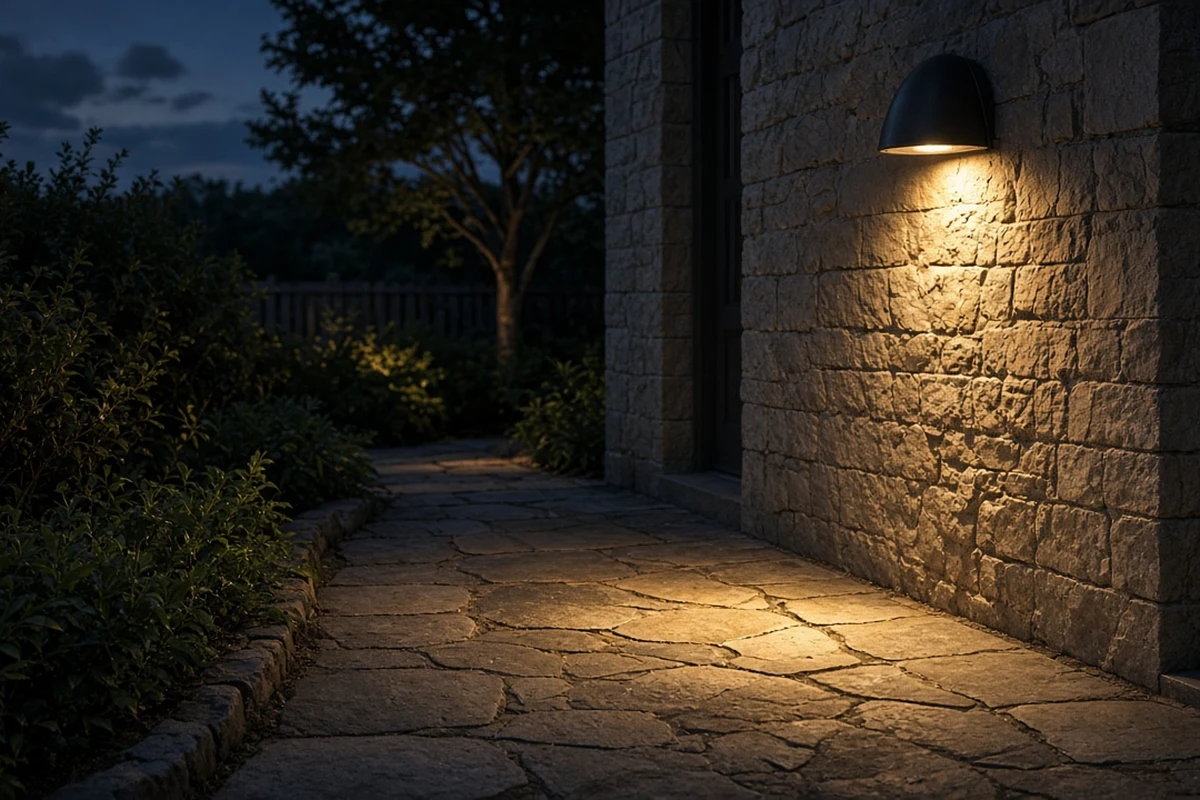
If a light near your garden is under your control, the sources agree on what helps. Purdue Extension recommends fixtures shielded so that all of the light is directed toward the ground and away from plants. It says uplighting and shining light over great horizontal distances should be avoided in all cases.
WSU Extension notes that the effects of high-intensity lights can be partly moderated by installing deflectors on the lights.
When a light is needed, Purdue suggests mercury vapor, metal halide or fluorescent lamps, in that order of preference. It advises avoiding high pressure sodium lamps and says even low-intensity incandescent is best excluded because of its high infrared output.
Timing lights
How long a light stays on matters as much as where it points. Purdue Extension says continuous lighting, which is unfortunately the most common, is potentially even more damaging than lighting that is turned off late in the evening. It recommends turning lights off or dimming them during off-peak hours to avoid continuous lighting of plants, which has the greatest potential for upsetting normal growth patterns.
Placing the garden away from lights
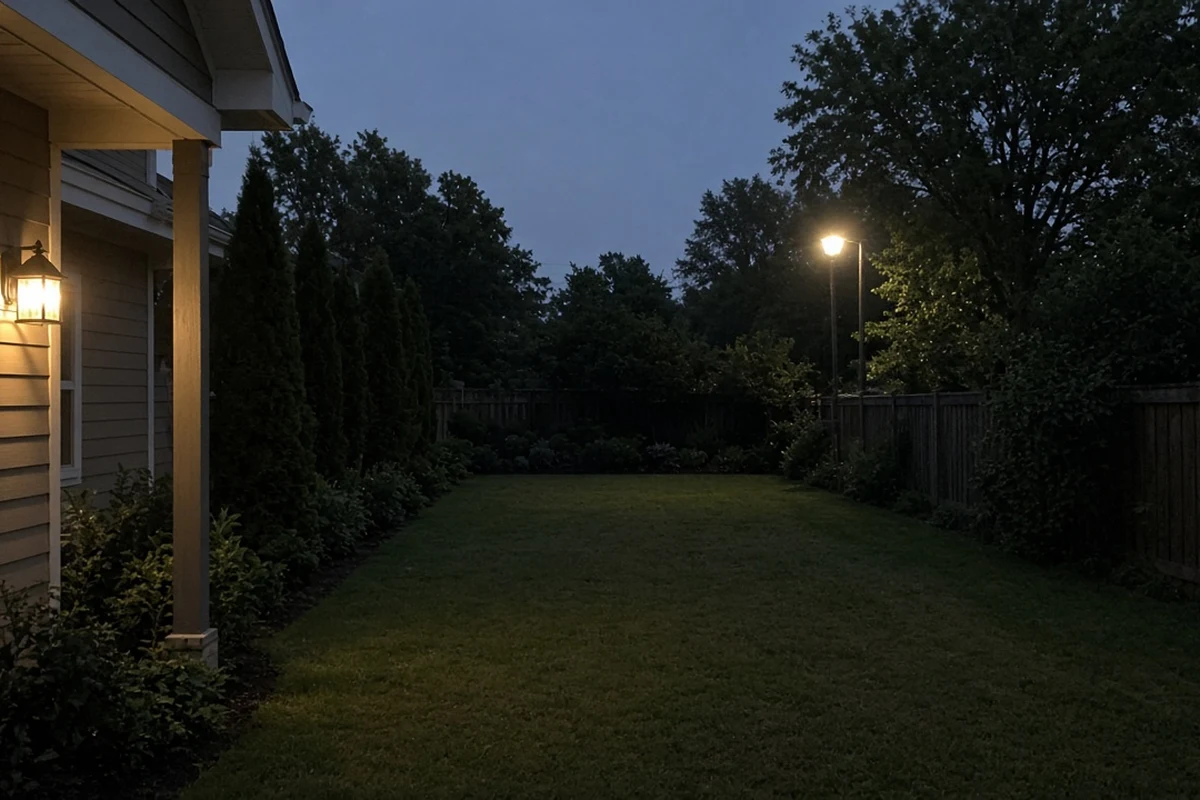
You cannot always change a neighbor’s lights or a street light, but you can choose where to plant. WSU Extension advises considering the location of high-intensity light sources, such as street lights and security lights, before installing plants. It also says marginally hardy plants should never be exposed to interrupted dark periods. Purdue advises that highly sensitive plants should be kept out of areas where high-intensity lighting rich in red and infrared wavelengths is used.
Troubleshooting
Plants nearest a street light stay green late into fall. WSU describes this effect in trees exposed to extended light near street lights. Consider the light’s location before planting.
Your own porch or security light shines on the bed. Purdue recommends shielding fixtures so light points at the ground and away from plants, and turning lights off or dimming them in off-peak hours.
The light near the garden runs all night. Purdue says continuous lighting has the greatest potential to upset normal growth patterns.
You are choosing a new bulb for a yard light. Purdue rates high pressure sodium and incandescent lamps as having a high potential effect on trees, and fluorescent, mercury vapor and metal halide as low.
Sources
- Purdue University Cooperative Extension Service. Does night lighting harm trees? (FNR-FAQ-17). https://www.extension.purdue.edu/extmedia/fnr/fnr-faq-17.pdf
- Washington State University Puyallup Research and Extension Center, Linda Chalker-Scott. The myth of night light. https://wpcdn.web.wsu.edu/wp-puyallup/uploads/sites/403/2015/03/light-pollution.pdf
FAQ
Does light pollution affect plants?
It can. Purdue University Extension says most night lighting is too dim to affect photosynthesis, but it can affect plants that are sensitive to day length. Day length responses can be triggered by a small fraction of the light needed for photosynthesis, and even a momentary flash during the dark period can matter.
Do street lights affect gardens?
They can. Washington State University Extension describes leaves and buds nearest street lights behaving as if summer never ended, staying green into autumn. It advises considering the location of high-intensity sources such as street lights and security lights before planting, and notes that deflectors can partly moderate their effects.
Which outdoor lights are worst for plants?
Purdue Extension rates high pressure sodium and incandescent lamps as having a high potential effect on trees, because they are rich in red and infrared light. It rates fluorescent, mercury vapor and metal halide lamps as low. WSU Extension agrees high pressure sodium lamps have the greatest impact.
How can I reduce stray light on my garden?
Purdue Extension recommends shielded fixtures that direct all light toward the ground and away from plants, avoiding uplighting, and turning lights off or dimming them in off-peak hours. Washington State University Extension suggests deflectors on high-intensity lights and siting plants away from street and security lights.


