
How to Optimize Your Indoor Cannabis Growing Environment
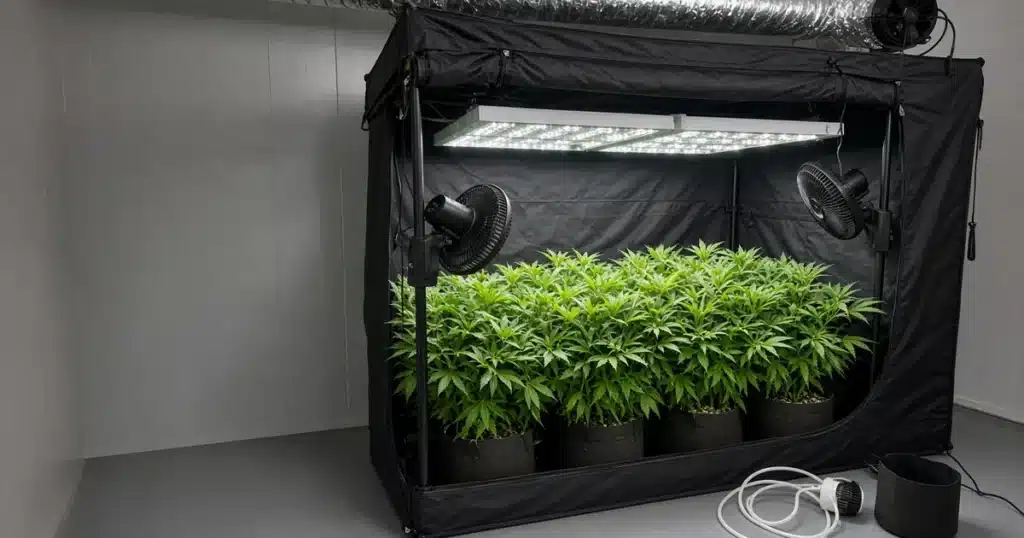
Indoor cannabis rewards careful room control. Light, temperature, humidity, airflow, water and pests all stack together. When those pieces stay in range, plants grow on schedule and finish cleaner. Here is a practical way to dial the environment without overcomplicating the gear list.
Lighting for indoor grows
Spectrum and intensity both matter. Blue-heavy light encourages bushier veg growth, while red-heavy light supports flowering. Full-spectrum fixtures that cover both ends can carry a plant from start to finish. As a rough intensity guide, many growers aim near 2,000 lumens per square foot in veg and around 5,000 lumens per square foot in flower. Too much light can bleach or burn tops. Too little cuts quality and yield. Set height and dimmers from canopy readings, not from the sticker on the box alone. Map a few points across the tent so corners are not starved while the center bleaches.
Temperature and humidity
Cannabis likes a defined comfort zone. In veg, daytime temperatures around 70 to 85 F work well for many rooms. In flower, about 70 to 80 F is a common target. Nights should run cooler, but keep the drop modest, often not more than about 10 F below the day reading, so plants are not shocked.
Humidity should fall as plants mature. Early veg can sit near 70 percent relative humidity. By late flower, many growers aim near 40 percent. High humidity on dense buds raises mold risk. Very low humidity dries plants out. Our guides to the best climate for a grow room and relative humidity control for cannabis go deeper on targets by stage.
Air circulation and ventilation
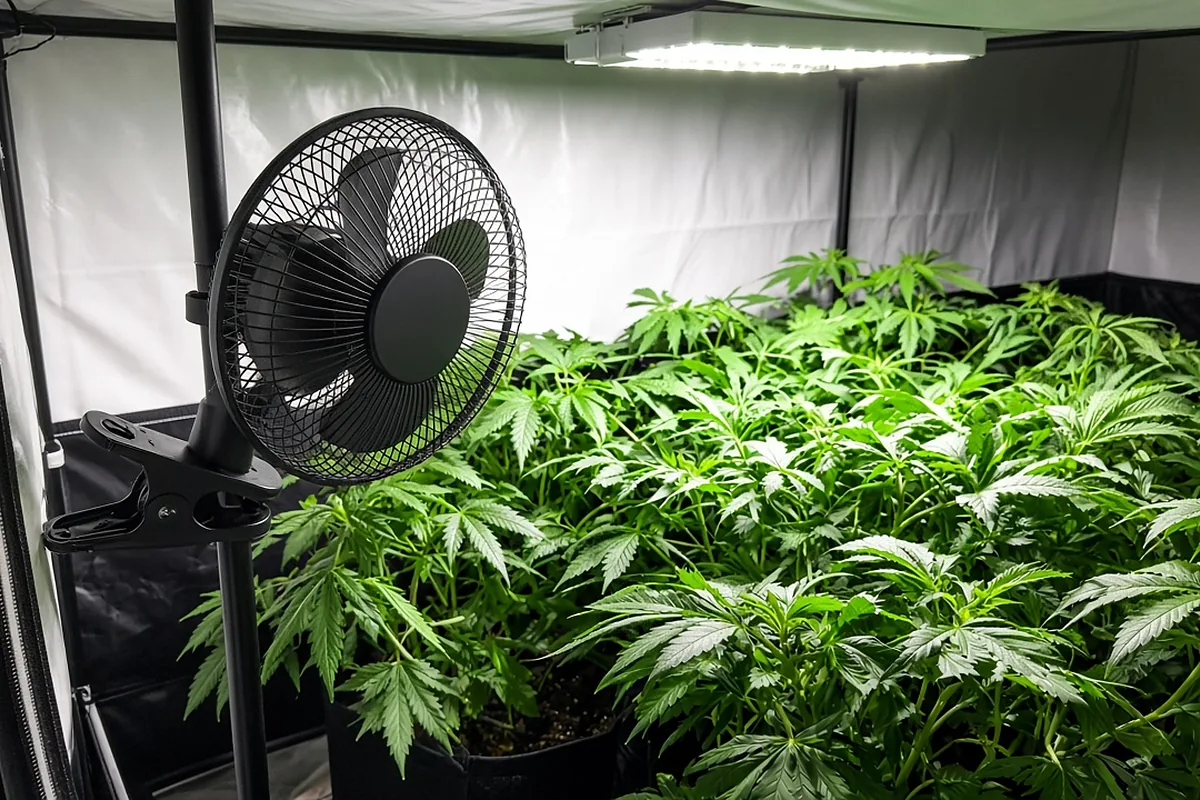
Circulation and ventilation do different jobs. Oscillating fans move air across the canopy, which helps stems toughen up and keeps leaf surfaces drier so spores have a harder time settling. Do not aim a fan so hard that leaves flap constantly, or you can get windburn.
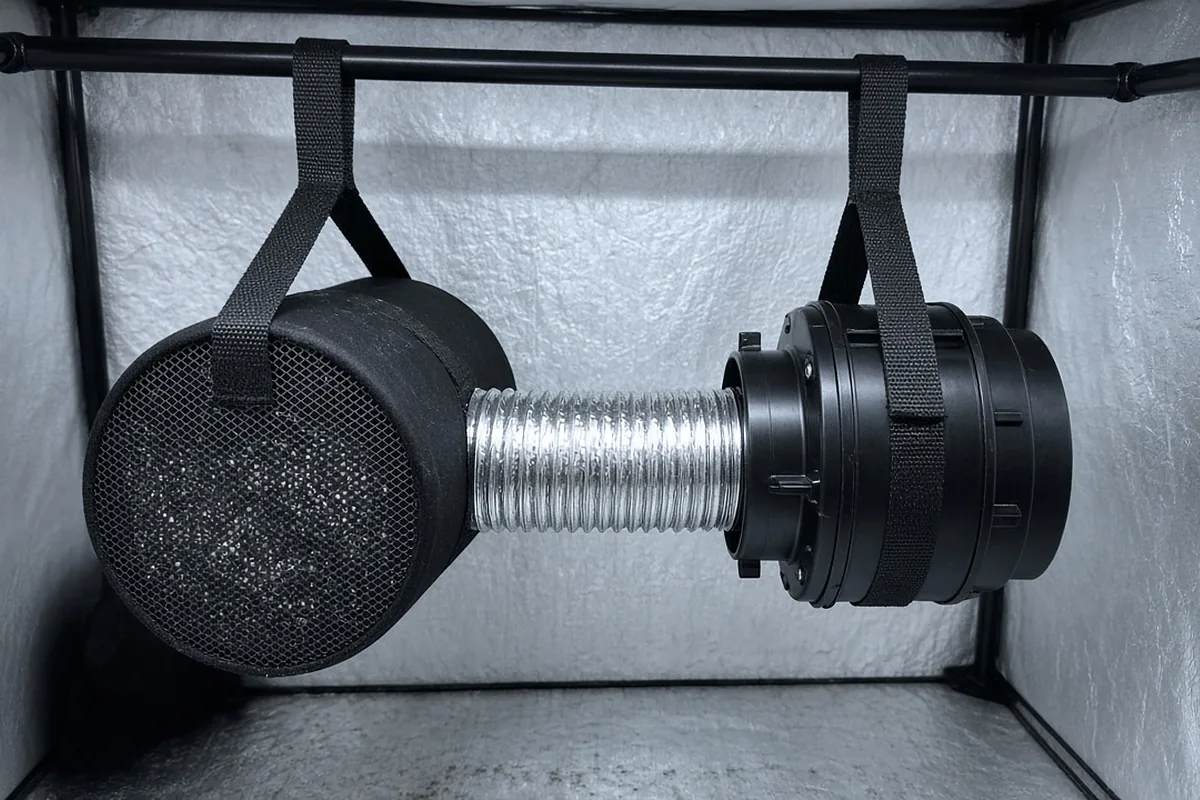
Ventilation swaps room air with fresh air. That replenishes the CO2 plants use for photosynthesis and helps carry heat and humidity out of the tent. An inline fan with a carbon filter is standard gear. If you want to raise CO2 on purpose in a sealed room, read our overview of CO2 generators for growing weed before you add tanks or burners.
Water, nutrients and pests
Water need scales with plant size, room heat and how hot your lights run. A common pattern is to water deeply, then wait until the top inch of soil is dry. The goal is even moisture without a waterlogged root zone. Overwatering is one of the most common beginner mistakes and can be as damaging as letting pots go bone dry.
Feed to the stage and the medium. More is not always better. Watch leaf color and runoff before you raise bottles. For pests, many home growers prefer softer approaches first: beneficial insects such as ladybugs or predatory mites, plus careful use of organic sprays or neem when needed. Keep the room clean and inspect the undersides of leaves often. Sticky traps near the medium help you spot fungus gnats early, before larvae chew roots.
Training, pruning and room layout
Training and pruning are part of environment control because they change how light and air move through the canopy. Topping, low-stress training and selective leaf removal can open the plant, improve penetration and point growth toward productive sites. Pair canopy work with even light coverage so lower sites are not left in deep shade.
Hydro growers face the same climate rules with tighter control of the root zone. Our guide to creating the best environment for a hydro setup covers that angle. With seeds from the shop and a room that holds steady light, climate and airflow targets, indoor plants have what they need to finish strong.
Get the genetics from Kind Seed Co, then run the basics until they are boring and reliable.
FAQ
What temperature should an indoor cannabis flower room be?
Many growers keep flower days around 70 to 80 F, with nights only modestly cooler, often not more than about 10 F below the day temperature.
How should humidity change from veg to flower?
Early veg can sit near 70 percent relative humidity. By late flower, about 40 percent is a common target to lower mold risk on dense buds.
Why do I need both fans and an exhaust?
Oscillating fans move air across leaves and strengthen stems. Exhaust ventilation swaps room air, replenishes CO2 and removes heat and humidity.
How often should I water indoor cannabis?
Water deeply, then wait until the top inch of soil feels dry. Exact timing depends on pot size, plant size, heat and light.


