
Mainlining cannabis guide
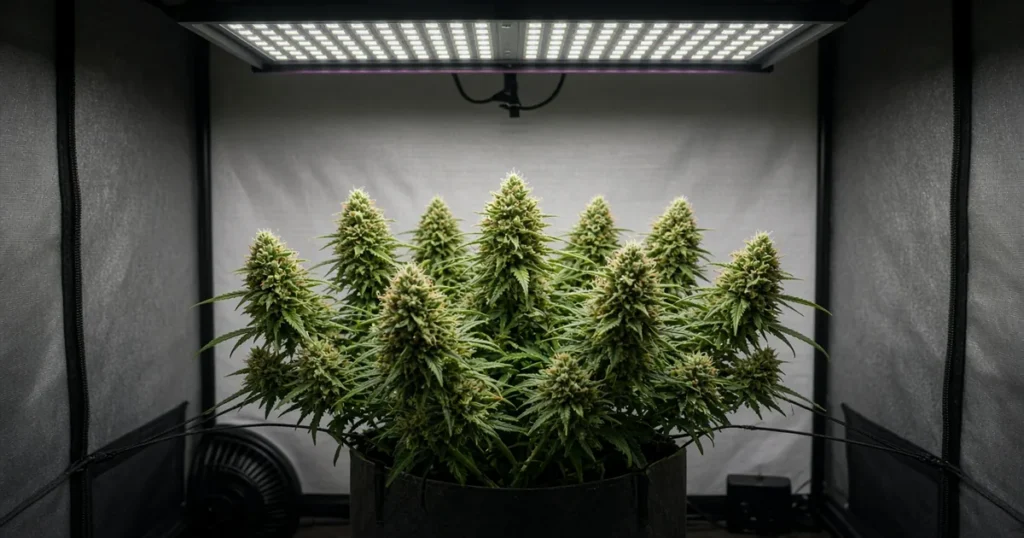
Mainlining is a training method that turns one cannabis plant into a balanced set of main colas, all fed from a single hub. Done well, it gives an even canopy where every top gets similar light. It takes more time in veg than simpler methods, but many indoor growers love the tidy, symmetrical plants it creates. This guide walks through mainlining step by step, the tools you need, the common mistakes and when it is worth the effort. It is for adults 21 and older growing where home cultivation is legal.
What mainlining is
Mainlining combines topping, removing lower growth and tying branches down into one plan. You top the plant early to create two main stems from a single point, called the hub. You then top each of those again, and again, doubling the number of colas each round. Lower growth below the hub is removed so the plant sends its energy to the chosen tops. The result is a plant with 4, 8 or 16 even colas.
Mainlining is closely related to manifolding. Many growers use the two names for the same idea. Our manifolding guide in this series covers the variations.
Why growers mainline
- An even canopy. All colas sit at a similar height, so light reaches them equally.
- Bigger top buds. Energy goes to a few strong colas instead of many small ones.
- Fewer larf buds. Removing lower growth cuts down on small, airy buds in the shade.
- Easier airflow. An open structure lets air move through the plant.
Results depend on the strain, light and grower skill, so treat these as goals rather than promises.
When mainlining makes sense
Mainlining works best with photoperiod plants indoors, where you control the veg time. It adds about two to four weeks of veg compared with a plant that is not trained. It is less suited to autoflowers, which have a short fixed life and little time to recover from repeated topping. For autoflowers, gentle low stress training is a better fit.
What you need
- A healthy photoperiod seedling
- Clean, sharp scissors or snips
- Soft plant ties or garden wire with a coating
- A pot with a rim you can tie to, or hooks
- Patience in veg
Step by step
Step 1. Let the seedling grow
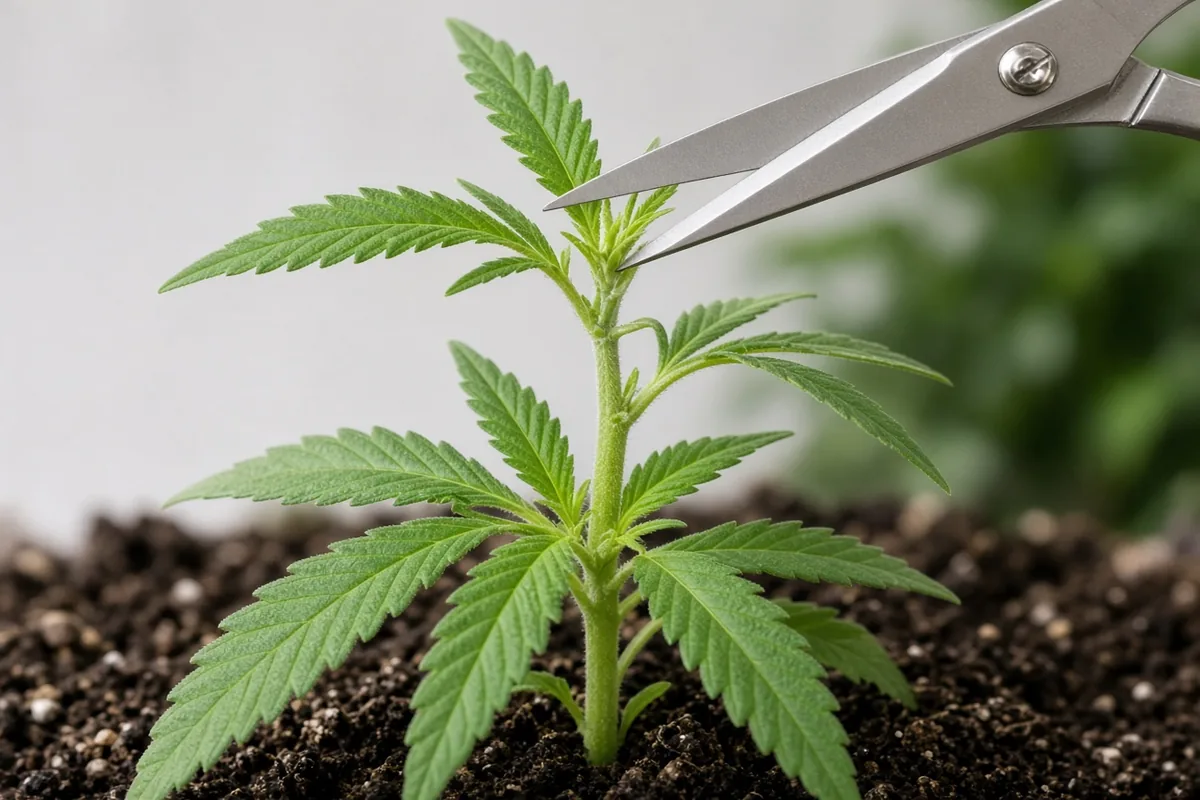
Wait until the plant has five or six nodes. A node is where leaves and branches grow from the stem.
Step 2. Top above the third node
Cut the main stem just above the third node. Remove all growth below the third node, including the lower branches and leaves. This leaves two branches growing from the third node. That point is your hub.
Step 3. Tie the two branches down
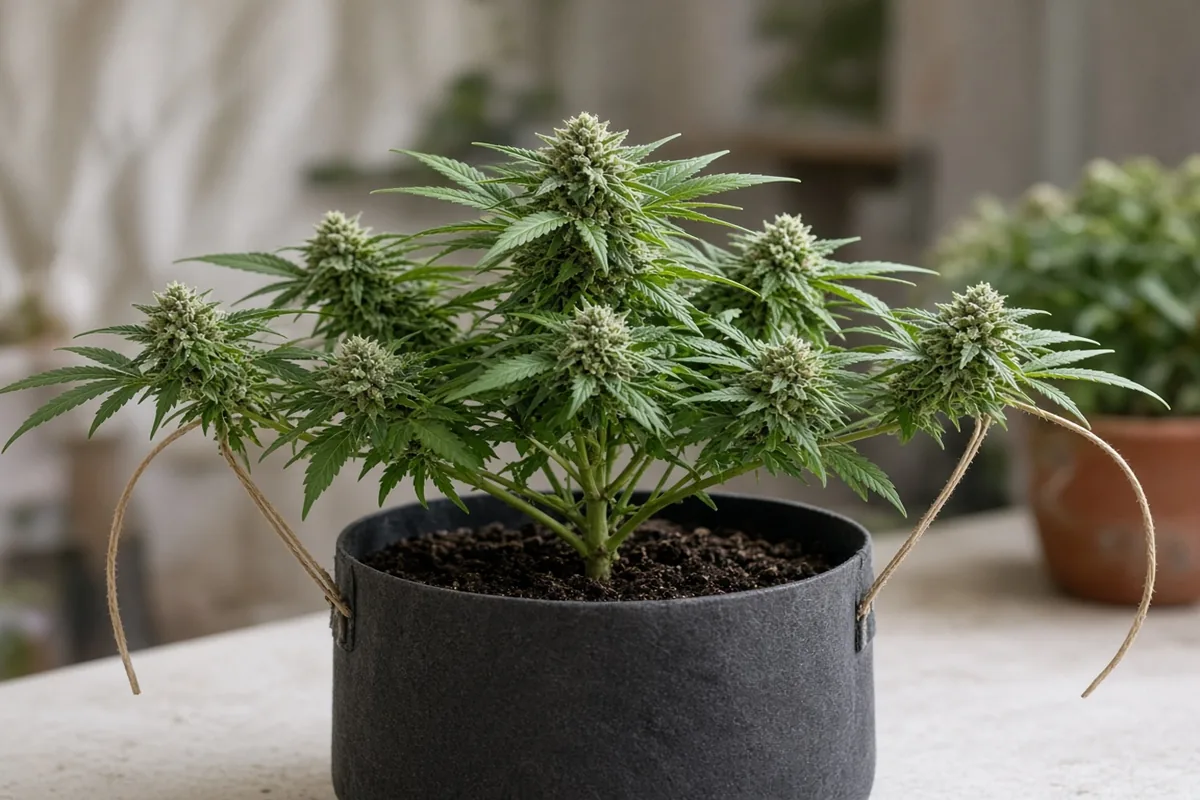
Gently bend the two new branches out to the sides so they grow horizontally. Tie them to the pot rim. The plant now looks like a capital T.
Step 4. Top each branch again
When each branch has grown three or four nodes, top it above the second node from the hub. Each branch now splits into two, giving four main colas.
Step 5. Repeat for eight colas
If you want eight colas, let the four new branches grow, then top each once more. Remove any small shoots that pop up lower on the arms so energy stays focused.
Step 6. Recover and fill the space
Give the plant a week or so to recover after the last topping. Spread the branches evenly under the light. When the canopy fills your space, switch to 12 hours of light to start flowering.
Timeline at a glance
| Stage | Rough timing from sprout |
|---|---|
| First topping | Weeks 3 to 4 |
| Tie down two arms | Right after first topping |
| Second topping, four colas | Weeks 5 to 6 |
| Third topping, eight colas | Weeks 7 to 8 |
| Flip to flower | When the canopy is full |
Timing varies with strain and conditions. Let the plant tell you when it is ready rather than following a strict calendar.
Care during flower
Once flowering starts, stop topping and avoid heavy bending. Keep ties loose so stems can thicken. Many growers use a trellis net to support heavy colas late in flower. Remove a few large fan leaves if they shade bud sites, but do not strip the plant.
Common mistakes
- Topping too early. A seedling with only two or three nodes may stall. Wait for five or six.
- Uneven arms. If one side grows faster, tie it lower or let the other side catch up before the next topping.
- Skipping recovery time. Topping again before the plant has bounced back slows everything down.
- Ties too tight. Tight ties can cut into stems as they thicken. Check and loosen them each week.
- Choosing a stretchy strain without room. Some plants stretch a lot in early flower, so leave headroom.
Mainlining vs other training
| Method | Effort | Best for |
|---|---|---|
| Low stress training | Low | Autoflowers and beginners |
| Topping | Low | Simple bushier plants |
| Mainlining | High | Even, symmetrical colas indoors |
| Screen of green | Medium | Filling a whole tent with one plant |
For a broader look, see our guide to training techniques for marijuana plants and our topping guide.
Watering and feeding a mainlined plant
A mainlined plant spends longer in veg, so its roots need room and steady care. Water until a little runs out the bottom, then wait until the top inch or two of soil is dry before watering again. Feed lightly after each topping, since the plant has fewer leaves for a few days. Once it recovers and pushes new growth, return to your normal veg feeding.
Picking genetics
Strains with strong branching and good recovery tend to suit mainlining. Many indica leaning hybrids work well in tents. Browse our high yield seeds for photoperiod options many growers choose for trained canopies.
Final thoughts
Mainlining asks for patience in veg, but it rewards you with a tidy plant and an even set of main colas. Start with a healthy photoperiod seedling, top above the third node, tie the arms flat and keep doubling until you reach the number of colas your space can hold. Give the plant time to recover between steps, and you will have a canopy that is easy to manage through flower.
Grow legally and responsibly
Home cultivation is only legal in some states, and each state sets its own plant limits, locking rules and rules about whether plants can be visible from a public place. You must be 21 or older to buy seeds from Kind Seed Co, and you should grow only where your state and city allow it. Check your state rules in our guide to the legal requirements for growing weed plants in your state before you plant. Federal treatment of cannabis seeds is also changing, so read our December 11 2026 seed rule explainer before you order. Keep plants and harvested flower locked away from children, pets and visitors, and never drive after using cannabis. This article is general information about gardening. It is not legal advice and it is not medical advice.
Frequently asked questions
What is mainlining in cannabis?
A training method that tops a plant into a central hub, removes lower growth and doubles main colas in even rounds.
Does mainlining increase yield?
Many growers report better top buds and fewer small lower buds. Results depend on strain, light and skill.
Can you mainline autoflowers?
It is not usually recommended. Autoflowers have little time to recover from repeated topping.
How long does mainlining add to veg?
Often about two to four extra weeks compared with an untrained plant.
Ready to start
Browse the full range in the Kind Seed Co shop or go straight to high yield seeds. Kind Seed Co sells only to adults 21 and older. Always follow the home grow laws where you live.