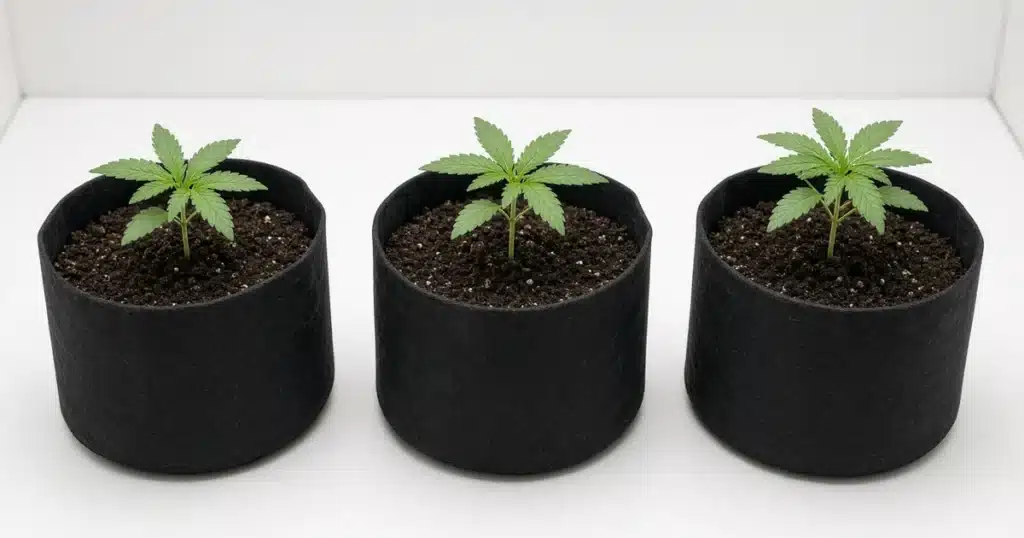
Micro-Growing Cannabis vs Macro-Growing: What to Consider

Micro-growing means raising a small number of cannabis plants in a closet or compact tent with close control, while macro-growing means larger-scale cultivation with more space and more plants. Kind Seed Co compares the two and shows how to set up a productive micro-grow at home.
The right scale depends on your space, your budget, your goals and the rules where you live. Most home growers end up on the micro side, but understanding both approaches makes it easier to plan a grow that fits your life. Here is how they compare and how to get the most from a small setup.
Micro-growing vs macro-growing at a glance
| Factor | Micro-growing | Macro-growing |
|---|---|---|
| Scale | A small number of plants | Many plants |
| Space | Closet, cabinet or compact tent | Large indoor rooms, greenhouses or outdoor plots |
| Control | Very high, every plant within reach | Harder to fine-tune plant by plant |
| Yield | Smaller harvests | Much larger potential harvests |
| Cost | Lower overall, but equipment is still needed | High investment in space, equipment, staff and utilities |
| Rules | Home grows are subject to local limits | Large-scale growing is generally for licensed operations, and rules vary by location |
In short, the choice usually comes down to yield versus control. Macro-growing offers bigger harvests but needs far more space and resources. Micro-growing gives you tight control over conditions in exchange for a smaller harvest. Neither approach is better in every case. It depends on what you want from the grow.
What is micro-growing cannabis?
Micro-growing means cultivating a limited number of plants, usually indoors, in a compact and controlled space such as a closet or small grow tent. Plants are often kept small with techniques like low-stress training or sea of green. The focus is on quality rather than volume. The idea is to get the most out of a small footprint by keeping every plant healthy and within easy reach.
Small does not mean simple, though. A micro-grow still needs care and attention to get right.
Advantages of micro-growing
- It fits almost anywhere. A spare closet or a corner of a small apartment can be enough.
- It uses fewer resources. Water, soil and nutrient needs are much lower than in a large grow.
- It gives you close control. You can fine-tune temperature, humidity, light intensity and other factors, and adjust them to suit the strain you are growing. That level of control improves your chances of a good harvest.
- It is discreet. A closed tent or cabinet keeps the grow tidy and out of sight.
Challenges of micro-growing
- Smaller yields. A small space means a smaller harvest than a larger grow.
- Equipment still matters. You still need grow lights, fans and sometimes a dehumidifier, and setting it all up can take real work.
- It takes attention. Small spaces can heat up or get humid quickly, so keeping conditions steady takes regular checks, especially for beginners.
What is macro-growing cannabis?
Macro-growing means cultivating cannabis on a large scale, often on outdoor plots or in large indoor setups such as big hydroponic rooms. It is focused on producing large quantities, and it typically relies on more space, more plants and more equipment. Large plots or spacious indoor rooms are paired with advanced cultivation techniques and machinery to keep the process efficient.
For most home growers, macro-growing is useful mainly as a point of comparison. It shows what you gain and give up at each end of the scale.
Advantages of macro-growing
- Higher potential yield. More space and more plants mean a larger harvest.
- Economies of scale. The larger the operation, the lower the cost of producing each unit.
Challenges of macro-growing
- Space and resources. Large grows need plenty of land or indoor space and a significant investment in equipment, staff and utilities.
- Rules and licensing. Large-scale cultivation is generally the territory of licensed operations. Plant-count and cultivation rules vary by country, state and province, so check the laws where you live before you plan any grow.
How to set up a micro-grow at home
A good micro-grow starts with a well-planned space. Focus on these four areas.
- Space. A closet, cabinet or compact tent all work. A tent makes it easier to control light and airflow. Our grow tent setup guide walks you through it, and our tips for growing in tight spaces cover layouts that make the most of every inch. If you rent, read our guide to setting up a grow room in a rented space.
- Light. Efficient LED fixtures suit small spaces because they run cooler than many older light types. Our LED lights guide explains what to look for.
- Airflow and odor. Small spaces trap heat and humidity. A small exhaust fan with a carbon filter keeps air moving and helps control smell, and a clip-on fan inside keeps air circulating around the plants.
- Containers. Choose pots that fit your space and allow good drainage. Smaller pots help keep plants compact, while fabric pots help roots breathe.
- Monitoring. A small thermometer and hygrometer let you check temperature and humidity at a glance, which matters more in a small space where conditions change quickly.
- Power and noise. Make sure your space has a safe power supply for lights and fans, and choose quiet fans if the grow is close to where you live and sleep.

Techniques that make small grows productive
In a small space, the goal is an even canopy where every bud site gets good light. These training methods help. Whichever you choose, start while plants are young and flexible, and keep it gentle.
- Low-stress training (LST). Gently bending and tying down branches keeps plants short and spreads the canopy out. Our guide to low-stress training shows how.
- SCROG. A screen of green uses a net above the plants to spread branches into an even, flat canopy. Learn more in our guide on how to SCROG.
- Sea of green (SOG). Some growers prefer more small plants flowered early instead of a few larger ones. It is one option, not the only way. Our guide to sea of green explains the approach.

Choosing seeds for a micro-grow
Genetics matter a lot when space is tight. Many micro-growers choose compact autoflowers or strains bred for indoor growing. Plant size still varies from strain to strain, so check the expected height on each product page before you buy. Autoflowers flower without a light change, which keeps the setup simple. Indoor photoperiod strains let you manage plant size through how long you keep them in the vegetative stage.
Browse our autoflower seeds and indoor seeds to compare options, or read our roundup of strains for a grow tent for ideas.
Which approach fits you?
Think about three things before you decide.
- Your goals. If you are growing for personal use, micro-growing is usually the practical choice.
- Your resources. Consider how much space, time and budget you can realistically commit.
- Your local rules. Home cultivation limits and licensing requirements vary by location. Check them first.
For most home growers, a well-run micro-grow offers the best balance of control, cost and discretion. Research the strains you plan to grow, pick a setup that fits your space, and enjoy the process.
If you are unsure where to begin, start small. A micro-grow is a low-risk way to learn the basics, and the skills you build carry over to any grow you plan later within your local limits.
FAQ
What is a cannabis micro-grow?
A micro-grow is a small indoor setup, often a closet, cabinet or compact tent, with a limited number of plants kept small through training and genetics. It trades big yields for control and discretion.
How much space do I need for a micro-grow?
Less than you might think. Many home growers use a small tent or closet. Kind Seed Co's tips for growing in tight spaces cover layouts that work.
What seeds are best for micro-growing?
Many micro-growers choose compact autoflowers or indoor-friendly strains. Check expected height on each product page before you buy. Browse Kind Seed Co's autoflower seeds and indoor seeds.
Which training methods suit small grows?
Low-stress training and SCROG help fill a small canopy evenly, and sea of green is another option some growers use. See how to SCROG.
Is large-scale growing legal at home?
It depends on where you live. Plant-count and cultivation rules vary by country, state and province, so check your local laws before you plan any grow.