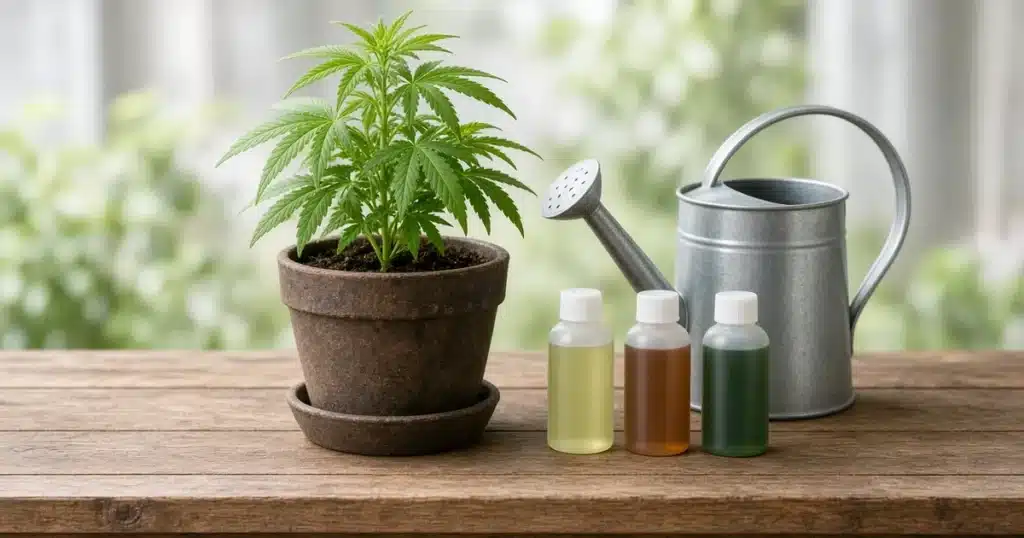
Phosphorus Deficiency in Cannabis Plants
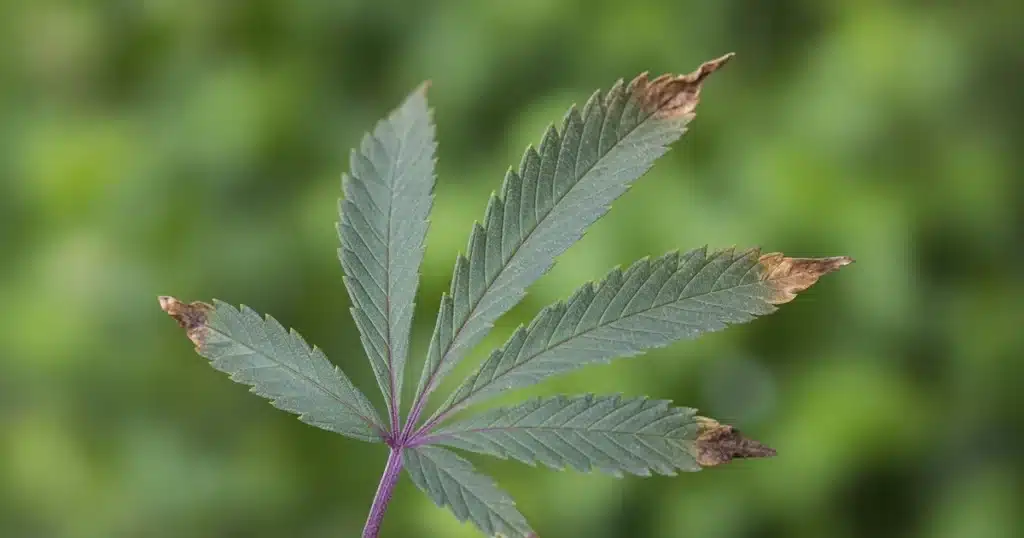
Dark, dull leaves with purple or bronze patches, slow growth and weak flowering can all point to phosphorus trouble. But phosphorus deficiency is easy to misread. Cold roots, low pH and plain genetics can produce similar colors, and adding more fertilizer is often not the answer. Below, you will find what phosphorus does, what a shortage looks like, what causes it, and how to fix it step by step. It draws on Alabama Cooperative Extension, Mississippi State University Extension and University of Delaware Cooperative Extension. Before you start a grow, check your state’s home grow law.
Why cannabis needs phosphorus
Alabama Cooperative Extension explains that “phosphorus in plants is key in capturing, storing, and converting the sun’s energy into biomolecules, such as adenosine triphosphate (ATP), that drive biochemical reactions.” It adds that “phosphorus promotes early root growth, winter hardiness, and seed formation.” That guidance is written for field crops.
Writing about corn, Mississippi State University Extension sums it up: “phosphorus’s primary role in a plant is to store and transfer energy produced by photosynthesis for use in growth and reproductive processes.”
Signs of phosphorus deficiency
Phosphorus is mobile inside the plant. University of Delaware Cooperative Extension notes that “symptoms of N, P, K, and Mg deficiencies will manifest in the old growth because they are mobile.”
Alabama Extension describes early signs as “an abnormally dark green or reddish purple color along the edge of the lower plant leaves.” Mississippi State adds that symptoms “appear on lower leaf tips and progress along leaf margins until the entire leaf shows purpling,” and that “new leaves emerging from the whorl are usually green, because the plant mobilizes available phosphorus to the youngest leaves.” Those descriptions are from corn. Growers report a similar pattern on cannabis, but that is grower observation.
On cannabis, look for:
- Dark green, dull or bluish lower leaves.
- Purple, red or bronze patches on lower leaves and leaf stems.
- Brown, dead spots spreading as it worsens.
- Slow growth and small buds.
How phosphorus moves in soil
Unlike nitrogen, phosphorus does not move far in soil. Mississippi State notes that “phosphorus is immobile in the soil solution,” which means roots have to grow to it. Anything that limits root growth also limits phosphorus uptake.
Purple is not always a problem
Many cannabis strains turn purple in leaves, stems or buds because of genetics or cool nights late in flower. If the plant is otherwise healthy and green leaves stay green, purple color alone is not a deficiency. Our guide to purple or red stems covers this.
What causes it
| Cause | What Extension says |
|---|---|
| Cold root zone | Alabama: “Cold temperatures retard root growth and reduce the phosphorus uptake in plants. Symptoms diminish, however, as the soil warms up.” |
| Low pH | Mississippi State: “Low soil pH severely limits phosphorus availability to plants, which may cause deficiency symptoms even where high soil test phosphorus levels exist.” |
| Wet, dry or compacted soil | Mississippi State lists “cool temperatures, too wet or dry soil, compacted soil” among factors that limit root growth. |
| Small roots | Mississippi State: “young plants are especially vulnerable because their root systems are small.” |
| Truly low phosphorus | Possible in spent or unfertilized soil. A soil test confirms it. |
How to fix phosphorus deficiency: step by step
- Confirm the pattern. Check that symptoms start on older, lower leaves while new growth stays green.
- Check root zone temperature. If pots sit on a cold floor or nights drop low, lift pots off the floor and warm the room. Many growers aim to keep roots above about 60°F (16°C), which is grower practice.
- Check runoff pH. Many soil growers aim for roughly 6.0 to 7.0 and coco growers roughly 5.8 to 6.2, which is common grower practice. Correct pH before adding nutrients.
- Check drainage and watering. Soggy or bone dry soil limits roots. Water when the top inch is dry and make sure pots drain.
- Feed if supply is low. If pH and temperature are fine, use a balanced or bloom formula with phosphorus at the label rate.
- For soil grows, consider organic sources. Utah State University Extension lists bone meal at 11 to 30% phosphate with moderate availability, so it works slowly, not overnight.
- Watch new growth. Damaged leaves usually will not recover. Judge success by whether new leaves come in healthy.
- Get a soil test for outdoor beds. Outdoor gardens can already be high in phosphorus. Testing avoids adding more than needed.
Phosphorus in flower
Phosphorus demand stays important through flowering, which is why many bloom formulas carry more of it. But more is not always better. In common grower experience, very high phosphorus feeds can crowd out other nutrients, and excess can build up in containers. If you use a bloom booster, follow the label and watch new growth for yellowing between veins, a sign that something else is being crowded out. In outdoor gardens, Mississippi State notes that soil can hold plenty of phosphorus that roots simply cannot reach when conditions are cold or acidic, so fixing those conditions often helps more than adding fertilizer.
Seedlings and young plants
Young plants are the most likely to show phosphorus trouble after a cold spell, because their root systems are small. Mississippi State describes symptoms that often appear when young plants move from cool, wet conditions into good growing weather, because “vegetative growth exceeds the roots’ ability to supply phosphorus.” Keeping seedlings warm and avoiding soggy starter mix is the best prevention.
How to prevent it
- Keep roots warm and the root zone well drained.
- Keep pH in range for your medium.
- Use a nutrient line with balanced phosphorus for each stage.
- Avoid overwatering, which damages roots.
- Test outdoor soil before adding phosphorus.
Troubleshooting
Lower leaves turned purple after a cold night. This is likely cold related. Warm the root zone and watch whether new growth stays healthy.
I added bloom booster but nothing changed. Check pH and root temperature. Phosphorus can be present but out of reach.
Purple stems but healthy leaves. Likely genetics or cool temperatures, not a deficiency.
Brown spots with yellow halos spreading quickly. This may be a leaf disease, not a deficiency. Remove affected leaves, bag them and throw them away, and improve airflow.
Leaves look burnt after feeding more. You may have overfed. In containers with good drainage, water with plain, pH adjusted water to light runoff, then start again at a lower strength. In beds or slow draining mixes, pause feeding instead.
Related guides
See magnesium deficiency, our 8 deficiencies by leaf symptoms and our soil feeding schedule.
Sources
- Alabama Cooperative Extension System, Phosphorus Basics: Deficiency Symptoms, Sufficiency Ranges, and Common Sources. https://www.aces.edu/blog/topics/crop-production/phosphorus-basics-deficiency-symptoms-sufficiency-ranges-and-common-sources/ (opened 2026-10-16)
- Mississippi State University Extension, Why is my young corn stunted and purple?. https://extension.msstate.edu/agriculture/soils/why-my-young-corn-stunted-and-purple (opened 2026-10-16)
- University of Delaware Cooperative Extension, Identifying Nutrient Deficiencies in Ornamental Plants. https://www.udel.edu/academics/colleges/canr/cooperative-extension/fact-sheets/identifying-nutrient-deficiencies-in-ornamental-plants/ (opened 2026-10-16)
- Utah State University Extension, Selecting and Using Organic Fertilizers. https://extension.usu.edu/yardandgarden/research/selecting-and-using-organic-fertilizers (opened 2026-10-16)
FAQ
What does phosphorus deficiency look like in cannabis?
It usually starts on older, lower leaves as dark green or dull color with purple, red or bronze patches. Brown, dead spots can follow, and growth slows.
Does purple on cannabis always mean phosphorus deficiency?
No. Many strains turn purple from genetics or cool nights. If leaves are otherwise healthy, purple color alone is not a deficiency.
Can cold temperatures cause phosphorus deficiency?
Yes. Alabama Extension explains that cold temperatures slow root growth and reduce phosphorus uptake, and symptoms fade as the root zone warms.
Can low pH cause phosphorus deficiency?
Yes. Mississippi State Extension notes that low soil pH severely limits phosphorus availability, even when soil test phosphorus is high.
How long does it take to fix phosphorus deficiency?
Once pH, temperature and supply are right, new growth should start to look better, though timing varies with the plant and conditions. Damaged leaves usually do not recover.