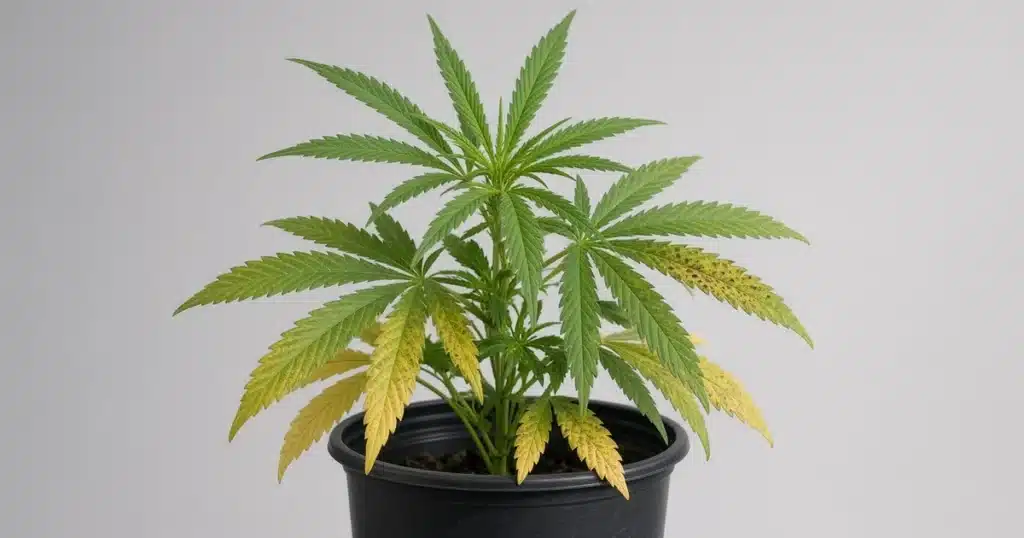
Should You Worry About Purple or Red Stems?
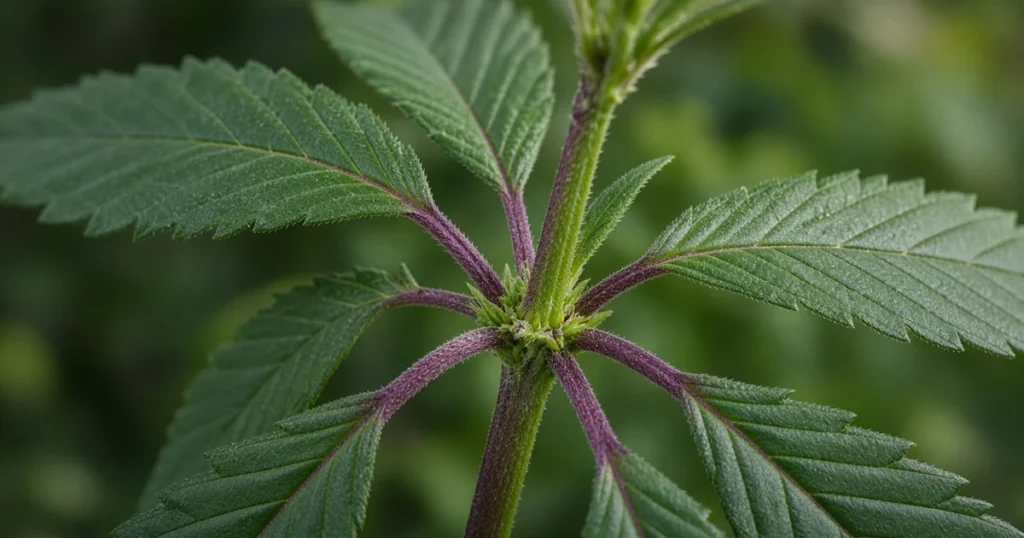
Usually not. Red or purple stems on cannabis are common, and in most healthy plants they come from genetics, bright light or cool temperatures. The color only matters when it shows up with other problems such as wilting, spots or soft stems. Below, you will find where the color comes from, the common causes, a “when to worry” checklist, and why reaching for a phosphorus fertilizer is the wrong first move.
Where the red and purple color comes from
The red and purple in plant tissue usually comes from pigments called anthocyanins. Washington State University Extension describes them as “water-soluble leaf pigments called anthocyanins, which are also found in red, blue, and purple flowers and fruits.” WSU’s publication covers leaves. Stems and petioles often show the same pigments, but applying WSU’s leaf findings to stems is our own inference, not something WSU states.
WSU explains that “plants use anthocyanins to protect their leaves from environmental stress,” and that they “can protect leaves from high levels of light and drought.”
Common harmless causes
Genetics
Some plants are simply built to be colorful. WSU notes leaves “can also turn red for reasons unrelated to autumn color development, such as genetic programming.” Some cannabis plants show red or purple stems throughout growth. If the plant is otherwise vigorous, this is just its look.
Bright light
WSU says “leaves in full sun are often redder than those in shadier areas of the same plant.” Stems facing a strong light or the sun may color up first. That is likely a protective response, but check the plant for other stress signs too.
Cool temperatures
WSU lists cold exposure as a trigger in some plants, such as broadleaf evergreens in winter. In cannabis, cool nights in late season outdoor grows may bring purple tones to stems and leaves.
Causes that need a closer look
WSU lists several stress causes of reddening that can need action:
- Nutrient deficiency. WSU says red leaves from “a deficiency in phosphorus or some other nutrient” is “a common problem seen in intensively grown agricultural crops, but rarely in home gardens.”
- Salts and heavy metals. “Exposure to excessive levels of fertilizer or deicing salts can induce leaf reddening.” WSU adds that high levels of metals in soil can do the same.
- Drought and poor drainage. WSU explains that in poorly drained soil, a lack of oxygen “harms and often kills fine roots, resulting in less water uptake.”
- Pathogen attack. WSU notes “pathogen-induced anthocyanins often appear in patches on the surface of the leaf rather than along the margins and tips.”
Training, bending and damage
If you bend or tie down branches, expect some color at the bend. WSU notes that “bending, crushing, or otherwise physically damaging leaves can cause them to accumulate anthocyanins in the damaged area.” WSU describes this in leaves, and stems often react the same way, so a red patch where a stem was bent or rubbed is likely minor stress, not a nutrient problem. Give the plant a few days and watch new growth.
What a soil test tells you
Testing is more reliable than guessing. WSU says a soil test gives “information on nutrient levels, soil pH, and heavy metal contamination all in one simple report.” For container growers using soilless mixes, WSU’s soil test advice does not apply directly. A tissue test is the closer equivalent, and a runoff test may offer extra clues. Either way, you are working from data instead of a color.
The phosphorus myth
Many guides say red stems mean the plant needs phosphorus. WSU Extension is direct: “It is a common myth that red leaves mean a deficiency in phosphorus or another nutrient.” It advises: “Before adding any fertilizer containing phosphorus, be sure to have your soil tested,” and warns that “adding excess phosphorus unnecessarily harms plants, soil life, and downstream aquatic systems.”
Cold roots can also mimic a deficiency. Texas A&M AgriLife, writing about tomatoes, says “tomato roots growing in cold soil, either in the greenhouse or the field, take up phosphorus poorly,” and that true phosphorus deficiency in tomatoes “is most often manifested as purpling of the leaves, particularly the leaf veins.” That is a tomato source, but it shows why a cold root zone, not an empty fertilizer bag, can be the real cause.
How to check your plant step by step
- Look at the whole plant. Is it growing well, with healthy green leaves? If yes, colored stems are most likely genetic or from light.
- Check whether the color matches the light. Redder on the lit side points to light.
- Check temperatures, especially at night and in the root zone.
- Check watering and drainage. Soggy pots or dry, stressed plants both cause trouble.
- Look for spots, patches, lesions or soft areas on stems and leaves.
- If you still suspect a nutrient problem, confirm it with a soil or tissue test.
- Only then, and only if the test shows a need, use a fertilizer and follow its label.
When to worry: a checklist
Purple or red stems deserve attention if you also see:
- Wilting even though the soil is moist
- Dark, sunken or soft spots on stems
- Leaves with blotchy red patches rather than even color
- Slow growth, small new leaves or yellowing
- A white crust on the soil or pot rim (possible salt buildup)
Quick guide to causes
| Cause | Typical look | What to do |
|---|---|---|
| Genetics | Even color, healthy plant | Nothing |
| Bright light | Redder on the lit side | Nothing, unless leaves also burn |
| Cold | Color after cool nights | Keep root zone and nights warmer if you can |
| Salt buildup | Reddening plus crust or tip burn | If salt buildup is confirmed, leach per your medium and review feeding |
| Poor drainage | Reddening with wilting in wet soil | Improve drainage |
| Pathogen | Patchy red spots, lesions | Isolate the plant and identify the problem |
| Possible deficiency | Slow growth, other symptoms | Soil or tissue test first, then follow the label |
Troubleshooting
| Problem | Possible cause | What to do |
|---|---|---|
| Stems purple from seedling stage | Genetics | No action needed |
| Purple appears after a cold snap | Cool temperatures | Keep plants warmer and watch new growth |
| Purple stems plus drooping in wet soil | Poor drainage, root stress | Let the mix dry and check drainage holes |
| Purple stems plus white crust on soil | Fertilizer salts | If salt buildup is confirmed, leach with plain water and feed less |
| Purple stems with sunken dark spots | Possible stem disease | Isolate the plant and get a diagnosis |
| Purple and slow growth | Could be several causes | Soil or tissue test before any fertilizer |
For more on salt buildup and leaching, see our flushing guide at https://kindseed.com/everything-you-need-to-know-about-flushing-cannabis/. For sulfur and other nutrient look alikes, see https://kindseed.com/why-is-sulphur-so-important-for-cannabis-plants/.
FAQ
Are purple stems on cannabis bad?
Usually not. Purple or red stems most often come from genetics, bright light or cool temperatures. They only need attention when you also see wilting, spots, soft stems or slow growth.
Do red stems mean a phosphorus deficiency?
Not necessarily, no. WSU Extension calls it a common myth that red leaves mean a phosphorus or other nutrient deficiency, and advises a soil test before adding any phosphorus.
Why do my cannabis stems turn purple at night or in fall?
Cool temperatures are a possible trigger for red and purple pigments called anthocyanins. In tomatoes, cold roots take up phosphorus poorly, and cannabis may react similarly, which is another reason to check temperature before adding fertilizer.
What should I do about red stems?
Check the whole plant, the light, temperatures and drainage, and look for spots or wilting. If you still suspect a nutrient issue, confirm it with a soil or tissue test, then follow the fertilizer label.
When should I worry about purple stems?
Worry when color comes with wilting in moist soil, dark or soft spots, patchy red blotches, slow growth or a white salt crust on the soil.
Sources
- Washington State University Extension FS209E, Why Do Leaves Turn Red? (https://pubs.extension.wsu.edu/product/why-do-leaves-turn-red-home-garden-series/)
- Texas A&M AgriLife Extension, Tomato Problem Solver: Phosphorus Deficiency (https://aggie-horticulture.tamu.edu/vegetable/problem-solvers/tomato-problem-solver/leaves/phosphorus-deficiency/)