Overwatering Cannabis — Signs, Differential Diagnosis & Recovery

Quick answer: Overwatering usually shows as droopy, heavy leaves on wet media, slow drying, and weak roots that cannot take oxygen. Fix it by pausing water, checking drainage and pot weight, then restarting with smaller, less frequent irrigations. Rule out underwatering, heat, light stress, and root-zone issues first.
Overwatering is one of the most common problems in home grows. Cannabis roots need moisture and air. When the medium stays soggy, roots struggle, nutrient uptake stalls, and leaves look unhappy even though the pot feels wet.
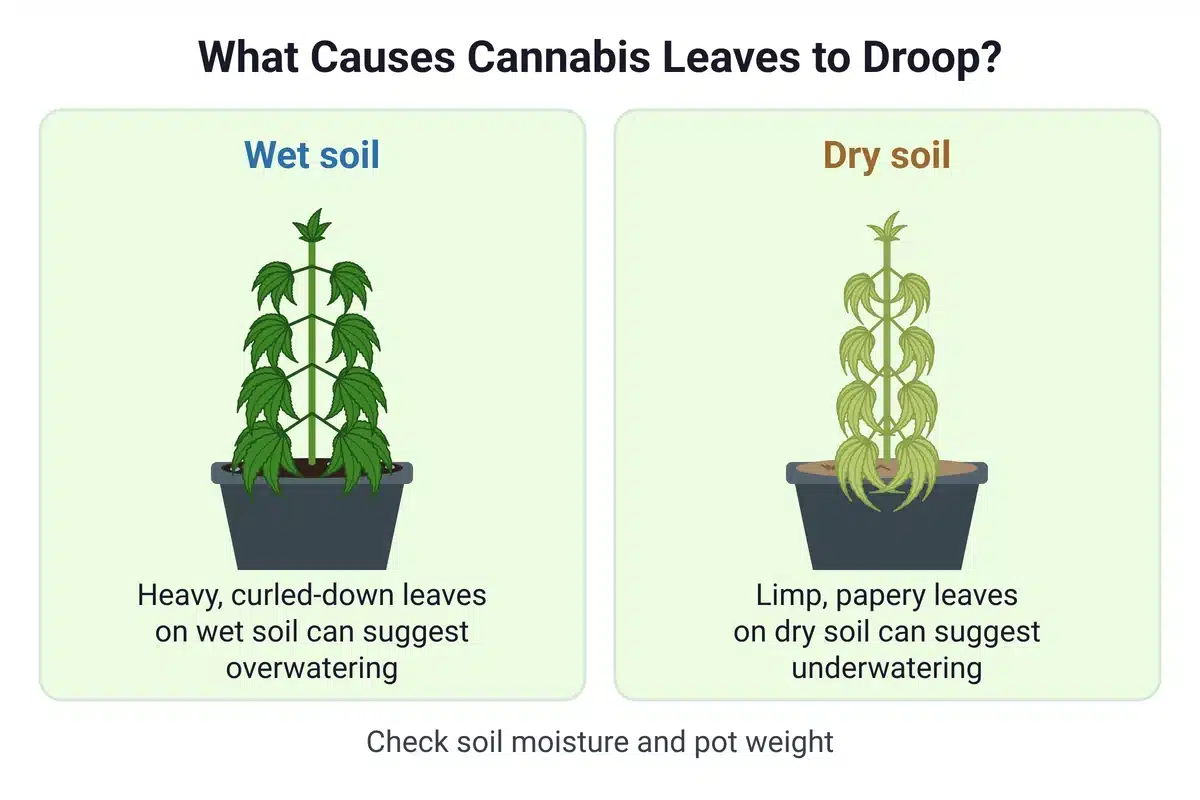
What Causes Cannabis Leaves to Droop?
Cannabis leaves can droop because of a watering problem. Heavy, curled-down leaves on wet soil can suggest overwatering, while limp, papery leaves on dry soil can suggest underwatering. Heat, strong light, a recent transplant and root problems can also cause drooping. Check soil moisture and pot weight alongside these other possible causes.
If the pot is light and the soil is dry, water thoroughly and follow the routine in our guide to watering marijuana plants. If the pot is heavy and wet, stop watering and let it dry down before you change anything else.
Overwatering vs Other Causes of Drooping
Drooping is a symptom, not a single disease. Before you cut feed or flood the pot again, compare patterns.
| Clue | Overwatering | Underwatering | Heat / low humidity | Light stress | Root-zone (bound / poor drain) |
|---|---|---|---|---|---|
| Medium feel | Heavy, wet, slow to dry | Light, dry, pulls from sides | Can be wet or dry | Usually unrelated to wetness | Wet top, poor runoff, or compacted |
| Leaves | Soft droop, often shiny/dark, clawing possible | Crisp droop, dry tips | Tacoing, limp in peak heat | Edges curl up / bleaching near lights | Persistent droop despite “correct” water |
| Timing | After frequent irrigations | After long dry gaps | Hottest hours | After raising intensity / lowering lights | After long veg in same pot |
| Recovery cue | Improves as medium dries + roots re-aerate | Improves after thorough water + runoff | Improves with temp/VPD fix | Improves with distance/dimming | Improves after transplant / better drainage |
Rule of thumb: If the pot is heavy and the top still looks wet days later, overwatering or drainage failure is the prime suspect. If the pot is feather-light and media pulls from the wall, underwater first.
Classic Signs of Overwatering
Watch for clusters of signals, not one leaf:
- Soft, limp leaves that do not perk up after lights-on
- Medium that stays wet for days, with little or no runoff when you finally water
- Slow growth, pale new growth, or tip burn from locked-out nutrients
- Fungus gnats thriving in constantly damp topsoil
- Musty smell from the root zone
- In hydro: persistently high reservoir levels, slimy roots, or stalled dissolved oxygen
Severe cases can progress toward root rot. Act early. Recovery is simpler before roots collapse.
Pot-Weight and Drainage Checklist
Use this before every “just in case” watering:
- Lift the pot. Learn the “just watered” weight vs “ready to water” weight for that container.
- Finger or meter check. Top inch dry does not mean the whole root ball is dry (or wet).
- Confirm drainage holes are not blocked. Saucers should not hold standing water.
- Check medium. Dense, compacted, or peat-heavy mixes hold water longer. Amend or repot if needed.
- Match pot size to plant. Oversized pots stay wet longer around a small root mass.
- Note environment. Cool, humid rooms dry slowly. Hot, dry rooms dry fast. Adjust intervals instead of guessing.
- Hydro note: Verify pump and airstone function. Roots should not sit in stagnant, low-oxygen solution.
Emergency Steps When You’re Sure It’s Overwatered
- Stop watering until the container approaches the light “ready” weight.
- Empty saucers and improve airflow around pots (gentle fan, not windburn).
- Raise light slightly or dim if leaves are also heat-stressed. Do not stack stressors.
- Hold heavy feeds until roots recover. Wet, damaged roots burn easily.
- If hydro: refresh reservoir, check temp (cooler usually holds more oxygen), confirm aeration.
Do not yank the plant out daily to inspect. Disturb roots only if you must repot.
Recovery Plan: Salvaging the Plant
Let the medium approach dry-down
Patience does most of the work. In humid rooms this can take longer. Resume water only when weight and feel say it’s time. Then water thoroughly to light runoff so salts do not concentrate in a half-wet ball.
Improve the root environment
- Ensure holes drain freely
- Consider a drier mix or more perlite/coco blend on the next transplant
- For chronic sogginess in a huge pot, carefully up-pot only if roots are healthy enough, or wait and water less volume more precisely
Water quality and nutrients
Use clean water appropriate for your method. After recovery starts, return to a mild feed rather than jumping straight to peak bloom strength. Pale leaves after overwatering often reflect temporary lockout, not an automatic need to dump bottles into wet soil.
Prune only what’s clearly dead
Remove mushy, fully yellowed leaves that will not recover. Leave anything still contributing canopy until the plant stabilizes.
Prevention for the Next Cycle
- Water by weight and runoff, not calendar alone
- Size pots to plant stage
- Prefer well-aerated media indoors
- Keep gentle airflow under the canopy
- In hydro, prioritize dissolved oxygen and clean reservoirs
- Train yourself on one consistent “ready to water” cue per container size
Starting with vigorous genetics from reputable feminized or autoflower packs will not prevent overwatering. Healthy seedlings forgive training mistakes better once roots are established. Technique still wins.
Why Roots Need Air
Roots exchange gases in the root zone. Water fills pore spaces. If pores never empty, oxygen drops and beneficial root function stalls. That is why “more love” with the watering can backfires. Cannabis in nature experiences wet-dry cycles. Containers and indoor rooms make it easy to erase the dry half of the cycle.
Aftercare Timeline (Example)
| Time since last overwater | Grower action |
|---|---|
| 0-24h | Stop water, empty trays, airflow |
| 1-3 days | Monitor weight, no heavy feed |
| When light again | Thorough water to light runoff |
| Following week | Slightly longer intervals, confirm drainage |
If the plant collapses further with a sour root smell, evaluate root health. Consider an emergency transplant into fresh, airy medium as a last resort, not day-one panic.
When to Suspect Root Disease
If droop persists after dry-down, runoff smells foul, or stems soften at the base, root disease may have taken hold. Improve oxygen and cleanliness. Remove clearly dead tissue carefully. Avoid spreading contaminated media between pots. Severe cases may not fully recover. Prevention beats heroics.
FAQ
Why are my cannabis leaves drooping if the soil is wet?
Wet media with soft droop usually points to overwatering or poor drainage and oxygen at the roots. Confirm pot weight and drainage before adding more water.
How long should I wait to water after overwatering?
Until the container is near its known dry-down weight and the root zone has air again. That can be days depending on pot size, medium, and humidity. There is no universal clock.
Can overwatering look like a nutrient deficiency?
Yes. Damaged or oxygen-starved roots take up nutrients poorly, so leaves can yellow or burn even when feed is “correct.” Fix the root zone first, then reintroduce mild nutrition.
Overwatering vs underwatering: quick tell?
Heavy wet pot plus soft limp leaves points to overwatering. Light dry pot plus crispy droop points to underwatering. When unsure, weigh and check runoff history.
Do drooping cannabis leaves recover?
Usually, yes, once the cause is fixed. Overwatered plants often perk up after the pot dries down and the roots get air again, and underwatered plants often lift soon after a thorough watering. Leaves that have turned yellow, brown or crispy may not recover, and normal new growth is not assured.
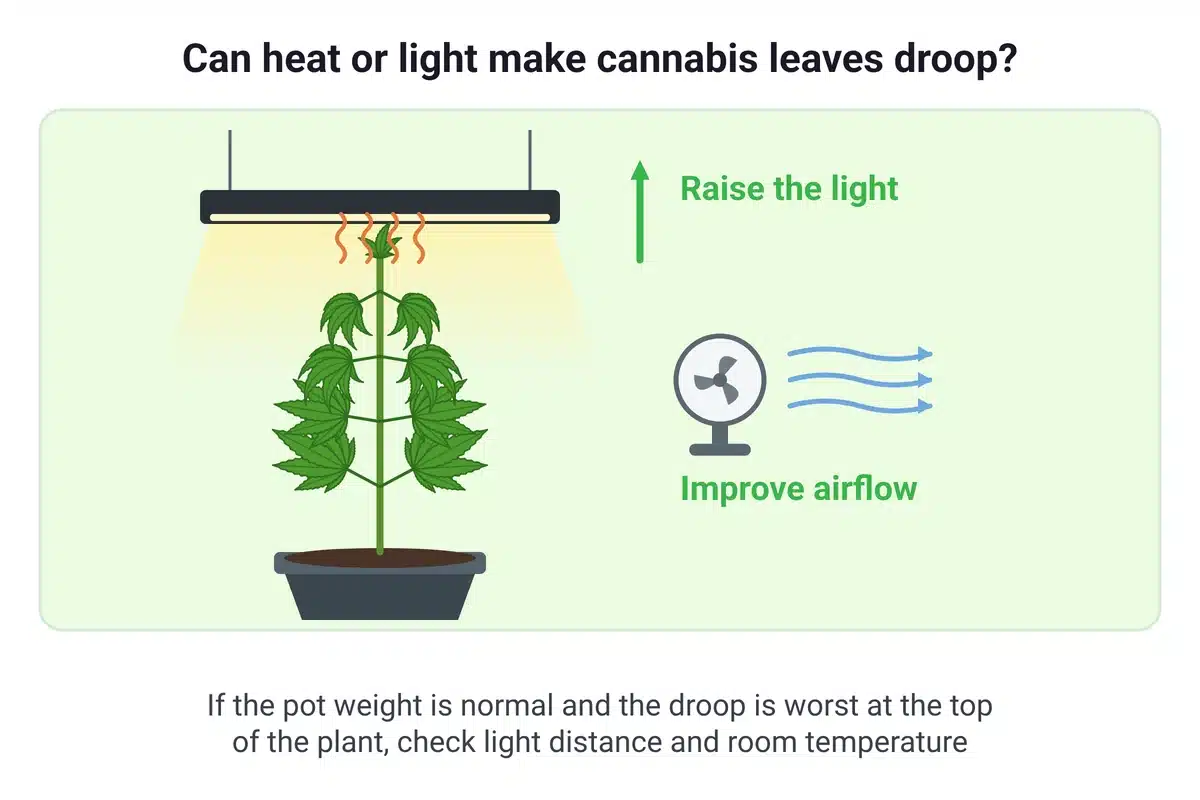
Can heat or light make cannabis leaves droop?
Yes. Leaves can droop or curl when a grow light hangs too close or the room runs hot, even when watering is right. If the pot weight is normal and the droop is worst at the top of the plant, check light distance and room temperature, then raise the light or improve airflow.