Week 5 Flower: What to Expect and How to Keep Buds Healthy
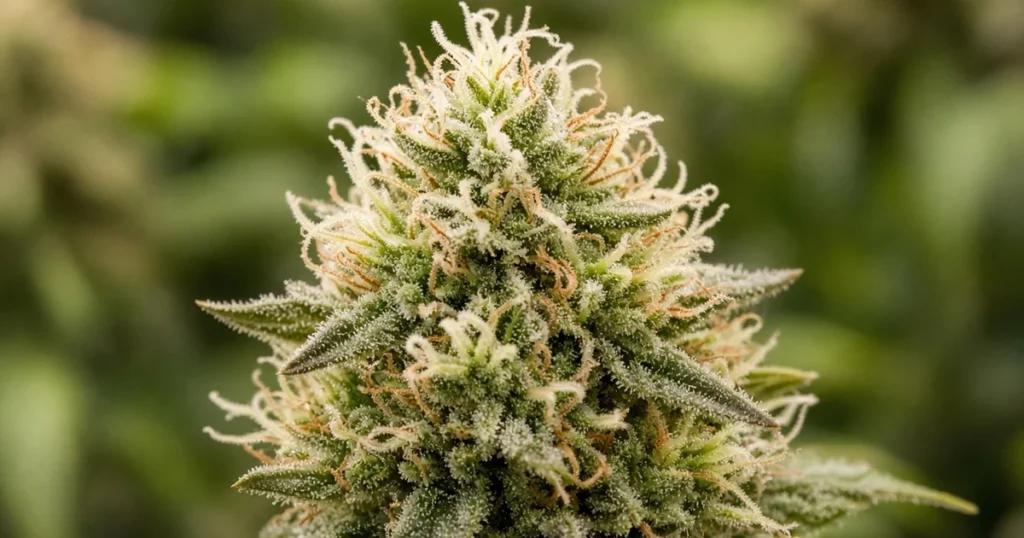
Week 5 of flowering is when a photoperiod cannabis plant stops looking like a bush with white hairs and starts looking like a mature flowering plant. Buds fatten, the smell often gets stronger and the plant puts most of its effort into flowers. It is also a week when problems, especially mold in dense buds, can reduce bud quality and size. Below, you will find what you should see this week, a simple checklist, and how to keep bud rot out.
Where week 5 sits in the flowering stage
The University of Saskatchewan’s home growing guide, a Canadian university guide that we use here for growing basics, splits flowering into early and late phases. It says early flowering lasts “for about 3 weeks” for most common varieties, and that this is when stems stretch in what growers call “The Stretch.” Late flowering then begins “when the plant has stopped growing vertically” and is “now exclusively focused on producing flowers.” The guide says “late flowering lasts for approximately four to six weeks for most commonly available varieties.”
So for a typical eight to ten week strain, week 5 usually falls early in late flower. For many strains the stretch is over by now, and bud building is in full swing. Autoflowers run on their own clock, so count from when flowers first appeared rather than from a light change.
What you should see this week
Every strain differs, but many plants show these signs around week 5.
- Height has usually leveled off, though long flowering strains may still stretch.
- Bud sites are stacking into clusters along each branch.
- Resin is building. USask notes the plant “begins to produce sticky resin on the rapidly growing flowers.”
- The smell often gets stronger, though timing varies by strain.
- Many pistils (the white hairs) are often still white. USask explains they turn “from a healthy white to a rusty brown colour” as plants mature.
- Trichomes under a hand lens are often still mostly clear. USask says they change “from clear to cloudy to amber orange” as they mature.
- A few lower fan leaves may yellow as the plant moves nutrients into flowers. Heavy yellowing high on the plant is not normal.
Is it too early to harvest?
Yes, for nearly every photoperiod strain. USask puts most varieties at roughly eight to ten weeks after flowering starts, and says the most common way to judge ripeness is watching trichome heads. Clear trichomes in week 5 mean the plant is still building. Harvesting now can reduce final bud development and ripeness. Wait, and start checking trichomes more often from week 7 or so.
Should you flush now?
No. A flush, giving only plain water, belongs at the very end of flowering if you do it at all. Starting it at week 5 cuts nutrients during heavy bud growth. Our flushing guide at https://kindseed.com/everything-you-need-to-know-about-flushing-cannabis/ explains what research says about timing.
Your week 5 checklist
- Keep your light schedule exactly the same. For photoperiods that means 12 hours of uninterrupted darkness. USask says short day cannabis “requires approximately 12 hours (or more) of uninterrupted darkness” to flower.
- Do not prune branches now. USask’s warning is about early flower, where it says pruning branches “can cause excessive stretching beyond what would normally occur.” Big cuts in week 5 also add stress.
- Support heavy colas. USask notes some plants “may even require staking and support as the buds develop to hold up the increasing flower weight.”
- Keep feeding a bloom fertilizer per its label. USask says flowering plants need “more phosphorus, potassium and calcium and less nitrogen than in vegetative growth.”
- Water by weight. USask’s rule of thumb: when a pot “weighs half as much as when it is fully watered, it is time to irrigate.”
- Check humidity and airflow daily (see below).
- Inspect the inside of your densest buds every two or three days.
- Write notes: date, smell, trichome color and any problems.
Preventing bud rot in week 5
Dense, swelling buds hold moisture, which is exactly what gray mold needs. Utah State University Extension, writing about hemp, says Botrytis bud rot needs “cool temperatures (65-75°F), humidity, and moisture (rain or irrigation).” NC State Extension, also on hemp, agrees that “temperatures between 65-75°F, coupled with moist or humid conditions, are most conducive to the growth and dispersal of B. cinerea.”
What to do:
- Keep humidity low in flower. USU advises “keep relative humidity in greenhouse to below 50%,” and NC State says “reduce humidity (below 50% RH) in greenhouses.”
- Space plants and move air. USU lists proper spacing “to promote airflow.” USask suggests small fans low in a tent “to help move the air around in the under-canopy, which can help prevent issues with mold.”
- Water at the base and avoid wet foliage late in the day.
- Remove any infected bud right away. NC State says removing dead and infected plant parts “is essential to preventing, slowing, and stopping the spread of infection.”
- Keep the grow clean. USU says: “Disinfect planting and field tools and greenhouse spaces with a 10-15% household bleach solution.” Handle bleach with care. Follow the product label, wear gloves and eye protection, keep the area ventilated, never mix bleach with ammonia or other cleaners, and rinse tools afterward. USU also advises wearing a mask or taking care not to breathe mold spores.
USU is blunt: “Infections cannot be cured, so prevention is key.” Our full guide at https://kindseed.com/stoner-alert-smoking-moldy-cannabis/ shows how to spot mold so you can throw affected buds out. Do not smoke or eat moldy buds.
Week 5 targets at a glance
| Factor | What to aim for | Why |
|---|---|---|
| Dark period | 12 hours, unbroken (photoperiods) | Keeps plants flowering |
| Humidity | Below 50% RH (Extension greenhouse hemp guidance for bud rot) | Limits mold |
| Airflow | Gentle air through and under the canopy | Dries buds, limits mold |
| Feeding | Bloom formula, per label | More P, K and Ca, less N |
| Pruning | Avoid | Prevents stress and extra stretch |
Troubleshooting
| What you see | Possible cause | What to do |
|---|---|---|
| Gray fuzz or brown mush inside a bud | Bud rot | Remove the whole bud, lower humidity and add airflow |
| Plant still stretching hard | Long flowering sativa type or light leak | Check for light leaks in the dark period |
| Fan leaves yellowing from the top | Possible nutrient or root issue | Check feeding and drainage, and test runoff if you can |
| Weak smell, small buds | Possibly low light or stress | Check light distance and dark period |
| Colas bending or snapping | Heavy buds | Stake or trellis now |
| New white hairs suddenly appear late | Possibly stress or light leaks | Seal leaks and keep schedule steady |
Looking ahead to the final weeks
From here, buds keep swelling. USask notes that during the final couple of weeks “new flower growth slows and existing flowers swell.” Keep conditions steady, watch for mold, and begin regular trichome checks. As harvest nears, our guide to the dark period before harvest explains why that step is unproven. It is at https://kindseed.com/48-hours-of-darkness-before-cannabis-harvest/.
FAQ
What happens in week 5 of flower?
For most photoperiod strains, the stretch is over and the plant is building buds. Buds stack and fatten, resin and smell increase, pistils are often still mostly white and trichomes are often still mostly clear.
Is it too early to harvest at week 5?
Yes, for nearly all photoperiod strains. Most varieties take roughly eight to ten weeks of flowering. Clear trichomes mean the plant is still developing.
Should I flush at week 5 of flower?
No. Flushing, if you do it at all, belongs at the very end of flowering. Starting at week 5 cuts nutrients during the heaviest bud growth.
Can I prune or defoliate in week 5?
It is best to avoid pruning branches now. The University of Saskatchewan guide warns that pruning in early flower can cause excess stretching, and big cuts this late add stress.
How do I prevent mold in week 5?
Keep humidity low, space your plants, move air through and under the canopy, water at the base, check dense buds often and remove any moldy bud right away.
Sources
- University of Saskatchewan (Canadian university guide), Gardening at USask: Cannabis (https://gardening.usask.ca/gardening-advice/sorted-by-plant/cannabis.php)
- Utah State University Extension, Bud Rot (Botrytis spp.) (https://extension.usu.edu/planthealth/ipm/notes_ag/hemp-bud-rot)
- NC State Extension, Gray Mold of Industrial Hemp (https://content.ces.ncsu.edu/gray-mold-of-industrial-hemp)