48 Hours of Darkness Before Cannabis Harvest: Does It Work?
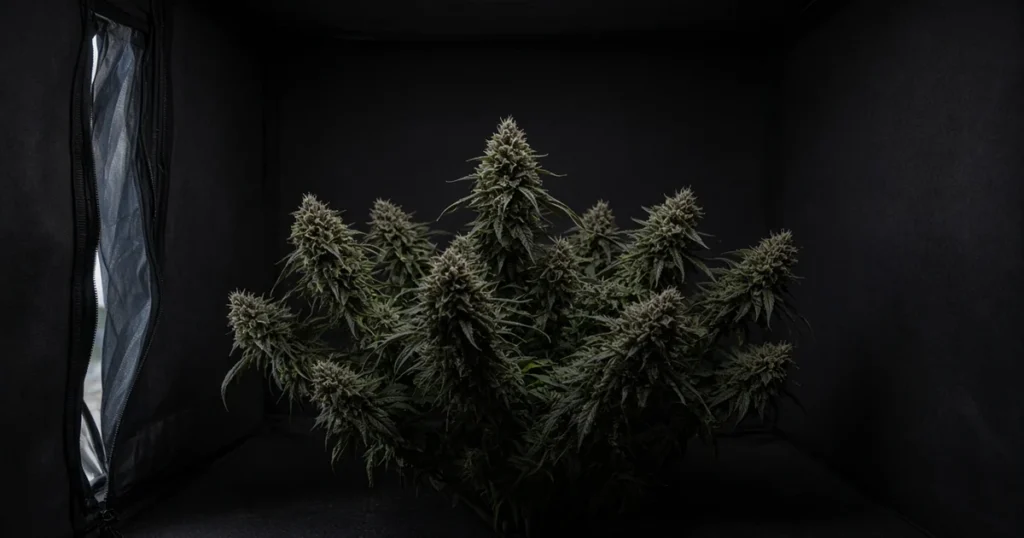
Some growers turn the lights off for 48 or 72 hours before they chop, hoping for more resin or THC. Others search for “48 hours of light before harvest” and wonder if the opposite works. Here are straight answers to both questions. The short version: the sources we reviewed for this article did not turn up a controlled, published study showing that a dark period before harvest raises THC or terpenes. It is a grower tradition, not a proven technique. Here is what we know about light and darkness, and the real risk to watch.
What the evidence says
There is a lot of confident talk about pre harvest darkness online. Large THC gains are often claimed online. We could not find a published, peer reviewed study behind those claims, so we do not repeat any figure as fact. That does not prove a dark period never helps. It means nobody has shown it under controlled conditions yet. Until controlled research is published, count any claimed potency gain as unproven.
The plant science we do have is about how light controls flowering, not about a final dark period boosting potency.
How light and darkness control cannabis
Most cannabis flowers in response to long nights. The University of Saskatchewan’s growing guide, a Canadian university guide we use here for growing basics, says short day cannabis “requires approximately 12 hours (or more) of uninterrupted darkness” to start flowering. UGA Extension, writing about hemp, says “most hemp cultivars will flower when exposed to day lengths of fewer than approximately 13 to 14 hr.”
Autoflowers are different. USask explains they begin to flower “based on age and/or maturity, instead of the length of darkness,” and UGA says autoflowering cultivars “initiate flowering a certain number of days after seeding, regardless of the day length.” So a dark period cannot do the same thing to an autoflower that a light schedule change does to a photoperiod plant.
By harvest, most flower development has already happened, so the question is only whether two dark days change what is already there, and that has not been shown.
What about 48 hours of light before harvest?
The same logic applies. Leaving lights on continuously in the final days has no published evidence of benefit either. For photoperiod plants, long light periods are what growers use in the vegetative stage. Changing the schedule right before harvest may add stress and will add electricity cost.
What actually matters more for potency
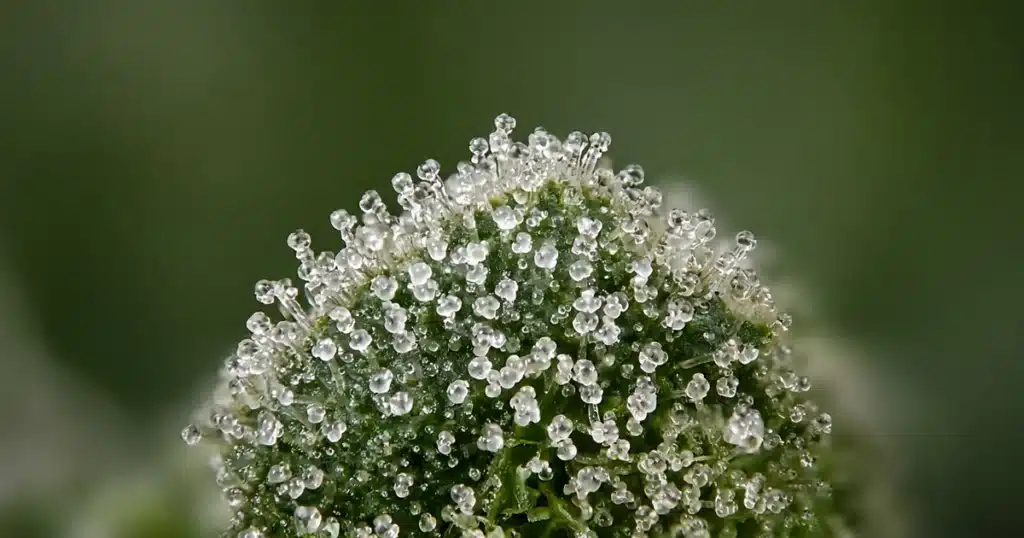
If the goal is the most resin and the best smell, harvest timing has far better support than a dark period. USask describes harvesting when trichome heads “first begin to go from cloudy to amber,” and says “there is usually about a 5-day window where peak ripeness is more or less maintained, after which the trichomes begin to degrade and cannabinoid levels fall.” Genetics, light intensity during flower, plant health and careful drying all matter too. Getting those right gives you a better shot at quality, while a dark period is unproven.
The real risk: mold in the dark
The bigger concern is moisture. A dark, closed tent with no lights running can get cooler and more humid, so watch the actual temperature and humidity, and mature buds are at their densest. That is the setting gray mold likes. NC State Extension, writing about hemp, says “temperatures between 65-75°F, coupled with moist or humid conditions, are most conducive to the growth and dispersal of B. cinerea.” Utah State University Extension, also on hemp, adds that bud rot may be an issue “under prolonged (one week or longer) greenhouse humidity or cool outdoor rains.”
UGA warns, for hemp, that “if floral material is significantly affected by botrytis, it can render the crop unmarketable.” Losing harvested buds to mold for an unproven boost is a bad trade.
If you decide to try it
If you want to test it yourself, do it carefully.
- Confirm the plant is truly ready. USask says ripeness is best judged by trichomes going “from clear to cloudy to amber orange.”
- Inspect the densest buds for any sign of mold first. Do not run a dark period on a plant that already has rot.
- Keep fans and dehumidifier running while the lights are off.
- Keep the dark period short, and keep airflow and humidity under control the whole time.
- Check humidity during the dark period, not just before.
- Base harvest timing on plant maturity, not on the dark period.
- Run a fair test: split clones or matching plants, give only one group darkness, and compare. Lab tests are the only way to know about THC.
Darkness during drying is different
Darkness after harvest is a separate, well supported practice. USask says “drying should also be done in the dark as light and UV can degrade the resin quality.” It recommends drying at about 61 to 73°F (the guide lists “16°C to 23°C”) and “between 50% and 60% relative humidity,” with gentle air movement. If you care about preserving what the plant made, a careful dark dry and cure matters more than a dark period before the chop.
Comparing pre harvest options
| Practice | Evidence | Main risk |
|---|---|---|
| 48 to 72 hours of darkness | No controlled published study | Humidity and mold |
| 48 hours of constant light | No published evidence | Possible stress, power cost |
| Harvest on time by trichomes | Supported by USask guidance | Low if done carefully |
| Dark, controlled drying | Supported by Extension guidance | Mold if humidity is too high |
Troubleshooting
| Problem | Possible cause | What to do |
|---|---|---|
| Musty smell after the dark period | Humidity built up with lights off | Inspect every bud, remove any with mold and harvest now |
| Buds look wet or soft | Poor airflow | Run fans and lower humidity |
| No visible difference after darkness | Expected, with no proven effect | Harvest and dry carefully |
| Autoflower did not respond | Autos flower by age or maturity, not darkness | Harvest by trichomes |
| Mold found during drying | Room too humid or crowded | Space branches, add airflow, check humidity |
For mold signs, see https://kindseed.com/stoner-alert-smoking-moldy-cannabis/. For the weeks before harvest, our week 5 guide at https://kindseed.com/week-5-flower/ covers conditions that keep buds healthy.
FAQ
Does 48 hours of darkness before harvest increase THC?
We did not find a controlled, published study showing that it does. Claims of large THC gains are not backed by peer reviewed research, so count them as unproven.
Should I give my plants 48 hours of light before harvest?
There is no published evidence that constant light before harvest helps. Changing the schedule at the end may add stress and will add power cost.
Is a dark period before harvest risky?
It can be. Lights off often means cooler, more humid air around dense, mature buds, and Extension sources writing about hemp say cool, humid conditions favor gray mold.
Does darkness work on autoflowers?
Autoflowers flower by age or maturity rather than by the length of darkness, so a dark period does not act on them the way a light schedule change acts on photoperiod plants.
Should cannabis be dried in the dark?
Yes. The University of Saskatchewan guide says drying should be done in the dark because light and UV can degrade resin quality, at about 61 to 73°F and 50 to 60 percent relative humidity.
Sources
- University of Saskatchewan (Canadian university guide), Gardening at USask: Cannabis (https://gardening.usask.ca/gardening-advice/sorted-by-plant/cannabis.php)
- UGA Extension Bulletin 1530, Industrial Hemp Production in Georgia (hemp research) (https://fieldreport.caes.uga.edu/publications/B1530/industrial-hemp-production-in-georgia/)
- NC State Extension, Gray Mold of Industrial Hemp (https://content.ces.ncsu.edu/gray-mold-of-industrial-hemp)
- Utah State University Extension, Bud Rot (Botrytis spp.) (https://extension.usu.edu/planthealth/ipm/notes_ag/hemp-bud-rot)