
Aquaponics Cannabis: Can Fish Feed Your Plants?
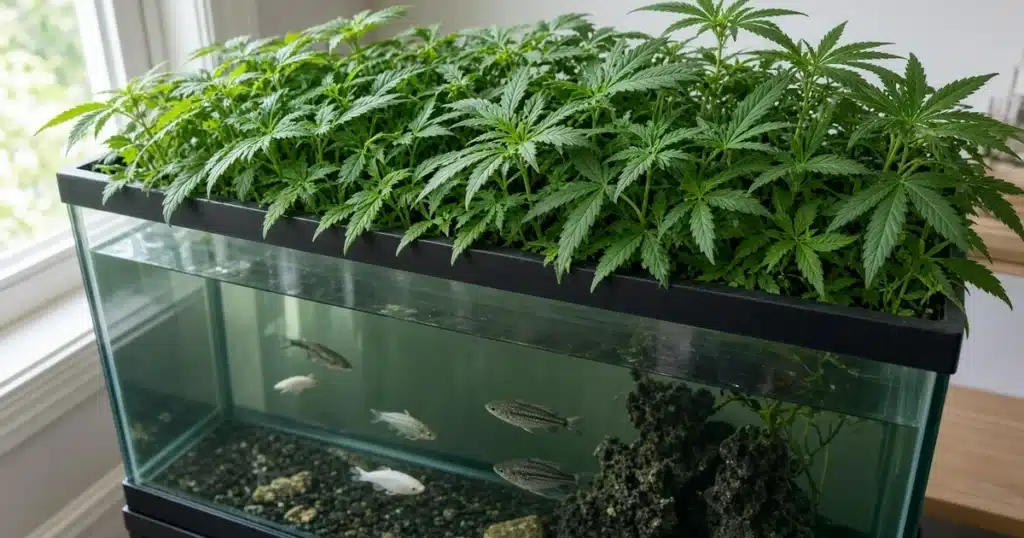
An aquaponics cannabis setup links a fish tank to a hydroponic grow bed. Fish waste releases ammonia, nitrifying bacteria turn it into nitrite and then nitrate, and plants take up the nitrate. One general aquaponics guide, not a cannabis source, notes that potassium is often added to support plant growth.
How Does an Aquaponic System Feed Plants?
Aquaponics joins fish farming and hydroponics in one loop. The Southern Regional Aquaculture Center explains that fish excrete ammonia, bacteria convert that ammonia to nitrite and then to nitrate, which plants can take up (SRAC). The bacteria live in a biofilter, and the plants take up nitrate from the water before it flows back to the fish. The source covers aquaponics in general, not cannabis.
Do Aquaponic Systems Need Added Nutrients?
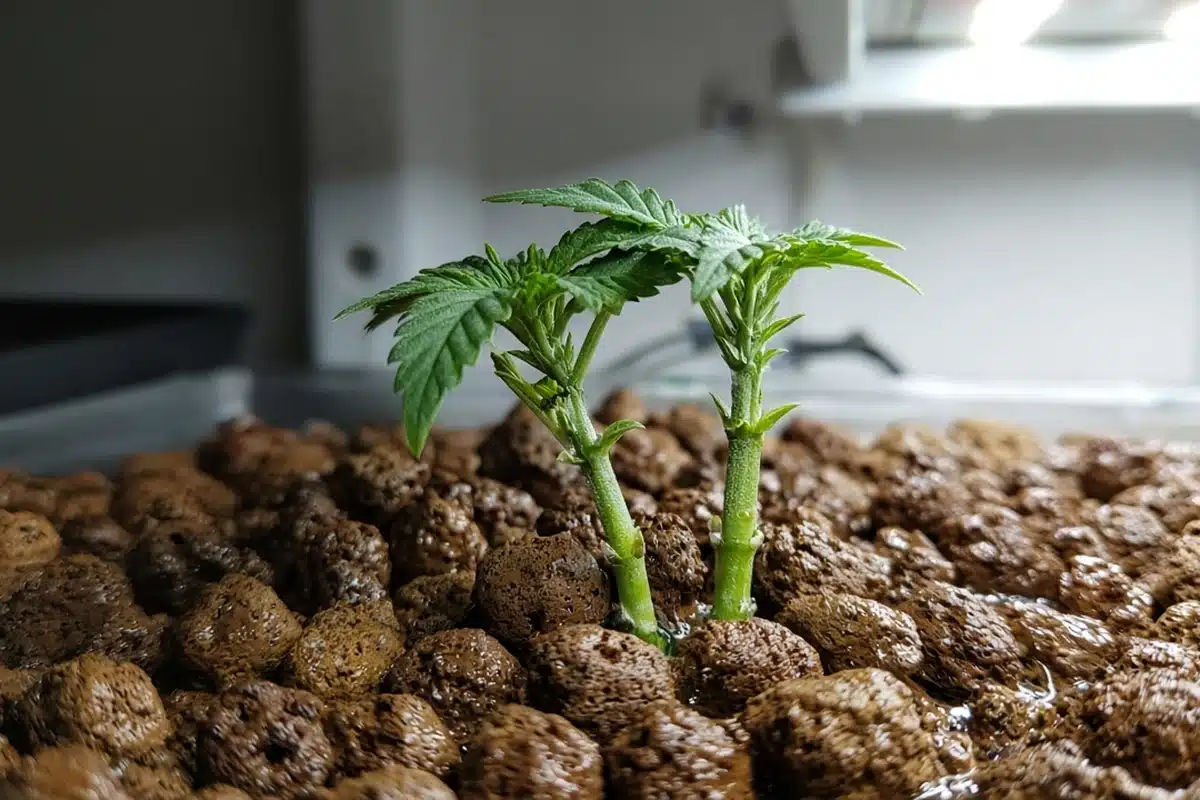
Often, yes. The SRAC guide notes that potassium is often supplemented in aquaponic systems to support plant growth (SRAC). There is little research on what cannabis needs from an aquaponic loop, so growers who try it watch the plants for shortfalls. Many fertilizers and sprays are not made for use around fish, so any additive must be safe for the fish and the bacteria as well as the plants. The guide to organic vs synthetic fertilizer explains the wider choice. Check the product label and local rules.
What Does an Aquaponics Loop Need?
An aquaponics loop needs more than a tank and a bed. The SRAC guide describes a biofilter and solids removal as part of the system. Growers also run a pump to move water between the tank and the bed and use a test kit for ammonia, nitrite, nitrate and pH. The table below lists each part and its upkeep.
Aquaponics Loop Parts
| Part | Job | Upkeep |
|---|---|---|
| Fish tank | Produces waste that becomes plant food | Feed fish and watch water quality |
| Biofilter | Holds bacteria that turn ammonia into nitrate | Give it time to establish |
| Grow bed | Holds the cannabis roots | Keep media clean and airy |
| Pump | Moves water between tank and bed | Check flow daily |
| Test kit | Tracks ammonia, nitrite, nitrate and pH | Test on a set routine |
Is Aquaponics Worth It for a Home Grower?
It depends on whether you want to keep fish. An aquaponics loop runs every day, and the fish need care even between grows. Startup takes time while the bacteria establish. Growers who enjoy the system like the closed loop, which fits the guide to an eco friendly grow room. Growers who want a simpler start often choose another option from the guide to indoor grow systems.
Curious about a small loop? Start with feminized seeds or compact autoflower seeds.
Sources
General horticulture sources below are not cannabis studies. Their findings are reported for the settings they studied, and cannabis use is described as grower practice.
Aquaculture extension guidance and grower practice sit behind these aquaponics notes, general growing information for Kind Seed Co readers.
FAQ
What fish are used in aquaponics?
Home aquaponics growers often use hardy freshwater fish that tolerate a range of water conditions, and some keep ornamental fish instead of food fish. The best choice depends on water temperature and how much care you can give. The fish are living animals that need daily feeding and clean water, so pick a species you can keep well.
Can you add nutrients to an aquaponics system?
Yes, with care. The SRAC guide notes that potassium is often supplemented in aquaponic systems to support plant growth. Anything added to the water reaches the fish and the bacteria too, so growers use only products that are safe for every part of the loop, add them slowly and test the water before and after.
How long does an aquaponics system take to start?
A new loop needs time for nitrifying bacteria to build up in the biofilter before they can turn fish waste into nitrate. Growers test ammonia and nitrite during this period and add plants once those readings settle. Letting the biofilter establish first protects both the fish and the plants.
Does aquaponic cannabis taste different?
Grower opinions vary, and flavor depends on genetics, growing conditions, drying and curing more than on the system alone. Any feed or treatment added to the loop also reaches the fish, so read it closely first. Check the product label and local rules.


