
Cannabis Chemotypes: Types I to V Explained
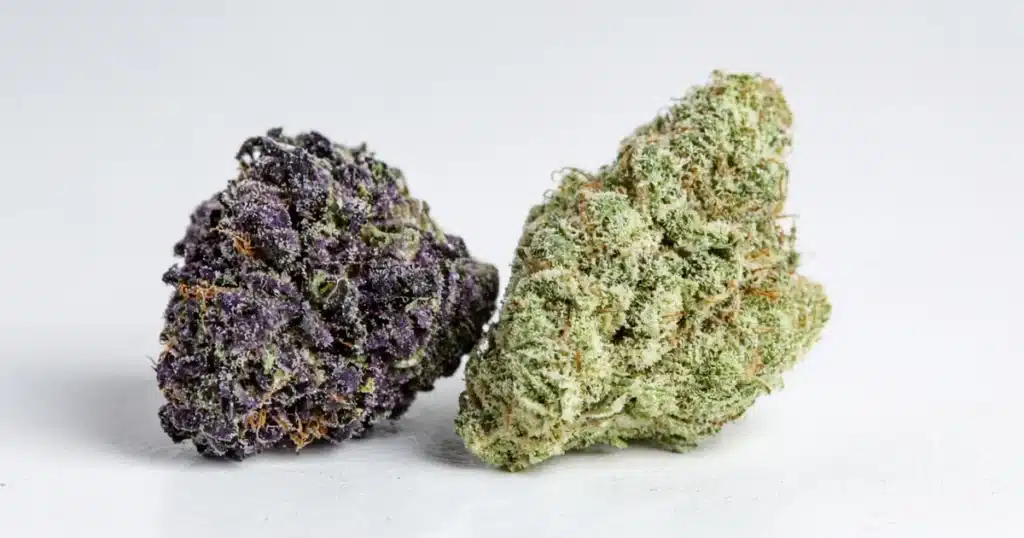
Cannabis chemotypes group plants by their main cannabinoids. Type I is THC dominant, Type II is intermediate with both THC and CBD, and Type III is CBD dominant. Hemp research adds Type IV, which is CBG dominant, and Type V, with almost no cannabinoids. A 2003 cross study tied the first three to two versions of one gene.
What Is a Cannabis Chemotype?
A chemotype, or chemical phenotype, groups plants by the main cannabinoids they make. It is a chemistry label, not a plant shape or a strain name. Researchers use it because two plants that look alike can make very different cannabinoids. The cannabis terms explained post gives a short definition. This post covers the five types and how they are inherited.
What Are Types I, II and III?
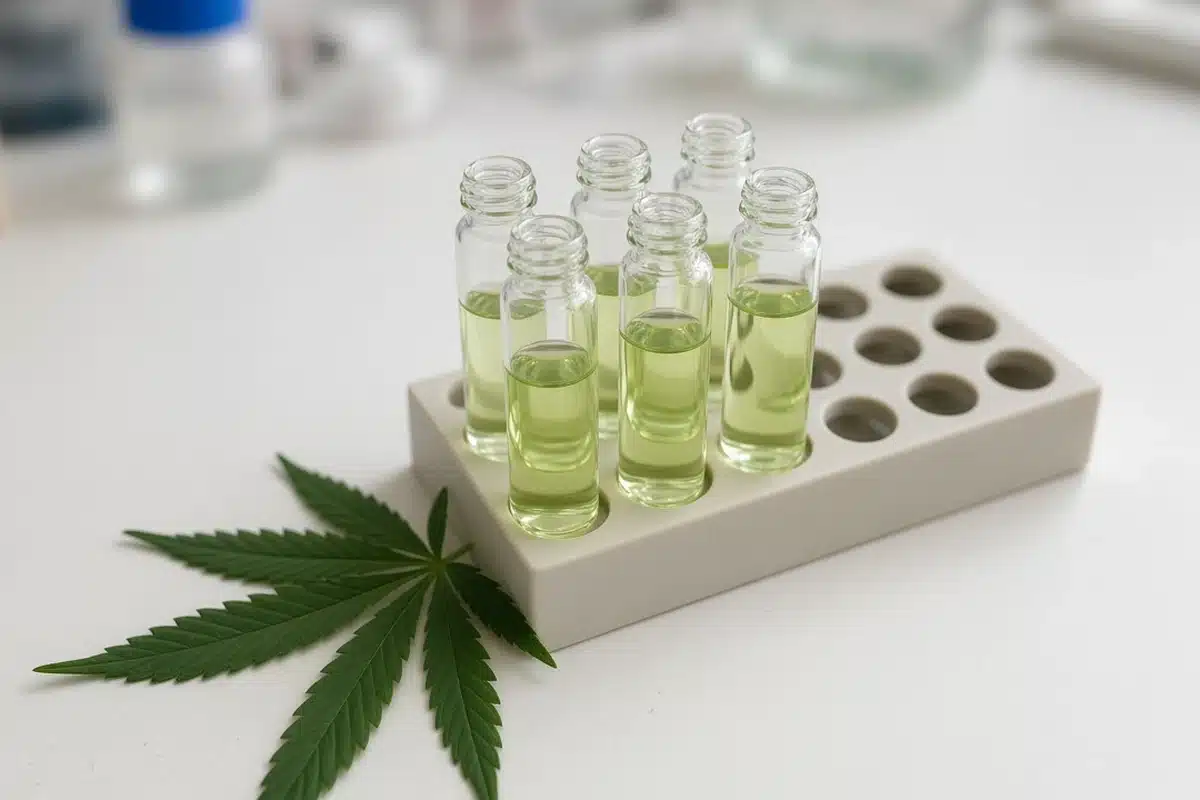
A 2021 review in Analytical Sciences describes the first three types. Type I is THC dominant, with total THC much greater than total CBD. Type II is intermediate, with both THC and CBD. Type III is CBD dominant. The review ties these types to two codominant versions of one gene, called BT and BD (Analytical Sciences 2021). The guide to thc vs cbd explains the two compounds, and the post on total active cannabinoids explains how labs report them.
Cannabis Chemotype Groups
| Type | Main cannabinoid pattern | How to confirm |
|---|---|---|
| Type I | THC dominant | Lab report |
| Type II | Mixed THC and CBD | Lab report |
| Type III | CBD dominant | Lab report |
| Type IV | CBG dominant (hemp research) | Lab report |
| Type V | Almost no cannabinoids (hemp research) | Lab report |
What Are Type IV and Type V Cannabis?
Types IV and V come from hemp research. A 2025 study in the Journal of Cannabis Research describes Type IV as fiber-type hemp dominated by CBG, and Type V as plants largely devoid of cannabinoids (Journal of Cannabis Research 2025). Those are hemp findings, and drug-type plants may not follow the same pattern. The post on what is cbg covers the compound behind Type IV.
How Are Chemotypes Inherited?
A 2003 study in Genetics crossed pure CBD and pure THC plants. In the second generation, pure CBD, mixed and pure THC plants appeared in a 1:2:1 ratio, which the authors explained with the codominant BD and BT alleles (de Meijer et al. 2003). In plain terms, in that cross a plant with two THC versions made mainly THC, a plant with two CBD versions made mainly CBD, and a plant with one of each made a mix. Other crosses can vary from the ratio by chance.
Interested in balanced or CBD-rich plants? See the cbd seeds and feminized seeds, and confirm chemistry with a lab report.
Sources
Some sources below studied hemp rather than drug-type cannabis. Their findings are reported as hemp results.
- Bolchi et al. 2021, Analytical Sciences 37(12), Development and Early Identification of Cannabis Chemotypes during the Plant Growth (review)
- Ceresa et al. 2025, Journal of Cannabis Research, Targeting the antioxidant, antimicrobial and anti-inflammatory activity of non-psychotropic Cannabis sativa L., a comparison with chemotype V (hemp research, PMC12542492)
- de Meijer et al. 2003, Genetics, The inheritance of chemical phenotype in Cannabis sativa L. (PMC1462421)
- Watts et al. 2021, Nature Plants, Cannabis labelling is associated with genetic variation in terpene synthase genes
Published research is the basis for this chemotype explainer. Kind Seed Co gives no cannabinoid or effect promise in it.
FAQ
Is chemotype the same as indica or sativa?
No. Chemotype describes which cannabinoids a plant makes, while indica and sativa are everyday labels. A 2021 study in Nature Plants found those labels did not accurately reflect genetic relatedness and lined up with only a few terpenes, such as myrcene with Indica. Plants with the same label can differ, so a lab report is the way to know.
Can one strain have more than one chemotype?
Yes, if the line is not stable for the cannabinoid genes. The 2003 Genetics study showed that crossing a THC plant with a CBD plant and then crossing the offspring produced pure THC, mixed and pure CBD plants in the next generation. Seeds from a line that still carries both versions can grow into different chemotypes.
How do you find out a plant's chemotype?
A lab report is the standard way to check. A cannabinoid lab report shows how much THC, CBD, CBG and other compounds a sample holds, and the ratio between them points to the chemotype. Smell, leaf shape and plant size do not show chemotype. Testing a sample from each plant you care about gives the clearest answer.
Do seeds come labeled by chemotype?
Not usually by type number. Seed listings tend to describe THC or CBD levels in everyday words rather than Type I to V. Those descriptions are a breeder's guide, not a test. If chemotype matters, plan to confirm it with a lab report, and note that a CBD-rich type alone does not show a plant meets any THC limit.


