
Cannabis Internode Spacing: Nodes Explained
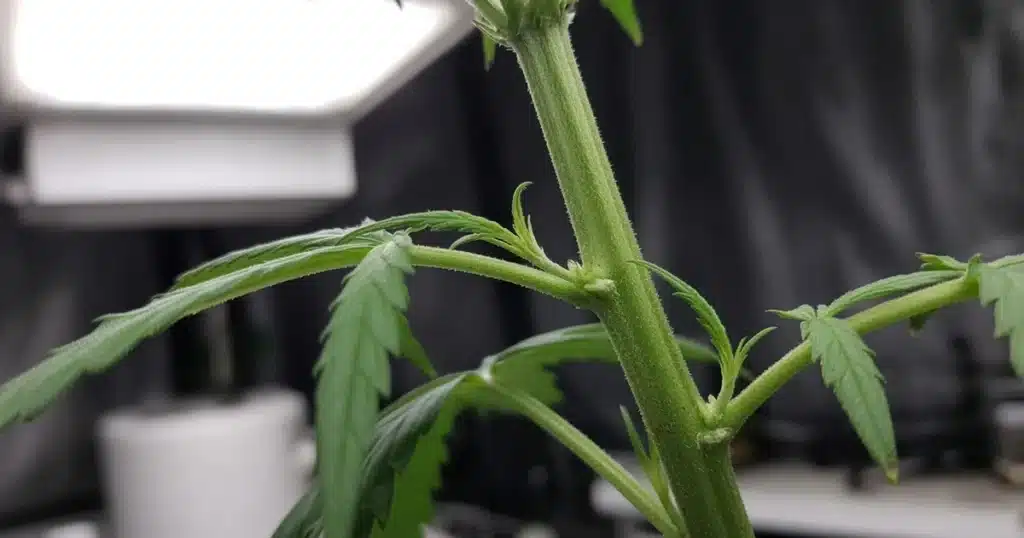
Cannabis internode spacing is the length of stem between two nodes, the points where leaves and branches grow. Tight spacing gives a bushy plant with bud sites close together. Long gaps can come from genetics or light. In soybean research, not cannabis, low light intensity was the main driver of longer internodes, with far-red light adding more.
What Is a Node on a Cannabis Plant?
A node is a point on the stem where leaves and branches grow. At each node, a leaf stalk grows out, and a small bud in the axil, where leaf meets stem, can become a new branch. In flowering plants, nodes are also where flower sites form. The section of stem between two nodes is the internode. Counting nodes is a simple way to track how a plant is growing.
What Causes Long Internode Spacing?
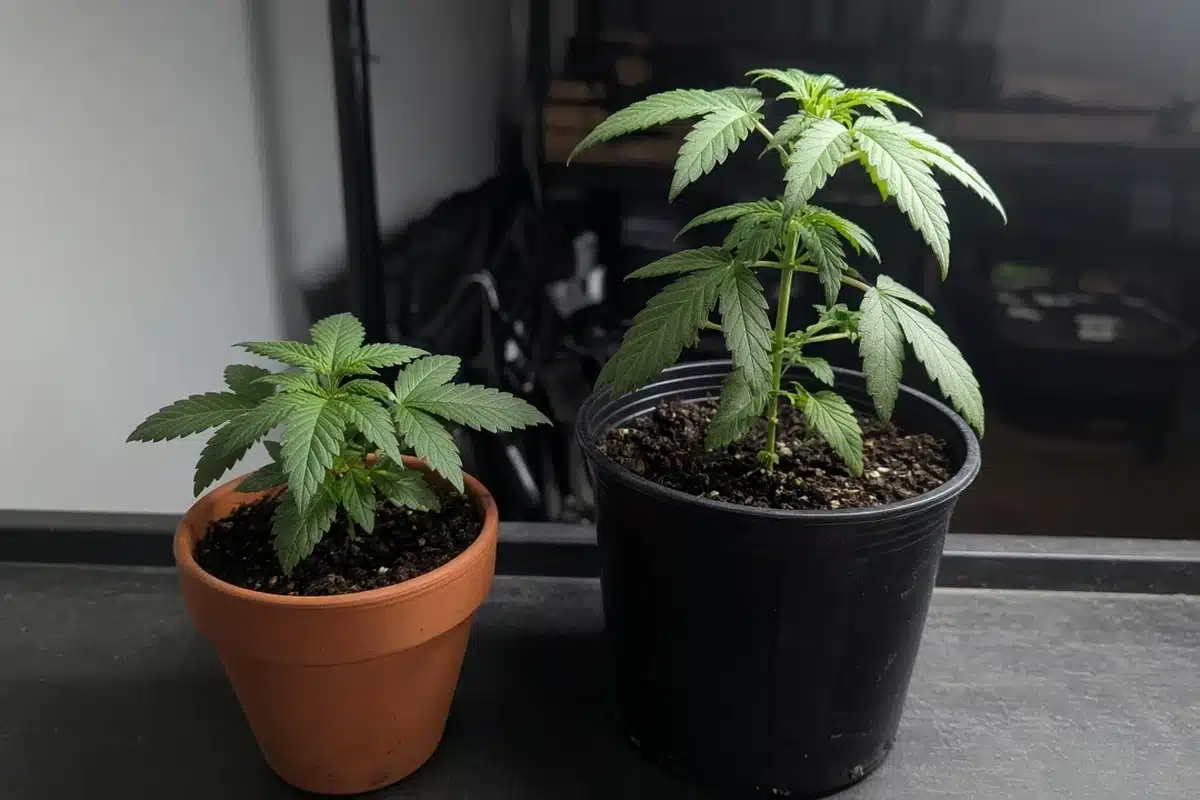
Genetics play a part, since some plants grow more open than others. Light matters too. A 2019 study in Agronomy on soybean found that internode elongation was mainly driven by low light intensity, with an added effect from a low ratio of red to far-red light (Agronomy 2019). That is soybean research, not cannabis. Growers still check light height and brightness when gaps stretch. The guide to cannabis stretching covers ways to control it.
Internode Spacing Clues
| What you see | Possible cause | What to check |
|---|---|---|
| Long gaps on a seedling | Weak or distant light, or genetics | Light height and brightness |
| Long gaps after the switch to flower | Flowering stretch | Plan training before the flip |
| Tight, even gaps | Genetics or strong light | Keep conditions steady |
How Do Leaves Change Along the Stem?
Leaf arrangement changes as a cannabis plant grows. A 2023 study in Plants on the cultivar White Widow found the leaves shift from opposite pairs to an alternating pattern around the twelfth node (Plants 2023). Lower on the stem, two leaves sit at each node across from each other. Higher up, the leaves take turns along the stem. The study covered one cultivar, so the point of change can vary.
Why Does Internode Spacing Matter for Training?
Training works at the nodes. Growers cut just above a node when topping, which the guide to topping explains, and they bend stems to open the plant, as covered in the guide to low stress training. Tight spacing gives more nodes in a short space, and long spacing can leave gaps between bud sites. Watching spacing early helps growers plan training before flowering.
Planning a compact grow? Start with feminized seeds or autoflower seeds.
Sources
One source below is soybean research, not cannabis, and is cited as such. The other is a peer-reviewed study of one cannabis cultivar.
- Agronomy 2019 9(8):428, PPFD and R:FR effects on soybean shoot organs (OTHER SPECIES: soybean)
- Morphological Characterization of Cannabis sativa L. Throughout Its Complete Life Cycle, Plants 2023 12(20):3646 (PMC10610221, cv. White Widow)
Plant research and grower practice both feed into this internode explainer from Kind Seed Co, written as general growing information.
FAQ
Is long internode spacing bad?
Not always. Some plants grow more open by nature, and stretch after the switch to flower is normal. Growers worry most when long gaps come with a thin, floppy stem. In soybean research, not cannabis, low light intensity was the main driver of longer internodes, so growers often check light first.
Do sativas have longer internodes?
Growers often say so. Plants with sativa heritage are commonly described as taller and more open, with longer gaps between nodes. Those labels are loose, though, and individual plants vary. Light and growing conditions still shape spacing, so spacing can differ between plants with the same label.
Can you fix spacing after it has grown?
Not directly. An internode that has already stretched will not shrink. Growers improve conditions so new growth stays tighter, often by adjusting light height or brightness in small steps and following the light maker's guidance. Training can also help, such as bending tall stems so lower nodes get more light. The guide to stretching covers more ways to manage it.
Where do you cut above a node?
Grower practice is to cut the main stem just above a node, leaving the node and its small branch buds in place. Those buds can then grow into new tops. Clean, sharp tools make a neat cut. The topping guide explains when and where growers make the cut on a young plant.


