
Cannabis Runoff: How Much and What It Tells You
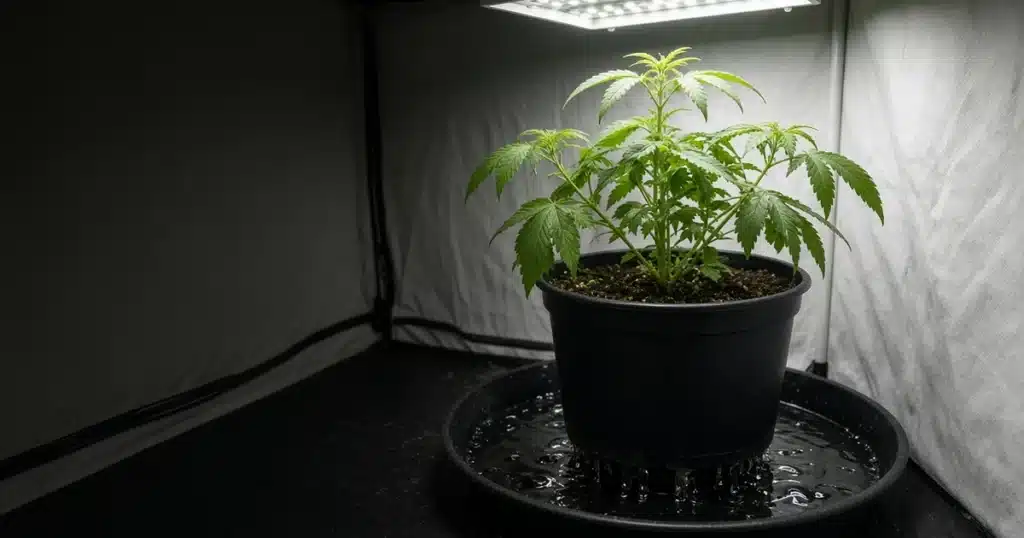
Cannabis runoff is the water that drains out of the bottom of a pot after watering or feeding. Extension researchers call the share that drains the leaching fraction. A Virginia nursery guide suggests about 15 to 30 percent for container nursery crops, not cannabis. Measuring it shows whether each watering reaches the whole root zone.
What Is Cannabis Runoff?
Runoff is the water that leaves the drainage holes after the mix in a pot is soaked. Virginia Cooperative Extension defines the leaching fraction as the volume of water leached from the bottom of a container divided by the volume of water applied (VCE SPES-128). So a leaching fraction of 0.2 means one fifth of the water ran out. The source covers container nursery crops, not cannabis, and growers borrow the idea for potted plants. The watering guide covers when to water.
How Much Runoff Should You Aim For?
The Virginia guide says nursery best management practices suggest a leaching fraction of about 15 to 30 percent (VCE SPES-128). It also notes that a target at 30 percent or lower calls for closer watching so plants still get enough water. There is no tested cannabis target, so treat the range as nursery guidance. The guide links the right amount to the salt in the water, shown in the table below.
Suggested Leaching Fraction by Water EC
Copied from Table 1 of the Virginia Cooperative Extension leaching fraction guide, adapted from Evans 2017. Container nursery crops, not cannabis.
| EC of applied water (dS/m) | Leaching fraction |
|---|---|
| Above 2.0 | 0.3 (30 percent) |
| 1.5 | 0.2 (20 percent) |
| Below 1.0 | 0.1 (10 percent) |
Why Do Growers Want Some Runoff?
As plants use water, salts are left behind in the mix and become more concentrated in the water that remains. The Virginia guide explains that leaching is needed to flush out water that has built up salts (VCE SPES-128). Too little runoff lets that buildup grow, and far too much wastes water and nutrients. Runoff is not the same as a flush before harvest, which the guide to flushing cannabis covers.
How Do You Measure Your Leaching Fraction?
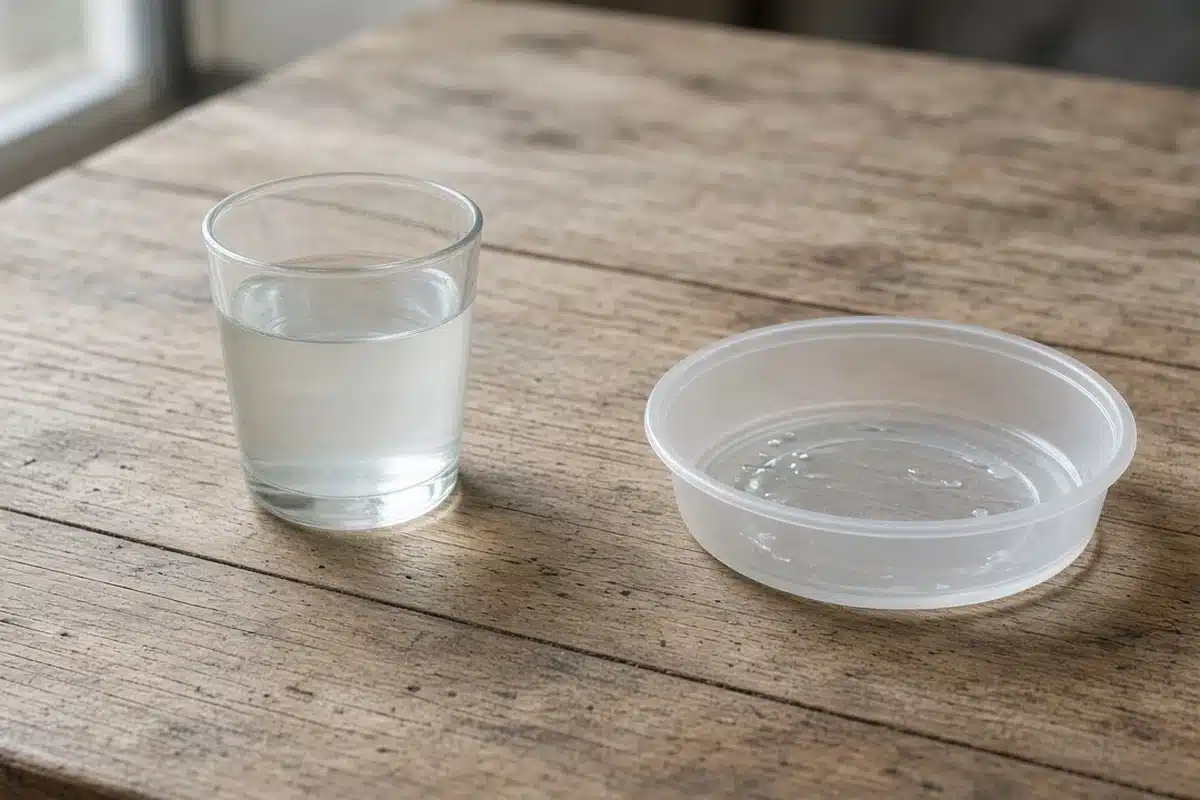
The Virginia guide describes a simple volume method. Set an empty container beside the plant to catch the water applied, water as usual, wait one hour, then measure what drained from the pot and what landed in the empty container. Divide the drained amount by the applied amount (VCE SPES-128). A Montana State University guide that includes hemp says leaching of 10 to 20 percent is expected when watering for its PourThru test (e-GRO). Runoff EC is one clue to salt buildup. Runoff pH is covered in the guide to understanding pH. Check the product label and local rules.
Planning a container grow? Start with feminized seeds or compact autoflower seeds.
Sources
General horticulture sources below are not cannabis studies. Their findings are reported for the settings they studied, and cannabis use is described as grower practice.
- Virginia Cooperative Extension, Leaching Fraction: A Tool to Schedule Irrigation for Container Grown Nursery Crops, SPES-128
- e-GRO Alert 2021, Montana State University, PourThru Method for Large Containerized Crops
Extension research on container irrigation and grower practice sit behind these runoff notes, general growing information for Kind Seed Co readers.
FAQ
Should plants sit in their runoff water?
Many growers empty saucers and trays soon after watering so the pot does not stand in drained water. When measuring, the Virginia guide suggests a spacer between the pot and the catch container so the mix does not soak the drained water back up. Catch the runoff, measure it, then pour it away.
Is runoff needed every watering?
Not always. The Virginia guide ties the leaching fraction to the salt level of the water, with cleaner water needing a smaller share of runoff. Some growers aim for a little runoff each time and others water lightly between fuller waterings. There is no set cannabis schedule, so watch the plant and the pot.
Is runoff the same as flushing?
No. Runoff is the share of water that drains out during a normal watering, which extension guides call the leaching fraction. Flushing usually means watering with plain water for a period, often before harvest, and is a separate practice with its own debate. This page covers runoff only and links to a full guide on flushing.
How do you measure how much runoff you got?
Put the pot in a clean saucer or tray, measure the water you pour in, wait about an hour, then measure what drained out. Divide the drained amount by the amount applied to get the leaching fraction. Use a plain cup for both readings, and treat any feed in the water with care. Check the product label and local rules.


