Cannabis Plant Respiration: How Plants Use Sugar for Energy
Quick answer: Respiration is the process cannabis uses to turn the sugar it made through photosynthesis into usable energy. Oregon State Extension calls it controlled oxidation inside living cells, essentially the reverse of photosynthesis. Respiration uses sugar and oxygen and gives off carbon dioxide and water. Unlike photosynthesis, it runs day and night in every living cell, including roots. Missouri Extension stresses that a plant only grows when the sugar it makes outpaces the sugar it uses up, which is why temperature, root oxygen and light all affect how well respiration supports growth.
What Is Plant Respiration?
Photosynthesis builds sugar. Respiration spends it. In its plant growth and development guide, Oregon State Extension writes that the carbohydrates a plant makes only become useful once they are converted to energy, which then fuels cell growth and new tissue. The process that releases that energy is respiration.
The guide likens it to a fire in a wood stove that releases heat, except that cells run the reaction slowly and under tight control. Sugar combines with oxygen and breaks down into carbon dioxide, water and energy. The same publication describes photosynthesis as a building process and respiration as a breaking down process.
For a plant, respiration does not mean breathing. There are no lungs. Gases move by simple diffusion in and out of cells, through the open spaces in leaves and out through the stomata.
Picture a cannabis plant running a simple sugar budget. During the day, leaves deposit sugar into the account through photosynthesis. All day and all night, every living cell withdraws from that account through respiration. What is left over at the end of each cycle is what the plant can invest in new growth. A plant with big daily deposits and modest withdrawals grows quickly. A plant with weak light and warm nights barely breaks even.
How Is Respiration Different From Photosynthesis?
The two processes mirror each other. Missouri Extension lays out the contrast in its Master Gardener guide to plant growth:
- Photosynthesis produces food, stores energy, uses water and carbon dioxide, releases oxygen and needs light.
- Respiration uses food, releases energy, produces water and carbon dioxide, uses oxygen and happens in light or dark.
Photosynthesis only happens in cells with chloroplasts, mostly in leaves. Respiration happens in all living cells, from root tips to flower buds. That is why roots, which never see light, still spend sugar around the clock. Every living cell in the stem, roots and flowers pays the same energy cost, day and night. The more living tissue a plant carries, the bigger its overnight bill, so large plants need strong light to stay ahead.
Our guide to photosynthesis in cannabis explains the sugar building half of this relationship.
Why Does Respiration Matter for Cannabis Growth?
Growth depends on the balance. Missouri’s guide puts the rule plainly: a plant grows only when the sugar it makes outweighs the sugar respiration uses up. Every gram of sugar spent on maintenance is a gram not used for new leaves, roots or flowers.
Oregon State describes the same balancing act from both sides. If respiration is much faster than photosynthesis, the plant lacks the energy it needs to grow, and growth slows or stops. If photosynthesis runs far ahead of respiration, photosynthesis itself slows.
The energy from respiration powers almost everything a cannabis plant does. According to the botany chapter from NC State Extension, respiration forms ATP, a molecule cells use to carry out their work. Building cell walls, taking up nutrients and moving sugars all draw on it. The post on how cannabis plants use sugars looks at where that sugar goes.
Flowering raises the stakes. Developing buds are busy, actively growing tissue, so they respire heavily and add to the plant’s daily energy bill. Strong light during flowering keeps deposits high enough to cover that cost. When light is weak late in flowering, respiration can eat into the margin that would otherwise build new flowers.
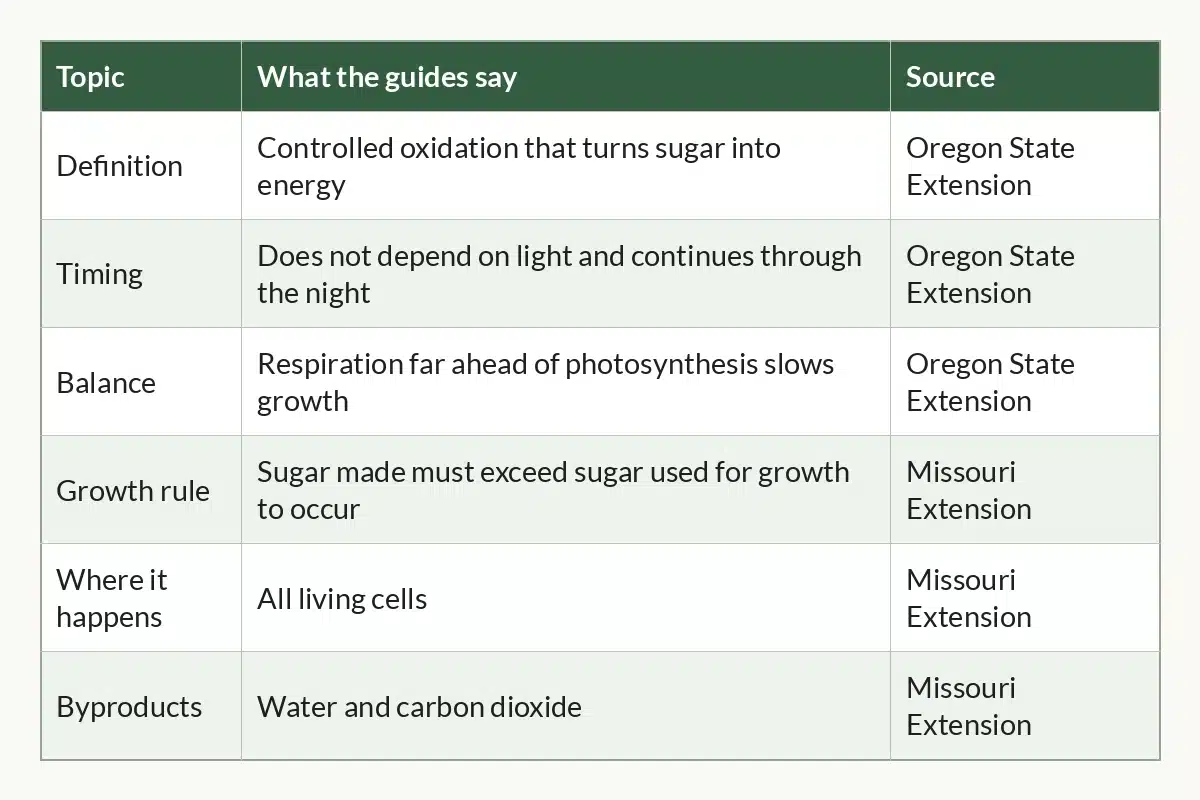
Cannabis Respiration at a Glance
| Topic | What the guides say | Source |
|---|---|---|
| Definition | Controlled oxidation that turns sugar into energy | Oregon State Extension |
| Timing | Does not depend on light and continues through the night | Oregon State Extension |
| Balance | Respiration far ahead of photosynthesis slows growth | Oregon State Extension |
| Growth rule | Sugar made must exceed sugar used for growth to occur | Missouri Extension |
| Where it happens | All living cells | Missouri Extension |
| Byproducts | Water and carbon dioxide | Missouri Extension |
How Does Temperature Affect Cannabis Respiration?
Respiration speeds up as temperature rises. University of Delaware Cooperative Extension, writing about vegetable crops, notes that hot nights above 75°F lead to greater cell respiration. In those crops, the extra respiration uses up stored sugars that would otherwise go into fruit and seeds. The article on heat effects in vegetable crops adds that respiration rises along with temperature.
That finding comes from vegetables in Delaware, not cannabis, but the principle applies to any plant. A warm dark period means the plant spends more of its daytime sugar just staying alive overnight. Oregon State adds that photosynthesis runs fastest between 65 and 85°F and falls off outside that range, so heat can cut sugar production while it raises sugar use.
For this reason, many indoor growers let the grow room cool a few degrees when the lights go off. A modest drop at night helps the plant keep more of what it made during the day. Day and night ranges appear in the guide to the best grow room climate.
Why Do Cannabis Roots Need Oxygen?
Roots respire too, and respiration needs oxygen. NC State explains that oxygen is plentiful above ground but can become limiting for seeds, roots and other underground parts. Well aerated soil supplies the oxygen roots need, while soil that stays saturated or compacted can starve them of it.
When roots cannot respire properly, they cannot produce the energy they need to absorb water and nutrients. NC State notes that a lack of soil oxygen limits growth and reduces overall uptake. That is why an overwatered cannabis plant can droop as if it were dry. Its roots are surrounded by water but lack the energy to use it.
Clones and seedlings face the same math. A cutting has no roots and only a few leaves, so it makes very little sugar while still respiring in every cell. Keeping clones under gentle light and moderate temperatures helps them avoid running their reserves down before roots form.
Root respiration also explains why root zone temperature matters. Warm roots respire faster and need more oxygen, yet warm water holds less dissolved oxygen than cool water. A root zone that is both hot and wet is a hard place for roots to work. Keeping containers out of direct sun and avoiding soggy mix helps roots keep up with their own energy needs.
How to Support Steady Respiration in Cannabis

- Cool the dark period slightly. Keep nights a few degrees cooler than days, without big swings.
- Avoid very hot nights. Ventilate or cool the room if night temperatures climb.
- Keep daytime temperatures moderate. Stay within the range where photosynthesis runs well.
- Use airy growing media. Choose mixes that drain well and hold air.
- Water, then let the mix dry back. Give roots time to get oxygen between waterings.
- Provide strong light. More photosynthesis means more sugar for respiration to use.
- Keep air moving. Fresh air supplies the carbon dioxide leaves need and removes stale, humid air.
Troubleshooting Respiration Problems
Plant droops in wet soil. Roots may lack oxygen. Let the mix dry back and improve drainage.
Slow growth in a hot room. Respiration may be eating into sugar reserves. Lower temperatures, especially at night.
Weak growth under dim light. Photosynthesis may barely cover respiration. Increase light intensity.
Roots look brown and soft. Waterlogged roots cannot respire well. Water less often.
Room swings widely between day and night. Large swings stress plants. Aim for a modest, steady drop.
Sources
- Oregon State University Extension, Plant Growth and Development (EM 9901): https://extension.oregonstate.edu/catalog/em-9901-plant-growth-development
- University of Missouri Extension, Plant Growth Processes (MG2): https://extension.missouri.edu/publications/mg2
- NC State Extension, Extension Gardener Handbook, Chapter 3 Botany: https://content.ces.ncsu.edu/extension-gardener-handbook/3-botany
- University of Delaware Cooperative Extension, Weekly Crop Update, heat effects on vegetables: https://sites.udel.edu/weeklycropupdate/?p=15224
FAQ
Do cannabis plants respire at night?
Yes. Respiration does not need light, so it keeps going through the dark period.
Is respiration the opposite of photosynthesis?
Roughly. Photosynthesis builds sugar and stores energy, while respiration breaks sugar down to release it.
Why do roots need oxygen?
Roots respire to make energy, and respiration requires oxygen from air spaces in the soil.
Does heat increase respiration?
Yes. Respiration rises with temperature, so hot nights use up more stored sugar.
Should my grow room be cooler at night?
A modest drop at night is common and helps the plant keep more of its daytime sugar.