
Cannabis Edema: Why Blisters Form Under Leaves
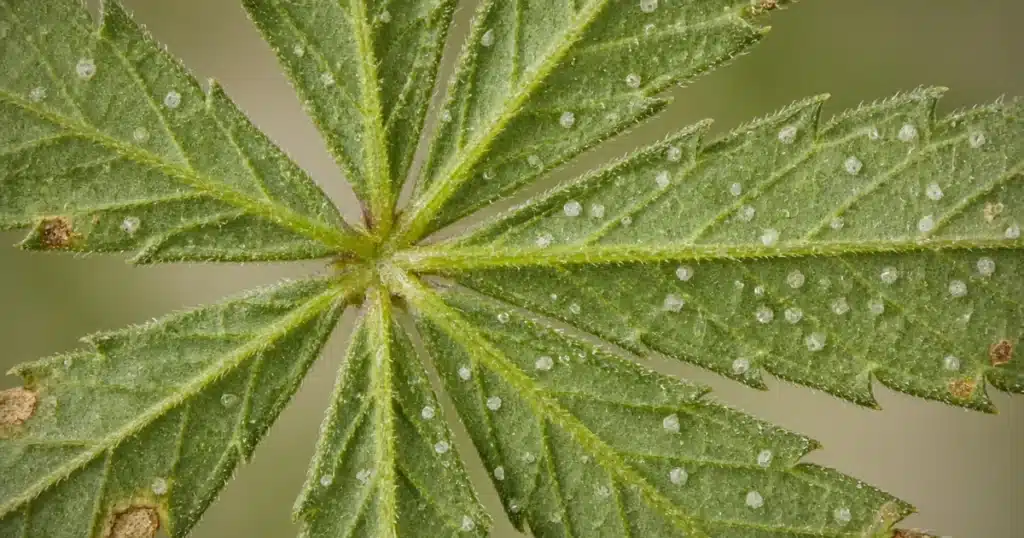
Quick answer: Edema is a nonliving disorder in which small blisters form on the undersides of leaves when roots take up water faster than the leaves can release it. University of Wisconsin plant pathologists describe the blisters as small, translucent and fluid filled at first, later bursting and turning tan and corky. UC IPM links edema to wet or waterlogged soil combined with reduced water loss from leaves, such as during cloudy weather or very high humidity. It is not caused by a pest or a germ. In cannabis, the fix is to water less often in cool, humid or dim conditions and improve drainage and airflow.
What Is Edema on Cannabis?
Edema, also spelled oedema, is a physiological disorder rather than an infection. The UC Statewide IPM Program page on edema calls it an abiotic or noninfectious problem and notes it is also known as corky scab. Nothing is spreading from plant to plant. The damage comes from the plant’s own water balance going wrong.
Wisconsin’s diagnostic clinic fact sheet on edema reports that it shows up often on houseplants, greenhouse plants and plants grown under plastic, and sometimes on vegetables in the field. Those are all settings with high humidity and limited air movement, which is why indoor cannabis grows can see it too.
Most cases are cosmetic. The Wisconsin fact sheet notes, though, that heavy blistering and scarring can reduce a plant’s ability to photosynthesize, and that extreme cases can ruin a greenhouse crop.
The Extension literature does not single out cannabis, but the plants named in these guides share a pattern with indoor cannabis. Kalanchoe, geraniums, tomatoes, peppers and cabbage all show edema when water uptake runs ahead of water loss. Maryland Extension notes that it is most often seen on cabbage in waterlogged soil and on container tomatoes during wet spring weather. Potted cannabis growing inside a humid tent faces much the same situation.
What Does Cannabis Edema Look Like?
Look at the undersides of leaves first. Wisconsin describes small translucent, fluid filled blisters forming mostly on older leaves, often starting near the margins. Held up to the light, the spots look paler than the surrounding tissue.
Over time the blisters can grow, merge, burst and scar. They then turn tan and corky. UC IPM describes the blisters as about a sixteenth of an inch across, occurring singly, in small groups or across large areas of a leaf. The Maryland Extension page on leaf blisters notes that the spots can often be seen from the upper side of the leaf as well.
Blisters can also appear on stems and, occasionally, on flowers. In bad cases, Wisconsin reports that leaves may shrivel, roll and drop.
Edema is easy to confuse with other leaf spots. Insect feeding, mineral deposits and fungal spots can all look similar at a glance. The raised, blister like texture on the leaf underside is the key clue. The post on what cannabis leaves can tell you helps sort out other common leaf changes.
Timing gives you another clue. Edema tends to follow a specific change in conditions, such as a run of cloudy days, a new watering routine or a cooler night temperature. If blisters appear soon after one of those changes and only on the leaf undersides, edema is the likely cause. Spots that spread steadily regardless of conditions point elsewhere.
What Causes Edema in Cannabis Plants?
Edema comes from an imbalance between water in and water out. Wisconsin explains that when soil is warm and moist, roots may absorb more water than the leaves lose. UC IPM describes the same thing: wet soil plus reduced transpiration causes roots to take up water faster than it leaves, and excess moisture builds up in leaf cells until they rupture.
Conditions that slow water loss from leaves include:
- High relative humidity
- Low light
- Cool air temperatures
- Poor ventilation
- Cloudy weather or a rise in humidity as air cools at night
Maryland Extension points to soggy soil as a key factor, especially when it coincides with cool, gray weather and stagnant air, because water pressure then builds up inside leaves. It can also develop during warm, humid days with rain followed by cool nights.
For indoor cannabis, the classic setup is a heavily watered plant in a cool, humid room with weak airflow, especially right after lights go out. Our guide to overwatering cannabis covers the wider effects of soggy soil.
Seedlings and clones need extra care here. They are often kept under humidity domes with low light, which are exactly the conditions that slow water loss from leaves. Venting domes gradually, avoiding constantly soggy plugs and giving young plants adequate light all lower the risk. UC IPM points out that damaged tissue cannot be repaired, so prevention is the only real tool. Its guidance for landscapes is to avoid watering too often, improve drainage and skip irrigation during cool, overcast, humid spells.
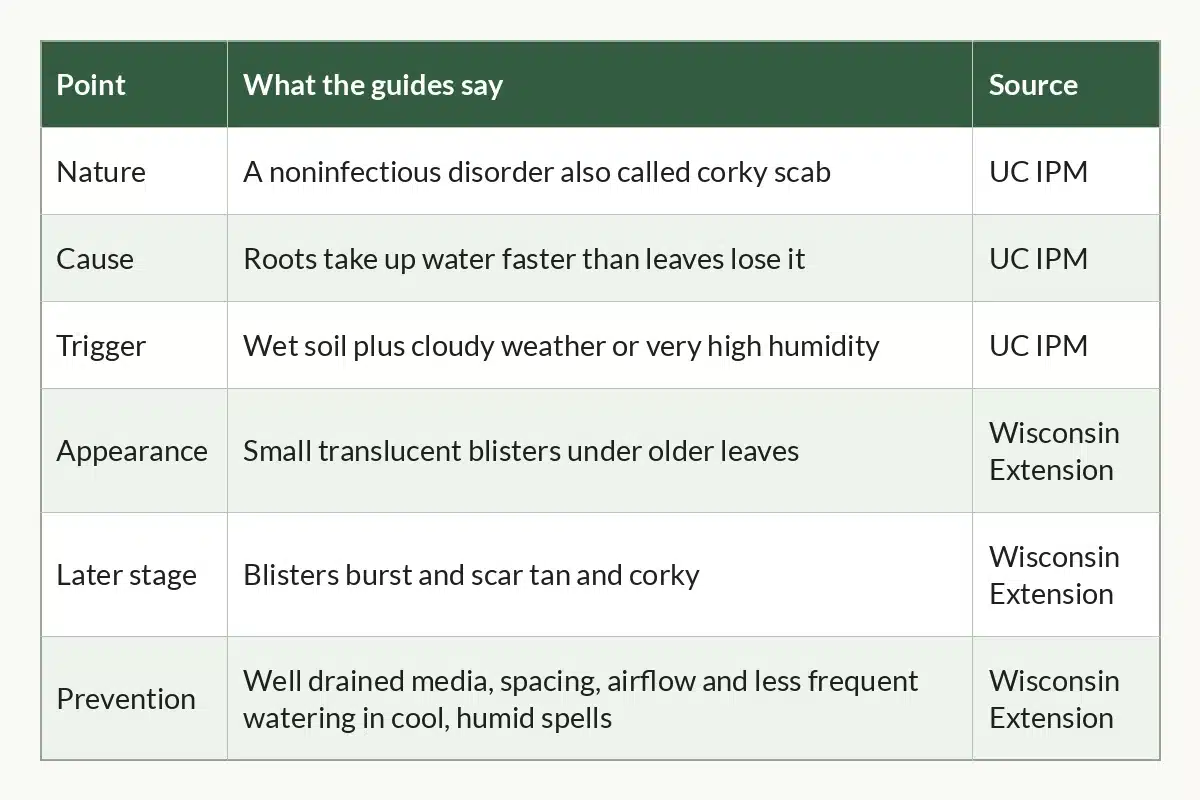
Cannabis Edema at a Glance
| Point | What the guides say | Source |
|---|---|---|
| Nature | A noninfectious disorder also called corky scab | UC IPM |
| Cause | Roots take up water faster than leaves lose it | UC IPM |
| Trigger | Wet soil plus cloudy weather or very high humidity | UC IPM |
| Appearance | Small translucent blisters under older leaves | Wisconsin Extension |
| Later stage | Blisters burst and scar tan and corky | Wisconsin Extension |
| Prevention | Well drained media, spacing, airflow and less frequent watering in cool, humid spells | Wisconsin Extension |
How Does Edema Affect Cannabis Growth?
For most plants the effect is limited. Each blister is a small patch of ruptured cells, and a few scattered spots on older leaves barely change how much light a plant captures. UC IPM describes the damage on landscape plants as mainly a matter of appearance.
The picture changes when edema spreads across many leaves. Wisconsin notes that extensive blistering and scarring can limit photosynthesis, and that leaves may shrivel, roll and fall. A cannabis plant that loses a large share of its fan leaves this way has less sugar to put into new growth and flowers.
Edema is also a useful warning. It signals that the root zone is staying wetter than the plant can handle under current conditions. The same soggy, airless mix that drives edema also leaves roots short of oxygen. Fixing the watering and airflow problems behind edema usually improves overall growth as well.
Once conditions change, Maryland Extension notes that new blisters stop forming, though existing spots remain. Keep an eye on new leaves to tell whether your changes are working.
Is Edema the Same as Guttation?
No, though both involve excess water. Guttation is the release of droplets from leaf edges and tips, usually overnight or early in the morning. The droplets sit on the surface and the leaf itself is not damaged. Edema happens inside the leaf, where cells swell and burst.
The two can show up under similar conditions, since both reflect roots pushing in more water than the leaves can release. Seeing frequent guttation can be an early hint that the same balance is off. Our post on guttation on cannabis explains that process in more detail.
How to Prevent Edema in Cannabis
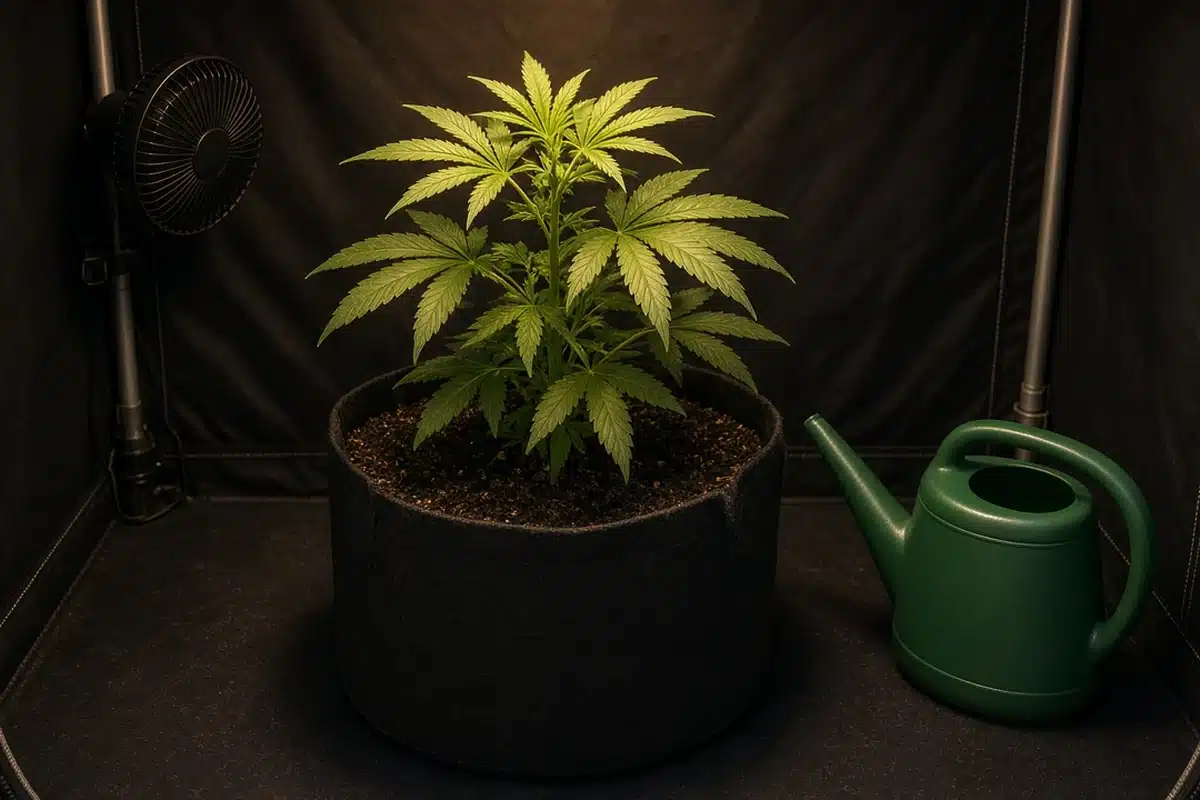
- Use a mix that drains well. Wisconsin recommends a well drained growing medium.
- Water less often in cool, humid spells. Cut back when light is low or air is damp.
- Water in the morning. Wisconsin suggests watering early so soil drains before night humidity rises.
- Let the upper mix dry. Maryland Extension advises letting the top 2 inches dry between waterings.
- Space plants out. More space lowers humidity around leaf surfaces.
- Boost air circulation. Fans and good exhaust help leaves release water.
- Raise light and warmth if they are low. Wisconsin notes this helps bring water loss back to normal.
- Empty saucers. Pour off standing water about 30 minutes after watering.
Troubleshooting Cannabis Edema
Blisters appear after several cloudy days outdoors. Water less often until skies clear.
Edema shows up right after lights off. Humidity is spiking as the room cools. Increase exhaust at night.
Lower leaves are covered in corky spots. Those spots will not go away. Focus on keeping new growth clean.
Pots stay wet for days. The mix may be too dense or the pot too large. Improve drainage.
Plants sit in saucers of runoff. Empty saucers promptly.
Sources
- UC Statewide IPM Program, Edema: https://ipm.ucanr.edu/home-and-landscape/edema/
- University of Wisconsin Madison Extension, Edema: https://hort.extension.wisc.edu/articles/edema/
- University of Maryland Extension, Small Blisters or Edema on Vegetable Leaves: https://www.extension.umd.edu/resource/small-blisters-or-edema-vegetable-leaves
FAQ
Is edema contagious?
No. It is a nonliving disorder caused by water balance, so it does not spread between plants.
Will edema spots go away?
No. Damaged tissue stays scarred, but new leaves grow normally once conditions improve.
Can edema kill a cannabis plant?
It is rarely serious. Severe cases can reduce photosynthesis and cause leaf drop.
Where does edema appear first?
Usually on the undersides of older leaves, often near the edges.
What is the main cause of edema?
Roots taking up water faster than leaves can lose it, often in wet soil and humid, cool or dim conditions.


