
Cannabis Ruderalis
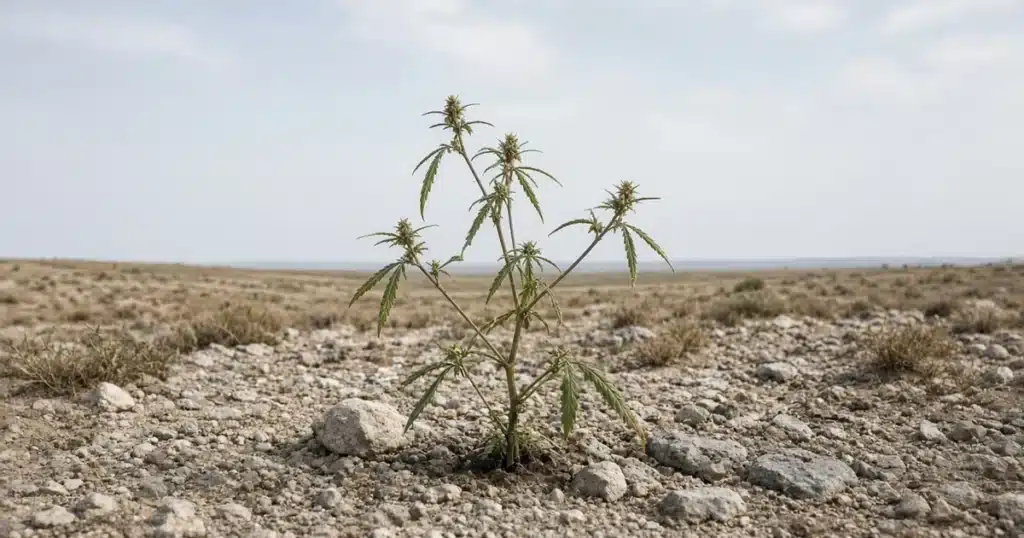
Ruderalis is the name given to a wild, hardy type of cannabis that is best known today for one trait: it flowers based on age, not day length. Breeders crossed that trait into other cannabis to create autoflowering strains. Below, you will find what ruderalis is, how it compares with indica and sativa, how the autoflower trait works, and how to grow modern auto hybrids. This guide draws on the USDA’s plant database and hemp research from University of Georgia Extension and Oregon State University Extension. Check your state’s home grow law before you plant.
What ruderalis is
“Ruderal” is a botany word for plants that colonize disturbed ground, like roadsides and abandoned fields. Cannabis ruderalis was described from wild plants in parts of Central and Eastern Europe and Central Asia, where summers are short. Growers describe it as small, sparse and quick to flower.
How to classify it is still debated. The USDA GRIN plant database lists cannabis as one species, Cannabis sativa L., with conspecific taxa including “Cannabis sativa L. subsp. indica” and “Cannabis sativa L. subsp. sativa.” Ruderalis does not appear there as a separate species. Older botanical accounts often describe it as a wild or feral form of Cannabis sativa rather than its own species. For growers, the name is a useful label for the day neutral trait, even if the botany is unsettled.
Why short summers shaped it
In places where summer is brief, a plant that waits for the long nights of autumn may run out of warm weather before its seeds ripen. A plant that flowers on its own after a few weeks of growth can finish while conditions are still good. That is the likely advantage of the trait in the wild, and it is the same advantage growers use today in short seasons.
Ruderalis vs indica vs sativa
| Trait | Ruderalis type | Indica leaning | Sativa leaning |
|---|---|---|---|
| Flowering trigger | Age (day neutral) | Long nights | Long nights |
| Typical size | Small | Short, bushy | Tall, stretchy |
| Leaves | Small, few blades | Broad | Narrow |
| Typical THC (wild) | Low, by grower reports | Varies | Varies |
| Main use today | Source of the autoflower trait | Breeding and growing | Breeding and growing |
These traits are common grower descriptions, not species definitions.
How the autoflower trait works
Most cannabis is photoperiod. University of Georgia Extension explains that “most hemp cultivars will flower when exposed to day lengths of fewer than approximately 13 to 14 hr.” UGA also describes “autoflowering (day neutral) cultivars that will initiate flowering a certain number of days after seeding, regardless of the day length.” Breeders and growers generally credit ruderalis as the source of that day neutral trait in modern autoflowers.
Oregon State University Extension notes that “autoflower varieties are generally ripe to harvest around 75 days after planting, while full season types require closer to 120 days,” and that their “shorter season plus the smaller size” reduce water use. Those are hemp field results, but they show why the trait is so useful.
From wild plant to modern autoflower
Pure ruderalis is rarely grown for flower. Breeders cross it with photoperiod indica and sativa lines, then select over generations for plants that keep the automatic flowering while gaining the size, potency and flavor of the other parent. Breeders generally describe most autoflowers sold today as hybrids with only a small share of ruderalis background. That is why the labels on autos usually describe them as indica or sativa leaning.
How to grow autoflowers: step by step
- Start in the final pot. Autos have a short veg period, so transplant shock costs more. Many growers sow directly into a 3 to 5 gallon container.
- Use one light schedule. Run 18/6 or 20/4 from seed to harvest. No 12/12 switch is needed.
- Go easy on feeding early. Seedlings need little. Feed lightly once true leaves are growing fast.
- Train gently. Bend and tie branches rather than heavy topping, so the plant does not stall.
- Watch the calendar and the plant. Most autos show pistils within a few weeks of sprouting. Go by the breeder’s stated seed to harvest time, then check trichomes.
- Plan outdoor timing. Outdoors, autos can be planted in late spring and harvested in summer, before fall rains. Some growers run two crops a season.
- Harvest when trichomes say so. Use a loupe. See our trichome guide.
Choosing an auto hybrid
When you shop for autoflowers, look at the breeder’s stated seed to harvest time, expected height and whether the seeds are feminized. Shorter strains suit small tents. Faster strains suit short outdoor seasons or growers who want more runs per year. Compare a few strains on the same setup and keep notes, since performance varies more between strains than between labels like indica or sativa.
Light and feeding for autos
Because autos flower on their own clock, you cannot lengthen veg to make a bigger plant. That makes the early weeks important: give good light from the start, keep the root zone warm and moist but not soggy, and avoid anything that stalls growth. Many growers feed autos a little lighter than photoperiod plants of the same size, since they are smaller and finish faster.
Myths to drop
- “Autos are always weak.” Modern hybrids can be strong. Wild ruderalis is a different plant.
- “Autos cannot be trained.” They can, gently.
- “Ruderalis is a proven separate species.” It is debated, and USDA’s database lists one species.
Where the trait shows up outdoors
Because autos do not wait for long nights, outdoor growers can plant them on their own schedule. In northern areas with short summers, an auto planted after the last frost can finish before fall rain and cold. In warmer areas, growers sometimes fit in a spring crop and a summer crop. Photoperiod plants outdoors, by contrast, all flower around the same time in late summer.
Troubleshooting autoflowers
My auto stayed tiny. Early stress (a small starter pot, overwatering, a cold room or late transplant) shrinks autos. Start them in the final pot next time.
It flowered sooner than expected. That is the trait at work. Timing varies by strain.
It is taking longer than the breeder said. Stated times are averages. Let trichomes decide.
Buds are airy. Light may be weak, or the plant was stressed early. See our light intensity guide.
Outdoor autos got moldy in wet weather. Inspect often, cut out and throw away any moldy buds, and do not use them. Choose faster strains or earlier planting next time.
Related guides
Compare feminized vs autoflowering seeds, see indica vs sativa, or browse autoflower seeds.
FAQ
What is cannabis ruderalis?
Ruderalis is a wild, hardy type of cannabis from regions with short summers. It is best known for flowering based on age rather than day length, the trait behind autoflowering strains.
Is ruderalis a separate species?
That is debated. The USDA GRIN database lists cannabis as one species, Cannabis sativa L., and older botanical accounts often describe ruderalis as a wild form of it.
Does ruderalis get you high?
Wild ruderalis is generally described by growers as low in THC. Modern autoflowers are hybrids bred to keep the auto trait with the potency of other parents.
How long do autoflowers take?
In Oregon State Extension hemp research, autoflower varieties were generally ready about 75 days after planting. Indoor cannabis autos vary by strain, so check the breeder’s stated time.
Do autoflowers need 12/12 to flower?
No. Autoflowers start flowering with age, so they can stay on one light schedule, often 18/6 or 20/4, from seed to harvest.
Sources
- USDA ARS GRIN-Global, Taxon: Cannabis sativa L. https://npgsweb.ars-grin.gov/gringlobal/taxon/taxonomydetail?id=8862 (opened 2026-10-16)
- University of Georgia Extension, Bulletin 1530, Industrial Hemp Production in Georgia. https://fieldreport.caes.uga.edu/publications/B1530/industrial-hemp-production-in-georgia/ (opened 2026-10-16)
- Oregon State University Extension, EM 9628, Planning a drought-resilient hemp crop. https://extension.oregonstate.edu/catalog/em-9628-planning-drought-resilient-hemp-crop (opened 2026-10-16)


