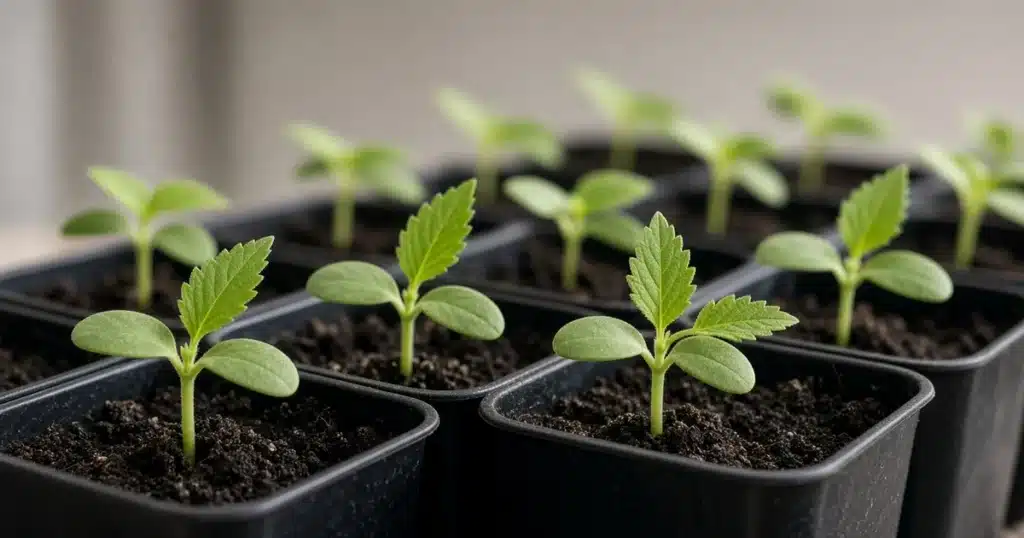
Feminized vs Autoflowering Seeds: 6 Key Differences
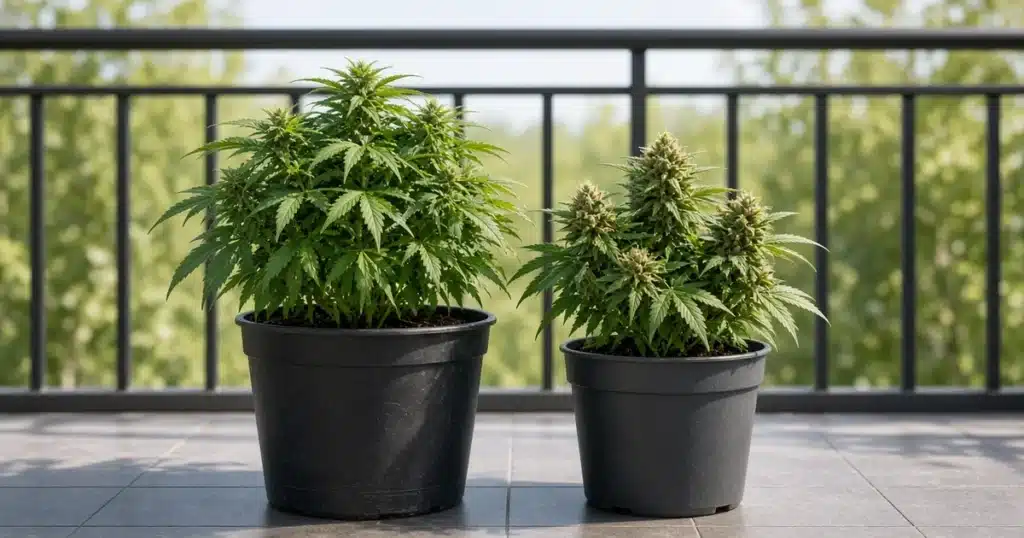
Feminized and autoflowering are two of the most common labels you will see on cannabis seeds, and they answer different questions. Feminized describes the sex of the plant. Autoflowering describes what triggers flowering. Many seeds are actually both. This guide explains what each term means, lays out six practical differences, and helps you pick the right type for your space. It uses hemp research from University of Georgia Extension and Oregon State University Extension. Before you buy or plant, check your state’s home grow law.
What feminized means
Feminized seeds are bred to produce a high percentage of female plants, which make the flowers growers harvest. University of Georgia Extension explains how hemp seed is feminized: “Hemp seeds are feminized by treating female plants with colloidal silver or silver thiosulfate and subjecting them to a reduced (12-hr/12-hr day/night) lighting schedule.” The treated female then makes pollen, and UGA says “the pollen from these flowers is used to pollinate female flowers, producing a high percentage of female seeds.”
Note the words “high percentage.” UGA also reports that in some cases “growers have reported that the feminization process has not been successful,” so it still pays to watch for male flowers.
Feminized and autoflowering are separate traits, and a seed can be both. A feminized seed that is not autoflowering is a photoperiod plant. It stays in vegetative growth until the nights get long enough.
What autoflowering means
Autoflowering plants start flowering based on age rather than day length. UGA describes “autoflowering (day neutral) cultivars that will initiate flowering a certain number of days after seeding, regardless of the day length.” For photoperiod hemp, UGA says “most hemp cultivars will flower when exposed to day lengths of fewer than approximately 13 to 14 hr.”
Oregon State University Extension adds that “autoflower varieties are generally ripe to harvest around 75 days after planting, while full-season types require closer to 120 days.” That is hemp field data, but it shows the gap in season length well.
The 6 differences
1. What triggers flowering
Photoperiod feminized plants flower when you give them about 12 hours of uninterrupted darkness each day indoors, or when nights lengthen outdoors. Autoflowers flower on their own schedule, so you can run them under the same light hours from seed to harvest.
2. Time from seed to harvest
Autoflowers are usually the faster option. OSU’s roughly 75 days versus 120 days in hemp gives a sense of scale. With photoperiod plants, you choose how long to keep them in veg, which stretches or shortens the total time.
3. Plant size
OSU notes the “smaller size of autoflower plants.” Feminized photoperiod plants can be kept small, but given a long veg they can get large.
4. Training and recovery time
Photoperiod plants can be topped, trained and given time to recover before you flip them. Autoflowers have a short veg window, so heavy training or transplant shock can slow growth and reduce plant size. Gentle bending works better than hard pruning on autos.
5. Yield per plant
With a long veg, a photoperiod plant can grow larger, depending on veg time and setup. Some growers run several autoflowers together to use space well, and you can fit more runs into a year. Results vary.
6. Water and season fit outdoors
OSU says autoflower varieties “require less water to achieve a crop” and can be “planted earlier in the year and harvested before peak water demand in late July and August.” For outdoor growers in short or dry seasons, that matters.
At a glance
| Trait | Feminized photoperiod | Autoflowering |
|---|---|---|
| Flowering trigger | Long nights (about 12 hours dark) | Age of the plant |
| Typical time to harvest | Longer, you control veg time | Shorter (OSU hemp field data: about 75 days) |
| Size | Small to large, depends on veg | Usually compact |
| Training | Topping and heavy training are fine | Gentle training works best |
| Light schedule indoors | 18/6 (18 hours light, 6 dark) in veg, 12/12 (12 light, 12 dark) to flower | One schedule from seed to harvest |
Can a seed be feminized and autoflowering?
Yes. Many seeds sold today are feminized autoflowers. They combine both traits: the seed is bred to grow a female plant, and that plant flowers on its own schedule. Listings vary, so check whether a feminized seed is photoperiod or autoflowering. When it says “auto” or “autoflowering,” check whether it is also feminized or a regular (mixed sex) auto.
Light schedules in practice
For photoperiod plants indoors, a common pattern is 18 hours of light and 6 of darkness in veg, then 12 and 12 to start flowering. The key is the dark period: it has to be truly dark and uninterrupted. Autoflowers are often run on 18/6 or 20/4 from seed to harvest. Because they do not depend on the dark period, a small light leak is less likely to stall them the way it can stall a photoperiod plant.
How to choose: step by step
- Measure your space. Note your tent or bed height. If headroom is tight, autoflowers are often easier.
- Count your time. If you want a harvest soon, autoflowers fit. If you can wait for a bigger plant, photoperiods give you more control.
- Check your light setup. Photoperiods need a light proof room or tent for 12 hours of darkness. Autoflowers are more forgiving here.
- Decide how much training you want to do. If you enjoy topping and screen setups, pick photoperiod.
- Think about your season if growing outdoors. In short or dry summers, autos can finish before the worst of the weather.
- Start with a small number. Run one or two plants of the type you choose and keep notes.
- Watch for male flowers either way. Feminized seed is not a guarantee of all female plants, as UGA’s growers found.
Troubleshooting
My photoperiod plant will not flower. Check for light leaks during the dark period. Even small leaks can delay flowering.
My autoflower stayed tiny. Early stress (transplanting late, overwatering seedlings, or a pot that is too small) hits autos hard. Start them in their final pot where possible.
A feminized plant grew pollen sacs. Remove the plant or the sacs carefully before they open, and check for stress like light leaks or heat. See our guide on early female plant signs.
My auto is still flowering past the breeder’s date. The stated time is an average. Let trichomes, not the calendar, decide.
Where to go next
Compare with regular vs feminized seeds, learn where the autoflower trait came from in our ruderalis guide, or browse autoflower seeds.
Sources
- University of Georgia Extension, Bulletin 1530, Industrial Hemp Production in Georgia. https://fieldreport.caes.uga.edu/publications/B1530/industrial-hemp-production-in-georgia/ (opened 2026-10-16)
- Oregon State University Extension, EM 9628, Planning a drought-resilient hemp crop. https://extension.oregonstate.edu/catalog/em-9628-planning-drought-resilient-hemp-crop (opened 2026-10-16)
FAQ
What is the difference between feminized and autoflowering seeds?
Feminized describes the plant's sex: these seeds are bred to grow female plants. Autoflowering describes what triggers flowering: these plants flower with age instead of day length. A seed can be both.
Are autoflowers easier for beginners?
Often, yes. They stay smaller and do not need a separate 12/12 light schedule. But they have little time to recover from stress, so early mistakes can shrink the harvest.
Do feminized seeds always produce females?
No. They produce a high percentage of females, but University of Georgia Extension notes that some growers have had feminization fail. Keep an eye out for male flowers.
How long do autoflowers take compared with photoperiods?
In Oregon State hemp research, autoflower varieties were generally ready around 75 days after planting, while full season types needed closer to 120 days. Indoor cannabis times vary by strain.
Can you top an autoflower?
You can, but many growers avoid hard topping on autos because they have a short veg period. Gentle bending and tying down is a lower risk way to open the canopy.