Types of Cannabis Concentrates: A Grower’s Guide

A concentrate is plant resin pulled away from the bud and leaf it grew on. Every type, from a pinch of kief to a jar of rosin, starts as the same thing: tiny resin heads that coat the flower. The differences come from how those heads get separated and what happens to them next. This guide walks through the main types of cannabis concentrates from the grow room side. For each one you’ll see what it is made from and which parts of the job are yours. It does not cover how solvent types are made. This guide stops where the lab work starts. Check your local law before making any concentrate at home.
Where Every Concentrate Starts: the Trichome Head
Look at a ripe bud up close and it glitters. That shine comes from trichomes, small outgrowths on the plant surface. The glandular kind make and hold the resin that every concentrate is built from.
A hemp plant anatomy publication from University of Nevada, Reno Extension describes three main glandular types: bulbous, capitate sessile and capitate stalked. The first two are too small to see without magnification. The capitate stalked trichome is the one you can spot by eye. It carries a large head on top of a stalk, so it looks like a tiny mushroom. The same hemp publication says trichomes hold the compounds most sought after by people growing for flower or extraction.
For concentrates, the head is the prize. It holds the resin, and it sits on a thin stalk that snaps with very little force. Rough hands, warm rooms and long hours of handling all knock heads loose before you want them loose. That fragility sits behind nearly every grower choice that follows.
To judge ripeness by eye, take a closer look at trichomes in our trichome primer, which covers the color changes and the tools.
Two Families: Solventless and Solvent
Every concentrate falls into one of two families. The split comes down to what pulls the resin away from the plant.
Solventless concentrates use physical means only. Screens shake loose dry resin heads. Cold water and ice make the heads brittle so they break away from the plant. Heat and pressure squeeze resin out of flower or hash. Nothing goes in that has to be taken back out later. Kief, hash, ice water hash and rosin all belong to this family. Home growers can make dry sift, kief or rosin with simple gear where the law allows.
Solvent concentrates use a solvent to dissolve the resin, and then the solvent is removed. Licensed labs make them in closed equipment built for the job. Home solvent extraction is illegal in many places, and we do not cover it here. When a solvent product comes up here, the focus stays on the plant material that goes in.
For a grower, the family matters less than you might think. Both start with resin heads, and both reward the same plant traits.
The Main Types of Cannabis Concentrates
Here are the types you will run into, in rough order from simple to heavily refined. Each one ends with the part that sits in your hands. For deeper posts on single types, browse our cannabis concentrates section.
Kief and Dry Sift
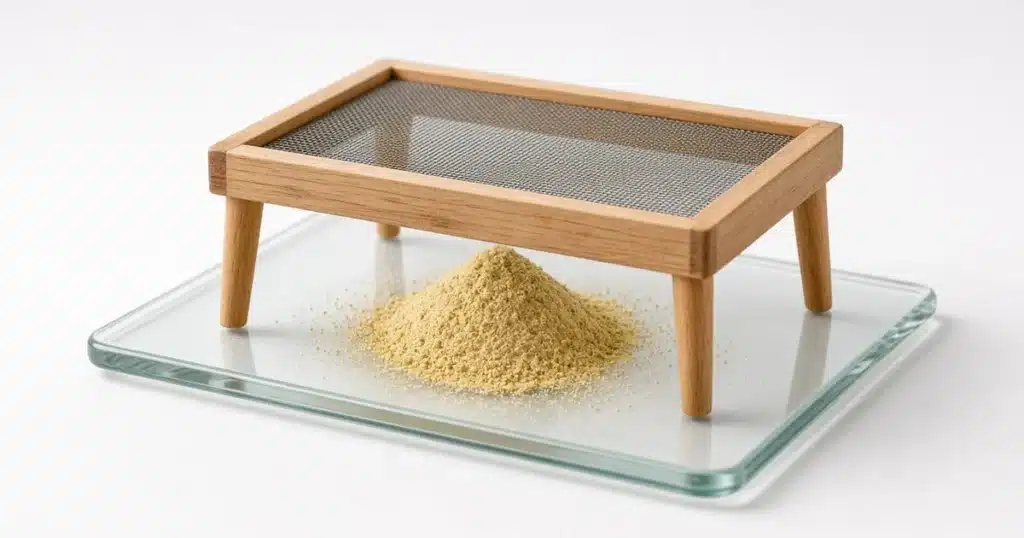
Kief is the loose resin powder that falls away from dried buds and trim as they move over a fine screen. Plenty of growers first meet it in a grinder’s catch or a trim bin. It is the simplest concentrate there is and the closest to the plant.
Dry sift is the same idea done with more care. The material passes over screens so cleaner heads come through and more leaf stays behind. The result is lighter in color and carries less plant matter than rough kief.
Both start from dried flower, trim and sugar leaves.
What the grower controls: a strain with dense, sticky heads, a full and even dry, and gentle handling so the heads stay put until you want them off. Our walkthrough on collecting kief at home has the full method.
Pressed and Hand Rubbed Hash
Hash is resin heads pressed together into a solid piece. Pressed hash starts as kief or dry sift. Pressure and a little warmth bind the loose powder into a block, ball or slab.
Hand rubbed hash is an older style. Charas is the classic example, hash rubbed by hand from live plants. It earns a place here as history more than as a home method.
Pressed hash reaches back to dried flower, trim or sugar leaves by way of kief. Hand rubbed hash comes straight off the living plant.
What the grower controls: the quality of the kief that goes into the press. Clean, well dried input with intact heads makes cleaner hash. Any leaf you leave in the kief ends up in the hash.
Ice Water Hash
Ice water hash, often called bubble hash, uses cold water and ice to separate resin heads from the plant. Cold makes the heads brittle, and gentle agitation breaks them free so they can be collected and dried into a fine, sandy concentrate.
It can start from dried flower and trim or from fresh frozen buds. Fresh frozen means the plant was frozen right at harvest and never dried. Freezing at the chop skips the dry and trim, so the heads reach the water without that extra handling.
Cold and a light touch matter here just as they do on the plant. Brittle heads snap off clean. Warm, soft resin smears and drags leaf along with it.
What the grower controls: a strain whose heads release cleanly in cold water, buds touched only when needed, and freezer space ready on harvest day when you wash fresh.
Rosin
Rosin is resin squeezed out with heat and pressure alone. It belongs to the solventless family, and it comes in two common forms.
Flower rosin is pressed straight from dried buds. Everything in the bud plays a part, so the result tracks the flower closely. Hash rosin is pressed from ice water hash or dry sift instead. Because the heads were separated first, hash rosin carries less plant matter.
Rosin can start from dried flower, kief, dry sift or ice water hash. That last one can come from fresh frozen plants, which leads to live rosin below.
What the grower controls: resin that feels greasy and tacky at trim time, buds that dry evenly, and storage that keeps the resin from going stale before it meets the press.
Live Resin and Live Rosin
On a concentrate label, live means the plant was frozen at harvest instead of dried. The idea is to hold on to the aroma of the living plant, which can fade during a dry.
Live resin is a solvent concentrate made from fresh frozen material in a licensed lab. Live rosin is solventless. It is pressed from ice water hash that was washed from fresh frozen plants.
Both begin the same way at harvest. The plant comes down, the buds go straight into the freezer, and the hang dry and trim never happen.
What the grower controls: the freeze at the chop. Buds need to go cold fast and stay frozen until they are used. The lab side of live resin is not covered here.
Shatter, Wax, Budder and Other Textures
Shatter, wax and budder are solvent concentrates named for their texture. Shatter is hard and glassy and snaps when it breaks. Wax is soft and crumbly. Budder is smooth and creamy, close to soft butter. Sauce, sugar and crumble are other texture names you may see on a label.
These are lab products. The texture comes from how the extract is handled after the solvent work, and that part sits outside this guide.
They can start from dried flower, trim or fresh frozen material, depending on the product.
What the grower controls: clean, well dried, resin rich input. A lab can only work with the resin the plant made.
Distillate
Distillate is a refined oil. Labs take it so far that much of the plant’s own character, its aroma included, is gone. Some products add aroma back afterward. With the plant’s traits stripped out, grower choices count for less here than with any other type.
What the grower controls: not much beyond clean plant material.
| Type | Family | Usual starting material | What matters most from the grow |
|---|---|---|---|
| Kief and dry sift | Solventless | Dried buds, trim and sugar leaves | Dense heads and a full, even dry |
| Pressed and hand rubbed hash | Solventless | Kief, or living plants for hand rubbed | Clean kief with little leaf in it |
| Ice water hash | Solventless | Dried flower and trim, or fresh frozen buds | Heads that release cleanly in cold water |
| Rosin | Solventless | Dried flower, kief, dry sift or ice water hash | Greasy resin and an even dry |
| Live resin and live rosin | Solvent for resin, solventless for rosin | Fresh frozen buds | A fast freeze at harvest |
| Shatter, wax and budder | Solvent | Dried flower, trim or fresh frozen material | Clean, resin rich input |
| Distillate | Solvent | Dried plant material | Clean input and little else |
Growing With Concentrates in Mind
Concentrates start long before harvest. The plant you choose sets the limit, and steady habits in late flower help you reach it.
Genetics come first. When I grow for the wash, I pick strains for resin cover and for sticky heads that stay whole. I want frost that reaches deep into the bud and out across the sugar leaves. A strain that only looks frosty on the outer calyxes gives up less at the screen or in the bucket.
Bud structure counts too. I like calyx heavy buds with sugar leaves that look dipped in resin. Those leaves stop being waste and start being input.
Match the plant to the method you use. Dry sift and ice water hash both collect whole heads, so head size and a clean release are the traits to watch. Flower rosin depends more on how greasy and tacky the resin feels in your fingers.
Late flower is when the heads fill out, so keep that stretch steady. Avoid big swings in the room, and keep your hands off the buds. Every time a cola gets squeezed, bumped or brushed, some heads come off on whatever touched it. Stake and net early so you are not moving branches around in the last weeks.
If you are choosing genetics with a wash or press in mind, start with our seeds for extraction and read each strain’s notes on resin and trichome cover.
Harvest Timing for Resin
Harvest timing decides what goes in the jar. The heads you collect are only as ready as the plant was on the day you cut it. Watch the heads, not the calendar.
In its hemp flower production guide, UVM Extension’s authors say a lens at about 60x brings trichomes into clear view. It describes clear trichomes as underdeveloped, without full resin development. Amber trichomes, by its account, are mostly mature but nearing breakdown. The guide advises harvesting before the trichome’s bulbous head bursts. Outdoors, it adds, intense sun can turn heads amber, so check the heads closely outside.
NC State Extension’s hemp harvest notes describe heads turning from clear to opaque white to amber. They also point out that heads on one plant ripen on their own schedules. So one plant can carry clear, cloudy and amber heads at once.
Different makers cut at different points. Some want heads that are fully formed and mostly cloudy. Others wait for more amber. When I time a harvest for resin, I check several buds, top to bottom, before I trust what I see.
Trimming, Drying and Storing for Concentrates
Every step after the chop either keeps heads on the plant or knocks them off.
Start with the trim. In its hemp post harvest guide, Oregon State Extension says wet or dry trimming is up to the producer. It asks growers to weigh which method keeps trichome structure intact. That is the deciding question for concentrates. Whichever way you go, trim over a clean tray and collect what falls. A separate post on wet or dry trimming compares the two in more detail.
Next comes the dry. UVM Extension puts ideal hemp drying conditions at around 60 to 70°F and 45 to 55% humidity. Above 70°F, the same guide says, terpenes, the aroma compounds, start to volatilize. For anyone pressing or sifting dried flower, a cool and even dry keeps more of the aroma you grew. Oregon State also lists freeze drying among the newer options for hemp flowers.
Storage comes last. The Vermont guide calls for cool, dark storage at low humidity, sealed in an airtight container. Keep buds meant for the press or the screen out of warm rooms and away from light until you use them.
Fresh frozen input skips the dry and trim entirely. For live rosin or a fresh wash, the job after harvest is short. Get the buds frozen and keep them that way.
Using Trim and Sugar Leaves
Trim is not waste when you grow for concentrates. University of Nevada, Reno Extension notes that hemp sugar leaves are sometimes harvested for what their trichomes hold. Their resin coating is what gives them the sugared look.
Trim and sugar leaves are a common input for kief and hash. They rarely make a clean flower rosin, but they can carry plenty of heads to a screen or into ice water. Leave big fan leaves out. They carry little resin and mostly add plant matter.
Handle trim with the same care as buds. Keep it cool and dry, and bag it airtight if it will sit before you use it.
Sources
- University of Nevada, Reno Extension, Hemp Basics: Anatomy of a Female Hemp Plant: https://extension.unr.edu/publication.aspx?PubID=4479
- University of Vermont Extension, Industrial Hemp for Flower Production: https://www.uvm.edu/d10-files/documents/2024-06/2020_Hemp_101.pdf
- Oregon State University Extension, Post-harvest processing of hemp flowers: https://extension.oregonstate.edu/catalog/post-harvest-processing-hemp-flowers
- NC State Extension, Hemp Harvest Timing and Drying: https://hemp.ces.ncsu.edu/hemp-harvest-timing-and-drying/
FAQ
What are the main types of cannabis concentrates?
The main types are kief and dry sift, pressed and hand rubbed hash, ice water hash, rosin, live resin and live rosin, solvent textures such as shatter, wax and budder, and distillate. All of them start as resin heads from the plant. They differ in how the resin is separated and how far it is refined.
Which concentrates are solventless?
Kief, dry sift, pressed hash, hand rubbed hash, ice water hash, rosin and live rosin are solventless. They rely on screens, cold water and ice, or heat and pressure. Live resin, shatter, wax, budder and distillate are solvent concentrates made in licensed labs.
Does the strain matter for concentrates?
Yes. The strain sets how much resin the plant makes, how large the heads grow and how cleanly they come away. I look for thick trichome cover on buds and sugar leaves, plus resin that feels sticky. For distillate the strain counts for less, because so much of the plant's character is refined out.
When should I harvest plants grown for concentrates?
Harvest by the trichome heads, not the calendar. UVM Extension hemp research describes clear heads as underdeveloped and amber heads as close to breaking down, and it advises harvesting before the heads burst. Check several buds under magnification, because heads on one plant ripen on their own schedules.
Can I use trim and sugar leaves?
Yes. Sugar leaves and trim are common inputs for kief and hash because they carry resin. Keep them cool, dry and apart from big fan leaves, which hold little resin and add plant matter.
What does "live" mean on a concentrate?
Live means the plant was frozen at harvest instead of being dried and trimmed. Live resin is made from that frozen material with a solvent in a licensed lab. Live rosin is pressed from ice water hash washed from frozen plants. For the grower, the job is a fast freeze at the chop.