
Hail Damage on Cannabis: How Plants Recover
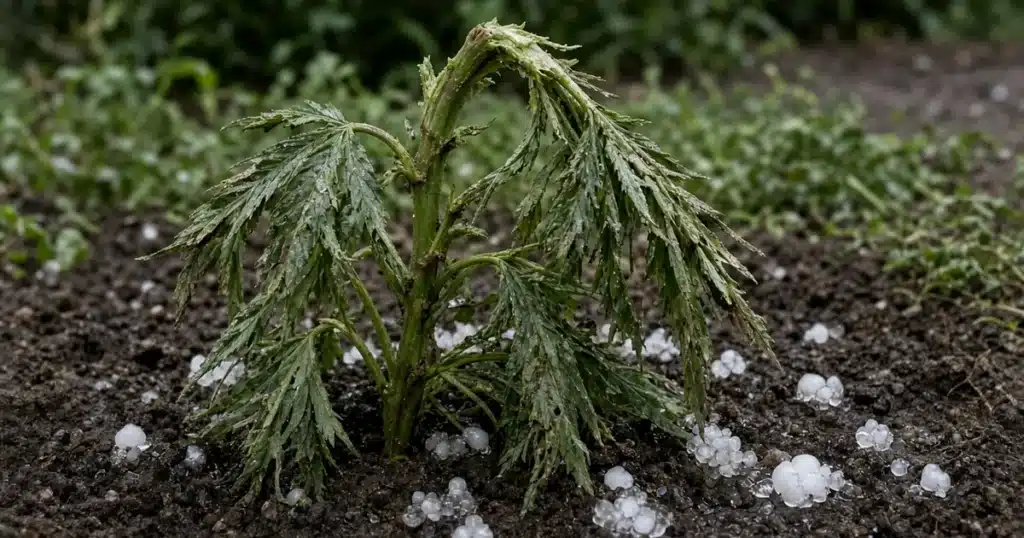
Hail can shred leaves, bruise stems and snap off the tops of outdoor cannabis. In field hemp, the Canadian Hemp Trade Alliance reports that plants hit early in the season often recover by sending out new shoots from the node below the damage, while crop failure is more common with August hail on mature plants.
What Does Hail Do to Cannabis Plants?
The Canadian Hemp Trade Alliance (CHTA) says intense storms can break off the top of the plant, destroy growing points, break or bruise stems and puncture or shatter leaves (CHTA). It notes that tall, fast-growing fiber hemp, which can elongate 4 to 6 inches a day, is more prone to damage than short grain types. Wind damage is a related problem, covered in our post on wind burn.
Can Cannabis Recover From Hail?
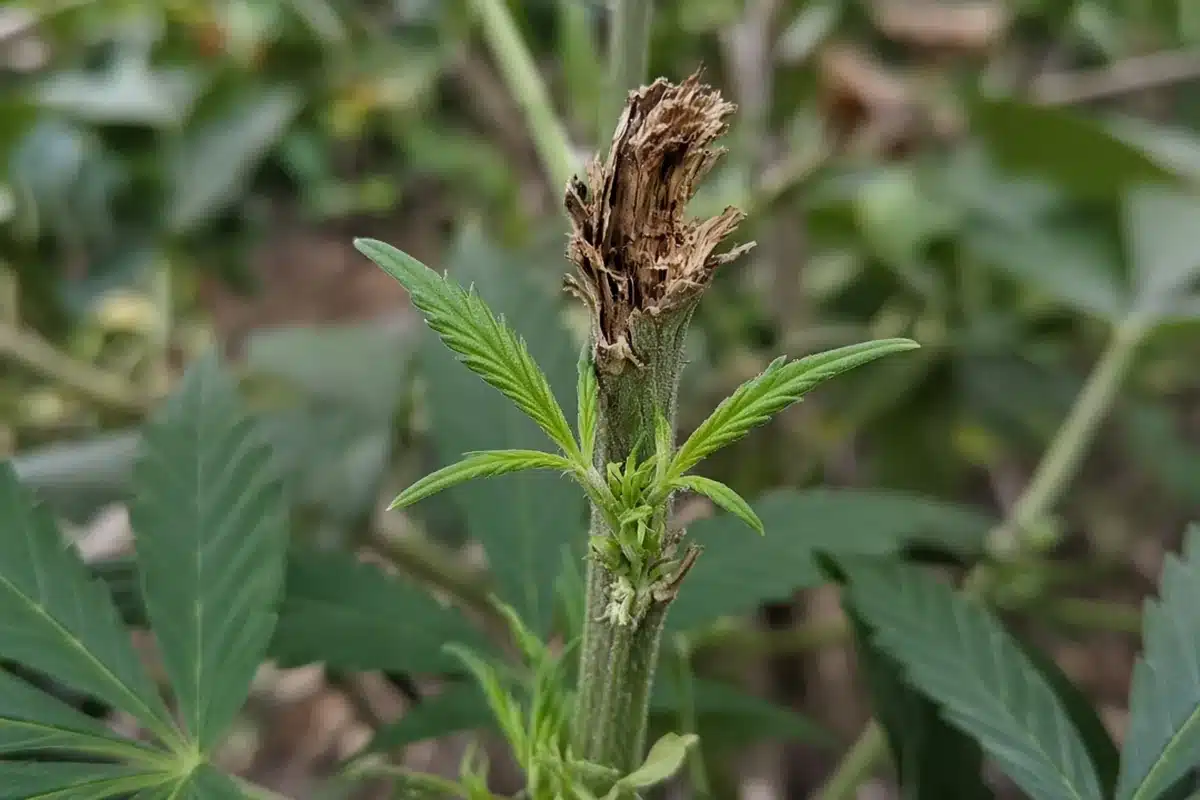
In field hemp, often. CHTA reports that moderately damaged hemp plants keep growing by sending out two shoots from the node below a damaged tip. The damaged main stem dies and seals off, and new leaders can form if there is time (CHTA). Its photos show regrowth 19 and 29 days after an early July storm, with plants ending up shorter and bushier. CHTA adds that severely damaged, broken plants may not recover, so yields on hailed fields are reduced.
Source: Canadian Hemp Trade Alliance, impacts of severe weather on hemp (field observations, not a controlled trial).
Data for this chart:
| Situation | Reported outcome | Source |
|---|---|---|
| Early-season hail on an actively growing crop | Plants may have enough time to recover | CHTA |
| August hail on more mature plants | Crop failure more commonly seen | CHTA |
| Moderately damaged tops | Plant sends out two shoots from the node | CHTA |
| Severely damaged, broken plants | May not recover, so yields on hailed fields are reduced | CHTA |
| Short grain types vs tall fiber types | Grain types more resilient to hail | CHTA |
What Should You Do Right After a Hailstorm?
CHTA’s observations suggest waiting to judge damage, since regrowth shows over the following weeks (CHTA). Removing torn leaves and snapped stems is common grower practice, but the source does not test pruning after hail. Our post on environmental stress covers other weather stress on cannabis.
Why Does Timing in the Season Matter?
CHTA says that if hail hits the actively growing crop early, plants may have time to recover, while August storms that hit more mature plants more often cause crop failure (CHTA). Regrowth after damage also delays maturity. Site choice matters for outdoor crops, so see where to grow outdoors.
Replanting or planning ahead for next season? See our range of outdoor seeds.
Sources
Some sources below studied hemp or other crops rather than drug-type cannabis, and their findings are reported as results for those crops.
The notes on this page are general growing information from Kind Seed Co, grounded in the CHTA source above.
FAQ
Does early-season hail hurt less than late hail?
The Canadian Hemp Trade Alliance reports that hail on an actively growing hemp crop early in the season often leaves plants enough time to recover. Crop failure is more commonly seen with August hailstorms that hit more mature plants, because there is less time left for new shoots to grow and mature.
How long should you wait before judging hail damage?
The Canadian Hemp Trade Alliance documented hemp regrowth in photos taken 19 and 29 days after an early July storm. Moderately damaged plants sent out new shoots during that time, while some stems were damaged beyond recovery. CHTA's photo record covers the first 29 days after the storm.
Do broken tops grow back?
The broken top itself does not grow back. CHTA explains that the damaged main stem dies and seals off, and the plant sends out two shoots from the node below. If there is enough time, those shoots develop new leaders. The result is usually a shorter, bushier plant with delayed maturity.
Are short plants less prone to hail damage?
In Canadian field hemp, CHTA reports that short grain types are more resilient to hailstorms than tall fiber types. Fiber hemp can elongate 4 to 6 inches a day in early summer, and its stems are more prone to physical damage from hailstones and gusty winds.


