
Frost Damage on Cannabis: What It Looks Like and What to Do
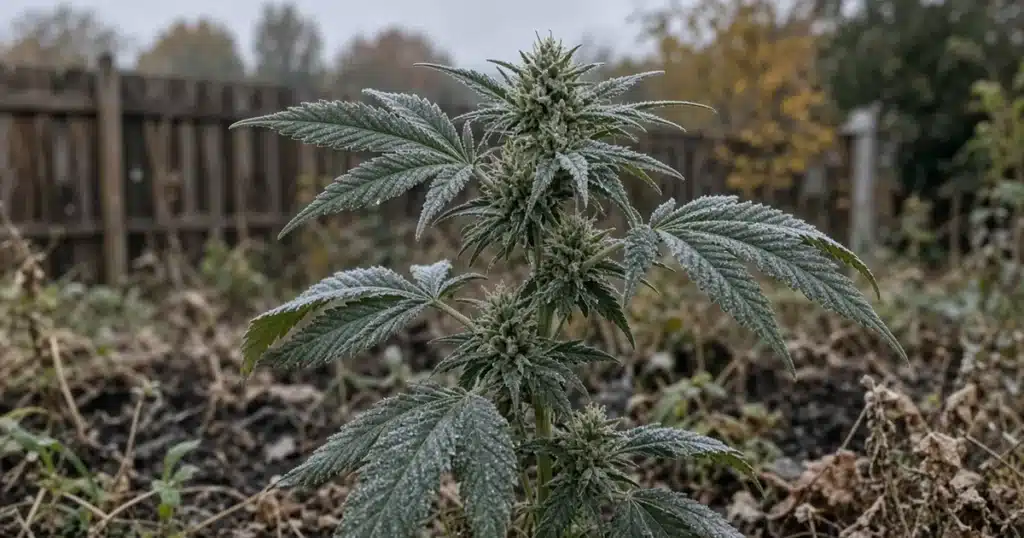
Frost damage on cannabis depends on the temperature. University of Vermont Extension reports mature plants tolerate 29 to 32°F, a moderate freeze of 25 to 28°F can damage leaves, and 24°F or colder causes heavy damage. If plants turn purple or red after a cold night, UVM says that alone does not necessarily mean the plant’s oils are affected.
How Cold Is Too Cold for Outdoor Cannabis?
In field hemp, UVM Extension gives three bands: mature plants easily tolerate 29 to 32°F, 25 to 28°F can damage vegetation, and 24°F or colder causes heavy damage to most plants (UVM Extension). UVM adds that those same light-frost temperatures would kill seedlings in spring. Purdue notes most frost data comes from Canadian grain and fiber hemp, with little data on cannabinoid hemp (Purdue). For young plants, see sudden temperature drops.
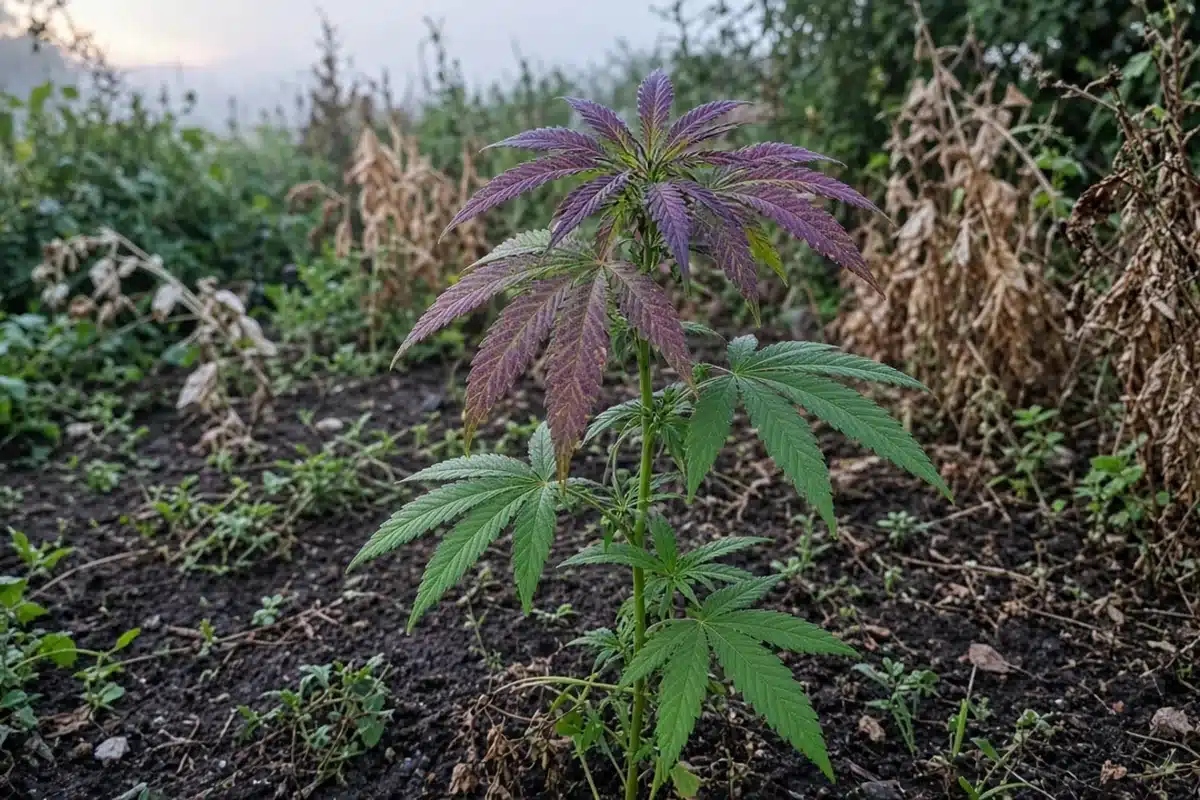
What Does Frost Damage Look Like?
Cold can turn green hemp purple or red. UVM says this color change does not necessarily mean the plant’s oils are affected (UVM Extension). At Purdue’s research farm, one cultivar turned deep purple after a 32°F night and looked unharmed, while another did not change color at all (Purdue). Purdue also passed on one grower’s report that purple plants were more likely to fade to brown after harvest and storage, without a loss in quality.
Source: UVM Extension (field hemp). The 20°F lower bound is a chart limit only. UVM says 24°F and colder.
Data for this chart:
| Temperature | Effect on mature hemp | Source |
|---|---|---|
| 29 to 32°F | Easily tolerated | UVM Extension |
| 25 to 28°F | Can damage vegetation | UVM Extension |
| 24°F and colder | Heavy damage to most plants | UVM Extension |
Should You Harvest Early After a Frost?
UVM says hemp should ideally be harvested before the first hard frost, but if harvest must happen after it, yields are not likely to be affected (UVM Extension). In UVM’s 2018 trial, the lowest temperature in uncovered plots was 27.8°F. For ripeness checks, see is your plant ready for harvest.
How Do Growers Protect Plants Before a Frost?
In UVM’s cold tolerance trial, row-covered hemp had a higher average temperature and fewer temperature extremes than uncovered plants (UVM Extension). Watching the forecast and harvesting mature plants ahead of a hard freeze are common grower practice. Broader cold stress is covered in our post on environmental stresses.
Growing in a short or cool season? Browse our outdoor seeds.
Sources
Some sources below studied hemp or other crops rather than drug-type cannabis, and their findings are reported as results for those crops.
- UVM Extension Outcroppings: Hemp and Cold Temperatures
- Purdue Pest&Crop: Frost and Hemp, Should Growers Worry?
Treat this as general growing information from Kind Seed Co, based on the field hemp sources above.
FAQ
Does purple color after cold mean frost damage?
Not necessarily. UVM Extension says colder temperatures can turn green hemp purple or red, but the color change does not necessarily mean the plant's oils are affected. Purdue saw one cultivar turn deep purple after a 32°F night and still look unharmed, while another cultivar did not change color at all.
At what temperature does hemp get damaged?
UVM Extension reports that mature hemp easily tolerates frost of 29 to 32°F. A moderate freeze of 25 to 28°F can damage vegetation, and freezes of 24°F or colder cause heavy damage to most plants. UVM notes that those same light-frost temperatures would kill seedlings in spring.
Can frost-damaged plants recover?
Light frost left some mature hemp unharmed in the cited reports. After a 32°F night at its research farm, Purdue found that both hemp cultivars appeared unharmed, one of them after turning purple. UVM says yields are unlikely to be affected if harvest happens after a first hard frost, though harvesting before it is ideal.
Why harvest before a hard freeze?
UVM Extension says hemp should ideally be harvested before the first hard frost. It also notes that freezes of 24°F or colder cause heavy damage to most plants. Harvesting mature plants ahead of a forecast hard freeze avoids that risk, even though light frosts have shown little effect in UVM's trials.


