How to grow the Lemon Haze cannabis strain from seed
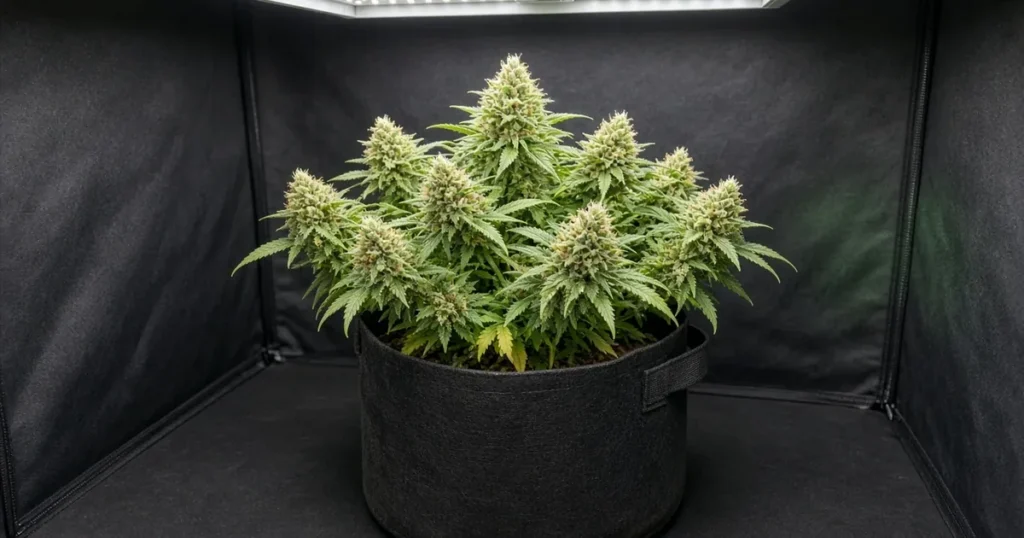
To grow the Lemon Haze cannabis strain from seed, germinate a quality seed, plant it straight into its final container, give it plenty of light and gentle low stress training, feed lightly and harvest when the trichomes look mostly cloudy. Our Lemon Haze Auto flowers on its own schedule, so you do not need to change your light cycle. This guide is for adults 21 and older where home growing is legal, and walks through every stage from seed to jar.
Meet Lemon Haze
Lemon Haze is widely described as a cross of Lemon Skunk and Silver Haze. As the name suggests, it is loved for its strong lemon aroma. It carries the sativa leaning character of the Haze family with a little more structure from its Skunk side, which helped make it a popular choice for growers who like citrus strains.
Kind Seed Co’s Lemon Haze Auto brings that profile into an autoflowering package. Autoflowers carry ruderalis genetics, so they flower based on age rather than day length. They tend to stay more compact than photoperiod versions and finish faster.
For exact specs such as expected flowering time and height, check the Lemon Haze Auto product page.
What to expect from Lemon Haze in the garden
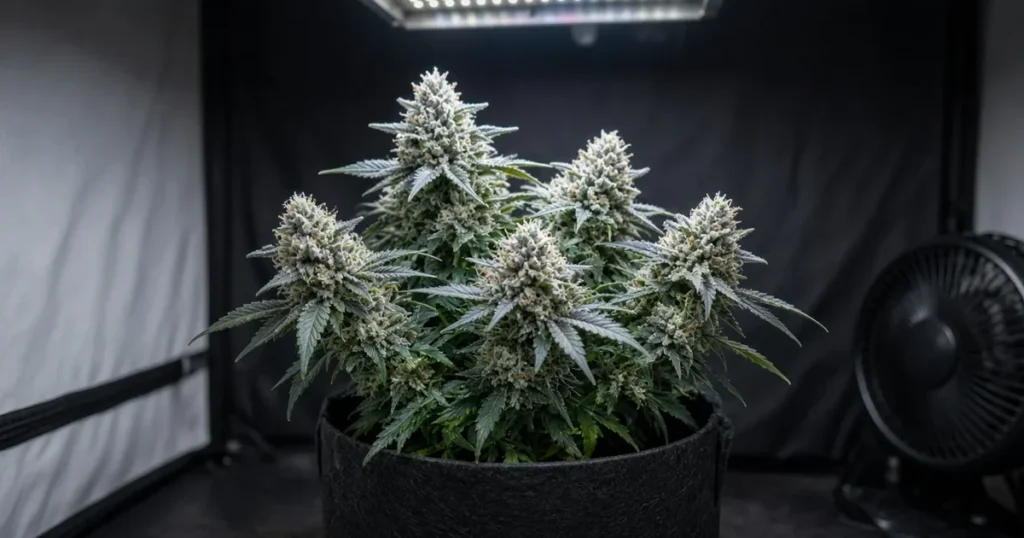
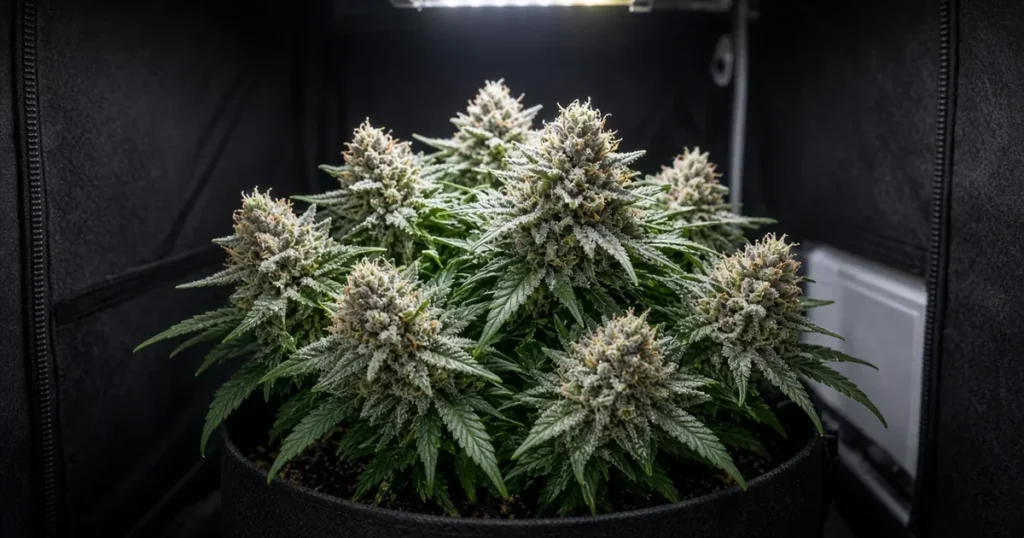
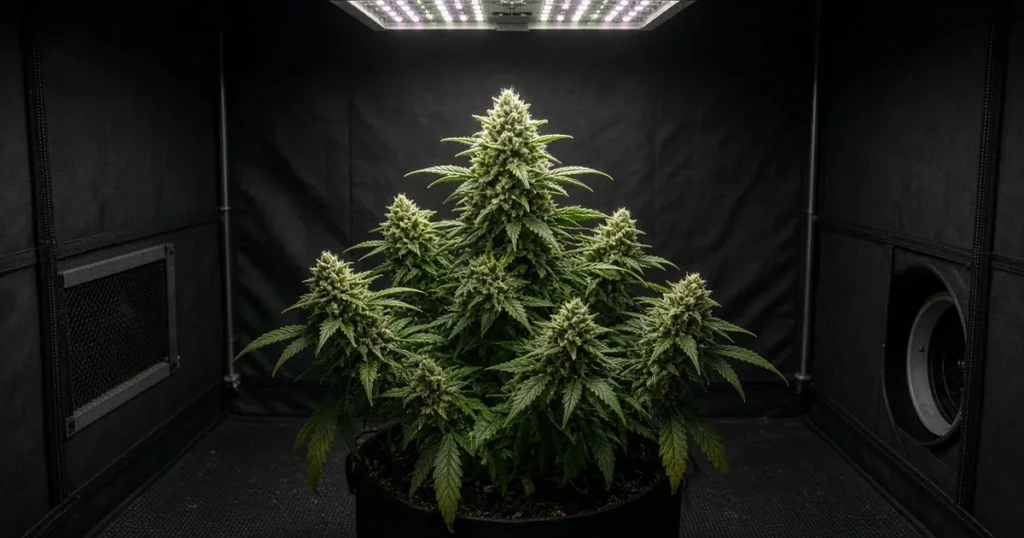
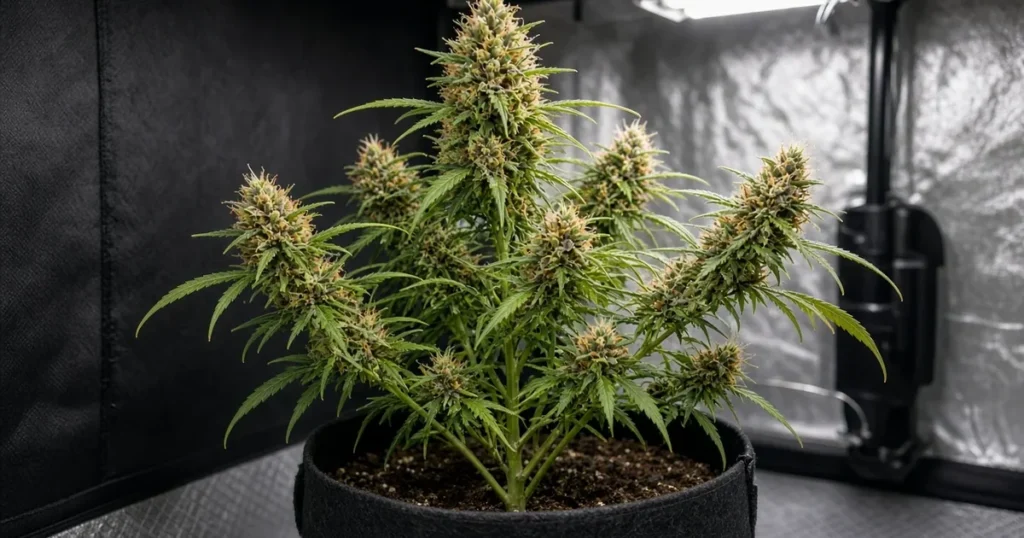
Lemon Haze tends to grow taller than indica dominant autos, with a sativa leaning shape and long colas. Its buds are often lighter in color with plenty of orange pistils. The citrus aroma is usually noticeable in late flower and becomes clearer during the cure.
In short, look for light green, resinous colas with orange pistils and an aroma that leans bright lemon peel and citrus over a light Haze spice. Every plant is a little different, and your setup, light and care will shape the final result as much as genetics.
Before you start
- Check your local laws. Grow only where home cultivation is legal under your state’s law and stay within your plant limit. You must be 21 or older. Federal treatment of cannabis seeds is also changing, so read our December 11 2026 seed rule explainer.
- Pick your space. A 2×2 or 2×4 tent suits one or two autoflowers.
- Gather supplies. A quality full spectrum LED, a 3 to 5 gallon fabric pot, a light, airy soil or coco mix, a small fan, a pH meter and a timer.
Step 1: Germinate the seed
- Soak the seed in clean, room temperature water for 12 to 24 hours, or until it sinks.
- Move it to a damp paper towel inside a covered plate in a warm, dark spot.
- Check daily. When a small white taproot appears, it is ready to plant.
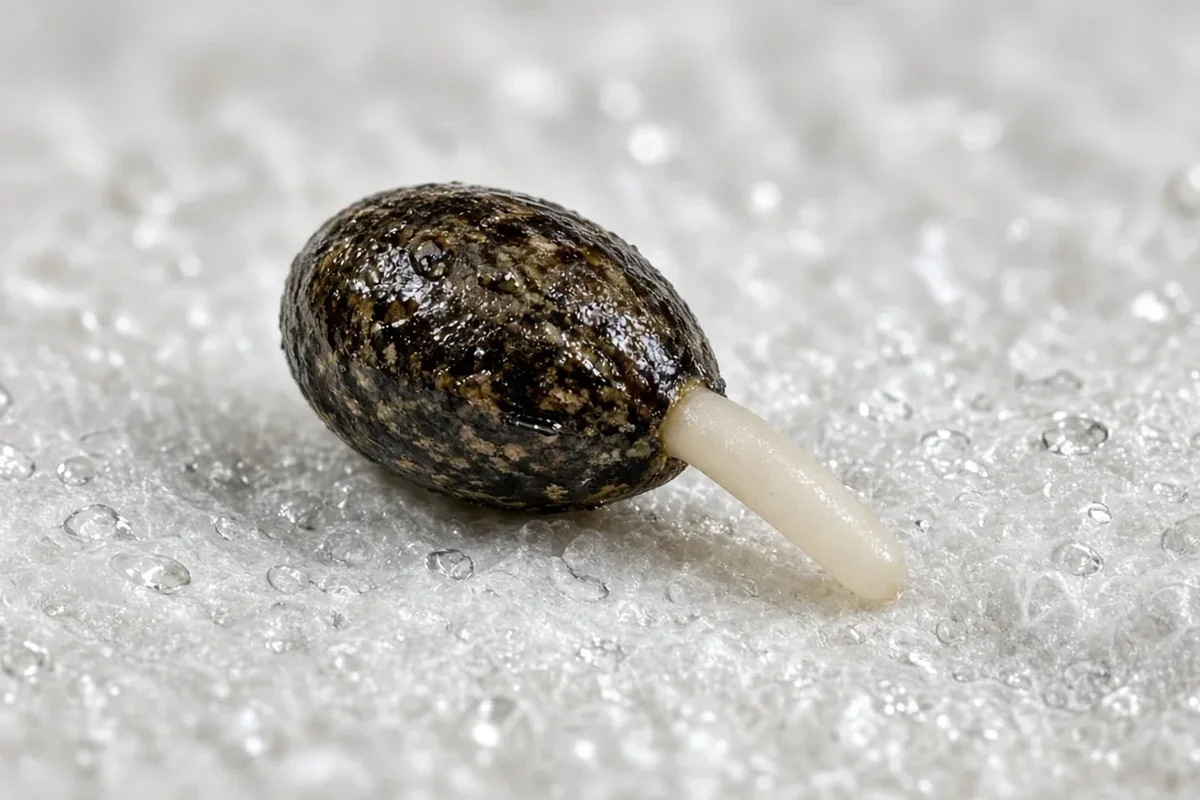
Handle the taproot gently and plant it root down about a quarter to half an inch deep.
Step 2: Plant directly into the final pot
Autoflowers do not love transplant shock, and they have a short life. Planting straight into the final pot saves time and stress. Pre-moisten the soil so it is damp, not soggy.
Step 3: The seedling stage
- Keep the light at a gentle intensity and a comfortable distance.
- Water lightly in a small circle around the stem.
- Keep humidity moderately high and temperatures comfortable.
- Many autoflower growers run 18 hours of light and 6 of dark, or 20 and 4, for the whole grow.
Step 4: Vegetative growth
Lemon Haze Auto has a short veg window, so gentle training goes a long way.
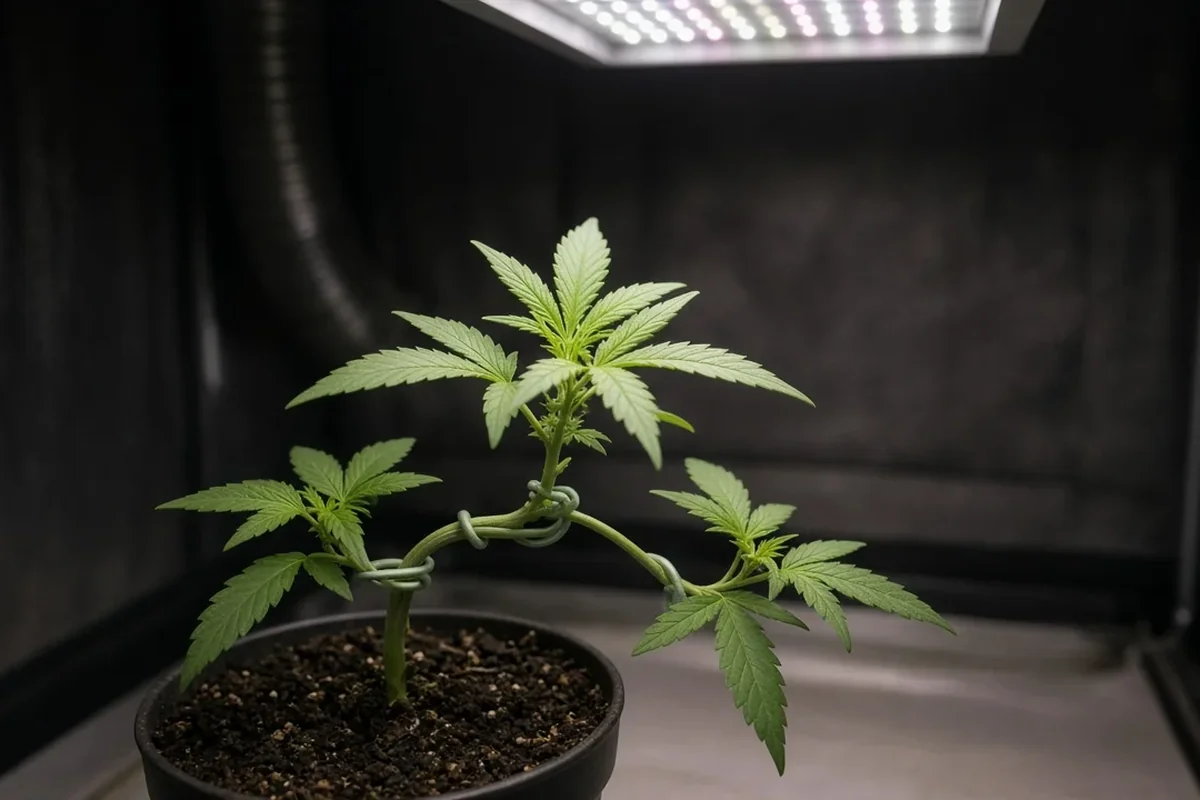
- Low stress training (LST). Gently bend the main stem and tie it down so the side branches can rise and form an even canopy.
- Skip heavy topping on autos. Some growers top autoflowers early, but beginners usually get better results with LST alone.
- Feed lightly. Autoflowers are often light feeders. Start at a fraction of the label dose and watch the leaves.
- Water wisely. Let the top inch of soil dry before watering again.
Step 5: Flowering
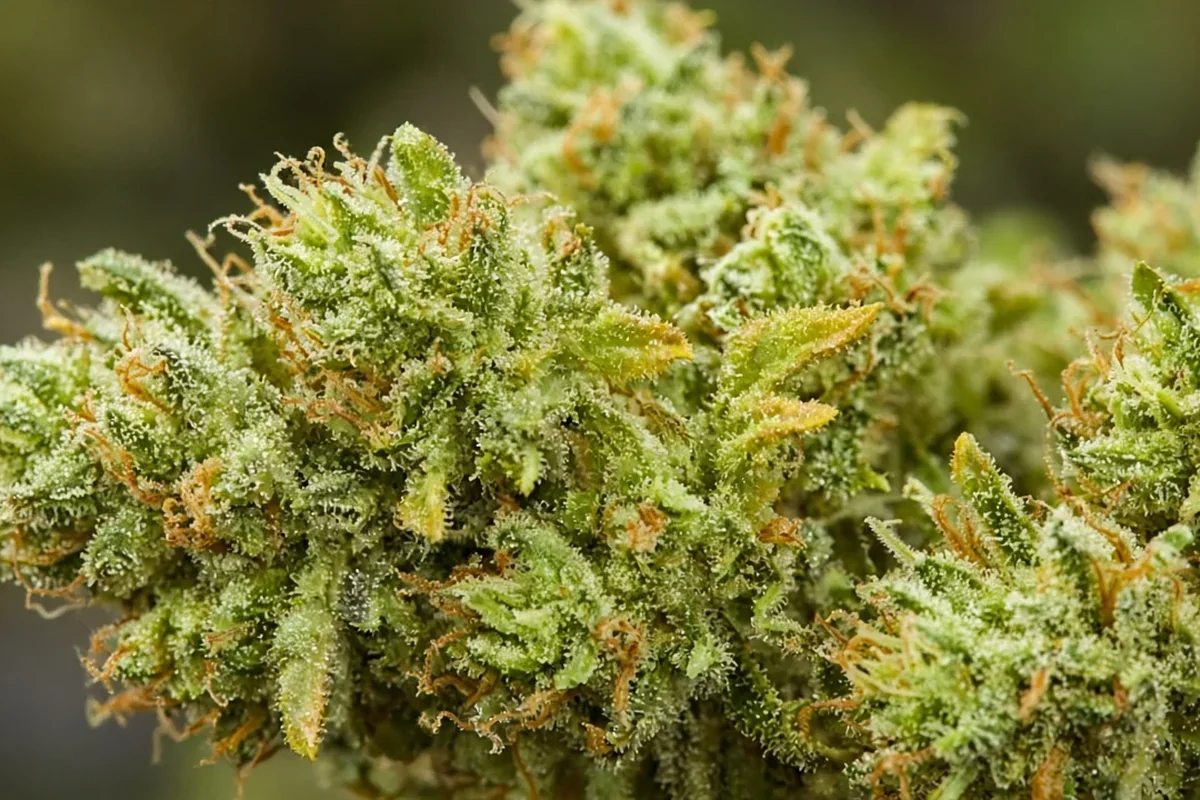
Your Lemon Haze Auto will start flowering on its own. You will see white pistils forming at the branch tips.
- Shift nutrients. Move toward a bloom formula with more phosphorus and potassium.
- Support branches. Use soft ties or a trellis net if colas get heavy.
- Lower humidity. Keep air moving and humidity lower to protect buds from mold.
- Keep the canopy even. Continue gentle LST through early flower.
Lemon Haze specific tips
- Use LST early so the main cola does not race ahead of the rest.
- Keep temperatures moderate in late flower to protect citrus terpenes.
- Dry slowly in a cool, dark space to keep the lemon aroma.
Step 6: Know when to harvest
The best way to time your harvest is to look at the trichomes, the tiny resin glands on the buds, with a jeweler’s loupe or clip on macro lens.
- Clear trichomes: not ready yet.
- Mostly cloudy: many growers harvest here.
- Some amber: some growers wait for a portion of amber.
Pistils also darken and curl as harvest nears. Use the product page’s flowering time as a guide, but let the trichomes have the final say.
Step 7: Dry and cure
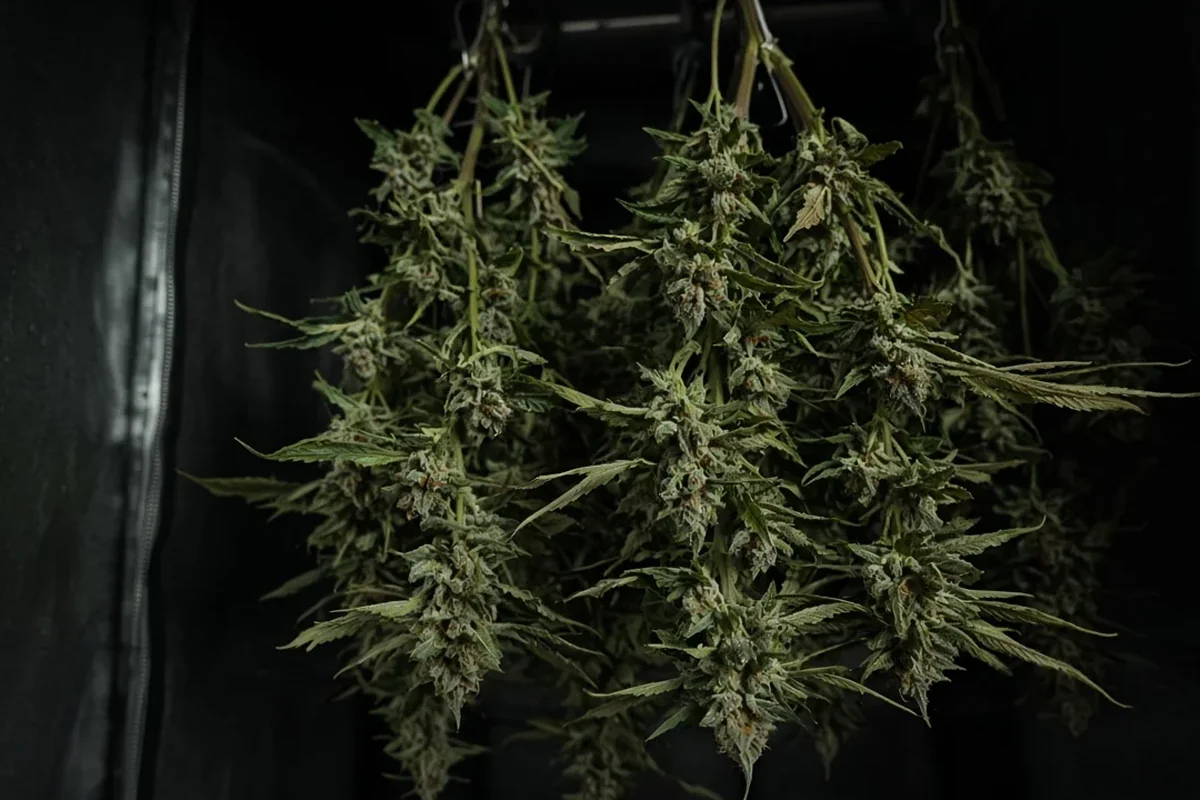
- Cut branches and hang them in a dark space with gentle airflow and moderate humidity.
- When small stems snap rather than bend, trim and place buds in airtight glass jars.
- Open the jars briefly each day for the first couple of weeks, then less often.
A slow dry and patient cure bring out the full Lemon Haze aroma.
Growing Lemon Haze as a photoperiod
If you grow a photoperiod Lemon Haze instead, you control when it flowers by switching your light to 12 hours on and 12 hours off. Expect a taller, longer project with more room for topping and training. The autoflower version is the simpler starting point.
Growing Lemon Haze Auto outdoors
Where outdoor home growing is legal, Lemon Haze Auto can do well in a sunny, private spot. Because it is an autoflower, you can plant after your last frost and harvest before fall weather turns. Use a large pot or well prepared bed, protect plants from heavy rain and keep them out of public view as your state requires.
A simple Lemon Haze shopping list
- One or two Lemon Haze seeds, within your legal plant limit
- A 3 to 5 gallon fabric pot per plant
- Light, airy soil or a coco and perlite mix
- A full spectrum LED light sized for your tent
- An oscillating clip fan and a small exhaust fan with a carbon filter
- A pH meter or test kit
- Soft plant ties for LST
- A jeweler’s loupe for checking trichomes
- Airtight glass jars for curing
Common Lemon Haze growing mistakes
- Overwatering seedlings. Small roots in a big pot drown easily.
- Overfeeding. Burnt leaf tips are a sign to back off.
- Ignoring height. Plan your tent height and use LST early.
- High humidity in late flower. Buds need good airflow.
- Harvesting by calendar alone. Check trichomes.
Frequently asked questions
Is Lemon Haze the same as Super Lemon Haze?
They are related names but are generally described as different crosses. Check the product page for the genetics we carry.
Does Lemon Haze need a big tent?
A 2×4 tent or larger gives its sativa leaning shape room to grow, though LST helps in smaller spaces.
How long does Lemon Haze Auto take from seed to harvest?
It varies with conditions. Check the Lemon Haze Auto product page for the expected timeline and confirm with trichomes.
What light schedule is best for Lemon Haze Auto?
Many growers use 18 hours on and 6 off, or 20 on and 4 off, from seed to harvest.
Can I grow Lemon Haze in a small tent?
Yes. Lemon Haze Auto suits 2×2 and 2×4 tents, especially with LST.
Start your Lemon Haze grow
With its distinctive aroma and light green, resinous colas with orange pistils, Lemon Haze has earned a loyal following. Pick up Lemon Haze seeds from Kind Seed Co to start your next grow, see our fruit strains family for similar options, or browse the full Kind Seed Co shop. For the basics, read our ultimate beginner’s guide to growing cannabis. Kind Seed Co sells only to adults 21 and older.