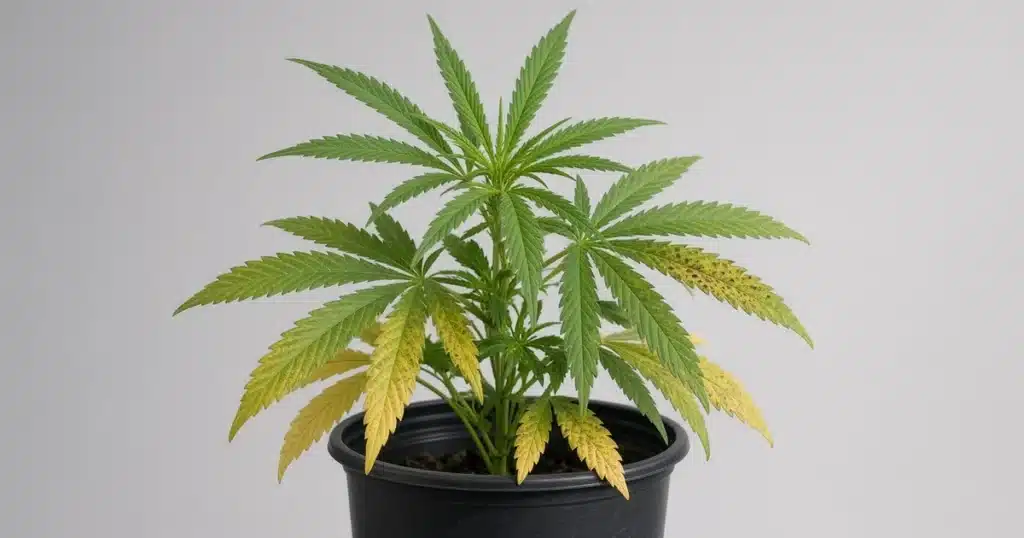
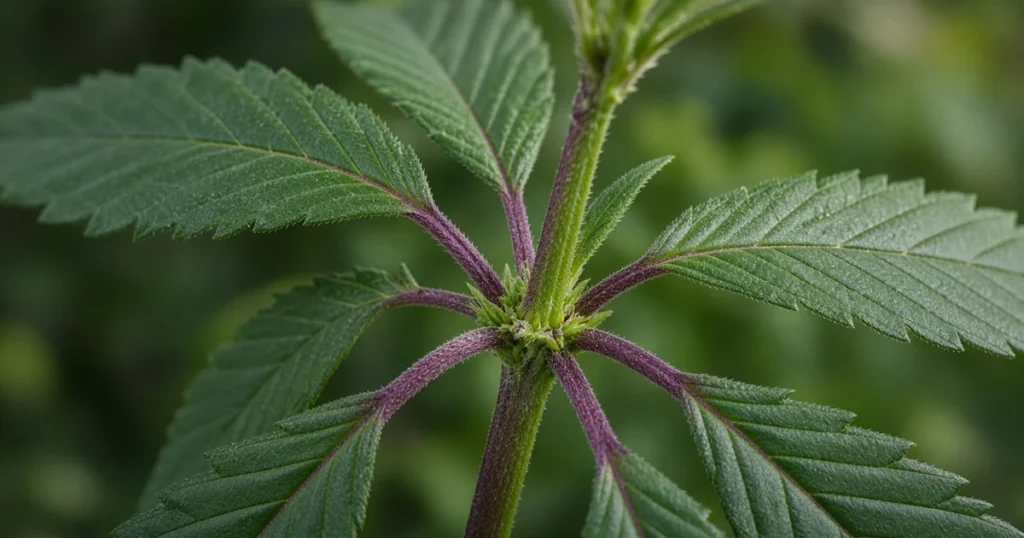
How to Revive a Dying Weed Plant: A Triage Checklist
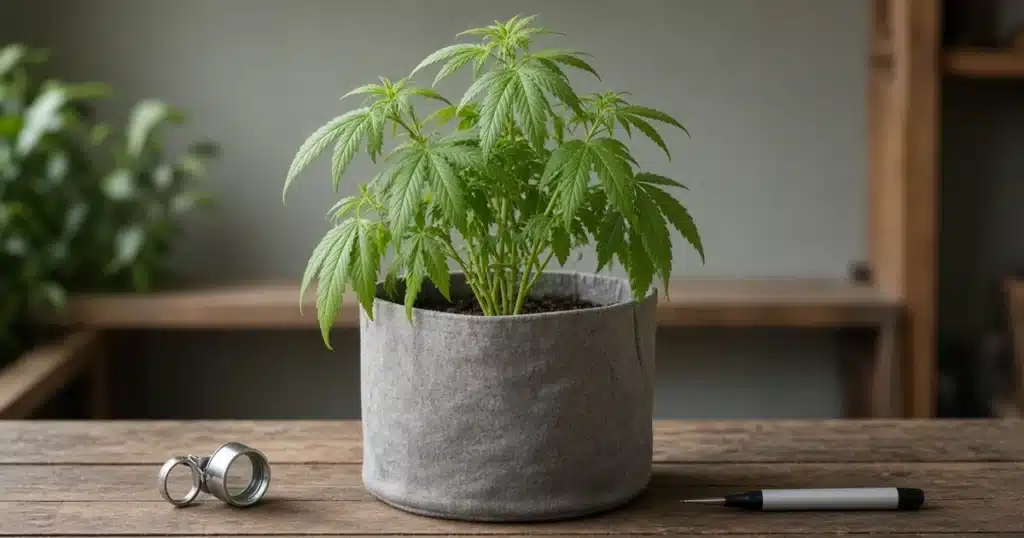
Quick answer: If your weed plant is dying, stop adding things and check the basics in order: water and drainage, roots, temperature and light, pH and feed strength, then pests. Change one thing at a time and judge the plant by its new growth. You may be able to revive a dying weed plant if the roots are still healthy, but not every plant comes back.
Most sick plants are not victims of a mystery disease. Penn State Extension notes that not all symptoms are related to insects or plant diseases. Soil, weather, the amount of light and other growing conditions can all affect plant health. That is good news, because those are things you can change.
First: Stop Making It Worse
When a plant looks bad, the natural reflex is to add something. More water, more feed, a spray, a different bottle tomorrow. That pile of changes makes it impossible to tell what helped and what hurt.
Pause and write down what you did in the last week: when you last watered and fed, any pH readings, any swings in temperature, and any new spray or pest you noticed. Penn State points out that overfertilization or overwatering causes problems as often as underfertilization or underwatering, so your own routine is the first suspect.
Damaged leaves often stay damaged. The goal is new growth that looks more normal, not old leaves turning green again.
Living or Nonliving Cause?
Extension diagnosticians start by asking whether the problem comes from something living, such as a pest or pathogen, or something nonliving, such as water, heat or feeding.
- Living causes tend to spread. Penn State says biotic diseases usually spread throughout the plant and from plant to plant.
- Nonliving causes tend to be even. Penn State says uniform distribution usually suggests an abiotic problem. NC State Extension adds that uniform damage is even more likely to be nonliving when all plant parts are affected within a short time.
- One can lead to the other. NC State explains that pests or pathogens are often secondary problems that move in after cultural or nonliving stress.
Oregon State University Extension recommends asking a series of targeted, practical questions before acting, such as how many plants are affected and what pattern the damage shows. It warns that people too often spray first and ask questions later.
Triage Checklist
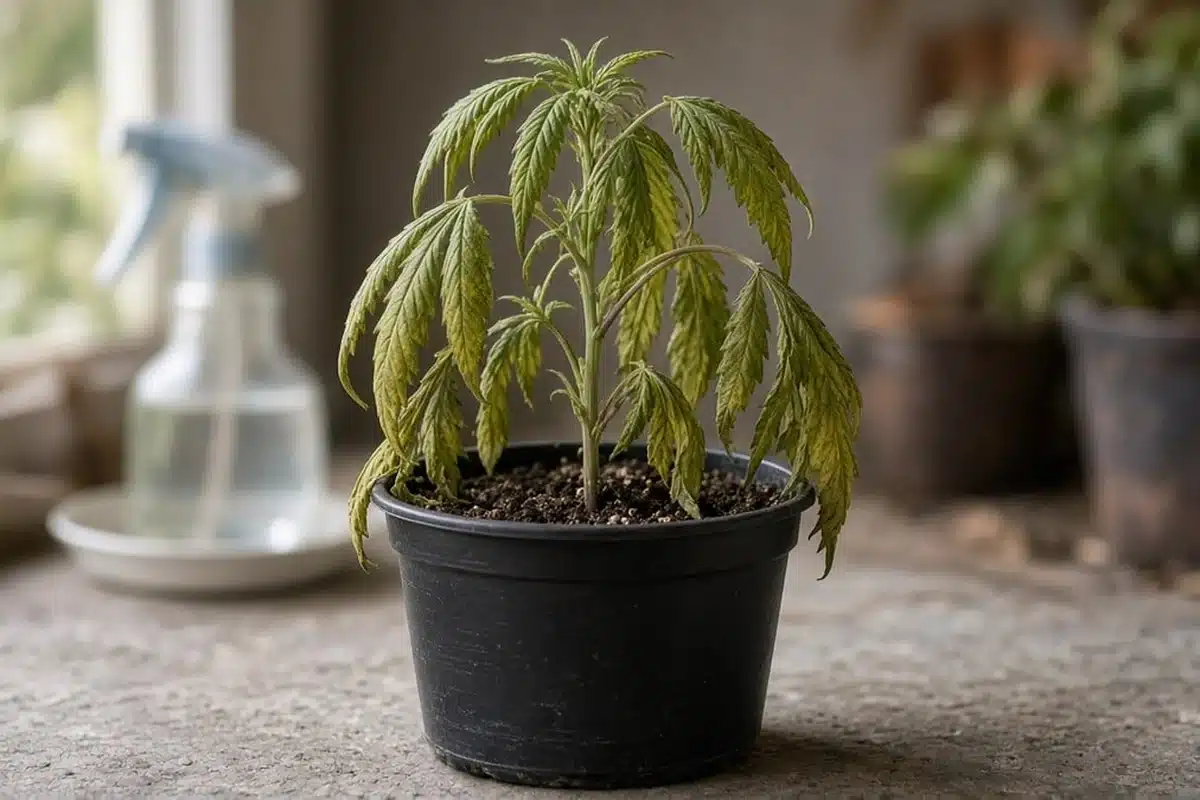
Work through it from top to bottom. Many problems that look like disease are still water or climate.
1. Collapse or Slow Fade
- Limp, floppy and the mix is wet. Too much water or roots in trouble. Do not add more water because the leaves look thirsty. Our guide to overwatering cannabis covers this in detail.
- Limp and the pot feels light. Too little water. Water thoroughly, then go back to lifting the pot to judge when to water next.
- Slow fade, still standing. Look at pH, light, feed strength and pests before naming a nutrient problem.
UMD Extension notes that wilting can come from either overwatering or a lack of water, which is why lifting the pot matters more than looking at the leaves.
2. Water and the Container
Lift the pot. A pot that stays heavy day after day is a clue. UMD says water should be able to drain from the bottom of containers and recommends a well drained mix. Check that drain holes are open and that pots are not sitting in a saucer of runoff.
3. Climate and Light
Note the temperature with lights on and off, the humidity and how close the light sits. Heat plus a wet pot is hard on roots. A light that is too close can bleach the tops, which is easy to mistake for a feeding problem.
4. pH and Feed Strength
Measure the pH of the water you mix and, if you can, the runoff. When pH drifts, nutrients can sit in the pot unused, which our guide to nutrient lockout in cannabis explains. If you have been feeding at a strong rate, a sick plant usually needs less, not more. For reading leaf symptoms, see our guide to spotting common cannabis deficiencies by leaf symptoms.
5. Pests and Surface Clues
Look under leaves and at the surface of the mix. Mites, thrips, fungus gnats and aphids are ordinary garden problems, and so is powdery mildew in still, humid air. Fix the climate that invited them as well as the pests themselves.
6. Roots
If the top of the plant does not explain the problem, check the roots. UMD Extension says healthy roots should be light colored and firm, while root rots show as discolored and softened roots. Use that as a sign to look closer, not a diagnosis on its own. If roots look bad, see our guide to Pythium root rot in cannabis.
A 72 Hour Plan to Revive a Dying Weed Plant
- Stop feeding. Hold off on nutrients until you know the cause.
- Check pot weight and drainage. Lift the pot and confirm water can drain freely.
- Fix the water. If the mix is soaked, let it dry back. If it is bone dry, water thoroughly once.
- Fix the climate and light. Bring temperature back to a steady range and raise the light if tops look bleached.
- Check pH. Measure what goes in and, if possible, what comes out.
- Look for pests. Check leaf undersides and the surface of the mix.
- Get air moving. Gentle airflow helps dry the surface and discourages mold.
- Do not stack changes. Avoid repotting, heavy pruning and refeeding on the same day unless the pot is waterlogged and you must move the plant.
- Recheck at 24, 48 and 72 hours. Decide the next change from what you see, not from worry.
- Wait for new growth. New leaves that look closer to normal are the best sign the plant is recovering.
Stage Notes
A seedling has little reserve, so it may not bounce back from heavy damage. A plant in the vegetative stage has the most time to recover. A plant in flower has the least time left, so keep the room steady and avoid extra projects.
What Revive Can Honestly Mean
It can mean the plant stops getting worse, new shoots look closer to normal, you get a steady wet and dry rhythm back, and pests are no longer multiplying. It does not mean every scarred leaf heals or a late flowering plant resets to week one. Some plants stabilize and finish smaller. That can still count as a good result.
UMD Extension also says severely damaged plants should be discarded. Removing a plant that is spreading pests or rot can protect the rest of the room.
Troubleshooting
Leaves droop and the mix stays wet. Likely too much water or poor drainage. Let the mix dry back and check the drain holes. See the overwatering guide linked above.
Plant droops just after a move to a bigger pot. The roots are settling. Keep conditions steady and water lightly for a few days.
New leaves come in pale or spotted. Check pH and feed strength before adding anything. See the lockout and leaf symptoms guides linked above.
Roots look brown and soft or the mix smells sour. Possible root rot. Use the Pythium guide linked above and consider whether the plant is worth saving.
Webbing, specks or tiny insects on leaves. A pest problem. Isolate the plant and fix still, warm or humid air.
White powder on the leaves. Likely powdery mildew. Improve airflow and lower humidity.
Frequently Asked Questions
Can every dying weed plant be revived?
No. Plants with badly damaged roots, severe rot or heavy pest damage may not recover, and UMD Extension says severely damaged plants should be discarded. Stabilize the plant first by fixing water, climate and pH, then decide based on new growth whether it is worth keeping.
Should I remove damaged leaves from a struggling cannabis plant?
Remove leaves that are fully dead or blocking airflow if they come away cleanly. Stripping a weak plant heavily adds more strain and removes leaves it still needs. Fix the cause first, wait for new growth and tidy up once the plant is clearly recovering.
Does a sugar or tea drench revive a dying weed plant?
It is not a revive method. We found no Extension source that supports it. Sweet drenches can feed microbes you did not intend to feed, especially in a wet pot. Water, drainage, climate, pH and pests come first. Work through the checklist instead of adding something new.
How long until a struggling cannabis plant shows recovery?
It depends on the cause. A simple droop from dry soil can perk up within hours of watering. Problems with pH or feeding take days to a week or more, and you judge them by new growth. Old damaged leaves usually do not recover, so watch the newest leaves.
When should I start over with a dying weed plant?
Consider starting over if the roots are badly rotted, the plant is spreading pests to healthy plants, or it has too little time left to recover. Starting fresh is not failure. Clean the space, use fresh mix and pots that drain well, and apply what you learned.
Sources
- Penn State Extension, Diagnosing a Plant Problem 101: https://extension.psu.edu/diagnosing-a-plant-problem-101
- NC State Extension, Extension Gardener Handbook, Chapter 7: Diagnostics: https://content.ces.ncsu.edu/extension-gardener-handbook/7-diagnostics
- University of Maryland Extension, Diagnose Indoor Plant Problems: https://www.extension.umd.edu/resource/diagnose-indoor-plant-problems
- Oregon State University Extension, Diagnose Plant Problems by Asking the Right Questions: https://extension.oregonstate.edu/news/diagnose-plant-problems-asking-right-questions