Most mold resistant cannabis strains for the Pacific Northwest
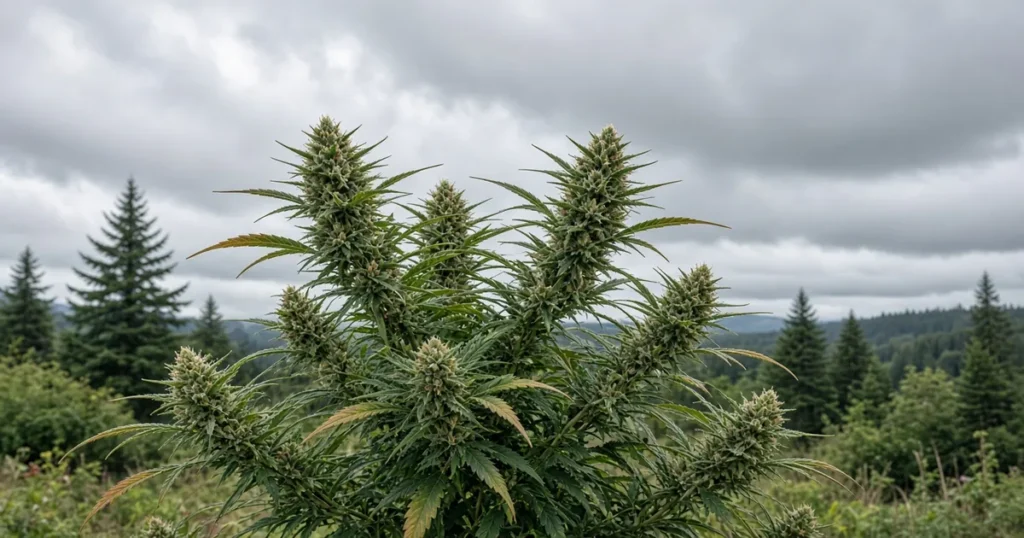
Growing cannabis outdoors in Washington, Oregon and northern California is a lesson in timing. Summers are often dry and sunny, but fall rain tends to show up right when buds are fattening. That moisture, combined with cool nights, is the perfect setup for bud rot and powdery mildew. Picking seeds with better mold tolerance will not make you immune, but it gives your plants a far better chance of reaching harvest clean. This guide explains which traits matter, which strain families tend to handle Pacific Northwest weather and how to set up your garden to help them. It is written for adults 21 and older growing where home cultivation is legal.
Why mold hits Pacific Northwest grows so hard
Two problems cause most of the losses.
- Botrytis, also called bud rot, starts inside dense colas when moisture sits for too long. By the time you see gray fuzz or a brown leaf sticking out of a bud, the inside is often ruined.
- Powdery mildew shows up as white dusty patches on leaves. It loves humid air, poor airflow and big swings between warm days and cool nights.
The Pacific Northwest delivers both conditions in late September and October. Dew forms overnight, rain arrives in bursts and the sun may not come out long enough to dry plants between storms.
Traits that help a strain resist mold
No strain is mold proof. Some just give mold fewer places to start.
- Airy bud structure. Buds that are a little looser let air and light reach the inside and dry faster after rain.
- Open branching. Plants with space between nodes move air through the canopy.
- Early finish. A plant that is ready in late September may dodge the worst October weather completely.
- Thick leaves and strong stems. Sturdy plants shed water and hold up under wet, heavy colas.
- Breeding history in wet climates. Some genetics were selected outdoors in places like the Netherlands, the UK or the Pacific Northwest itself, and those traits often carry through.
Strain families that tend to do well
These families are general starting points. Always check the specific strain page for listed flowering time, and treat those numbers as estimates.
Early finishing indica leaning hybrids
Many compact indica hybrids finish in late September to early October outdoors. Their shorter season is their main advantage. Watch dense buds closely in rain.
Sativa leaning plants with airy buds
Some sativa leaning strains have long, open flowers that dry quickly. The trouble is many of them finish too late for the region, so pick ones with a listed early outdoor harvest.
Autoflowers
Autoflowers let you sidestep fall entirely. A spring planted autoflower can finish in midsummer when the weather is driest. You can run two crops before the rain if your plant count allows.
Breeder lines selected for mold tolerance
Kind Seed Co groups seeds that are known for handling damp conditions in our mold resistant cannabis strains collection. Our broader outdoor seeds range is another place to compare options.
Garden setup that cuts mold risk
Spacing and pruning
Give each plant room. Remove lower branches that will never get good light. This practice, often called lollipopping, opens airflow at the bottom of the plant where moisture sits longest.
Rain covers
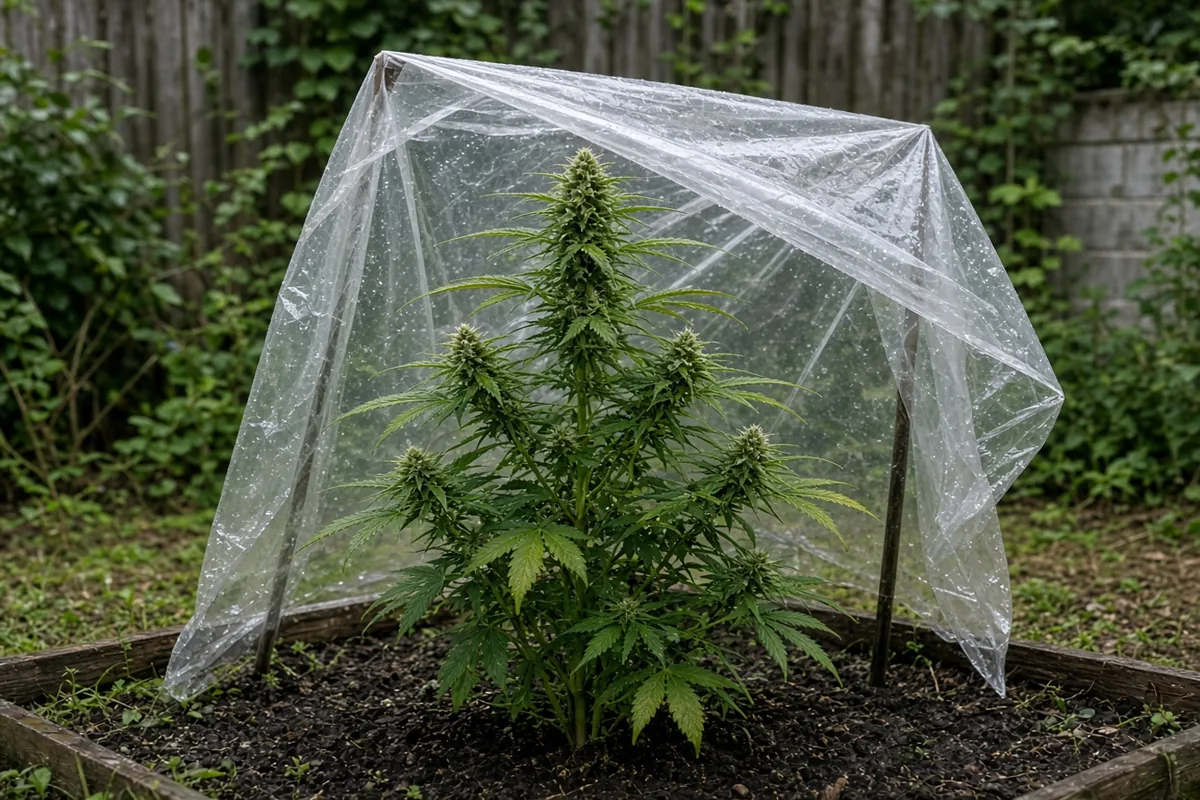
A simple frame with clear plastic or greenhouse film over the top of your plants keeps the worst rain off. Leave the sides open so air can move. Many Pacific Northwest growers say a cover is the single biggest upgrade they made.
Morning sun
Plant where early sun hits. Morning light burns off dew faster, which shortens the time buds stay wet.
Shake and check
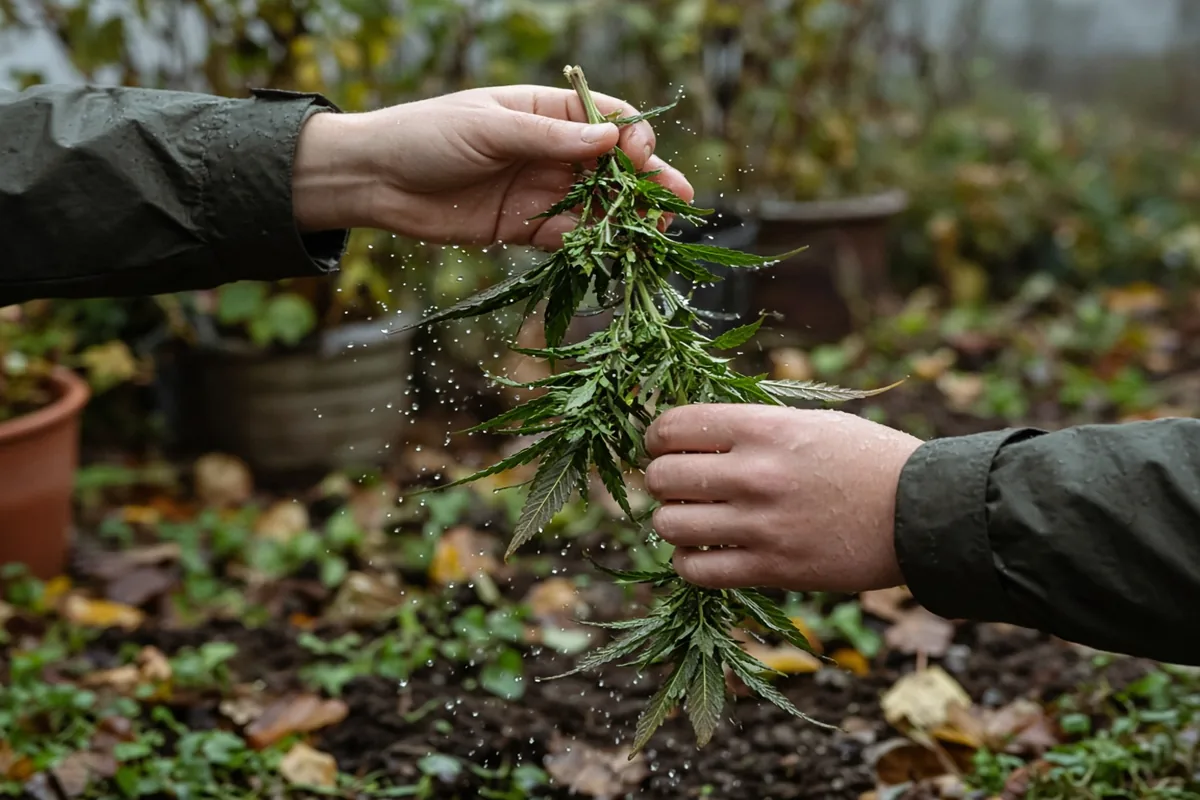
After a rain, gently shake branches to knock water off. Check the inside of the biggest colas every few days in late flower. Remove any brown or gray spots right away with clean scissors, and cut well past the visible damage.
Harvest timing in a wet fall
When a long storm is coming and your plants are close, it is often smarter to harvest a little early than to risk losing the crop. Many growers harvest in stages, taking the top colas first, then giving lower buds a few more days if the weather breaks. Dry the harvest in a room with good airflow and steady humidity so mold does not start during drying.
Common mistakes in the Pacific Northwest
- Choosing a strain for its looks. Giant dense colas are exactly what mold loves.
- Planting a late finisher. A strain listed for an early November finish may never make it.
- Overfeeding nitrogen late. Lush, leafy plants hold more moisture.
- Crowding the garden. Plants touching each other trap humid air.
Reading strain pages the right way
When you shop, look at three details on each strain page. First, the listed outdoor harvest window. Second, the stated height, because a giant plant is hard to cover. Third, any notes about bud structure or climate. Use those details to shortlist two or three strains, then grow them side by side and keep notes. After one season you will know far more about your own yard than any seed description can tell you.
Using local knowledge
The Pacific Northwest has a long history of backyard gardeners who deal with the same rain and fog every fall. Talk to neighbors who grow tomatoes, grapes or hops, because they fight the same mildew and rot. Note which corners of your yard dry first after rain and which stay soggy. Small changes, such as moving a fabric pot six feet into a breezier spot, can make more difference than any seed choice.
Grow legally and responsibly
Home cultivation is only legal in some states, and each state sets its own plant limits, locking rules and rules about whether plants can be visible from a public place. You must be 21 or older to buy seeds from Kind Seed Co, and you should grow only where your state and city allow it. Check your state rules in our guide to the legal requirements for growing weed plants in your state before you plant. Federal treatment of cannabis seeds is also changing, so read our December 11 2026 seed rule explainer before you order. Keep plants and harvested flower locked away from children, pets and visitors, and never drive after using cannabis. This article is general information about gardening. It is not legal advice and it is not medical advice.
Frequently asked questions
Is any cannabis strain completely mold resistant?
No. Some strains have traits that lower the risk, such as airy buds and early finish, but any plant can get bud rot in long wet weather.
When should I harvest outdoor cannabis in Washington or Oregon?
Many plants finish in late September to mid October. Watch the forecast and harvest early if a long storm threatens ripe plants.
Are autoflowers good for the Pacific Northwest?
Yes. They can finish in summer before fall rain arrives, which avoids much of the mold risk.
Do rain covers really help?
Yes. A clear roof with open sides keeps buds drier and is one of the most effective upgrades for wet regions.
Ready to start
Browse the full range in the Kind Seed Co shop or go straight to mold resistant cannabis strains. Kind Seed Co sells only to adults 21 and older. Always follow the home grow laws where you live.