
Perlite vs Vermiculite for Cannabis: Which to Use?
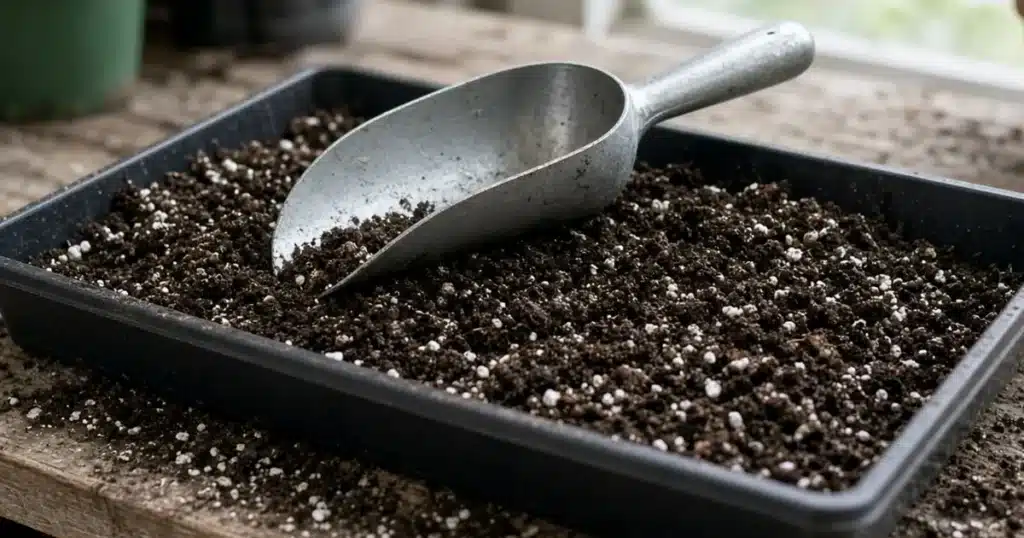
Perlite and vermiculite both lighten a cannabis growing mix, but they behave differently. UGA Extension notes both are sterile with a pH of 7 to 7.5, but vermiculite has a large cation exchange capacity while perlite does not. NC State says vermiculite alone packs and holds too much water, and it recommends rooting mixes of peat with perlite.
What Is the Difference Between Perlite and Vermiculite?
UGA Extension describes perlite as lightweight, chemically inert and sterile, and vermiculite as a heat-treated clay mineral with those same traits plus a large cation exchange capacity, meaning it can hold nutrients. Both have a pH of 7 to 7.5, and both increase porosity (UGA). By comparison, UGA lists peat at pH 3.0 to 4.0.
When Should You Use Perlite?
NC State recommends rooting media such as one part peat to one or two parts perlite by volume for cuttings (NC State). Perlite also appears in cannabis substrate research, and one study grew plants in coir mixes with 10% to 30% perlite (Plant and Soil). Our super soil post covers a richer mix.
Source: UGA Extension B1256 (greenhouse substrates).
pH and nutrient holding of peat moss, perlite and vermiculite (greenhouse substrates)
| Component | pH | Holds nutrients (CEC) | Source |
|---|---|---|---|
| Peat moss | 3.0 to 4.0 | Not stated | UGA B1256 |
| Perlite | 7 to 7.5 | No large CEC | UGA B1256 |
| Vermiculite | 7 to 7.5 | Large CEC | UGA B1256 |
When Should You Use Vermiculite?
NC State suggests a fine vermiculite layer about a quarter inch deep to cover very small seeds, but says vermiculite by itself is not recommended for rooting because it packs and holds too much moisture (NC State). Its nutrient-holding capacity sets it apart from perlite (UGA).
Can You Mix Both in a Cannabis Substrate?
Yes. In one cannabis study, seedlings grew in a 50:50 vermiculite and perlite mix before moving to coir-based substrates. Later, plants in coir-perlite mixes grew least, linked to low transpiration (Plant and Soil). A 2025 review notes substrate choice strongly affects growth and rooting (Agriculture 2025). For outdoor beds, see the best soil for growing outdoors, and for coir, see coco coir.
Sources
- UGA Extension B1256: Essential pH Management in Greenhouse Crops
- NC State Extension Gardener Handbook: Propagation
- Ortiz-Delvasto et al. 2023, Plant and Soil: Water Availability in Substrates for Cannabis
- Agriculture 2025 Review: Soilless Growing Media for Cannabis Cultivation
The sources above are the backbone of this guide, which Kind Seed Co shares as general growing information.
FAQ
Does perlite add nutrients?
No. UGA Extension describes perlite as lightweight, chemically inert and sterile, without the large cation exchange capacity that vermiculite has. That means perlite adds air space to a mix but does not hold onto nutrients, so feeding still has to come from the rest of the mix or the water.
Why do seed-starting mixes use vermiculite?
NC State Extension suggests a layer of fine vermiculite about a quarter inch deep to cover very small seeds, because it is fine and screened. It also warns that vermiculite on its own is not recommended for rooting cuttings, because it packs down and tends to hold too much moisture.
What substrates have cannabis studies used?
One cannabis study germinated seeds in vermiculite and grew seedlings in a 50:50 vermiculite and perlite mix before moving them to five coir, peat and perlite substrates. Available water in the substrate was the main factor affecting growth, and coir-perlite mixes gave the lowest growth in that trial.
Does more perlite mean better drainage?
UGA Extension says both perlite and vermiculite increase substrate porosity, and NC State recommends up to two parts perlite per part peat for well-drained rooting media. UGA adds that perlite, unlike vermiculite, has little cation exchange capacity, so it does not hold nutrients.


