
How to Calibrate a pH Meter for Growing Cannabis
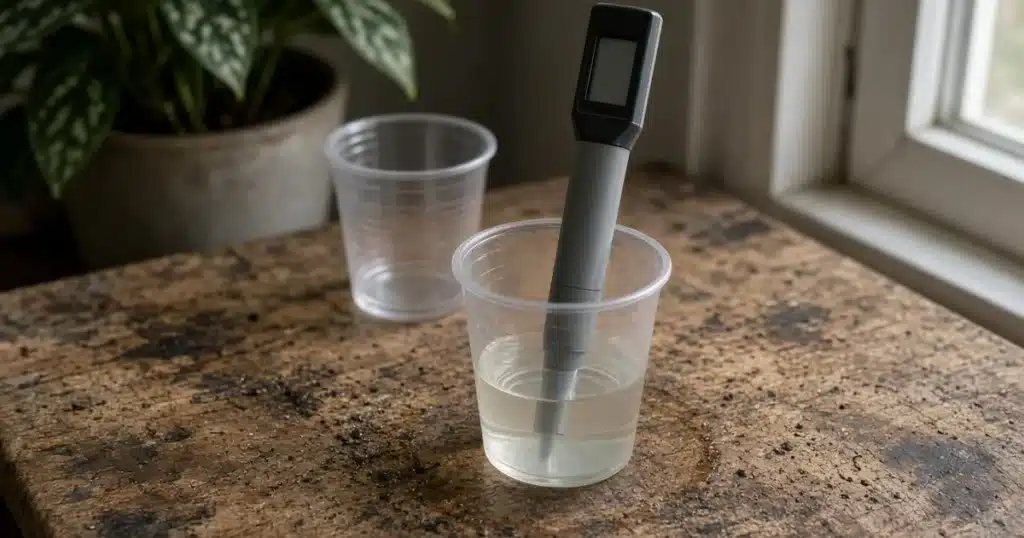
Calibrating a pH meter means checking it against standard buffer solutions so its readings are true. Purdue Extension says standard solutions are needed to calibrate meters, and University of Kentucky guidance stresses regular calibration and soaking the probe in storage solution. In short, calibrate before you test, and store the meter properly between uses.
Why Calibrate a pH Meter?
Purdue notes that all nutrients are readily available in soilless substrates at a pH of about 5.4 to 6.2, though each crop has its own best range (Purdue HO-237). University of Kentucky says regular calibration with standard buffers is critical (University of Kentucky). Our pH guide explains why pH matters.
What Do You Need to Calibrate?
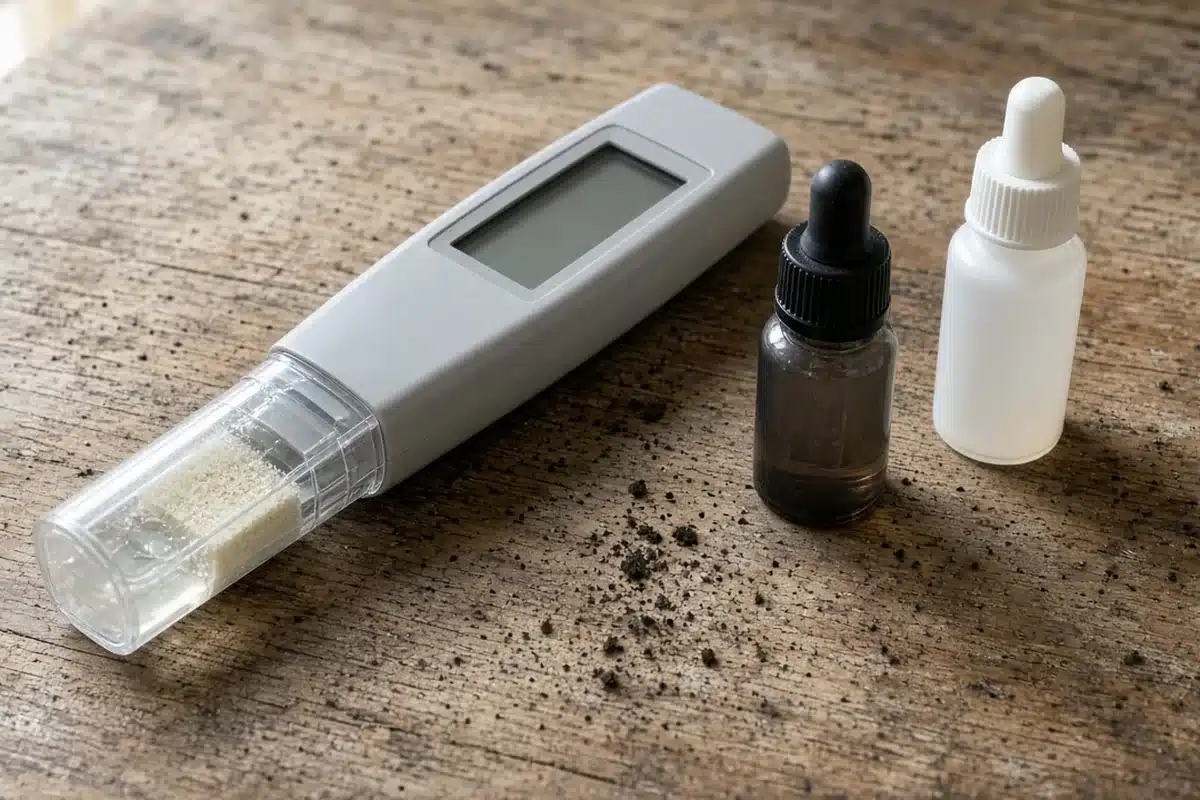
Purdue says standard solutions for pH and conductivity are needed to calibrate meters, and that units with automatic calibration and temperature compensation are desirable (Purdue HO-237). University of Kentucky advises using the calibration solutions the maker recommends and following the manual (University of Kentucky).
Source: Purdue Extension HO-237 (soilless substrates, greenhouse crops). Each crop has its own optimal range.
Substrate pH with all nutrients readily available (greenhouse crops in soilless substrates)
| Item | Value | Source |
|---|---|---|
| pH with all nutrients readily available | 5.4 to 6.2 | Purdue HO-237 |
How Do You Calibrate a pH Meter Step by Step?
Follow your meter’s manual. University of Kentucky advises soaking the electrode in storage solution for at least one hour before use to rehydrate it, then calibrating with standard buffers (University of Kentucky). Rinsing the probe between buffers is common grower practice. Purdue recommends keeping meters and solutions at room temperature in low humidity (Purdue HO-237).
How Do You Store and Maintain the Probe?
Purdue says to store meters and solutions in a room with low humidity at room temperature, and never in the greenhouse, especially in hot weather (Purdue HO-237). Kentucky points to the maker’s manual for cleaning and storage (University of Kentucky). If readings look fine but plants still struggle, see nutrient lockout, and our supplies list for other tools.
Sources
- Purdue Extension HO-237: pH and EC Measurements in Soilless Substrates
- University of Kentucky CCD-TA-06: Sensors and Tools for Evaluating CEA Production
General growing information from Kind Seed Co, tied to the Purdue and Kentucky sources above.
FAQ
How often should you calibrate?
University of Kentucky guidance calls regular calibration with standard buffer solutions critical and points growers to the maker's manual for the schedule. Purdue recommends a routine monitoring program, testing on the same day each week, and calibrating before each of those sessions is grower practice built on that routine.
What are pH buffers?
Buffers are standard solutions with a known, fixed pH used to set and check a meter. Purdue Extension says standard solutions for pH and conductivity are necessary to calibrate meters. University of Kentucky advises using the calibration solutions recommended by the meter's maker rather than substituting other liquids.
Why does a probe need storage solution?
University of Kentucky advises soaking a pH electrode in the recommended storage solution for at least one hour before use to rehydrate it before taking readings. Purdue adds that meters and solutions should be kept at room temperature in a room with low humidity, never in the greenhouse.
How do you measure pH in pots?
Purdue recommends the PourThru method. Let the pot drain for 30 to 60 minutes after watering, place a saucer underneath, and pour enough distilled water on top to collect about 50 mL of runoff, roughly 100 mL for a 6.5-inch pot. Then measure the pH and EC of that runoff.


