Pink Grow Lights in Living Spaces: Why They Look Pink and White Options
The short answer
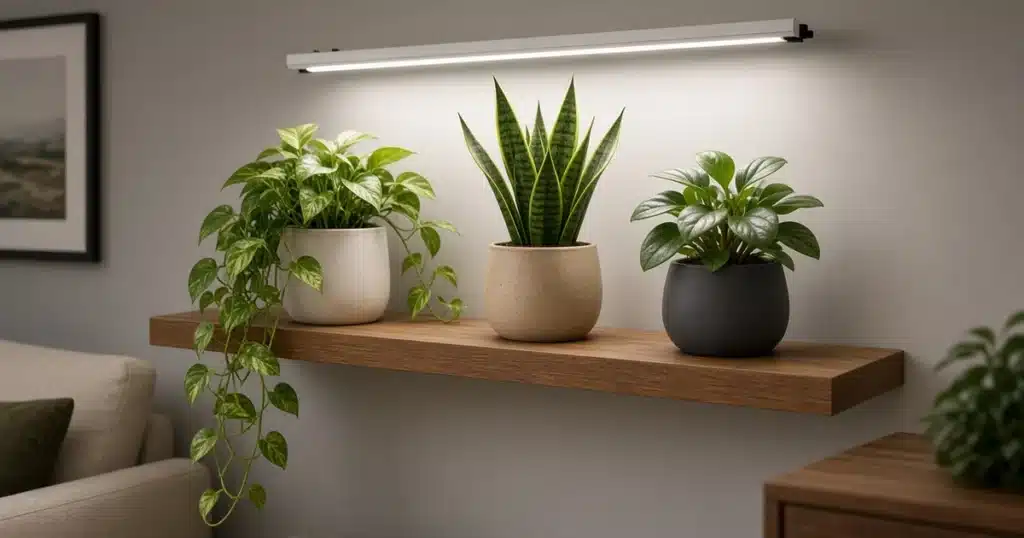
A pink grow light looks pink because it mixes mostly red and blue LEDs with little green. Plants use red and blue light well, but the mix looks odd to people and makes leaves hard to judge. For living rooms and kitchens, white full spectrum LEDs grow plants well and look far more natural.
Many home growers switch to white once they see the difference.
Why do some grow lights look pink?
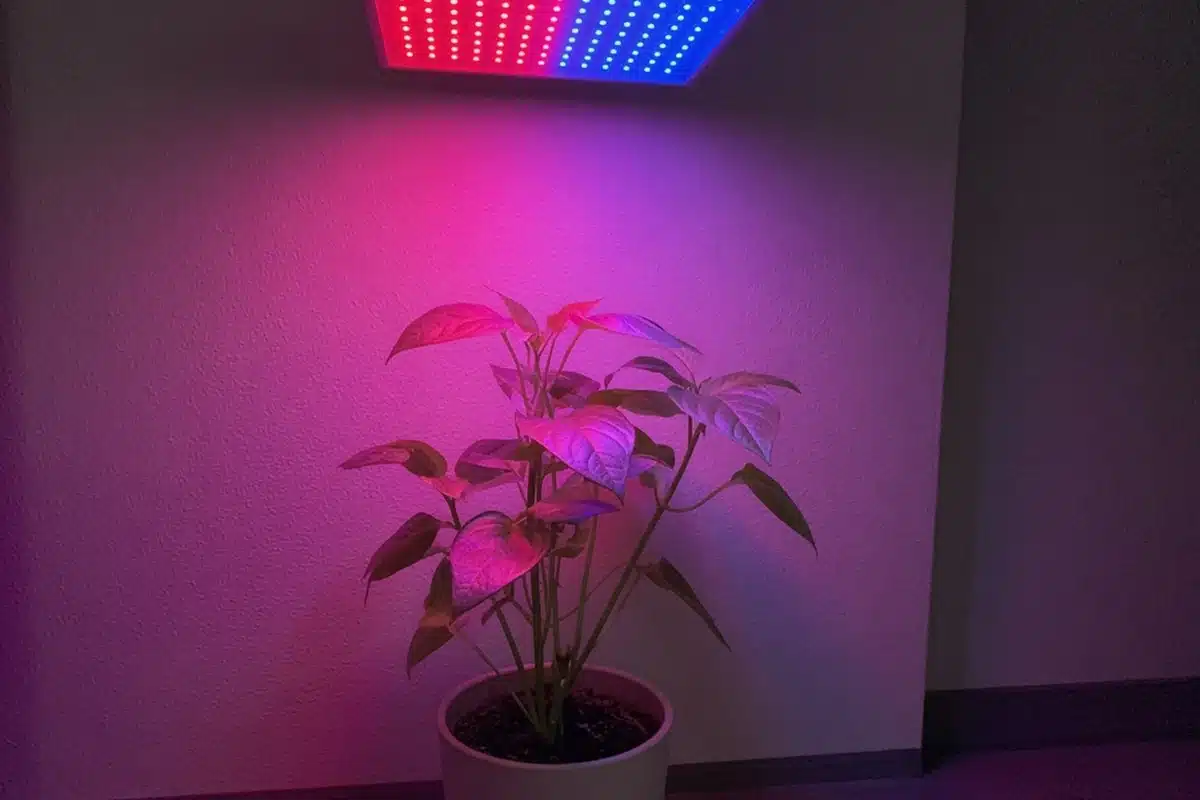
Our eyes see green and yellow light most easily. A light made mostly of red and blue LEDs skips the colors our eyes like most, so it looks pink or purple.
The US Department of Energy page on color and spectrum explains how the mix of colors from a light source shapes the color we see. A light can be bright in red and blue and still look dim and odd to the eye.
Many early grow lights paired red and blue LEDs, a combination that gives plants useful wavelengths but makes the light look pink or purple.
Do plants need pink light?
Plants use light from across the visible range. Red and blue drive a lot of growth, but green and other colors help too.
The HortScience article on LED lighting, a grower’s guide to light spectra reviews how different colors of light affect plant growth. It shows that broad spectrum light supports healthy plants and that green light reaches deeper into the leaf canopy.
The University of Maryland Extension article on fine tuning your indoor plant lighting choices explains that white LEDs give home growers a broad spectrum that works well for most plants.
Our post on how light wavelengths affect cannabinoid production covers how growers think about color for flowering plants.
How do pink and white lights compare?
| Feature | Pink LED | White LED |
|---|---|---|
| Color to the eye | Pink or purple | Natural white |
| Plant growth | Good for many plants | Good for most plants |
| Seeing leaf color | Hard | Easy |
| Comfort in a room | Can feel harsh | Easy on the eyes |
| Photos | Hard to color correct | Natural looking |
Sources: US Department of Energy, HortScience, University of Maryland Extension.
Pink lights can grow plants. The main downsides are comfort and seeing your plants clearly. Under pink light, yellow leaves, spots and pests are harder to spot.
White lights fix both problems. Plants grow well, leaves look normal and the room looks like a room.
Our post on choose the right LED lights for your cannabis grow explains how to compare fixture options.
What should you look for in a white grow light?
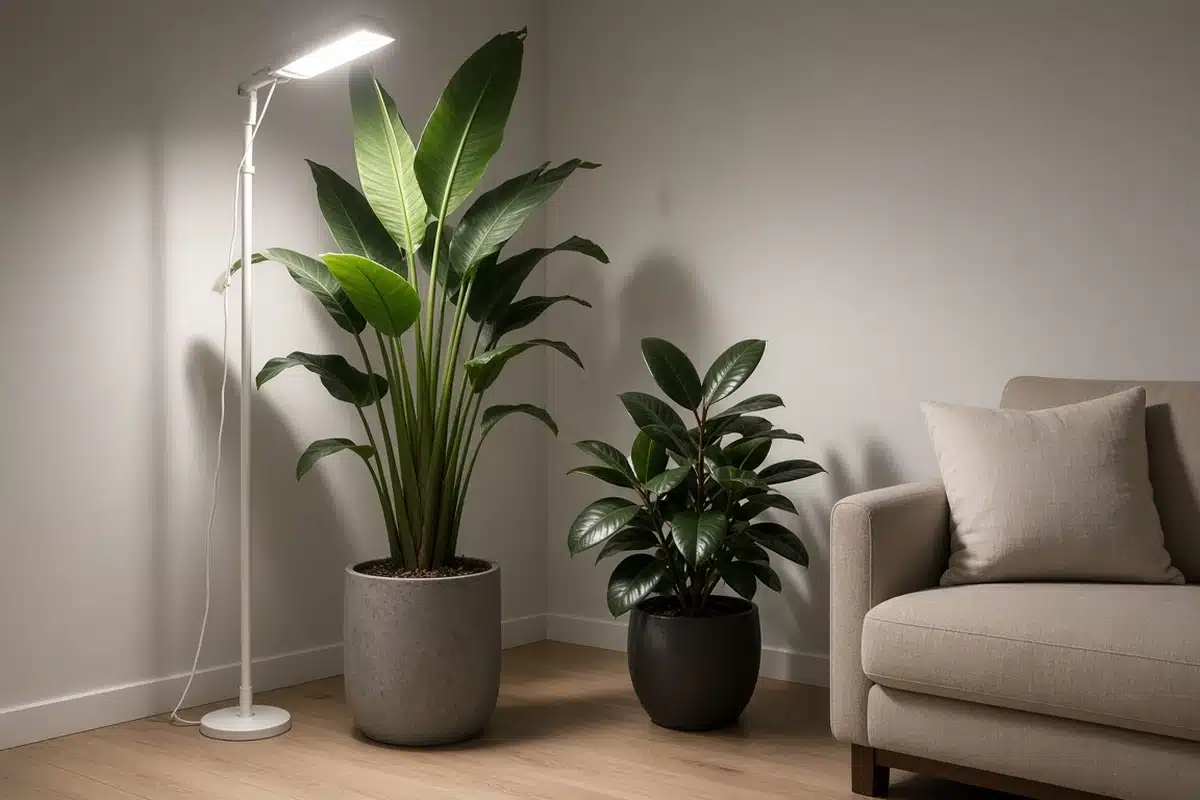
Look for full spectrum white LEDs. Many use a mix of warm and cool white diodes. Some add a few red diodes for flowering plants, which gives a slightly warm tone.
Color temperature on the box tells you how warm or cool the light looks. Around 3000 to 4000 K looks warm and cozy. Around 5000 to 6500 K looks like daylight.
Check the light output too. A grow light should list a plant light rating, not just watts. Our post on optimal lighting for growing indoors explains how to judge brightness.
How do you use a pink light in a living space?
If you already own a pink light, there are ways to make it easier to live with. Hang it inside a tent or a cabinet so the glow stays contained. Run it on a timer during hours when you’re not in the room.
You can add a white light nearby to soften the color. This also helps you see leaves more clearly.
Does light color change how plants grow?
Light color can shift plant shape a little, and plants under heavy blue light often stay compact with short stems. Plants under heavy red light may stretch more. Broad white light falls between the two, which suits most houseplants, herbs and vegetables.
For home growers, these differences matter less than total light. A bright white fixture at the right distance will outgrow a dim pink one every time. Focus on light amount first and color second.
How to: step by step
- Decide where your plants will live.
- Pick white full spectrum LEDs for shared rooms.
- Choose a color temperature you like.
- Check the light output for plants.
- Hang lights at the distance the maker suggests.
- Run lights on a timer.
Troubleshooting
Leaves look purple. The light is pink, not the leaf. Check under white light.
Room feels harsh. A pink light is in an open room. Switch to white or contain it.
Hard to spot problems. Pink light hides color. Look at plants under white light each week.
Plants stretch under white light. It may be too far away or too dim. Lower it or add power.
Warm white looks yellow. Pick a higher color temperature for a cooler look.
White light grows plants well and makes your space comfortable. Kind Seed Co carries cannabis seeds for growers setting up lights at home.
Sources
- LED lighting: a grower’s guide to light spectra, HortScience (ASHS), LED lighting
- Color and spectrum, US Department of Energy, Color and spectrum
- Fine tuning your indoor plant lighting choices, University of Maryland Extension, Maryland Grows, Fine tuning your indoor plant lighting choices
FAQ
Are pink grow lights better for plants?
Not for most home growers. White full spectrum LEDs grow plants well and are easier to live with.
Why do pink lights use red and blue?
Plants absorb red and blue well, and those LEDs were efficient early choices.
Can I use a pink light in my living room?
You can, but many people find the glow harsh. Containing it or switching to white helps.
What color temperature should I pick?
Around 3000 to 4000 K looks warm.
Do white lights work for flowering plants?
Yes. Many full spectrum white fixtures grow flowering plants well.