
Top 7 Reasons to Choose Triploid Cannabis Seeds
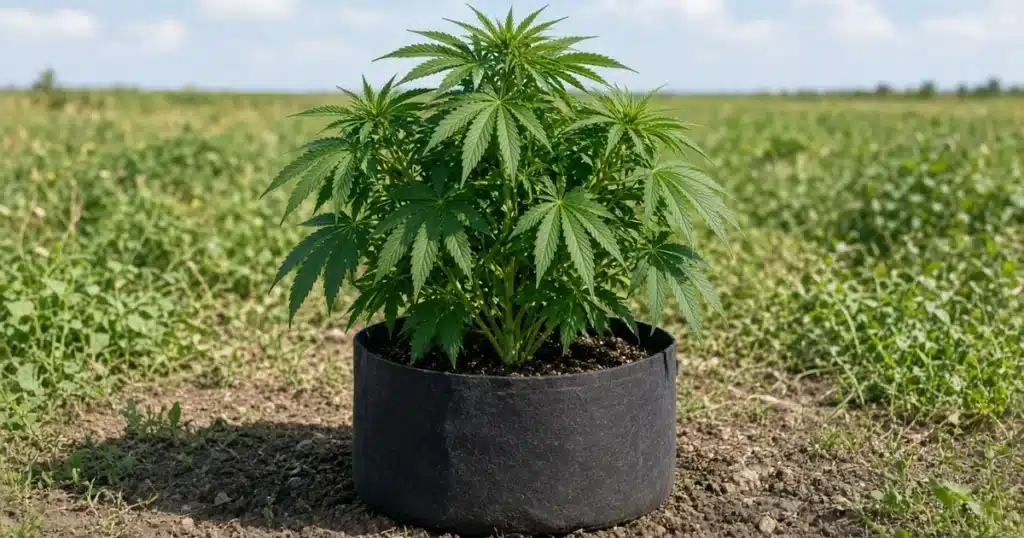
Triploid seeds are one of the newer ideas in cannabis breeding. They are often sold as “seedless” because the plants have trouble setting seed even when pollen is around. That matters most to outdoor growers who live near other cannabis or hemp. Below, you will find what triploid means, how triploid seeds are made, what university research has found, and seven practical reasons a grower might choose them, along with the limits. It draws on Cornell University hemp trials and an Oregon State University graduate thesis. Before you grow, check your state’s home grow law.
What triploid means
Most cannabis plants are diploid: they carry two sets of chromosomes, one from each parent. A triploid plant carries three sets. An Oregon State University thesis explains that “triploids are created by crossing a diploid plant with a tetraploid plant, and the result is that the progeny seeds will have three complete sets of chromosomes within the genome (triploid), which will cause the progeny to be infertile.”
The same thesis says the infertility “is caused by phenomenon known as a triploid block,” where a fertilized plant fails to develop seed because of an imbalance between the parents’ chromosome sets.
In practice, “infertile” is a strong word here. As the Cornell trials below show, triploid plants are seed reduced rather than fully sterile.
How triploid seeds are made
Cornell University hemp researchers describe the process. First, breeders double the genome of a normal diploid seed parent with a chemical treatment, recovering a tetraploid plant. Then, in Cornell’s words, “that tetraploid (4X) seed parent is crossed with the diploid (2X) pollen donor to produce seedless triploid (3X) F1 hybrid cultivars.” Because the triploid plant itself cannot reliably make seed, every batch has to be produced fresh from those parents.
What the research found
Cornell trialed diploid and triploid hemp cultivars in 2021 and 2022 at sites with and without pollen pressure. Its key results:
- “At pollen-free sites, triploids had similar concentrations of cannabinoids to their diploid counterparts.”
- “At pollen-challenge sites, triploids had greater concentrations of cannabinoids than diploids.”
- Triploid cultivars produced significantly less seed than diploids at the pollen challenge site, though Cornell notes they still produced some viable seed.
That last point is important. Triploids are seed reduced, not perfectly seedless. These are hemp findings. Hemp and marijuana are the same species, but the trials did not test home grown marijuana, so treat the results as a guide rather than a promise.
7 reasons growers choose triploid seeds
1. Less seed in buds when pollen is nearby
This is the main reason. Cornell explains that “pollination decreases the value of material,” with “unmarketable seeded material for smokable flower products.” Triploids set far less seed under pollen pressure.
2. Peace of mind for outdoor growers
The OSU thesis notes that “a major problem for outdoor growers in the hemp industry is pollen drifting over from a neighboring field.” If you grow outdoors near other plants, triploids can lower the chance of seeded buds.
3. Cannabinoid levels held up under pollen
In Cornell’s trials, triploid cultivars “produced similar concentrations of cannabinoids at pollen-free and pollen-challenge sites.”
4. Fewer conflicts with neighbors
Cornell notes that triploid cultivars “could lead to greater and more reliable yields for growers and less conflict between producers of cannabinoid hemp and grain/fiber hemp.” In a home setting, that may mean fewer seeds in your buds if a neighbor’s plants release pollen, though it is not a guarantee.
5. Fewer surprises from stressed plants nearby
If a plant in your garden or a neighbor’s throws a few pollen sacs, triploid flowers are less likely to fill with seed. This is an inference from the pollen trials, not a separate test.
6. F1 hybrid uniformity
Cornell describes triploids as F1 hybrids. When the parent lines are stable, F1 plants tend to be uniform. See our guide to F1, F2 and F3 seeds.
7. Less need to scout for stray pollen
You still need to remove males, but a stray pollen sac does less damage. That can save time for growers who cannot inspect every node daily.
Why triploids exist at all
Seeds in buds have long been a problem for flower growers. A pollinated female spends energy making seeds, and the seeds themselves are unwanted in smokable flower. Indoors, growers manage that by removing males and preventing stress. Outdoors, there is no way to stop pollen carried on the wind from a field or yard nearby. Breeders have used polyploidy to make seedless crops for decades, and the OSU thesis lists earlier successes in crops such as hops and maples. Triploid cannabis applies the same idea.
The limits
- Triploids are not fully sterile. Cornell found “some viable seed.”
- They are a newer category with fewer strain choices.
- They are no better than diploids when there is no pollen around, according to Cornell’s pollen free results.
- You cannot breed seeds from them in the usual way.
How to grow triploid seeds: step by step
- Decide if you need them. They make the most sense outdoors or in shared spaces where pollen is a real risk.
- Read the label. Check whether seeds are feminized, autoflowering or photoperiod, and the stated flowering time.
- Germinate as usual. Grow them the way you would any feminized seed of the same type.
- Still check for males and pollen sacs. Remove any you find before they open.
- Watch buds in late flower. Look for any swollen calyxes that may hold seed.
- Keep notes. Record how many seeds, if any, you find at harvest to judge how they performed in your garden.
Are triploid seeds right for you?
If you grow indoors in a sealed tent with feminized seed and no males, triploids add little. Cornell’s results showed no cannabinoid advantage where there was no pollen. If you grow outdoors in an area with other cannabis or hemp, or share a space with other growers, they can be worth the extra cost.
Troubleshooting
I found seeds in my triploid buds. Triploids reduce seed but do not stop it entirely, as Cornell found. Remove nearby pollen sources where possible.
My triploid plant hermed. Any plant can form pollen sacs under stress. Check for light leaks, heat or other stress.
Plants are bigger than expected. Growth varies by cultivar. Give them more space or train them early.
Germination was slow. Seed vigor varies by batch and breeder. Keep conditions warm and moist, not wet, and be patient.
Related reading
For more on seed types, see regular vs feminized seeds and how to tell if a female has been pollinated.
Sources
- Cornell University Hemp Program, Triploid Pollen-challenge Trials. https://hemp.cals.cornell.edu/resources/reports-factsheets/2022-cornell-hemp-field-day-handouts/triploid-pollen-challenge-trials/ (opened 2026-10-16)
- Oregon State University ScholarsArchive, graduate thesis on inducing polyploidy in hemp. https://ir.library.oregonstate.edu/downloads/8p58pn90t (opened 2026-10-16)
FAQ
What are triploid cannabis seeds?
Triploid seeds grow plants with three sets of chromosomes instead of the usual two. They are made by crossing a tetraploid parent with a normal diploid parent, and the plants have trouble setting seed.
Are triploid cannabis plants completely seedless?
No. Cornell hemp trials found triploid cultivars produced far less seed than diploids under pollen pressure, but they still produced some viable seed.
Do triploid plants have higher THC or CBD?
Cornell found similar cannabinoid levels to diploids where there was no pollen, and higher levels than diploids where pollen was present. Those were hemp trials, not tests on home grown marijuana.
Can I make seeds from triploid plants?
Not in the usual way. Triploids are bred to be largely infertile, so new seed has to be produced from the tetraploid and diploid parent lines.
Who should grow triploid seeds?
Triploids make the most sense for outdoor growers or anyone growing where pollen from other plants is likely. Indoors with no pollen, they offer little advantage.


