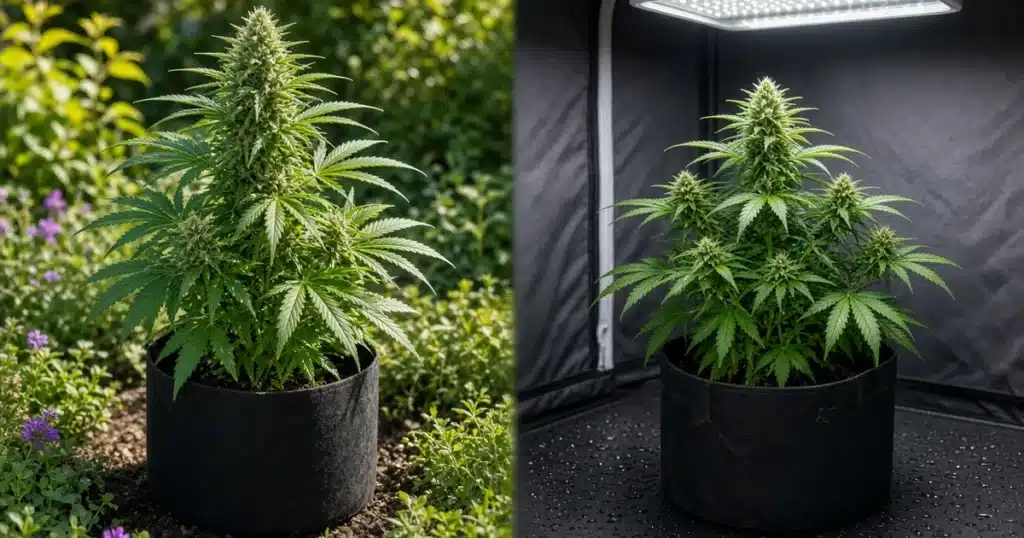
7 Common Strain Types That Fit Grow Tents

Grow tents reward plants that stay manageable under a fixed ceiling height. This list covers common tent-friendly categories and plant styles, not a scored leaderboard. Match height, flowering time, and odor control to your actual tent, not to hype names alone.
Kind Seed Co is a seed reseller, not the breeder of every line you might run. Catalogs change. Always read the specific product page for the pack you buy. Browse feminized seeds and autoflower seeds when you compare formats.
What “tent-friendly” usually means
Before the list, check your constraints:
- Interior height after lights, pots, and saucers
- Wattage and coverage of your fixture
- How many plants you can legally and practically run
- Odor tolerance and filtration
- Time you can spend training
A stretchy sativa-leaning photoperiod in a 4-foot-tall tent fights you all flower. A compact hybrid or auto in the same box is simply easier.
1. Compact indica-leaning photoperiods
Shorter internodes and bushier shapes fit low ceilings. Some indica-leaning cultivars still need topping or LST, but they can be easier to manage under lower ceilings than lanky tropical types. Expect denser flower structure when the environment is dialed, your phenotype still varies pack to pack.
Tent tip: Leave headroom for the flower stretch after the flip. “Short in veg” can still gain height in weeks 1-3 of bloom.
2. Balanced hybrid photoperiods (workhorse tent plants)
Medium-height hybrids are a common tent choice. Many take training well, fill a screen of green, and finish in flowering windows home growers find practical. Hybrids are not automatically “easy,” but they often suit 2×2 to 4×4 tents when height and training match the room.
Tent tip: Top once or twice, then even the canopy so one cola does not burn under the center of the light.
3. Autoflowers for small tents and simple schedules
Autos flower by age, which suits growers who want fewer photoperiod flip decisions. Some autos stay naturally compact in smaller containers such as 2-5 gallon pots. That habit can make them a practical option for small tents, closets, and first runs.
Tent tip: Do not transplant obsessively or train them as hard as a long-veg photoperiod. Gentle LST early often beats late topping on autos. Germination and vigor vary, results are never guaranteed.
4. Fast-finishing photoperiods for tighter calendars
Some photoperiod lines are selected for relatively shorter bloom times. In tents, that can mean less weeks of peak odor and power use. “Fast” is relative, read each cultivar’s stated window and still watch trichomes.
Tent tip: Pair fast finishers with solid carbon filtration, shorter flower still smells.
5. Low-odor or milder-scent cultivars (when discretion matters)
No cannabis is truly odorless in late flower, but some cultivars are discussed as milder than fuel-heavy counterparts. If housing rules or neighbors matter, genetics plus a quality carbon filter and sealed ducting matter together.
Tent tip: Filter rating and clean ducting beat relying on a strain nickname alone.
6. Plants that take training for SCROG tents
If you run a screen of green, look for cultivars known to branch and fill horizontal space rather than only stacking one spear. Stretchy plants can still work in SCROG if you start the screen early and tuck often.
Tent tip: Install the net at a height you can still reach for watering and leaf work. Aggressive defoliation is optional, do not copy extreme online strips on a first run.
7. Compact CBD-forward or mixed-ratio options (goal-dependent)
Some growers want lower-THC or mixed-ratio flower for personal preference. Compact CBD-rich cultivars exist in feminized and auto formats. Suitability is about your goals and local rules, not a universal ranking.
Tent tip: Verify lab expectations on the product description and remember home phenotypes vary. Follow the law where you live.
How to choose among these styles
| Tent situation | Styles that often fit |
|---|---|
| Very short ceiling | Compact indica-leaners, many autos |
| 3×3 / 4×4 with training time | Balanced hybrids, SCROG-friendly plants |
| First grow, simple schedule | Autos or easy hybrid photoperiods |
| Odor-sensitive housing | Milder-scent picks + strong filtration |
| Short season indoors (personal deadline) | Faster photoperiods or autos |
There is no single winner. A “top” plant for your neighbor’s 5-foot tent may be wrong for your 48-inch closet.
Soft ranking reminder
Lists like this are starting maps, not proof that seven pack SKUs beat every other seed. Phenotype, environment, and grower skill decide more than a blog order. No permanent leading tent strain belongs here.
Setup habits that help any tent cultivar
- Measure real hanging height with the light on its usual setting
- Control stretch with training instead of only cranking dimmers down at the last second
- Keep airflow moving under and over the canopy
- Do not overpot a tiny tent until you know your watering rhythm
- Track notes so the next run improves
FAQ
Should I only grow autos in a tent?
No. Photoperiods thrive in tents when height and schedule are managed. Autos are one convenient option, especially in small spaces.
How many plants in a 2×2?
Often one to four depending on pot size, training, and local plant-count rules. Crowding causes humidity and light problems faster than it increases yield.
Do sativa-leaning plants ever work in tents?
Yes, with early training, maybe a taller tent, and strict height control. They are simply less forgiving of low ceilings.
Will feminized seed guarantee a perfect tent plant?
Feminized seed reduces male hunts, it does not freeze height or aroma. Read grow reports and leave vertical margin.
Tent success comes from matching plant style to ceiling height, training time, and odor control, not from a frozen leading list. Use these seven common categories as a shopping lens, then pick packs that fit your gear. More reading: seed bank blog.