What changed in the Texas medical marijuana program in 2026

Texas runs one of the most limited medical programs in the country, the Texas Compassionate Use Program, known as TCUP. It is overseen by the Texas Department of Public Safety rather than a health agency, and for years it had only three licensed dispensing organizations serving a state of more than 30 million people. That started to change with House Bill 46, which the legislature passed in 2025 and which took effect on Sept 1 2025. Most of its practical effects arrived in 2026, as new licenses were awarded and the expanded eligibility list moved into everyday use.
This post walks through what HB 46 changed, how the licensing rollout went in 2026, what stayed the same and what Texans should watch. It is program and access information only, not legal or medical advice.
The program before HB 46
TCUP began under the 2015 Texas Compassionate Use Act. It allowed low THC cannabis, defined by a cap on THC by weight, for a short list of conditions. Later bills in 2019, 2021 and 2023 added conditions such as autism, cancer and post traumatic stress disorder. Physicians registered with the Compassionate Use Registry of Texas prescribe, and patients fill prescriptions through licensed dispensing organizations. There is no patient card in the usual sense. The prescription in the registry is the key record.
What HB 46 changed
| Area | Before | After HB 46 |
|---|---|---|
| Dispensing organizations | 3 licenses | Up to 15 total, 12 new |
| Condition categories | Earlier list | Adds chronic pain lasting more than 90 days, traumatic brain injury, Crohn’s disease and other inflammatory bowel disease, and terminal illness or hospice and palliative care |
| Locations | Main sites only | Satellite storage and dispensing locations allowed |
| Product forms | Limited | Adds some forms such as aerosol and patches under DPS rules |
| Smoking | Not allowed | Still not allowed |
The new condition categories expand who can receive a prescription. They are eligibility categories, not claims about outcomes, and a registered physician still decides whether a prescription is appropriate.
How the 2026 licensing rollout worked
DPS split the 12 new licenses into two phases. Nine were awarded in Phase I in December 2025, and three more in Phase II around April 1 2026. After the April 1 2026 announcement, DPS released a corrected scoring tabulation on May 8 2026 that rescinded three conditional awards and gave them to three other applicants. That correction drew complaints and legal questions from applicants who lost places, so patients may see some delay in local openings.
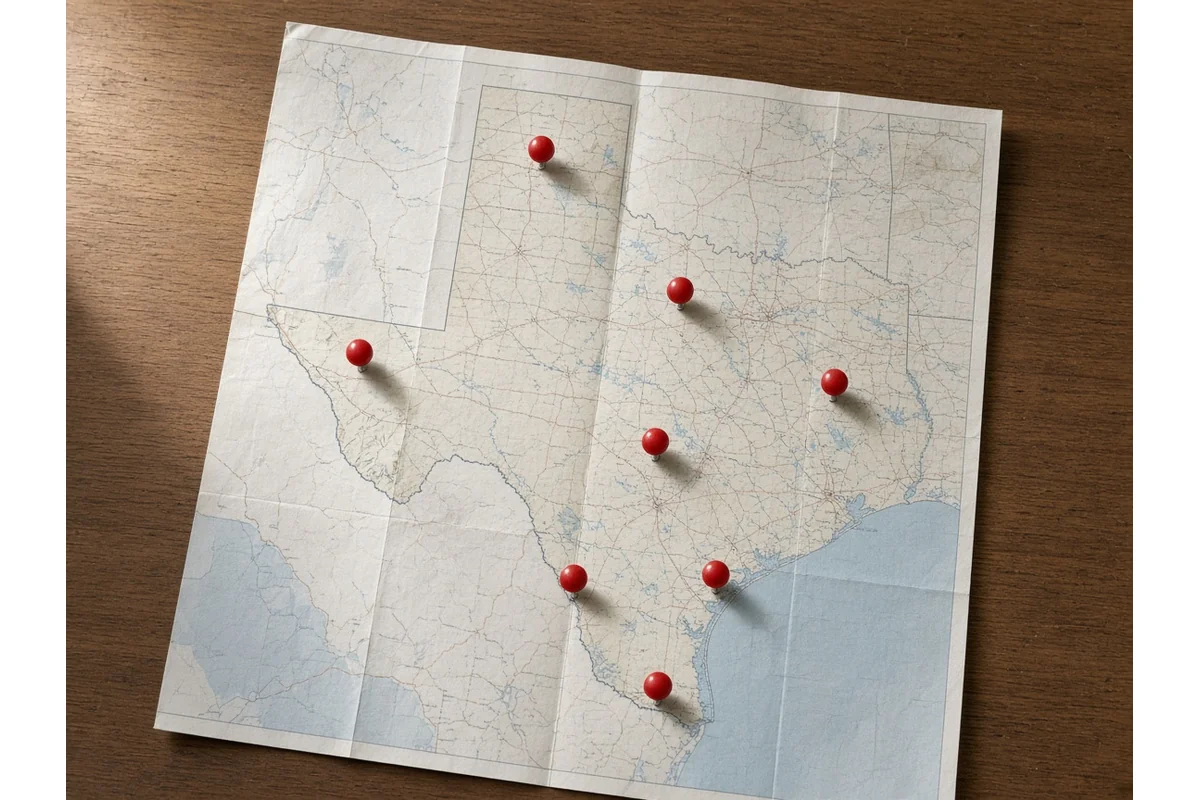
New licensees must be operational within 24 months of receiving a license. In practice that means many will open during 2026 and 2027 rather than immediately. Satellite locations will help reach patients outside the major cities, where travel to pickup has been a real burden.
What did not change
TCUP is still a low THC program with a THC cap defined in statute and DPS rule. Smoking is still not allowed. There is still no home cultivation for anyone. Out of state patients still cannot buy in Texas. Recreational use is still illegal, and Texas has not passed an adult use law.
The hemp backdrop
Texas has also been in a long fight over hemp derived THC products sold in convenience stores and smoke shops. A 2025 bill to ban them was vetoed, and the governor later issued an executive order directing state agencies to tighten rules, including age limits. The federal hemp changes also land in late 2026. The synthetic cannabinoid exclusion takes effect Nov 12 2026, and THC and container limits plus a seed provision take effect Dec 11 2026. That shift could shrink the hemp market and make TCUP more important for patients who qualify.
The federal piece
In 2026 federal regulators moved marijuana sold under a state medical license into Schedule III through a final rule effective April 28 2026, with a separate hearing on broader rescheduling that began June 29 2026. Texas businesses still operate under state law first, and federal changes do not override TCUP limits. Watch for how DPS handles registration questions as the federal process continues.
What patients should do in 2026
Check whether your condition now falls in a covered category, and ask a registered physician. Find which dispensing organizations deliver or have pickup near you, since the list is growing. Keep your registry information current. If you were already a patient, nothing in HB 46 requires you to reapply.
What to watch next
Watch the opening dates of the new licensees, any litigation over the corrected tabulation, DPS rule changes on product forms and the 2027 regular session, when lawmakers may revisit the THC cap. Texas meets in regular session only in odd years, so major statutory change usually waits until 2027 unless a special session is called.
Home grow in Texas
Growing cannabis at home is illegal in Texas for patients and everyone else. Seeds do not change that. Our legal requirements for growing weed plants in your state compares states that allow home cultivation.

How a Texas prescription works in practice
A patient sees a physician who is registered with the Compassionate Use Registry of Texas. The physician enters the prescription in the registry with the patient’s name, date of birth and the last five digits of their Social Security number. The patient then contacts a licensed dispensing organization, which checks the registry, confirms identity and fills the order. Many organizations deliver statewide, and several have pickup sites in major metro areas. With the new licensees and satellite locations, pickup options should grow across regions such as the Rio Grande Valley, West Texas and East Texas, where patients have often relied on delivery alone.
Program access, age and the law
This guide covers how the Texas program works and who can access it. It does not describe what cannabis does for any condition, and it is not a substitute for a conversation with a licensed practitioner. Rules can change after a legislative session or a new agency rule, so confirm every detail with the Texas Department of Public Safety Compassionate Use Program before you act. Federal law still treats cannabis outside a state medical license as a controlled substance, and seeds have their own federal rules, so read our December 11 2026 seed rule explainer before ordering. Kind Seed Co sells only to adults 21 and older, and buying seeds is never a substitute for following the home grow rules in your state. Our guide to the legal requirements for growing weed plants in your state lists what each state allows. This article is general information. It is not legal advice and it is not medical advice.
Frequently asked questions
When did HB 46 take effect in Texas?
September 1 2025. Its licensing and access effects mostly rolled out during 2026.
How many dispensing organizations can Texas license now?
Up to 15, after HB 46 added 12 new licenses awarded in two phases.
Can Texas patients grow at home?
No. TCUP does not allow home cultivation.
Who runs the Texas program?
The Texas Department of Public Safety runs the Compassionate Use Program and its registry.
Final thoughts
For Texas, 2026 was the year HB 46 moved from paper to practice, with new licensees, satellite sites and a wider list of eligibility categories. The program is still low THC, still smoke free and still without home grow. Check DPS for opening dates and rule updates.
Ready to start
Browse the full range in the Kind Seed Co shop or go straight to marijuana seeds texas. Kind Seed Co sells only to adults 21 and older. Always follow the cannabis laws where you live.