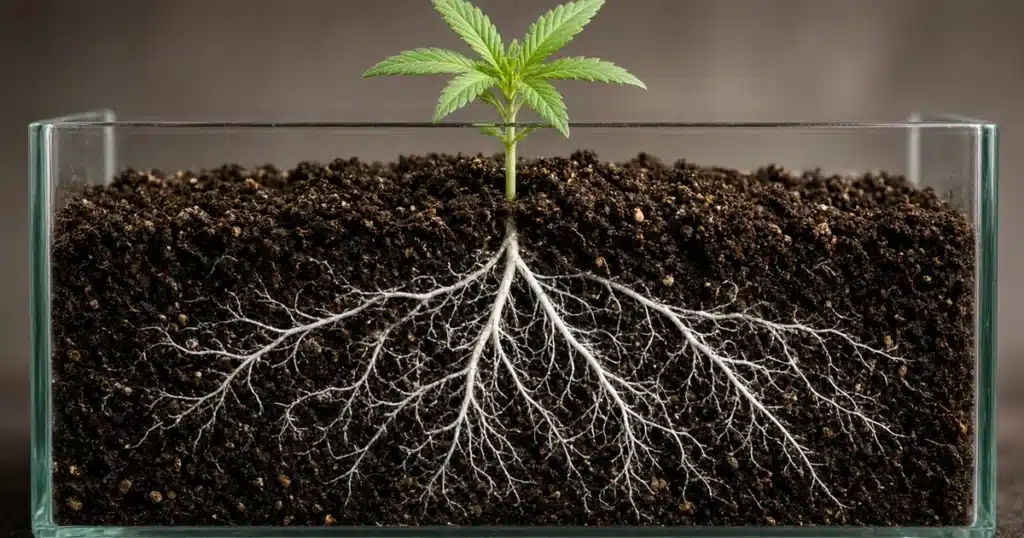
Why Use Molasses for Cannabis?

Molasses is mostly sugar. It may feed soil microbes in living soil, but there is no solid evidence it fattens buds or boosts yield. If you want to try it, use plain unsulphured molasses in soil only, test it on one plant, and judge the result yourself.
Molasses is one of the most talked about home grow additives, especially for late flowering. Some growers swear by it, while others see no difference. Below, you’ll find what molasses is, what the evidence actually says, how growers use it in late flower, and how to try it without causing new problems.
What molasses is
Molasses is the thick, dark syrup left over when sugar is refined. An Oregon expert answer on Ask Extension sums it up: “Molasses is refined from sugarcane or beets, and is mainly a carbohydrate (sugar). Blackstrap molasses contains vitamin B6, calcium, magnesium, iron and manganese.”
That second sentence is why molasses gets talked about as a plant food. It does contain small amounts of minerals. But the main ingredient by far is sugar, and plants make their own sugar through photosynthesis. They don’t need to drink it.
Where sugar can matter is in the soil. Soil is full of bacteria and fungi, and many of them feed on simple sugars. Molasses does not move from the root zone into the flowers or pour sugar into buds. Its main value is as a soluble carbon source that can support microbial activity. In other words, any effect from molasses comes through the soil life, not by feeding the buds directly.
There are a few kinds. Blackstrap is the darkest and most concentrated. Some molasses is treated with sulfur dioxide as a preservative, which is sold as sulphured molasses. Growers who use molasses usually pick unsulphured, with nothing else added.
What the evidence says
The research support for molasses as a fertilizer is thin. NC State Extension’s Beaufort County Center looked into it and reported that it could find no research based information supporting the use of molasses, in any formulation, as a fertilizer.
There is also one vegetable trial worth knowing about. Purdue University’s Midwest Vegetable Trial Report from 2025 tested transplant solutions on cabbage. The authors reported that results “indicate no benefit to cabbage from any transplant solution in high-fertility conditions, and detrimental effects from the large amount of molasses used.” That was cabbage, not cannabis, so it does not prove anything about buds. It does show that more molasses is not automatically better, and that a lot of it can do harm.
So where does that leave growers? Most of the support for molasses comes from grower experience, and experience is hard to judge without a side by side comparison. A grower who adds molasses in late flower is also usually doing many other things right, so it is hard to know what caused a good harvest.
Molasses in late flowering: what growers do and what to expect
Late flowering is when most growers reach for molasses. The idea is that the plant is putting its energy into buds, and that feeding the soil life at this point helps the plant take up what it needs.
Here is what growers commonly do. Some add a small amount of molasses to plain water during the last weeks of flowering, in soil or living soil only. Some use it alongside a flush, the period when they stop or reduce bottled nutrients. Others mix it into compost teas. There’s no agreed amount or schedule, and you won’t find one here, because no reliable evidence backs any specific rate.
What should you expect? Quite possibly, no visible change at all. Molasses is not a shortcut to bigger buds, and there is no solid evidence that it fattens them. If it does anything, it is likely small and indirect, through the soil. Taste claims are anecdotal too. Some growers say it improves flavor, but that has not been shown in trials.
The real risks in late flower are mold and pests. Buds are dense, and sugar on the soil surface can attract fungus gnats or grow mold. Never spray molasses on leaves or buds. Foliar sprays on dense flowers raise mold risk.
If you want to know what normally happens in the first weeks of bloom, see our guide to cannabis flowering weeks 1 and 2 at https://kindseed.com/cannabis-flowering-week-1-2/.
Living soil vs bottled nutrients and hydro
Molasses only makes sense where there is an active soil life to feed. In living soil or rich organic mixes, microbes are already working, and molasses gives them extra sugar.
In a soilless mix fed with bottled nutrients, there is less soil life, so the main idea behind molasses has less to work on. In hydro, it makes very little sense. Sugar in a reservoir can feed unwanted bacteria, turn the water cloudy, and coat pumps, lines and drippers. Clogged emitters can starve plants of water at the worst time.
If you grow in hydro or coco on drip, skip molasses. Focus instead on a stable nutrient solution, correct pH and good oxygen in the root zone.
How to try molasses safely, step by step
- Decide if it fits. It only makes sense in soil with active microbes, not in hydro.
- Buy plain unsulphured molasses with nothing added.
- Try it on one plant first and leave another as a comparison.
- Mix it fully into water. Do not spray it on leaves or buds.
- Watch the soil surface for gnats or mold and stop if they show up.
- Keep notes so you can judge the result yourself.
Don’t skip the comparison plant. It’s the most important step. Pick two plants of the same strain, in the same light, with the same feeding. Treat one and not the other. At harvest, compare the buds, the dry weight if you can, and the smell. If you see no difference, you have your answer for your setup.
Troubleshooting
| Sign | Likely cause | What to do |
|---|---|---|
| Sticky film or mold on the soil | Sugar left on the surface | Stop, scrape the top layer, let the soil dry a little |
| More fungus gnats | Sugar and damp soil | Stop using it and let the top inch dry |
| Clogged drippers or pumps | Sugar in the lines | Do not use it in drip or hydro systems |
| No visible change | Expected, evidence is weak | Stop if you see no benefit |
Most problems with molasses come from sugar sitting on wet soil. Water it in fully, let the top of the soil dry between waterings, and stop at the first sign of mold or gnats.
Better ways to support late flower
If your goal is good buds in late flower, the basics matter far more than any additive.
Keep feeding steady and avoid big swings. Check the pH of your water and runoff, because the wrong pH can lock out nutrients even when they are present. Keep temperatures in a comfortable range, and lower humidity as buds get dense to reduce the risk of mold. Make sure air moves around and through the canopy.
Light matters too. Keep your light schedule consistent and avoid light leaks during the dark period. Finally, harvest at the right time by checking trichomes rather than the calendar. These steps are well established basics, and they cost little or nothing.
Sources: Ask Extension, Oregon expert answer on molasses (https://ask.extension.org/kb/faq.php?id=472340). NC State Extension, Beaufort County Center, Molasses or Malarkey? (https://beaufort.ces.ncsu.edu/news/molasses-or-malarkey/). Purdue University, Midwest Vegetable Trial Report, Rohwer and Hosch, 2025 (https://docs.lib.purdue.edu/mwvtr/276/).
FAQ
Does molasses make buds bigger?
There is no solid evidence that molasses fattens buds. Molasses is mostly sugar, and it does not travel into the flowers. At most it may feed soil microbes in living soil. If you want to test it, treat one plant and compare it with an untreated plant of the same strain.
When should I add molasses in flowering?
If you use it at all, use it in soil only, and judge the result yourself. Many growers try it in the later weeks of flowering, but there is no proven schedule. Start with one plant, watch the soil for mold or gnats, and stop if you see problems or no benefit.
Sulphured or unsulphured?
Unsulphured. Sulphured molasses has been treated with a preservative, and growers who use molasses choose plain unsulphured molasses with nothing added. Blackstrap is a common choice because it is the most concentrated.
Can I use molasses in hydro?
It is not recommended. Sugar in a reservoir can feed unwanted bacteria and clog pumps, lines and drippers. Hydro systems also lack the soil life that molasses is meant to feed, so there is little reason to use it there.
Does molasses improve taste?
Claims that molasses improves taste are anecdotal. Some growers believe it helps, but it has not been shown in trials. Flavor depends far more on strain, a healthy grow, harvest timing, and a slow dry and cure.