Why You May Need to Rehydrate Cannabis
Buds that crumble to dust, burn fast and taste harsh have usually lost too much moisture. Rehydrating can bring back some of the texture, but it has limits, and doing it the wrong way can invite mold. This guide explains what is happening when buds dry out, gives a safe step by step method, and shows how to store buds so you do not need to rehydrate next time. It draws on University of Vermont Extension, Oregon State University Extension and NC State Extension drying research. Rules on possessing and storing cannabis vary, so check your state’s home grow law.
Why cannabis dries out
Moisture moves from wet to dry. If buds sit in a container that is not airtight, or are opened often in dry air, they keep losing water. University of Vermont Extension explains that drying “reduces the ‘moisture content’ of plant products typically from 80% to approximately 10%.” Go much further than you need, and buds turn brittle.
Heat and light also play a part. Oregon State University Extension notes research showing that “storing flowers in the presence of light, exposure to air and high temperature can negatively affect some cannabinoid concentrations.” In common grower experience, overdry buds have often been stored warm, bright or loosely sealed.
Signs your buds are too dry
- Small stems snap instantly and buds crumble when you touch them.
- Buds burn very fast and taste harsh.
- The smell is faint or flat compared with when you first jarred them.
- A hygrometer in the jar reads well below 55%.
How long rehydrating takes
With a humidity pack, a mildly dry jar often evens out in one to two days. Very dry buds can take two to four days. Larger, denser buds take longer than small popcorn buds, because moisture has to move into the center. Resist the urge to speed things up. Slow and steady is what keeps the outside of the bud from getting damp while the inside is still dry.
What rehydrating can and cannot fix
Rehydrating can restore some moisture so buds feel springy and burn more evenly. It cannot bring back terpenes that have already evaporated, and it cannot undo heat damage or age. Think of it as a texture fix, not a time machine.
The mold risk
Water is what mold needs. UVM explains that lowering moisture means “the water activity (aw) of the crop is reduced which inhibits growth of microorganisms such as mold.” When you add moisture back, you move in the other direction. NC State Extension warns that after drying “you have to keep it dry or it will absorb moisture and may mold.” That is why slow, controlled methods are safer than tricks that add a lot of water fast.
OSU describes the curing range for hemp as a moisture content of 55 to 65% and water activity below 0.65. You cannot measure water activity at home, but a small hygrometer in the jar gives a good proxy: most growers aim for about 58 to 62% relative humidity in the jar.
How to rehydrate cannabis: step by step
- Inspect first. Look for fuzz, webbing, dark spots or a musty smell. If you see any, do not rehydrate. Throw that material away.
- Use an airtight glass jar. Fill it loosely, about three quarters full, so air can move.
- Add a two way humidity pack. Choose one rated around 58 to 62%. It releases or absorbs moisture to hold that level.
- Add a small hygrometer. It tells you what is actually happening inside the jar.
- Seal the jar and wait. Leave the jar in a cool, dark place for a day.
- Check the reading and the buds. Buds should feel slightly springy, not wet. If the hygrometer climbs above about 65%, open the jar and let it air out.
- Give it some time. Overdry buds can take two to four days to even out. Check daily.
- Store as normal. Keep the humidity pack in the jar and the jar out of light and heat.
When not to rehydrate
Skip rehydrating if the buds show any sign of mold, if they were stored somewhere damp before they dried out, or if they smell musty rather than simply flat. In those cases the safest step is to throw the material away.
Methods to avoid
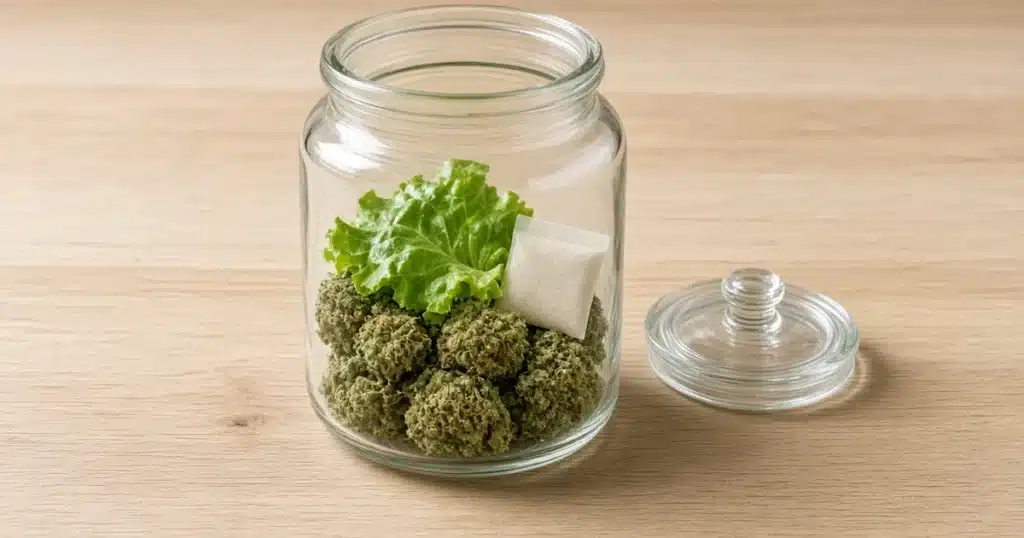
Quick hacks like adding a damp paper towel, citrus peel, bread or lettuce leaves can raise moisture fast, but they put wet organic material right next to your buds. That is an easy way to start mold. A humidity pack is the safer choice.
How to keep buds from drying out
- Store in airtight glass, not plastic bags.
- Keep jars cool and dark. OSU suggests that long term storage of manicured hemp buds be kept cold and dry.
- Use a two way humidity pack in each jar.
- Open jars only when needed.
- Match jar size to the amount of flower so there is not a large air gap.
Rehydration methods at a glance
| Method | Speed | Mold risk | Our view |
|---|---|---|---|
| Two way humidity pack | Slow (days) | Low | Best choice |
| Jar with hygrometer only, no pack | None | Low | Monitor only, adds no moisture |
| Damp paper towel or peel in jar | Fast (hours) | High | Avoid |
| Bread or lettuce leaf | Fast | High | Avoid |
Troubleshooting
Buds feel wet or spongy after rehydrating. That means too much moisture. Open the jar and let buds air out in a dark room for a few hours, then reseal with a pack.
Hygrometer reads above 65%. Remove the buds and dry them a little before resealing. High readings for days raise mold risk.
Buds smell musty or like hay. A musty smell can mean mold. Look closely. If in doubt, throw it out. Do not smoke, eat or use moldy material. A hay smell usually means the original dry was too fast.
Buds still crumble after several days. Very old or heat damaged flower may not recover, and adding more moisture will not fix it. If it shows any sign of mold, throw it away.
Related guides
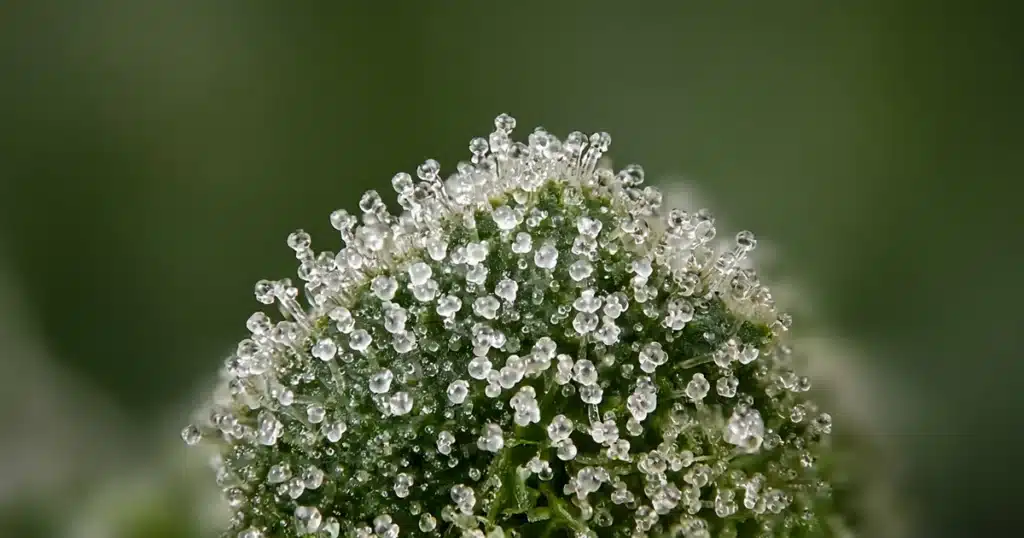
Learn how trichomes hold aroma, and how to burp curing jars so buds stay in the right range.
Sources
- University of Vermont Extension, Drying and Curing Herbs and Flowers. https://blog.uvm.edu/cwcallah/2021/02/23/drying-and-curing-herbs-and-flowers-hops-hemp-and-everything-else/ (opened 2026-10-16)
- Oregon State University Extension, Post-harvest processing of hemp flowers. https://extension.oregonstate.edu/catalog/post-harvest-processing-hemp-flowers (opened 2026-10-16)
- NC State Extension, Hemp Harvest Timing and Drying. https://hemp.ces.ncsu.edu/hemp-harvest-timing-and-drying/ (opened 2026-10-16)
FAQ
How do you rehydrate dry weed safely?
Put the buds in an airtight glass jar with a two way humidity pack rated around 58 to 62%, add a small hygrometer, and let it sit in a cool, dark place for two to four days. Check daily for mold.
Can rehydrating cannabis cause mold?
Yes, if you add too much moisture. Extension drying guides note that lower moisture is what keeps mold from growing. Slow methods like humidity packs are safer than wet hacks.
What humidity should a cannabis jar be?
Many growers aim for about 58 to 62% relative humidity in the jar. Oregon State Extension describes a curing moisture range of 55 to 65% for hemp.
Does rehydrating bring back the smell?
Only a little. It can restore texture, but terpenes that have already evaporated do not come back.
Is it safe to use a damp paper towel to rehydrate weed?
It adds moisture fast and puts wet material next to your buds, which raises mold risk. A two way humidity pack is a safer choice.