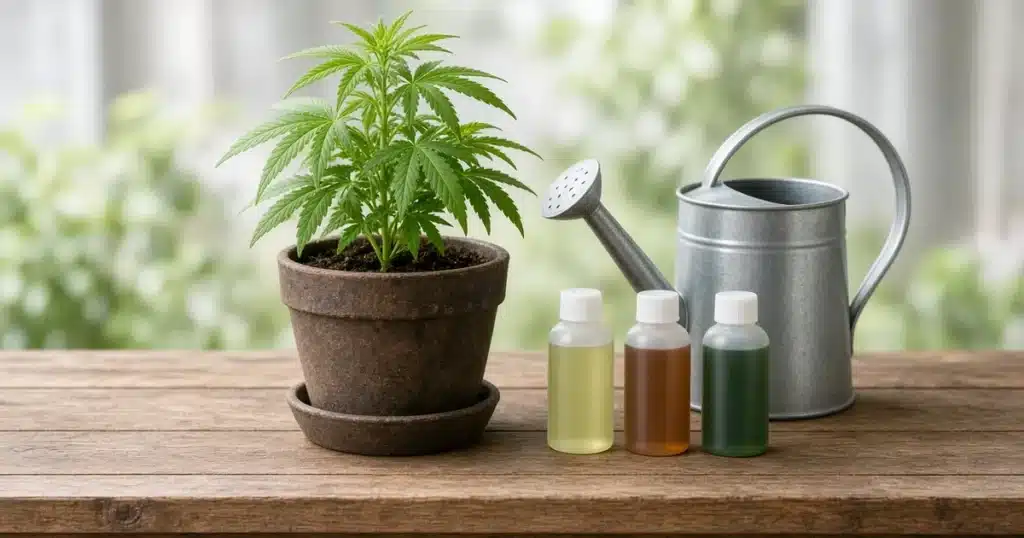
Understanding pH and How It Affects Cannabis Plants
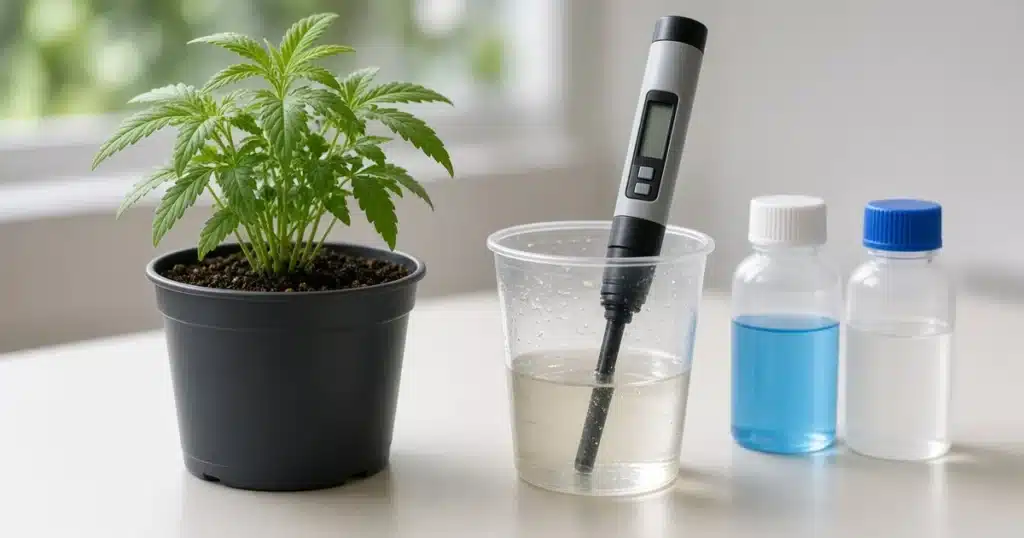
Cannabis roots take up nutrients best inside a fairly narrow pH window, and cannabis soil pH is the first number to check when plants look hungry. University of Maryland Extension gives a suitable range of 6.0 to 6.5 for most crops, and many soil growers aim for that range. Hydro systems run a little lower. Kind Seed Co covers why pH matters, how to test it, and how to correct it before nutrient lockout slows your plants.
pH is easy to overlook because you cannot see it. Your plants can have plenty of food in the pot and still go hungry if the root zone drifts out of range. Getting into the habit of checking it is one of the cheapest ways to avoid problems later in the grow.
What pH means for cannabis plants
pH is a measure of how acidic or basic something is. On the pH scale, 7 is neutral. Numbers below 7 are acidic and numbers above 7 are basic, or alkaline.
For a grower, pH matters because it controls what the roots can absorb. University of Missouri Extension explains that pH affects nutrient solubility and availability, so when it is outside the right range, plants may not be able to take up all the nutrients that are present. Nutrients such as calcium and magnesium may be sitting right there in the soil or the nutrient solution, but the plant can only take them up when the root zone is in the right range. Both your growing medium and the water or feed you give your plants affect that number, so you need to keep an eye on each of them.
Your plants’ needs also shift as they grow. Cannabis uses plenty of nitrogen in the early stages and more phosphorus once flowering begins. Keeping pH in range through every stage means the plant can reach each of those nutrients when it needs them, and you run into fewer feeding problems along the way.
How the wrong pH hurts your grow
pH that is too high or too low causes the same core problem: nutrient lockout. Lockout is when the plant cannot take in nutrients even though they are available. The result looks like a deficiency, which is why so many growers add more fertilizer and make things worse.
The wrong pH also leads to slow, stunted growth. A plant that cannot feed properly will not reach its full size, and that can mean a smaller harvest.
If leaves start to yellow, spot or curl, run through this short checklist before you change your feed:
- Check the pH of the water or nutrient mix going in.
- Check the pH of the runoff coming out.
- Compare both readings with the range for your medium in the table below.
- Only once pH is in range, match the symptoms to a specific nutrient using a leaf symptom guide.
Fixing pH first also saves money. Good fertilizer is not cheap, and there is no point buying more when the plant simply cannot use what is already in the pot.
The right pH range for soil, coco and hydro
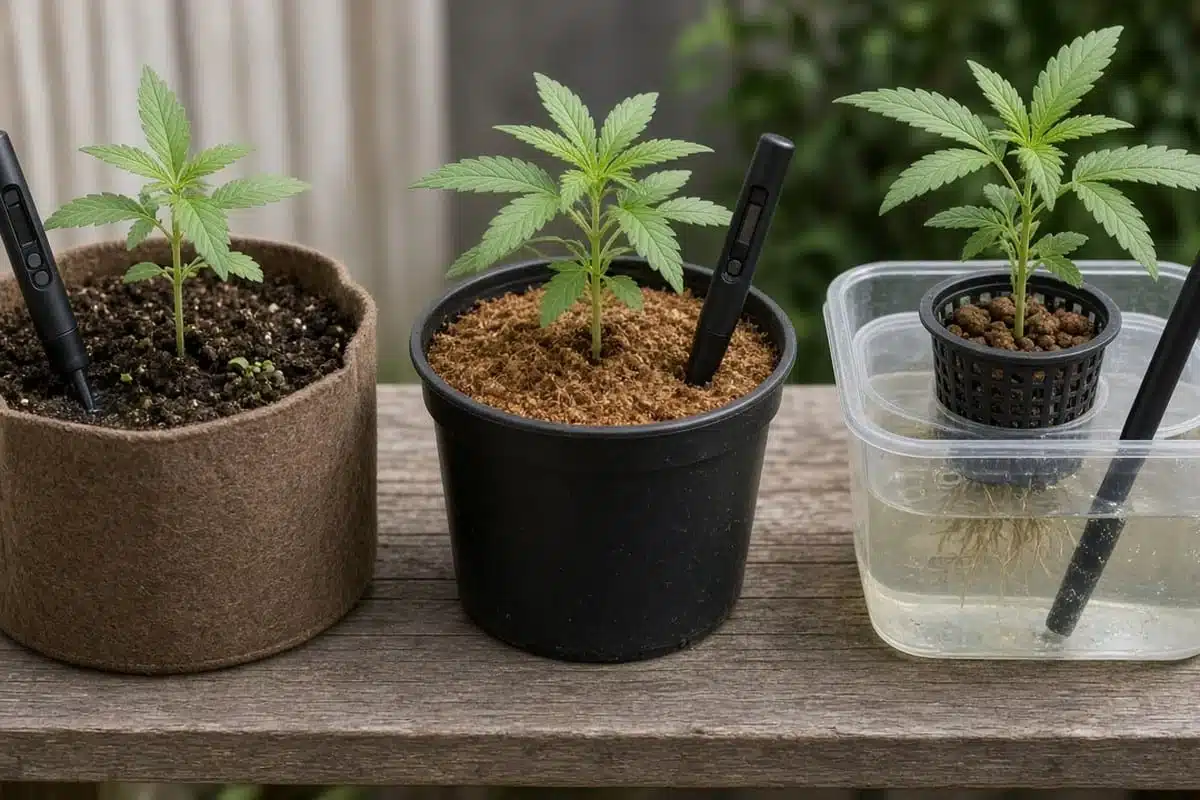
The right target depends on what your plants are growing in. Soil runs a little higher. Hydro runs slightly more acidic.
| Growing medium | Typical pH target | Notes |
|---|---|---|
| Soil | About 6.0 to 6.5 | University of Maryland Extension’s range for most crops, not a cannabis specific figure |
| Coco coir | Test the runoff and follow the medium’s label | Soilless, so check your own readings |
| Hydro | About 5.5 to 6.5 | University of Missouri Extension’s rule of thumb for most hydroponic crops. Measure after mixing nutrients, then adjust |
University of Maryland Extension notes that there isn’t a single pH that is ideal, and that optimum phosphorus availability is at pH 6.5. Use these ranges as a starting point and let your own readings guide you. Always test after you mix, because the same water can read quite differently once nutrients go in. For stage by stage feeding details, see our soil feeding schedule or the hydroponic feeding schedule.
Coco coir is a soilless medium. Washington State University Extension describes coir itself as pH-neutral, so it is worth checking the label on the product you buy.
Bagged potting mix is not the same as garden soil, either. University of Maryland Extension explains that commercial soilless mixes are usually made of ingredients such as sphagnum peat moss, perlite, vermiculite, composted bark, compost and coconut coir, plus small amounts of lime and fertilizer, and that they have a pH of about 6.2. Garden soil varies far more from place to place, which is why a soil test really matters for outdoor beds.
How to test pH at home
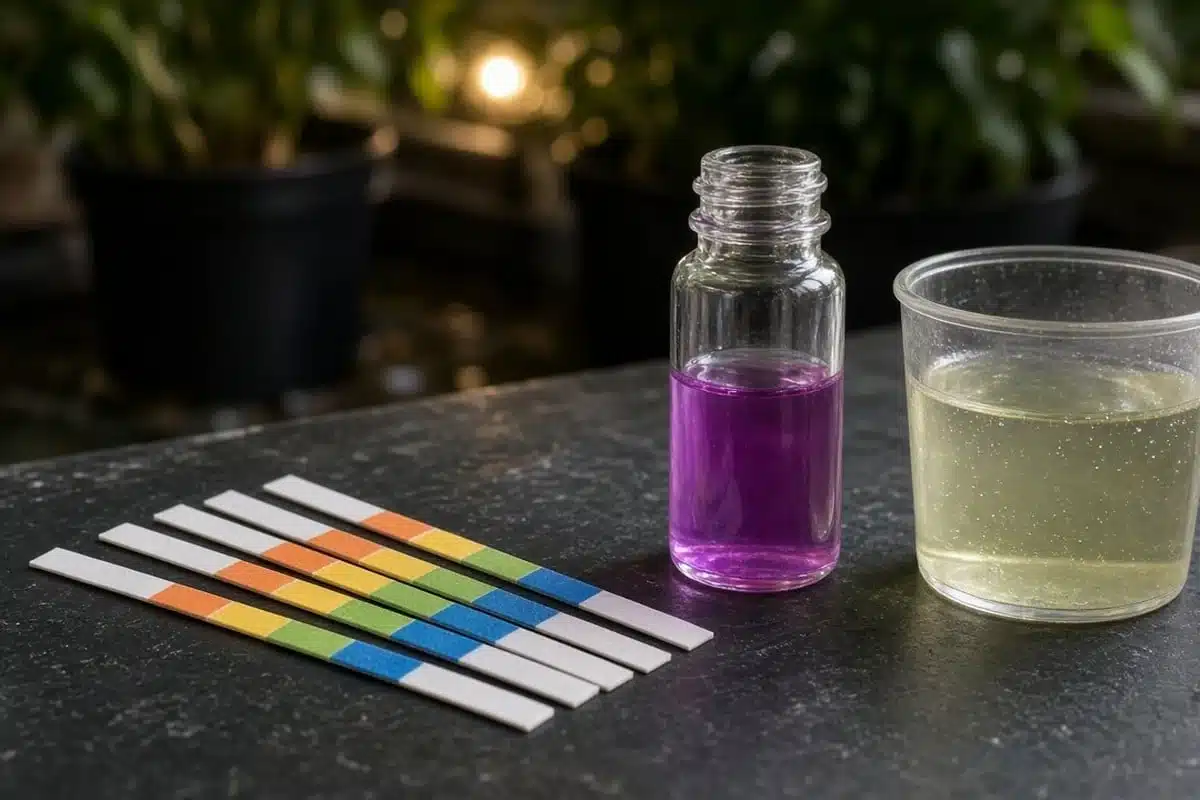
Measuring pH is quick and inexpensive. There are three common tools.
- Digital pH meter or pen. The fastest option and the most precise when looked after. University of Missouri Extension advises calibrating at two points, pH 4 and pH 7, with calibration solutions, often called buffer solutions, following the maker’s instructions. Plain tap or distilled water is not a reliable standard for calibration. Rinse the probe after each use and store it the way the maker recommends. Meters drift over time, so calibrate regularly and any time a reading looks odd.
- Drop test kits. Fill the test vial with your mixed nutrient solution or runoff, add a few drops of the test liquid, then shake. The color of the sample shows the pH when you compare it with the chart.
- Test strips. Strips work in a similar way. Dip one in the liquid you want to test and match the color to the chart on the pack. University of Missouri Extension’s hydroponic guide advises against using strips in nutrient solutions, because dyes in fertilizers can change the color.
Whichever tool you use, keep three checks separate so you always know what you are measuring:
- Feed pH. The reading of the water or nutrient mix before it goes into the pot.
- Runoff pH. The reading of what drains out the bottom. It gives you a clue about conditions in the root zone.
- Soil slurry. Mix a small sample of soil with water in a cup, let it settle, then test the liquid. This gives you a third view of the medium itself.
Write your readings down. Tracking all three over a few waterings shows you which way things are drifting before the plant starts to show it.
How to raise or lower pH
Before planting
If you are preparing outdoor beds or mixing your own soil, start with a soil test. University of Maryland Extension notes that a testing lab can calculate the correct lime requirement to reach a target pH, and that elemental sulfur lowers soil pH. Both take time to work, so make changes well ahead of planting and follow the rates on the product or the advice from your soil test.
During the grow
Once plants are in the ground or the pot, pH up and pH down products are the simplest tool. Mix your nutrients first, then adjust the finished solution. Add a small amount at a time, stir and test again until you reach your target. Adding a lot at once can swing the reading too far the other way. If runoff keeps coming back out of range even when your feed is right, the medium itself may need attention, and a soil slurry test will help you confirm it.
Organic growers can also adjust soil pH over time with amendments such as garden lime, which raises it. These work slowly, so they suit longer term soil care rather than quick corrections.
pH, EC and nutrients work together
pH is only half of the picture. EC, or electrical conductivity, tells you how strong your nutrient solution is. pH tells you whether the plant can use it. A feed with the right strength but the wrong pH still leads to lockout. A feed with a perfect pH but far too much strength can burn the roots.
That is why most growers check both on every feed. Mix, measure EC, then set pH last, and compare both numbers with the schedule for your medium. When a problem does show up, knowing both readings makes it much easier to tell a pH issue from a feeding issue.
Troubleshooting
Soil pH stays high after adding gypsum. University of Maryland Extension explains that gypsum does not lower soil pH, while elemental sulfur does.
Runoff reads very different from your feed. The medium itself may be pulling pH up or down. Run a soil slurry test to check the medium directly.
pH drifts after mixing or over a few days. University of Missouri Extension’s hydroponic guide notes that the pH and EC of nutrient solutions change as dissolved fertilizers are added and as plants and microbes use water and nutrients over time. Measure and adjust again.
pH barely moves when you add acid, or it swings every day. Water alkalinity sets how much acid it takes. The same guide notes that at high alkalinity, above 160 ppm, more acid is needed to change pH, and at low alkalinity, below 40 ppm, water pH changes constantly.
Strip colors don’t match your meter. Fertilizer dyes can change strip colors in nutrient solutions, so trust a calibrated meter.
Leaves show deficiency signs even when you feed normally. pH outside the range can stop roots from taking up nutrients that are present. Check pH before you add more fertilizer.
Readings are slightly off target. Small swings are normal. Retest, compare with your notes, and adjust only when readings stay out of range.
Start your next grow
If you are new to growing, forgiving genetics make it easier to learn skills like testing and adjusting pH. Browse our beginner seeds or explore the full range of feminized seeds to plan your next grow.
Sources
- University of Maryland Extension, FS-1054, Soil pH and Nutrient Availability (PDF): https://extension.umd.edu/sites/extension.umd.edu/files/publications/FS-1054%20Soil%20pH%20and%20Nutrient%20Availbility_Update_12_2021.pdf
- University of Missouri Extension, G6984, Hydroponic Nutrient Solutions: https://extension.missouri.edu/publications/g6984
- University of Maryland Extension, Growing Media (Potting Soil) for Containers: https://extension.umd.edu/resource/growing-media-potting-soil-containers
- Washington State University Extension, Kittitas County, Coconut Coir vs Peat Moss (PDF): https://s3.wp.wsu.edu/uploads/sites/2080/2018/03/coconut-coir.pdf
FAQ
What is the best pH for cannabis in soil?
University of Maryland Extension gives a suitable range of 6.0 to 6.5 for most crops, and many soil growers aim for that range. The same guide notes that there isn't a single pH that is ideal and that phosphorus is most available at pH 6.5. Test your runoff regularly to see where your soil sits.
What pH should hydro and coco run?
University of Missouri Extension gives 5.5 to 6.5 as a rule of thumb for most hydroponic crops. For coco, test the runoff and follow the medium's label. Measure after mixing nutrients, then adjust.
What is the difference between feed pH and runoff pH?
Feed pH is the reading of the water or nutrient mix going into the pot. Runoff pH is what drains out and hints at conditions in the root zone. A soil slurry test gives a third view. Track each one separately.
Can wrong pH look like a nutrient deficiency?
Yes. Out of range pH can lock nutrients out even when they are in the soil, so leaves show deficiency symptoms. Check pH first, then use our [leaf symptom guide](https://kindseed.com/how-to-spot-8-common-cannabis-plant-deficiencies-by-leaf-symptoms/).
Should I pH my water before or after adding nutrients?
After. Nutrients change the pH of your water, so mix everything first, stir, then measure and adjust. University of Missouri Extension notes that pH changes as dissolved fertilizers are added.