
What to Do With Male Cannabis Plants: 7 Practical Options
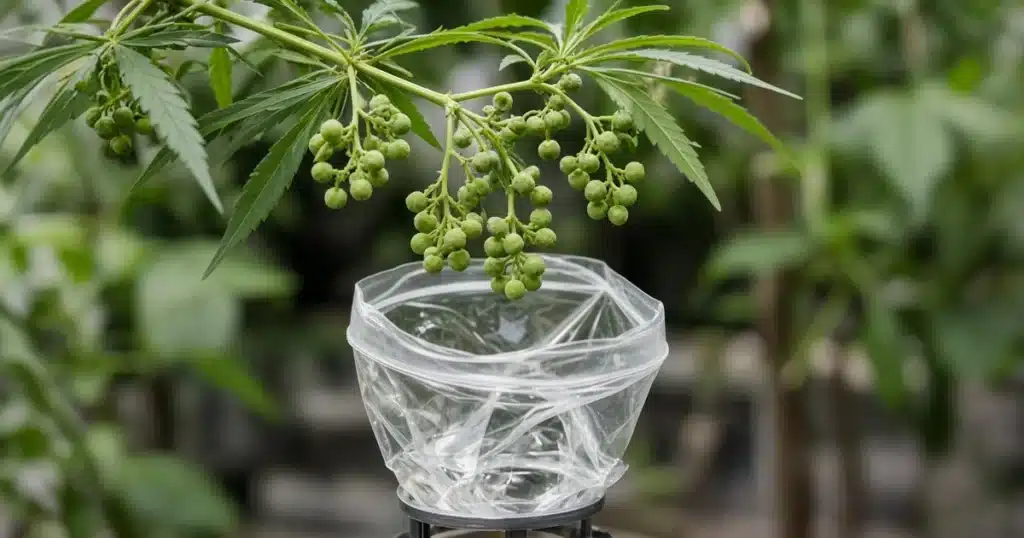
Quick answer: If you are growing for flower, the most useful thing to do with male cannabis plants is find them early and remove them before their pollen sacs open. Utah State University Extension says pollination significantly reduces crop value. After that, a male can still be useful for breeding, practice or the compost heap, as long as its pollen stays away from your females.
Cannabis is mostly dioecious, which USU explains means it has separate male and female plants. Females make the seedless flowers most home growers want. Males make pollen. Knowing what to do with male cannabis plants starts with knowing why that pollen matters. Rules on growing differ from place to place, so check your state and local rules before you grow.
Why Male Plants Matter in a Flower Grow
USU says male plants produce pollen for a span of two to four weeks. University of Vermont Extension notes that a single plant can produce as many as 350,000 pollen grains or more, and that pollen can travel 5 km or more on the wind. Just one missed male can seed a whole room.
Seeded flowers are not ruined, but they put energy into seeds instead of flower. That is why most of the options below start with getting the male away from the females.
Timing matters just as much as the choice you make. A male caught at the first sign of closed flower clusters gives you every option on this list. A male found with open sacs gives you far fewer, because by then the main job is limiting how far its pollen spreads. Check plants every couple of days once they begin to show pre flowers, and keep notes on which plants you have already confirmed.
1. Spot Them Early
Male flowers form at the nodes where side branches meet the main stem. USU says female flowers show two white fuzzy hair like structures, while male flowers are round, lack the white hairs and generally occur in dense clusters. UVM adds that checking is easier with a hand lens, and that male flowers first look like small capsules before they open. For a full guide, see our article on how to determine the sex of your cannabis plants.
Oregon State University Extension notes there are no reliable visual methods to tell the sex of a plant before flowers form, so watch closely once plants start to show pre flowers.
2. Remove Them Safely
Oregon State and USU describe the same careful approach for unwanted male plants in production fields. Here it is as a home routine:
- Confirm the sex. Check several nodes with a hand lens so you do not pull a female by mistake.
- Work early. Remove the male before its pollen sacs open, if you can.
- Cover it first. Slip a plastic bag over the plant before you move it, so pollen stays inside.
- Cut at the base. Oregon State says to cut unwanted plants at ground level and bag and seal the plant.
- Seal and remove. Close the bag tightly and take it out of the grow space.
- Change gloves and clothing. Oregon State says to remove clothing or gloves that might have pollen on them before going back to other plants.
- Clean up. Wipe tools and surfaces near where the male stood.
- Check the rest. Look over the remaining plants for more males or for male flowers on females.
3. Dispose of Them Cleanly
USU says a male found in a field grown for CBD should be removed and buried, burned or carefully stored to prevent pollination of the females. At home, burying the bagged plant or sending it out with sealed green waste are the simplest options. Follow your local waste rules.
4. Keep One for Breeding
Pollen carries genetics, which is why breeders keep selected males on purpose. A male kept for breeding needs its own separate space, well away from any flowering females. Saving pollen is covered in our guide to collecting and storing cannabis pollen.
5. Practice Your Training Skills
A male you will remove anyway can be a low risk plant for practicing techniques such as topping or bending branches before you try them on your keepers. Do this only while the plant is still in the vegetative stage and well before any flowers form.
6. Turn the Greenery Into Compost or Mulch
The leaves and stems of a male can go into compost or be chopped as mulch, as long as you remove the plant before the pollen sacs open. No source we found says composting is safe once the sacs are open, so bag and remove any male that is already shedding. Keep male greenery well away from flowering females. Male plants are not a substitute for female flower, so keep their use to the garden.
7. Plan Fewer Males Next Time
Regular seeds give a mix of males and females, so plan space and time to remove males. Feminized seeds are bred to give female plants, which our guide to what feminized seeds are explains. Either way, keep a calendar for checking plants as they reach the pre flower stage.
Troubleshooting
You found a male late. Bag it before you move it, cut it at the base and remove it from the room. Then check every female closely over the next few weeks.
The pollen sacs have already opened. Pollen may already be on nearby plants. Remove the male carefully in a bag, change clothing and gloves, and avoid running strong fans while you work.
Seeds are showing up in the buds. Your females were likely pollinated. Our guide on how to tell if your female cannabis plant has been pollinated covers the signs.
A female is growing male flowers. USU notes that plants with both male and female structures do occur. Remove the male flowers carefully or remove the plant if there are many, and check for stress such as light leaks or heat.
You cannot tell if a plant is male yet. Wait a few more days and check again with a hand lens. Oregon State notes there is no reliable way to tell from leaves alone before flowers form.
Frequently Asked Questions
Should I remove a male plant right away?
In a flower grow, yes, as soon as you have confirmed it is male and before its pollen sacs open. Utah State University Extension says pollination significantly reduces crop value. If you want to keep the male for breeding, move it to a separate space far from your females instead.
Are male plants useless for resin?
They are not useful as a flower crop. Male plants make pollen sacs rather than the seedless flower clusters home growers want, and they produce far less of the resinous flower structure found on females. Their real value is in breeding, practice and the compost heap.
Can male plants go in the compost?
Yes, if you remove them before the pollen sacs open. Bag the plant before you move it, then compost the leaves and stems away from your grow space. USU suggests burying, burning or carefully storing removed males, and no source we found says composting is safe once the sacs have opened.
How long do male plants shed pollen?
Utah State University Extension says male plants produce pollen for a span of two to four weeks. That is a long window for pollen to reach your females, which is why early removal matters. University of Vermont Extension adds that pollen can travel 5 km or more on the wind.
What should I do if I find a male plant late?
Bag it before you move it, cut it at the base and seal the bag, as Oregon State University Extension describes. Change your gloves and clothing before touching other plants. Then watch your females closely for signs of seeds over the following weeks.
Sources
- Utah State University Extension, Ten Frequently Asked Questions About Growing Cannabis: https://extension.usu.edu/crops/research/ten-frequently-asked-questions-about-growing-cannabis
- Oregon State University Extension, EM 9279 Sex Ed (plant sex guide for growers): https://extension.oregonstate.edu/catalog/em-9279-hemp-sex-ed
- University of Vermont Extension, OutCROPn blog, Determining the Sex of Plants (2020): https://blog.uvm.edu/outcropn/2020/07/22/determining-the-sex-of-hemp-plants/
These sources cover cannabis grown for CBD and fiber in fields. We pass them on as general growing guidance.


