Nematodes For Cannabis: Beneficial Vs Root Knot Nematodes
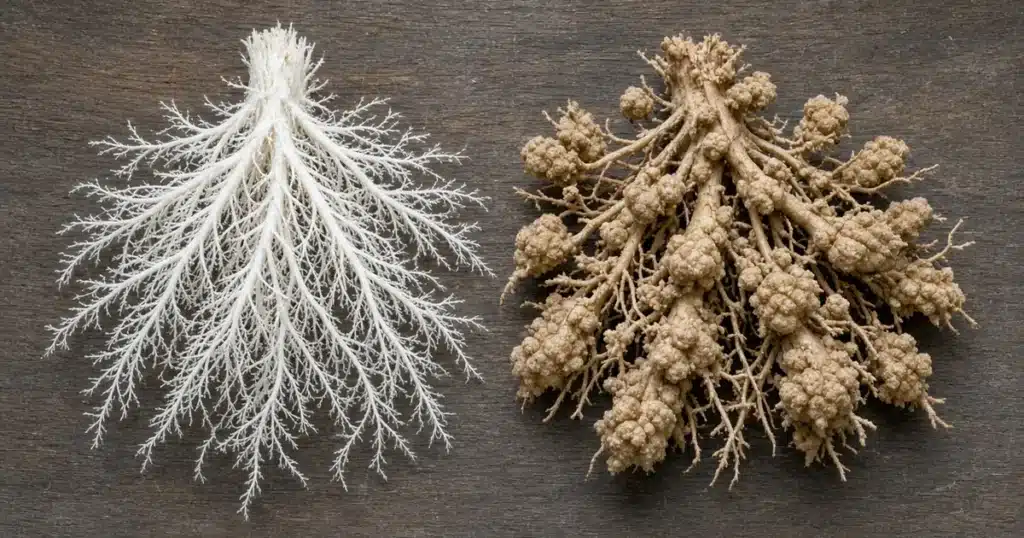
Quick answer: Nematodes for cannabis come in two very different kinds. Beneficial, insect parasitic nematodes hunt soil dwelling insect larvae and do not attack plants. Plant parasitic nematodes, such as root knot nematodes, feed on roots and cause galls that weaken the plant. Beneficial nematodes work best when drenched into moist, dark soil, and they do little on leaves.
Two Kinds of Nematodes

The UC Statewide IPM Program says nematodes are microscopic roundworms that live in the soil and are too small to see without a microscope. Some feed on plant roots. Others feed on insects, and those are the ones sold as beneficial nematodes.
| Type | What it does | Signs you may see |
|---|---|---|
| Beneficial, insect parasitic (Steinernema, Heterorhabditis) | Enters soil insects and kills them within two to three days | Fewer soil dwelling larvae, no damage to plants |
| Plant parasitic, root knot (Meloidogyne) | Feeds inside roots and forms galls | Galls on roots, stunting, wilting in the heat of the day, yellow leaves |
How Beneficial Nematodes Work
Colorado State University Extension says the insect parasitic nematodes sold for pest control belong mainly to two groups, Steinernema and Heterorhabditis. The young infective stage moves through moist soil looking for a host. Steinernema nematodes enter the insect through natural openings, such as the mouth and breathing pores. Once inside, they release bacteria, and the insect typically dies within two to three days.
Colorado State University says these nematodes do not attack mammals, birds or plants, and do not appear to have any significant harmful effects on other beneficial organisms or people.
Where Beneficial Nematodes Work Best
Because they are susceptible to drying and ultraviolet light, Colorado State University says beneficial nematodes are most effective against insects that live in moist, dark places, such as soil insects. Insects on foliage may be susceptible in lab tests, but control is poor in field applications. In short, beneficial nematodes are best thought of as a soil tool, not a leaf spray.
Colorado State University says Steinernema feltiae is effective against certain fly larvae and is sometimes used to control fungus gnats, and Heterorhabditis species are more mobile in soil. Our guide to fungus gnats in cannabis pots covers that pest in detail.
How to Apply Beneficial Nematodes to Cannabis Pots
- Check the product. Colorado State University says most packaged nematodes have a shelf life of several weeks or even months if refrigerated. Use them well within the date on the label.
- Keep them cool, never frozen or hot. Colorado State University says nematodes are sensitive to freezing, and that short exposure above about 90 to 95°F can kill common strains.
- Read the label and your state’s rules. Follow the product label, and check that any pesticide is allowed for cannabis in your state.
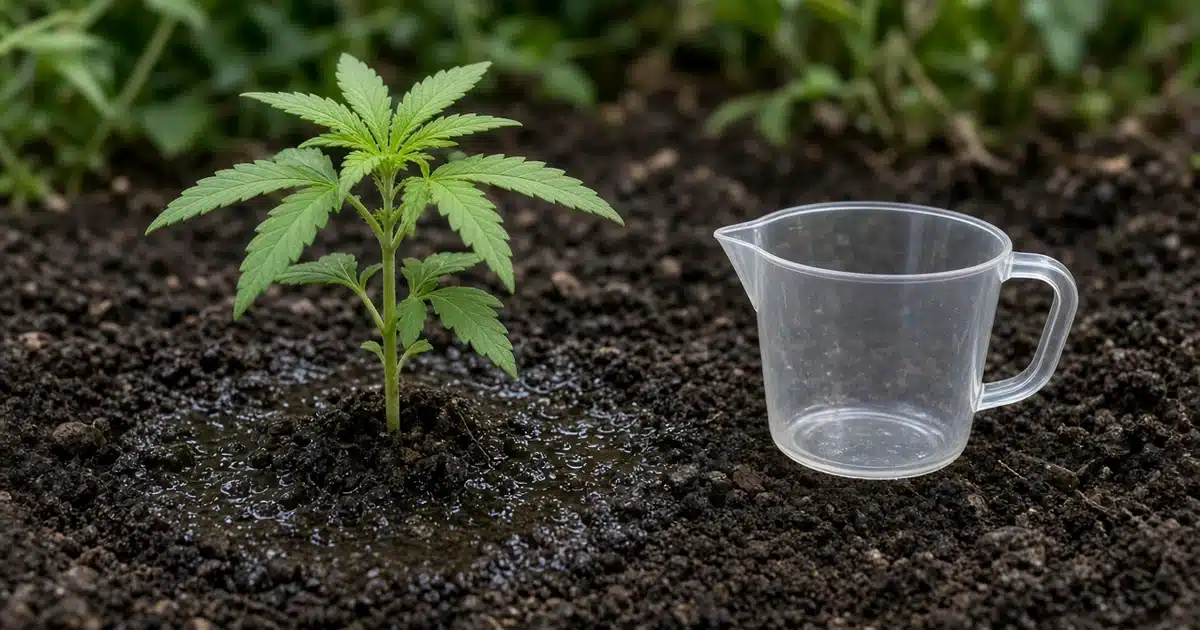
- Water the soil first. Colorado State University says adequate moisture is essential and recommends watering before application.
- Mix with water as the label says. Colorado State University says the usual method is to dilute the nematodes in water and drench the soil.
- Drench at a dim time. Apply when light is low, since nematodes are susceptible to ultraviolet light.
- Keep the top layer moist. Nematodes need free water to move, according to Colorado State University, so do not let the mix dry out after application.
- Check results. The UC IPM floriculture guide suggests potato slices on the soil surface to check for gnat larvae, and yellow sticky cards for adults.
Root Knot Nematodes on Cannabis
Cannabis can host root knot nematodes too. In a 2024 US study in the Journal of Nematology, researchers tested several cannabis cultivars in greenhouse trials and found that all of them were good hosts for root knot nematodes, although gall symptoms were less severe than on cucumber.
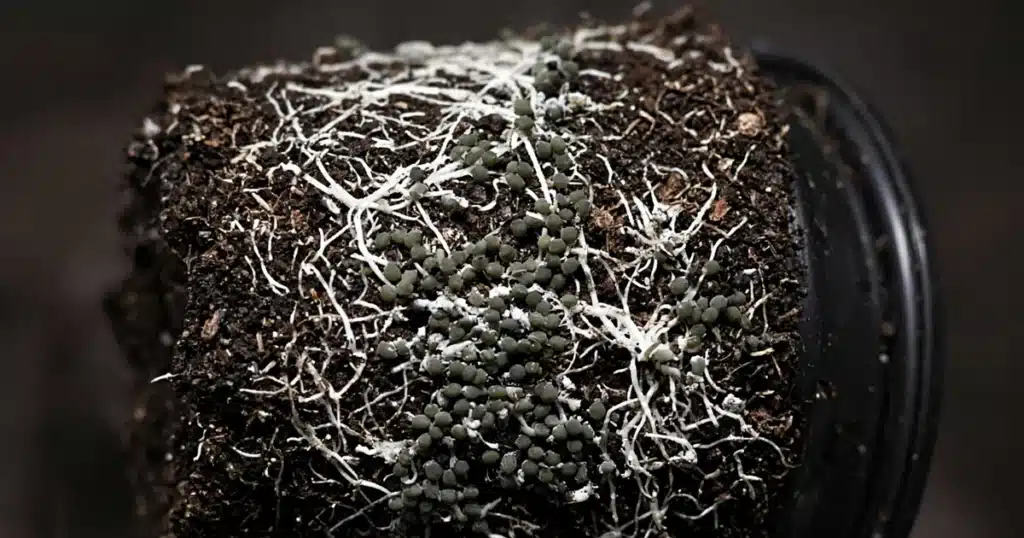
UC IPM says root knot nematodes cause galls that can grow as large as 1 inch across on some plants, and that the galls damage the water and nutrient conducting abilities of the roots. Above ground, plants may show stunting, wilting during the hottest part of the day even with good soil moisture, loss of vigor and yellowing leaves.
UC IPM says root knot galls cannot be rubbed off, unlike the nitrogen fixing nodules on legume roots. To confirm a problem, it suggests sending soil and root samples to a lab, or running a simple bioassay with melon seedlings kept at about 80°F.
Lowering Root Knot Nematodes in Garden Beds
UC IPM says fallowing, crop rotation and soil solarization can lower root knot numbers, but these methods work mainly in the top foot of soil, so they are effective only for about a year. Our guide to soil solarization for cannabis beds explains that method. UC IPM also says organic amendments such as peat, manure and compost can help plants tolerate nematodes. Before you plant cannabis outdoors, check your state’s home grow law.
Nematodes and Other Biocontrols
Beneficial nematodes are just one of several natural enemies you can use. For predators that work above ground, see our guide to beneficial insects for cannabis.
Troubleshooting
Roots have round swellings that will not rub off. Those are likely root knot galls, not a sign of beneficial nematodes. UC IPM says galls cannot be rubbed off, unlike legume nodules. Send a sample to a lab to confirm.
Flying gnats are still around a week after drenching. Beneficial nematodes work on soil dwelling larvae, not flying adults. Check for larvae with potato slices, as the UC IPM floriculture guide suggests.
Nothing changed after the drench. The mix may have been too dry. Colorado State University says adequate moisture is the most important factor, and nematodes need free water to move.
The package sat in a hot mailbox. Colorado State University says short exposure above about 90 to 95°F can kill common strains. Use a fresh batch that stayed cool.
Small round bugs sit on the roots, not galls. That is a different problem. Read our guide to root aphids on cannabis.

Frequently Asked Questions
Are nematodes good or bad for cannabis?
Both kinds exist. Beneficial, insect parasitic nematodes, such as Steinernema and Heterorhabditis, attack soil insects and do not attack plants, according to Colorado State University. Plant parasitic nematodes, such as root knot nematodes, feed on roots and form galls. A 2024 US study found that cannabis cultivars are good hosts for root knot nematodes.
Which pests can beneficial nematodes help with in cannabis soil?
They help with insects that live in moist, dark soil. Colorado State University says Steinernema feltiae is effective against certain fly larvae and is sometimes used for fungus gnats, and that control of insects on foliage is poor in the field. The UC IPM floriculture guide also lists Steinernema feltiae drenches for fungus gnat larvae.
How do you apply beneficial nematodes to cannabis pots?
Water the soil first, then dilute the nematodes in water as the label says and drench the mix, as Colorado State University describes. Apply when light is low, since ultraviolet light harms them, and keep the top layer moist afterward. Store them cool and never let them freeze or sit above about 90°F.
What do root knot nematodes do to cannabis roots?
They feed inside the roots and cause galls. UC IPM says the galls damage the water and nutrient conducting abilities of the roots, which can lead to stunting, midday wilting and yellow leaves. A 2024 US study found that the cannabis cultivars it tested were good hosts, with milder galls than on cucumber.
Are beneficial nematodes safe to use around cannabis plants?
Colorado State University says insect parasitic nematodes do not attack mammals, birds or plants, and do not appear to have any significant harmful effects on other beneficial organisms or people. Read the label and check your state’s rules before you use them, and follow the label for mixing and storage.
Sources
- Colorado State University Extension, Insect Parasitic Nematodes: https://extension.colostate.edu/resource/insect-parasitic-nematodes/
- UC Statewide IPM Program, Pest Notes: Nematodes: https://ipm.ucanr.edu/home-and-landscape/nematodes/
- UC Statewide IPM Program, Floriculture and Ornamental Nurseries: Fungus Gnats: https://ipm.ucanr.edu/agriculture/floriculture-and-ornamental-nurseries/fungus-gnats/
- Coburn and Desaeger, Journal of Nematology 56 (2024), host status of cannabis cultivars to root knot nematodes: https://doi.org/10.2478/jofnem-2024-0003