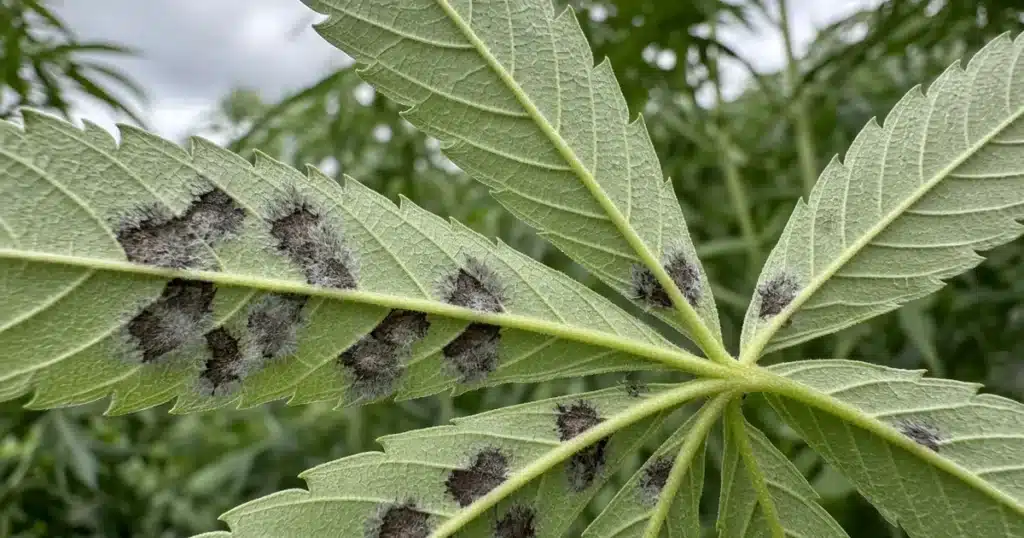
Algae On Cannabis Soil: Causes, Removal And Prevention
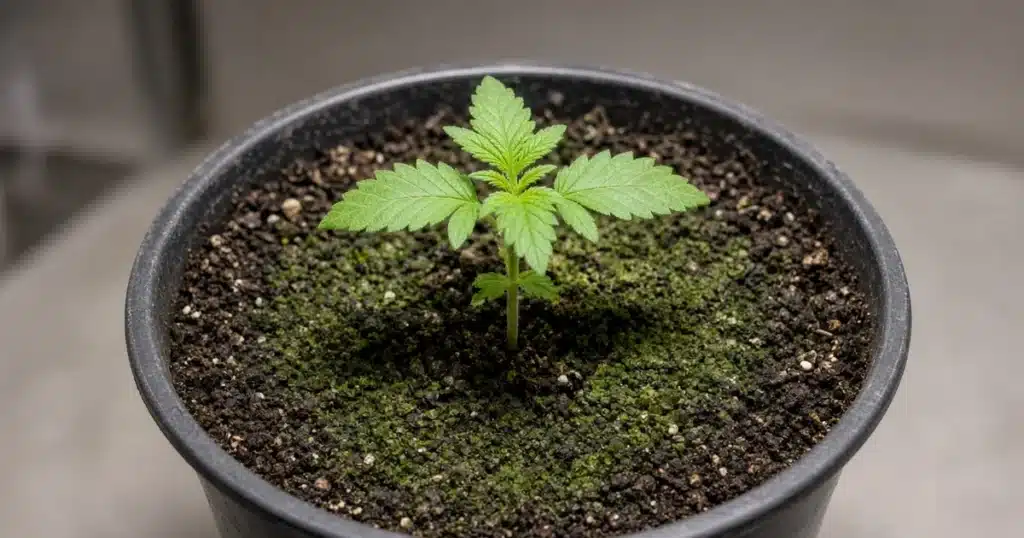
Quick answer: Algae on cannabis soil is a green film or mat that grows when the surface of the mix stays wet and gets light. University of Maryland Extension says it usually is not harmful to plants, but a thick mat can crust over, block water and feed small flies. Let the top of the mix dry between waterings, add airflow, break up or remove the mat and keep light off the surface.
How to Tell It Is Algae
University of Maryland Extension says algae grow under moist conditions and form a greenish layer on the surface of the growing media. Fungi on potting media, by contrast, form a white to grayish layer. Both can grow together or separately.
UConn Extension says algae are simple plants that contain chlorophyll but lack true roots, leaves and stems. To grow, they need water, light and mineral nutrients. Their spores and cells are found almost everywhere, so a wet, lit, fed surface is all they need to get started.
Algae, Moss or Nostoc?
| Growth | What it looks like | Where it grows |
|---|---|---|
| Algae | A green mat or film across a wet surface | Wet growing media, benches and floors |
| Moss | Small plants with rhizoids that anchor them | Wet, shaded spots, including inside pots shaded by the crop |
| Nostoc (blue green algae) | Mats that swell into dark green, jelly like masses when wet and turn flaky when dry | Soil, gravel, cement and plastic containers |
Sources for the table: the e-GRO Alert from Michigan State University for algae and moss, and UF/IFAS Extension for Nostoc.
Why Algae Grows on Cannabis Soil
UConn Extension says overwatering crops frequently leads to algae buildup on the surface of the growing media. It also advises against excessive fertilization, runoff and puddling water. UF/IFAS lists nutrients from fertilizers and irrigation, light, high humidity and warm temperatures as the conditions that favor surface algae.
Feeding plays a part. Christopher Currey of Iowa State University writes in an e-GRO Alert that free mineral nutrients on the surface of the substrate are one factor in algae growth, and that a surface kept wet by frequent misting grows algae. If you feed on a fixed routine, our feeding schedule for cannabis in soil shows how to match feeding to plant stage.
Why Seedlings and Clones Get It First
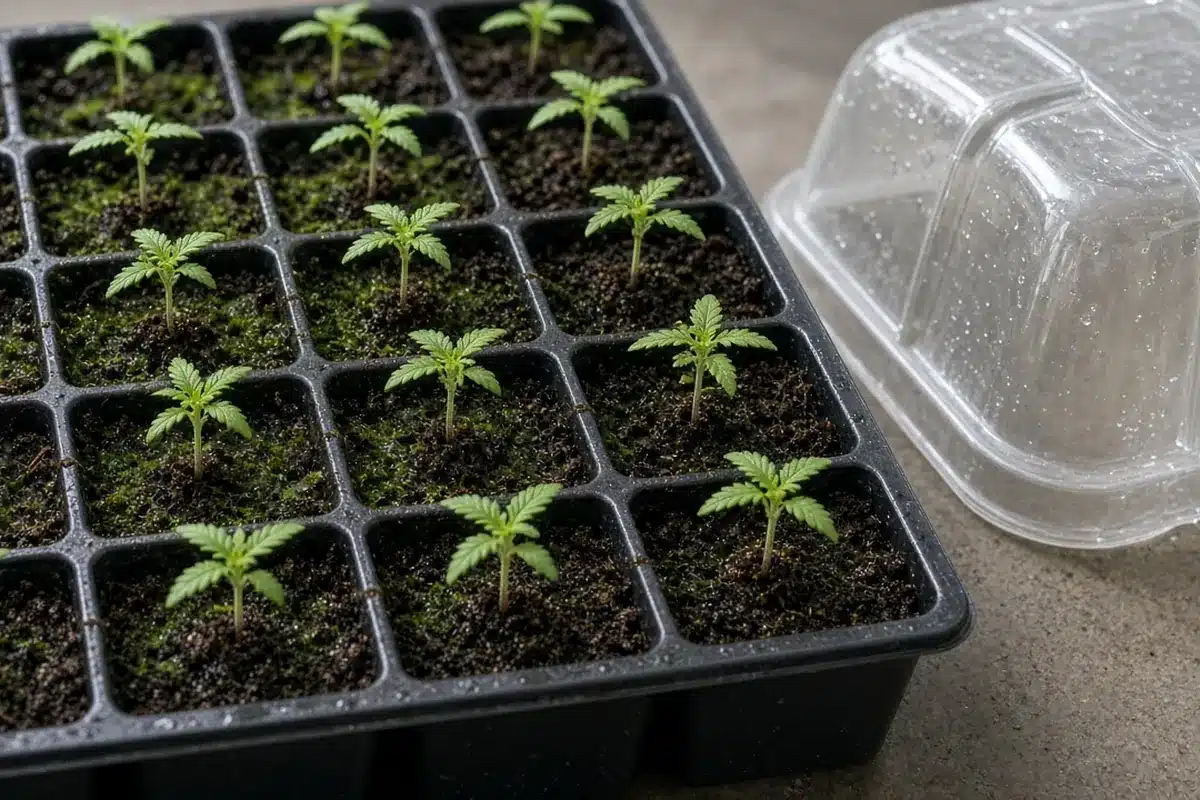
Michigan State University researchers writing in e-GRO describe warm air and root zone temperatures, low light, humid air, moist media and frequent watering as an environment very suitable for algae and moss. That describes a typical seedling tray or clone dome closely.
Is Algae on Soil Bad for Cannabis?
Usually not on its own. University of Maryland Extension says algae growth on potting media is not usually harmful to plants. Trouble only starts when it gets thick.
- It competes for nutrients. UConn Extension says algae compete with desirable plants for nutrients.
- It forms a crust. UConn says algae eventually form an impermeable layer on the media surface that can interfere with water penetration. University of Maryland adds that a thick mat can dry and crust over.
- It makes rewetting harder. The Iowa State e-GRO Alert says the crust makes it harder to evenly rewet the substrate.
- It can block germination. Michigan State researchers note that thick algal mats can act as a barrier to seed germination in propagation.
- It feeds small flies. University of Maryland says the mat can attract fungus gnats and shore flies.
How to Get Rid of Algae on Cannabis Soil
- Confirm it is algae. Look for a green film or mat. A white or gray fuzzy layer is more likely fungal growth.
- Let the top of the mix dry. University of Maryland Extension says to allow the surface to dry between waterings. UConn says to let the upper surface of the media dry out between waterings.
- Break up or remove the mat. University of Maryland says to break the mat up with a small tool such as a fork, or remove and discard the upper layer of media along with the mat.
- Top dress with fresh, dry mix. Replace any layer you removed with fresh mix so the surface starts clean.
- Add airflow. University of Maryland says to keep humidity low with good air circulation between pots. Michigan State researchers suggest limiting irrigation and turning on ventilation fans for an existing problem.
- Block light on clear pots. Algae need light to grow, UConn says, so use opaque pots or slip clear ones into a dark outer pot.
- Feed with care. UConn says not to apply excessive fertilizer, since mineral nutrients feed algae.
- Clean trays and pots before reuse. UConn advises cleaning and sanitizing pots and trays before using them again.
Scraping alone may not last, especially for Nostoc. UF/IFAS says physically removing Nostoc like algae gives only short term control, because they will eventually return. Michigan State researchers call controlling excess moisture possibly the most powerful strategy.
How to Keep Algae From Coming Back
- Water only as needed. If the surface stays wet for days, our guide to overwatering cannabis covers how to check moisture and adjust.
- Pick a mix with the right drainage. UConn recommends selecting a growing medium with appropriate drainage for the crop.
- Avoid puddles and runoff. UConn says to avoid runoff and puddling water on floors and benches.
- Keep the space ventilated. UConn says proper ventilation helps reduce moisture.
- Lift the dome on seedlings. Give seedlings and clones fresh air every day once they root, since Michigan State researchers link humid, moist propagation to algae.
Troubleshooting
Algae comes back within a week. The surface is still staying wet. UF/IFAS says physical removal gives only short term control. Water less often, add a fan and block light on the mix.
Water beads up and runs off the surface. A thick algal mat may have crusted over. University of Maryland says to break the mat up with a fork or remove the top layer.
There is white fuzz on the soil, not green film. That is more likely fungal growth, which University of Maryland describes as a white to grayish layer. If you see caps or stalks, see our guide to mushrooms in cannabis pots.
Small flies hover over the pots. University of Maryland says algal mats can attract fungus gnats and shore flies, and Colorado State University says fungus gnat larvae feed on algae, fungi and plant roots in the top 2 to 3 inches of mix. See our guide to fungus gnats in cannabis pots.
Seeds are not coming up through the green layer. Michigan State researchers say thick algal mats can act as a barrier to seed germination. Remove the layer and sow on a fresh surface.
Frequently Asked Questions
Is algae on soil bad for cannabis plants?
Usually not on its own. University of Maryland Extension says algae growth on potting media is not usually harmful to plants. A thick mat is the problem. UConn Extension says algae compete for nutrients and can form a crust that interferes with water penetration, and University of Maryland says the mat can attract fungus gnats and shore flies.
What conditions make algae grow on cannabis soil?
Algae need water, light and mineral nutrients, according to UConn Extension, which also says overwatering often leads to algae on the surface of growing media. UF/IFAS adds fertilizer and irrigation nutrients, high humidity and warm temperatures. A wet, lit, well fed surface in a warm, humid room is ideal for it.
Should I scrape algae off the soil?
You can break it up or remove it. University of Maryland Extension says to break the mat up with a small tool such as a fork, or remove and discard the upper layer of media with the mat. UF/IFAS warns that physical removal gives only short term control, so also let the surface dry between waterings.
Why is there green algae on my cannabis soil?
The surface is staying wet, getting light and holding nutrients. UConn Extension says overwatering frequently leads to algae buildup, and an Iowa State e-GRO Alert says free mineral nutrients on the surface and frequent misting add to it. Seedling trays are especially prone because they are warm, humid and moist.
How do I stop algae coming back on cannabis soil?
Let the top of the mix dry between waterings and keep humidity low with good airflow, as University of Maryland Extension advises. Avoid excess fertilizer and puddling water, as UConn suggests, and block light on clear pots. Clean and sanitize pots and trays before reuse so algae do not carry over.
Sources
- UConn Extension, Managing Algae in the Greenhouse: https://ipm.cahnr.uconn.edu/managing-algae-in-the-greenhouse/
- University of Maryland Extension, Algae and Fungal Growth on Soil of Indoor Plants: https://www.extension.umd.edu/resource/algae-and-fungal-growth-soil-indoor-plants
- UF/IFAS Extension, Biology and Management of Nostoc (Cyanobacteria) in Nurseries and Greenhouses (AG430): https://ask.ifas.ufl.edu/publication/AG430
- Colorado State University Extension, Fungus Gnats as Houseplant and Indoor Pests: https://extension.colostate.edu/resource/fungus-gnats-as-houseplant-and-indoor-pests/
- e-GRO Alert (Iowa State University), Algae in Propagation (PDF): https://www.e-gro.org/pdf/2015_403.pdf
- e-GRO Alert (Michigan State University), Managing Algae and Moss Inside Greenhouses (PDF): https://www.e-gro.org/pdf/2024-13-26.pdf