Springtails In Cannabis Soil: What They Mean And What To Do
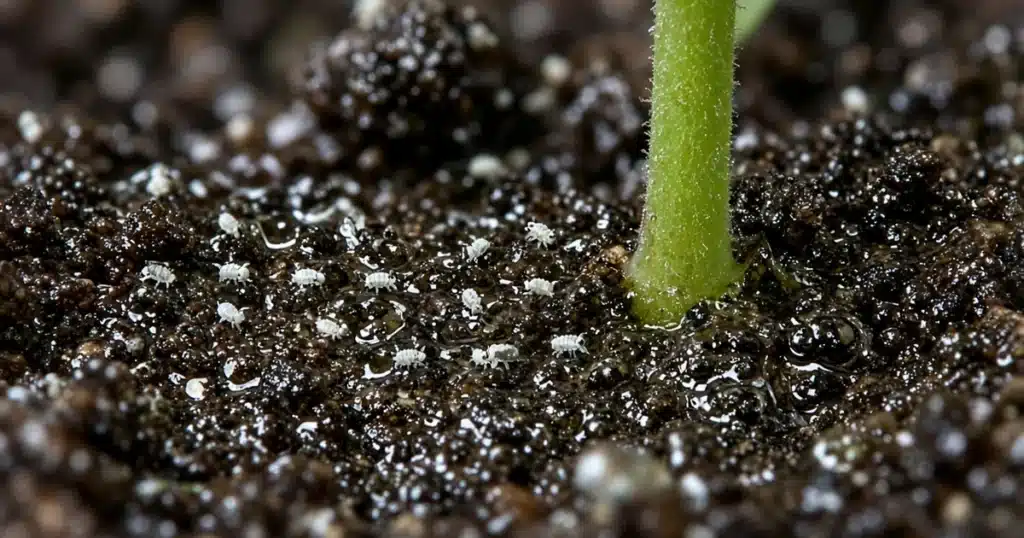
Quick answer: Springtails in cannabis soil are tiny, wingless soil animals that jump when you disturb them. Most are harmless scavengers that feed on decaying matter, fungi and algae, and mature cannabis plants are not significantly injured by them. A crowd of springtails usually means the mix is staying very wet and rich in organic matter, so drying the surface is the main fix.
Are Springtails Good or Bad for Cannabis?
Mostly good, though sometimes a nuisance. The UC Statewide IPM Program says most springtails are harmless scavengers feeding mainly on decaying organic matter. Colorado State University Extension says they help break down organic matter and recycle nutrients, and that their presence is usually a sign of healthy, living soil. UConn IPM calls them generally beneficial because of their role as nutrient recyclers.
The exception is the seedling stage. UC IPM notes that some species may chew on the roots and leaves of seedlings, and Colorado State University says a few may damage tender plants. Utah State University Extension puts it plainly: springtails rarely cause economic injury, and control measures are rarely needed.
What Springtails Look Like
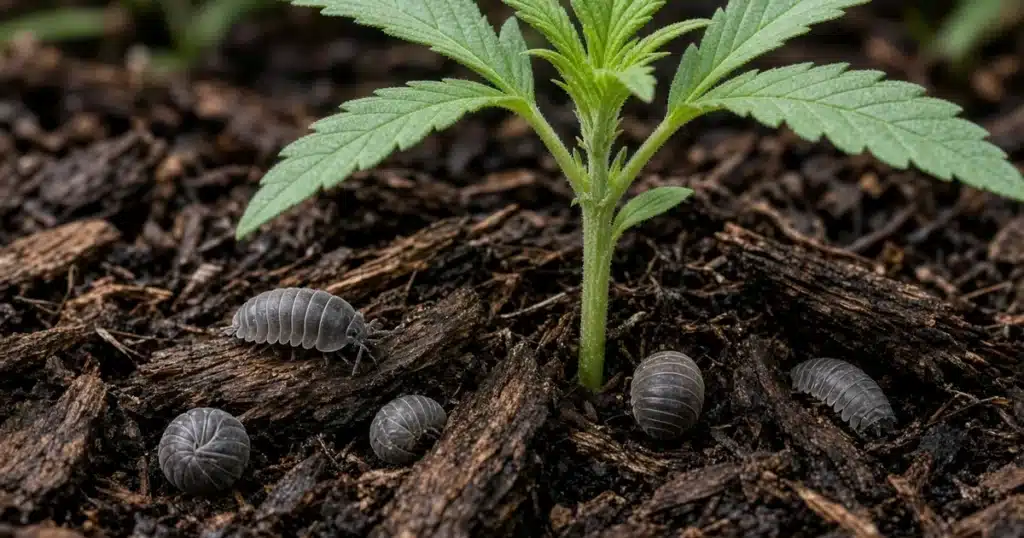
UC IPM describes springtails as minute, wingless, insect like arthropods about 1/16 inch long. Young ones are usually whitish, and adults tend to be whitish, bluish or dark gray to black. Their name comes from a tail like part called the furcula, tucked under the body. When disturbed, it acts like a spring and throws them up to several inches into the air.
That jump is the easiest field test you can do. Tap the pot rim or water the surface gently and watch. Springtails pop off the soil like tiny fleas, but they do not bite people or pets, according to UC IPM.
Why Springtails Show Up in Cannabis Pots
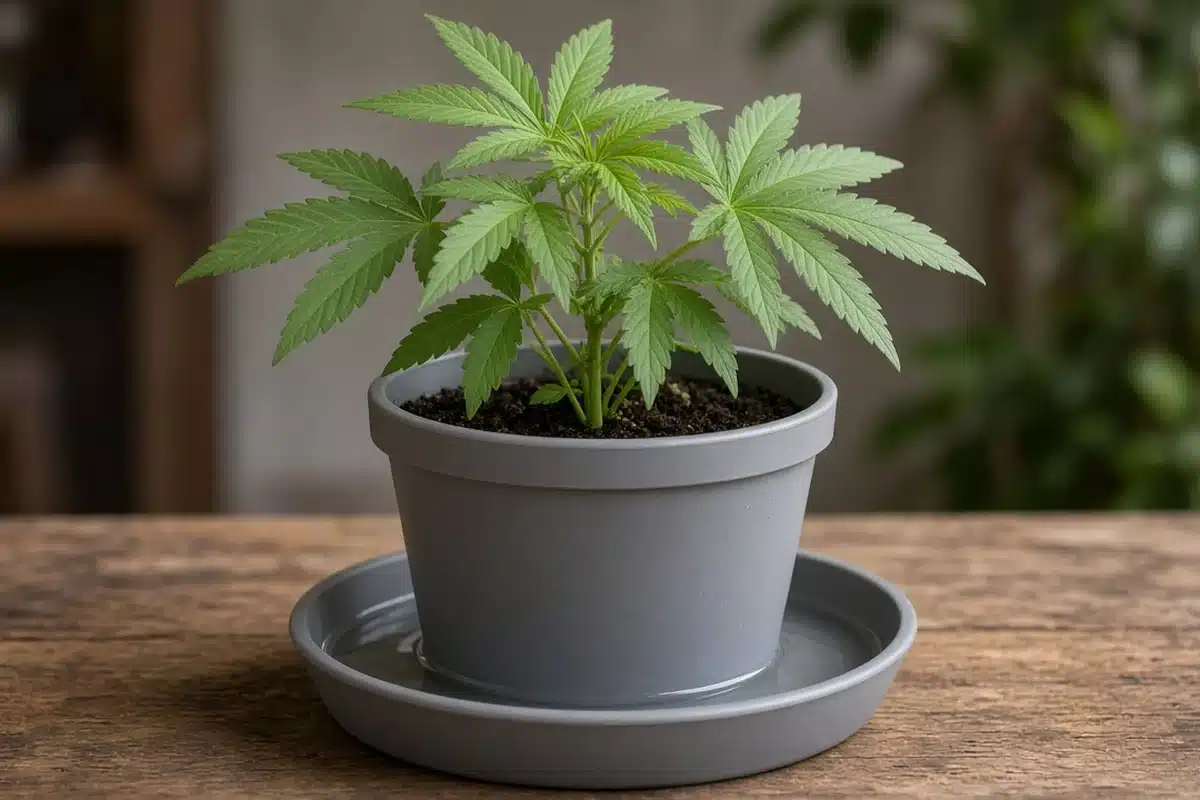
Above all, springtails need moisture. Colorado State University says springtails breathe through their skin, which is why they need moist places to live. In moist soils with lots of organic matter, it says tremendous numbers can be present, up to thousands per square foot.
UConn IPM says springtails are found in growing media with high levels of organic matter or compost, especially if plants have been overwatered. It adds that they can spread in unpasteurized potting soil. Rich living soil mixes, thick top dressings and pots that rarely dry out are all common reasons for a springtail boom in cannabis containers.
When You Can Ignore Them
You can usually leave springtails alone when plants are past the seedling stage, leaves look healthy and growth is steady. Utah State University says control is rarely needed. In a healthy pot they are part of the soil food web, and the numbers often fall as soon as the surface dries a little.
How to Lower Springtail Numbers in a Pot
- Let the top layer dry. UC IPM says the key to managing springtails is to reduce moisture and excess organic matter in plant pots. Wait until the top inch of mix feels dry before the next watering.
- Empty saucers after watering. Standing water keeps the mix wet from below, which suits springtails.
- Check that pots drain. UConn IPM advises avoiding overwatering and letting the media dry down between irrigations.
- Remove rotting debris. Pick fallen leaves and decaying matter off the soil surface, since that is what springtails feed on.
- Use pasteurized mix for seedlings. UConn IPM notes that springtails can be spread in unpasteurized potting soil.
- Recheck after a week. Tap the pot and look again. Fewer jumpers means the drier routine is working.
For a watering routine that fits each growth stage, see our guide to overwatering and cannabis growth.
Springtails and Other Small Soil Animals
| What you see | Most likely | Where to read more |
|---|---|---|
| Tiny white or gray specks that jump | Springtails | This guide |
| Small dark flies over the soil | Fungus gnats | fungus gnats in cannabis pots |
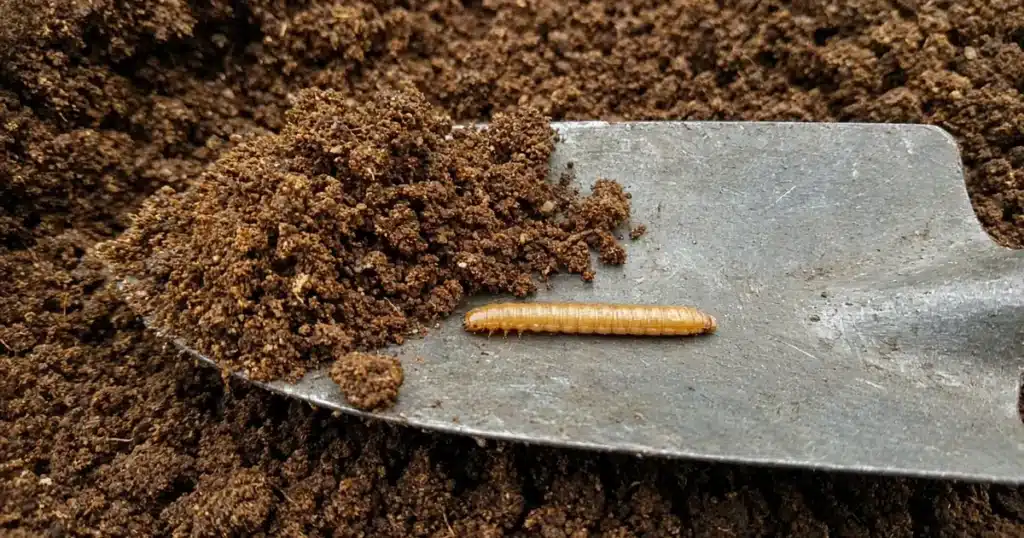
| Fast white runners with many legs that do not jump | Symphylans | symphylans in cannabis soil |
| Round dark aphids on the roots | Root aphids | root aphids on cannabis |
Natural Predators of Springtails
UConn IPM says the predatory mite Stratiolaelaps scimitus feeds on springtails as well as other soil dwelling insects. That is a fact about the soil food web, not a reason to buy predators for a pot that only needs to dry out. Follow the product label, and check that any pesticide is allowed for cannabis in your state.
Troubleshooting
Springtails swarm after every watering. The mix is staying wet for too long. Water a little less, empty saucers and let the top inch dry before the next watering.
Seedling leaves have tiny pits. UConn IPM says high numbers of garden springtails can feed on tender young seedlings and leave tiny pits on the leaf surface. UC IPM adds that damage shows as minute, rounded pits on young leaves or roots. Dry the surface and move seedlings to fresh, pasteurized mix if the damage keeps spreading.
The bugs do not jump. Then they are probably not springtails. Use the table above to compare them with other soil animals.
Numbers come back in a new pot. Check the new mix. UConn IPM notes that unpasteurized potting soil can carry springtails, and rich compost top dressings bring them back quickly.
You see springtails on the floor or in the saucer. Colorado State University says overcrowding and soil drying can trigger migrations, and that indoor migrations usually last less than a week.
Frequently Asked Questions
Are springtails good or bad for cannabis soil?
Mostly good. Colorado State University says springtails help break down organic matter and recycle nutrients, and UConn IPM calls them generally beneficial. UC IPM says some species may chew seedling roots and leaves, but mature plants are not significantly injured. A big population mainly tells you the mix is staying very wet.
Do springtails eat cannabis roots?
Rarely, and mainly on seedlings. UC IPM says most springtails are harmless scavengers that feed on decaying matter, fungi, molds and algae, while some species may chew on the roots and leaves of seedlings. Established cannabis roots are not their usual food, so healthy older plants are not significantly injured.
Why do I see springtails in my cannabis soil after watering?
Water brings them to the surface, and wet mix is where they thrive. Colorado State University says springtails need moist places because they breathe through their skin. UConn IPM says they build up in media with high organic matter, especially when plants are overwatered. Let the top inch dry between waterings.
Can springtails hurt cannabis seedlings?
They can when numbers are high. UConn IPM says garden springtails can feed on tender young seedlings and leave tiny pits on the leaves, and UC IPM says damaged seedlings may wilt. Keep the seedling mix pasteurized, water carefully and let the surface dry between waterings to protect young plants.
Will springtails in my cannabis soil go away on their own?
Often, once the mix dries out. UC IPM says the key to managing springtails is reducing moisture and excess organic matter in pots. Colorado State University notes that soil drying can push them to move on. Utah State University says control is rarely needed, so start with a drier watering routine.
Sources
- UC Statewide IPM Program, Pest Notes: Springtails: https://ipm.ucanr.edu/home-and-landscape/springtails/
- Colorado State University Extension, Springtails: https://extension.colostate.edu/resource/springtails/
- Utah State University Extension, Springtails: https://extension.usu.edu/planthealth/ipm/notes_ag/veg-springtails
- UConn IPM, Springtails in the Greenhouse: https://ipm.cahnr.uconn.edu/springtails-in-the-greenhouse/