
Guttation On Cannabis: Why Water Drops Form On Leaf Edges
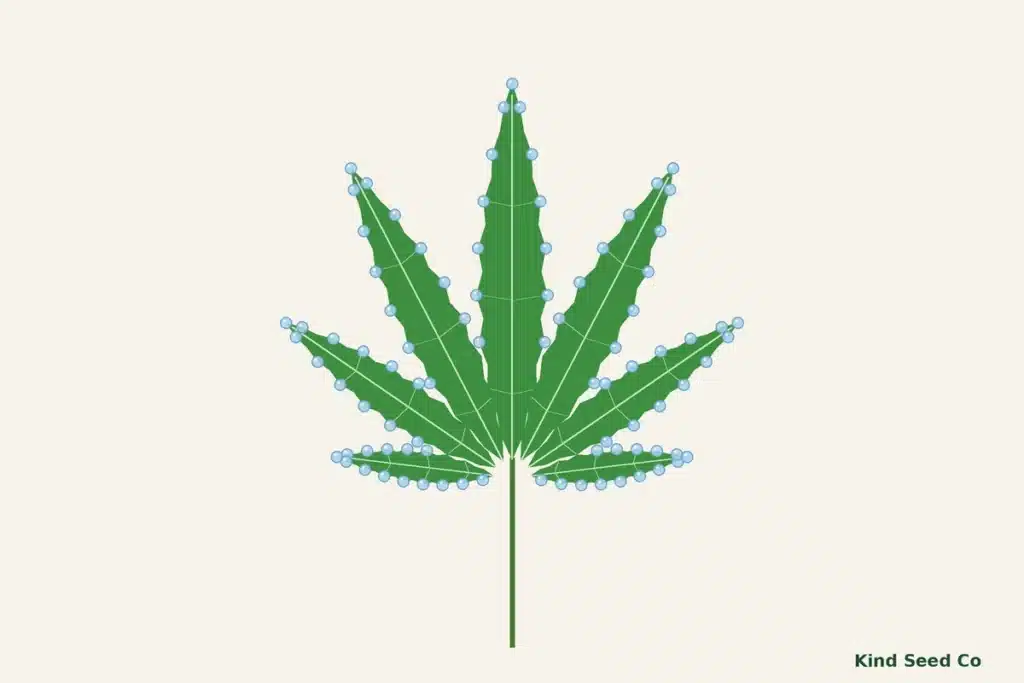
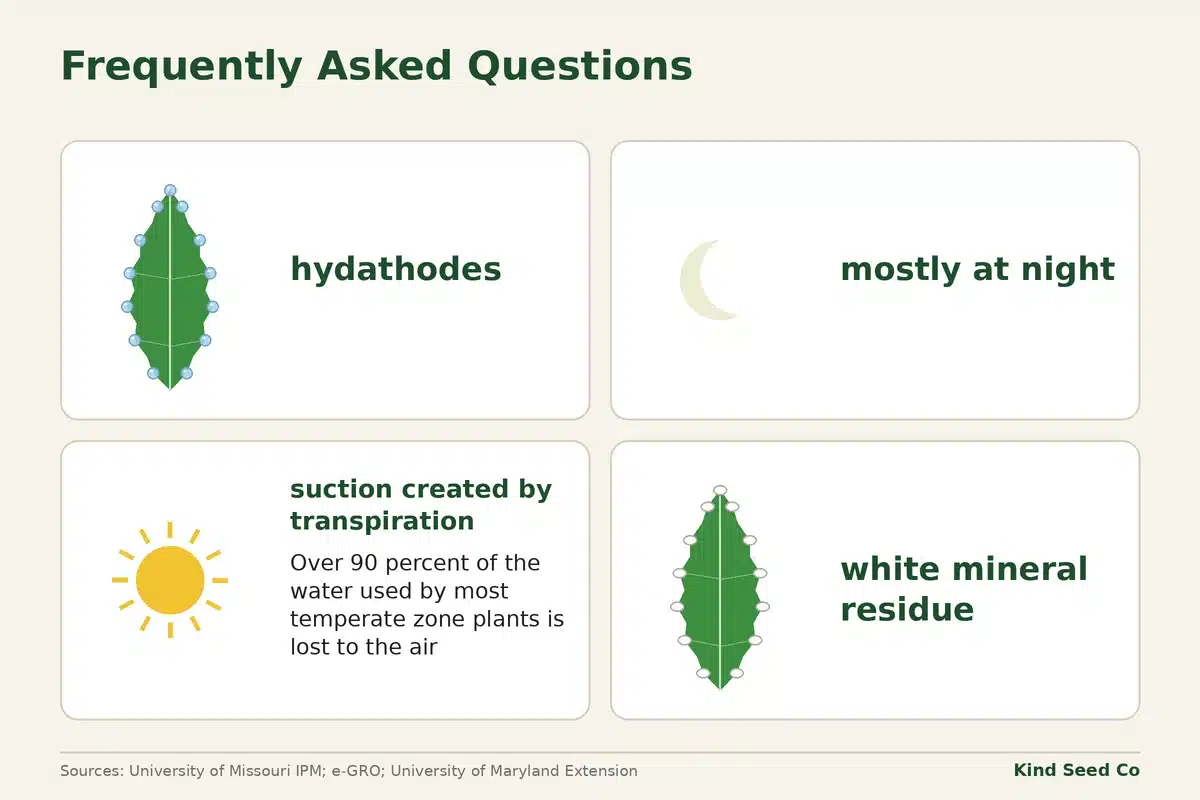
Quick answer: Guttation is the release of water drops from pores called hydathodes at leaf tips and edges. It happens mostly at night, when stomata are closed but roots keep pushing water up, especially with wet soil, humid air and calm conditions. It’s a pressure release, not a disease, though the drops can dry into white mineral residue.
What Is Guttation?
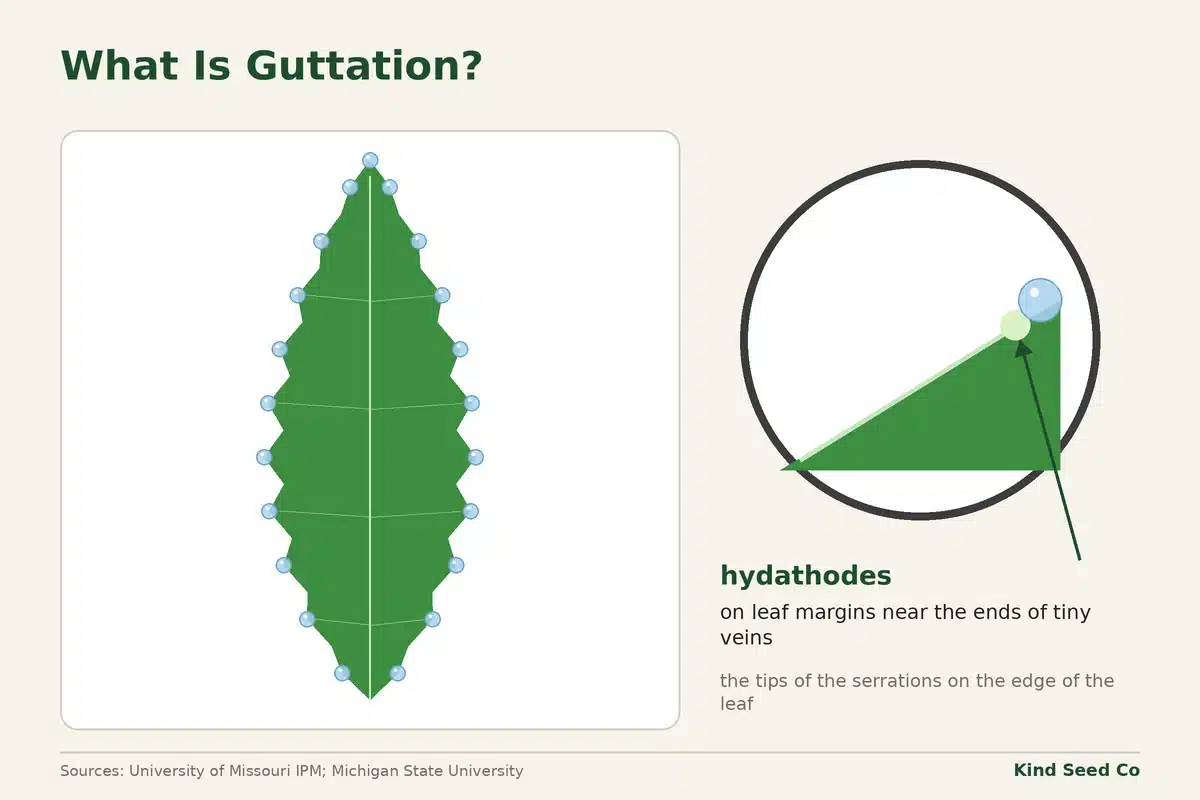
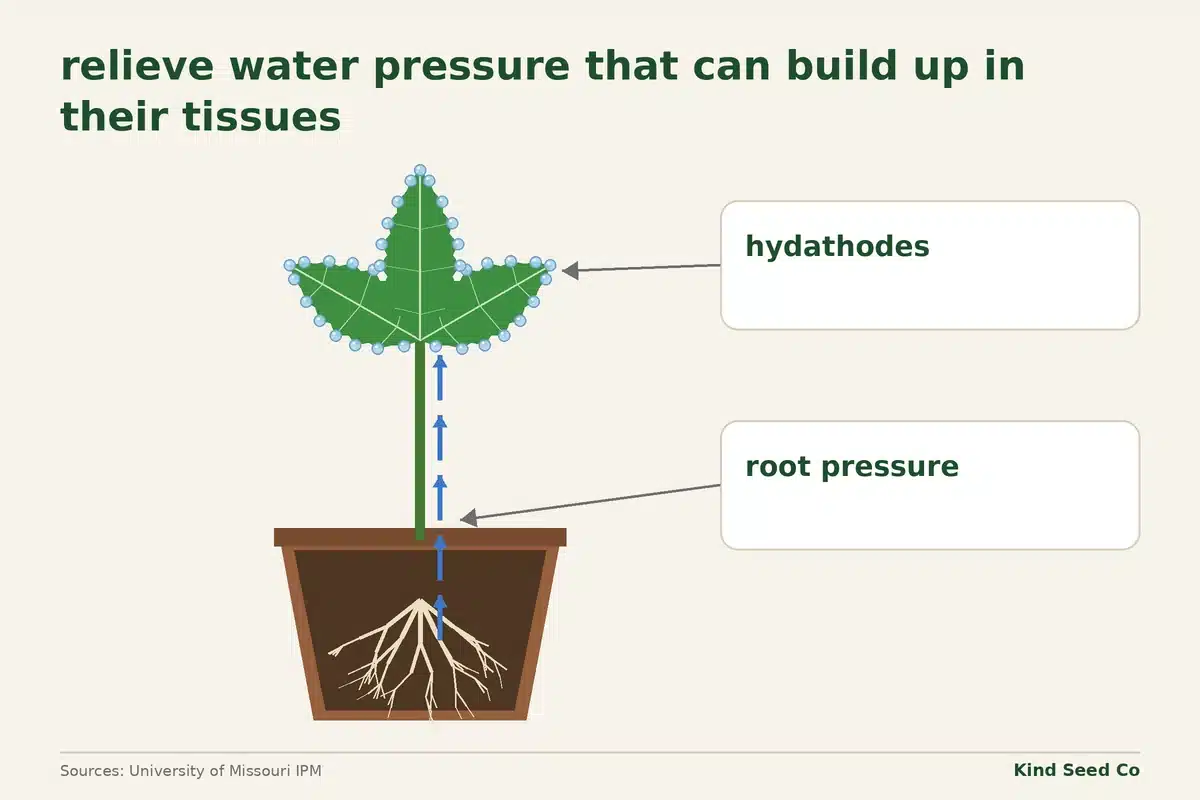
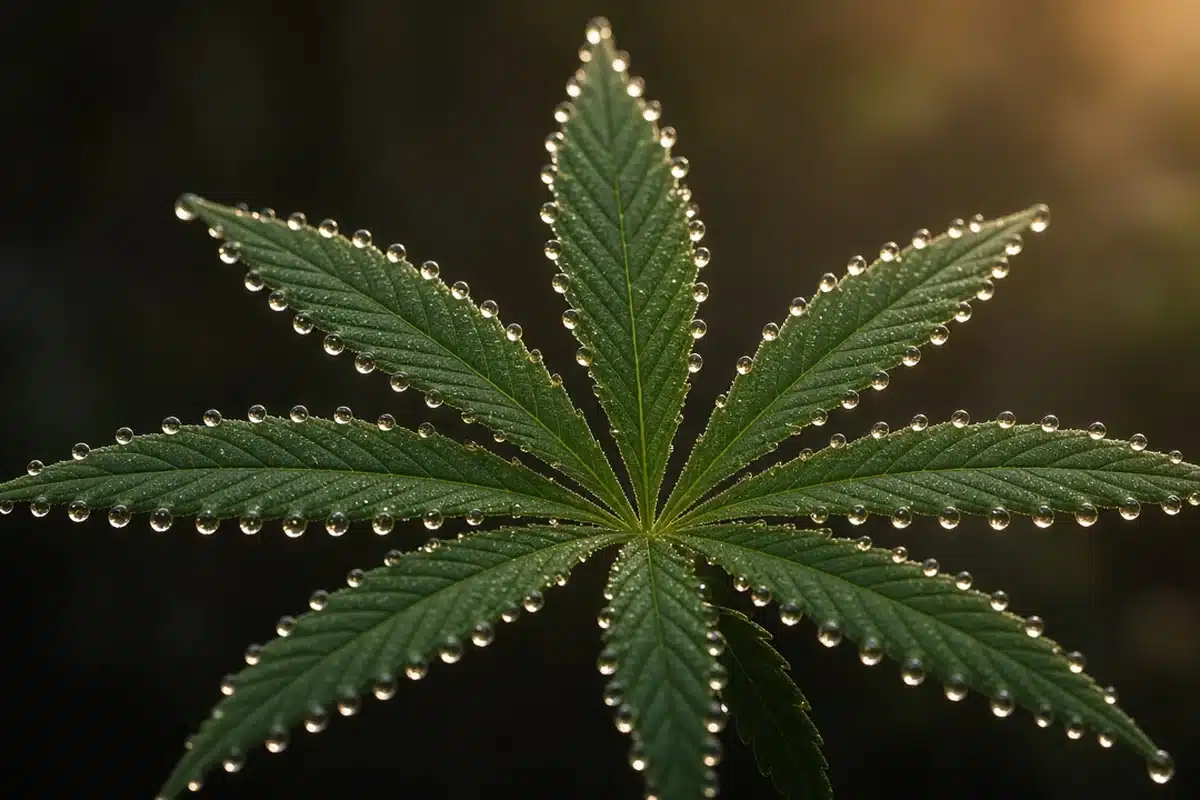
Guttation is how plants exude water from structures called hydathodes on the margins or tips of leaf blades. University of Missouri horticulturist Christopher Starbuck describes it as a way for plants to relieve water pressure that can build up in their tissues under certain conditions.
The hydathodes sit on leaf margins near the ends of tiny veins. On a serrated leaf, the drops form on the tips of the serrations on the edge of the leaf, as Michigan State University describes for grapevines. On a cannabis leaflet, look for beads at the points of the teeth.
Why Cannabis Leaves Drip Water at Night
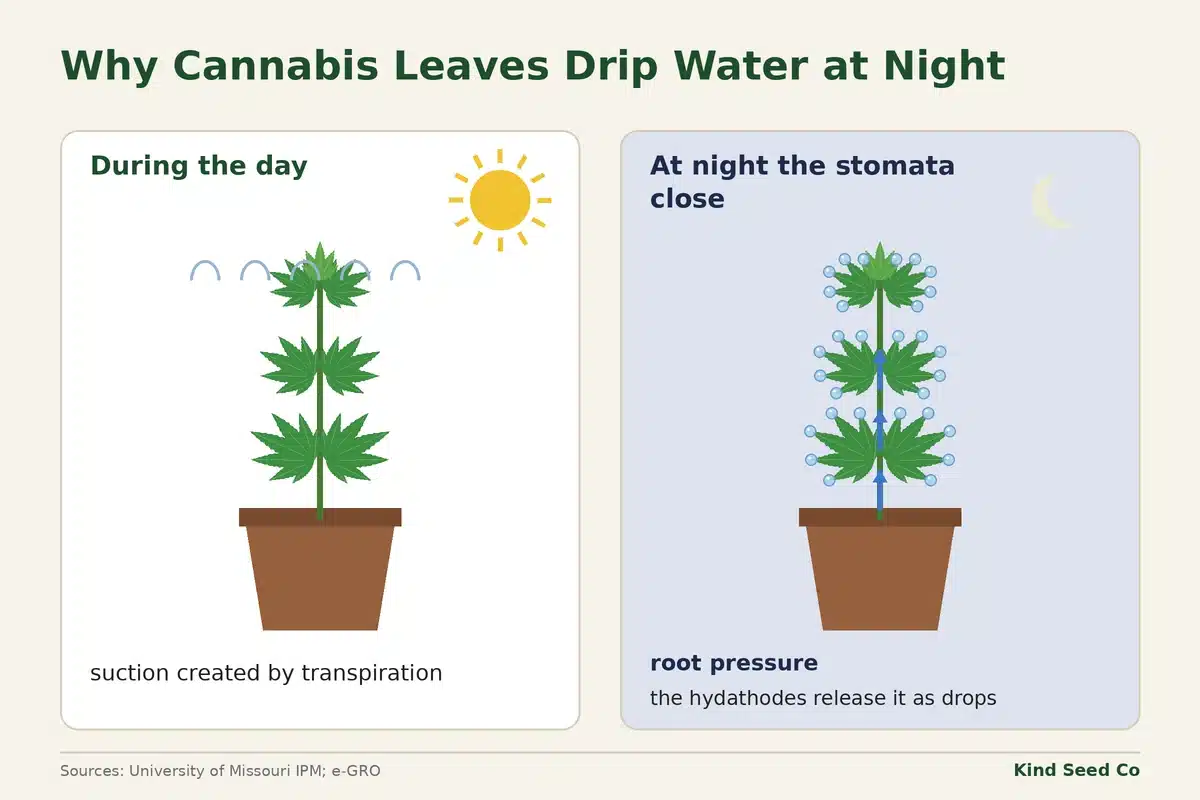
During the day, a plant pulls most of its water from the soil through suction created by transpiration, which is evaporation from the stomata on the leaves. Over 90 percent of the water used by most temperate zone plants is lost to the air this way. For more on those pores, see stomata: what are they.
At night the stomata close, so transpiration can’t remove water from the leaf. On nights with humid air, cool temperatures and warm soil, root pressure can still move water up to the leaves, and the hydathodes release it as drops. NC State University and University of Kentucky horticulturists add in e-GRO that guttation typically occurs at night when the stomata are closed and humidity is elevated.
What Makes Guttation More Likely
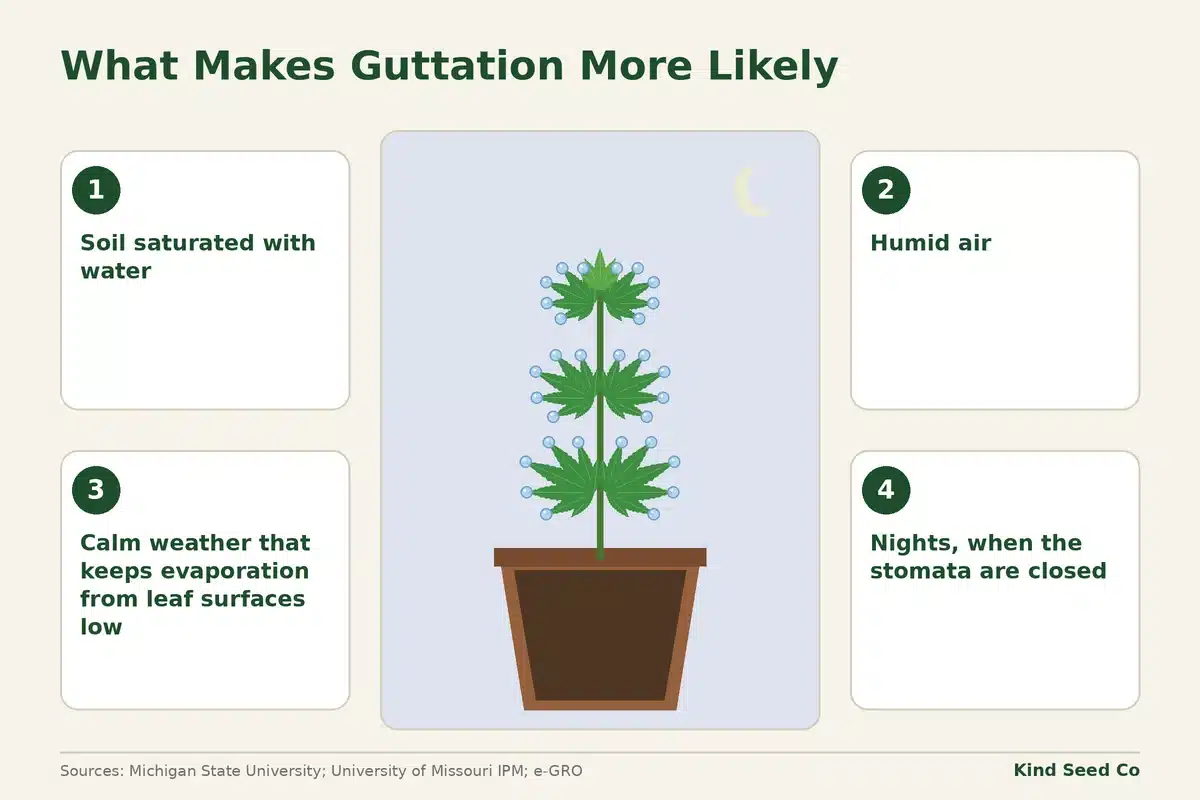
- Soil saturated with water.
- Humid air.
- Calm weather that keeps evaporation from leaf surfaces low.
- Nights, when the stomata are closed.
Indoors, the dark period is the plant’s night. Our guide to relative humidity control for cannabis covers the humidity side.
Guttation vs. Dew and Edema
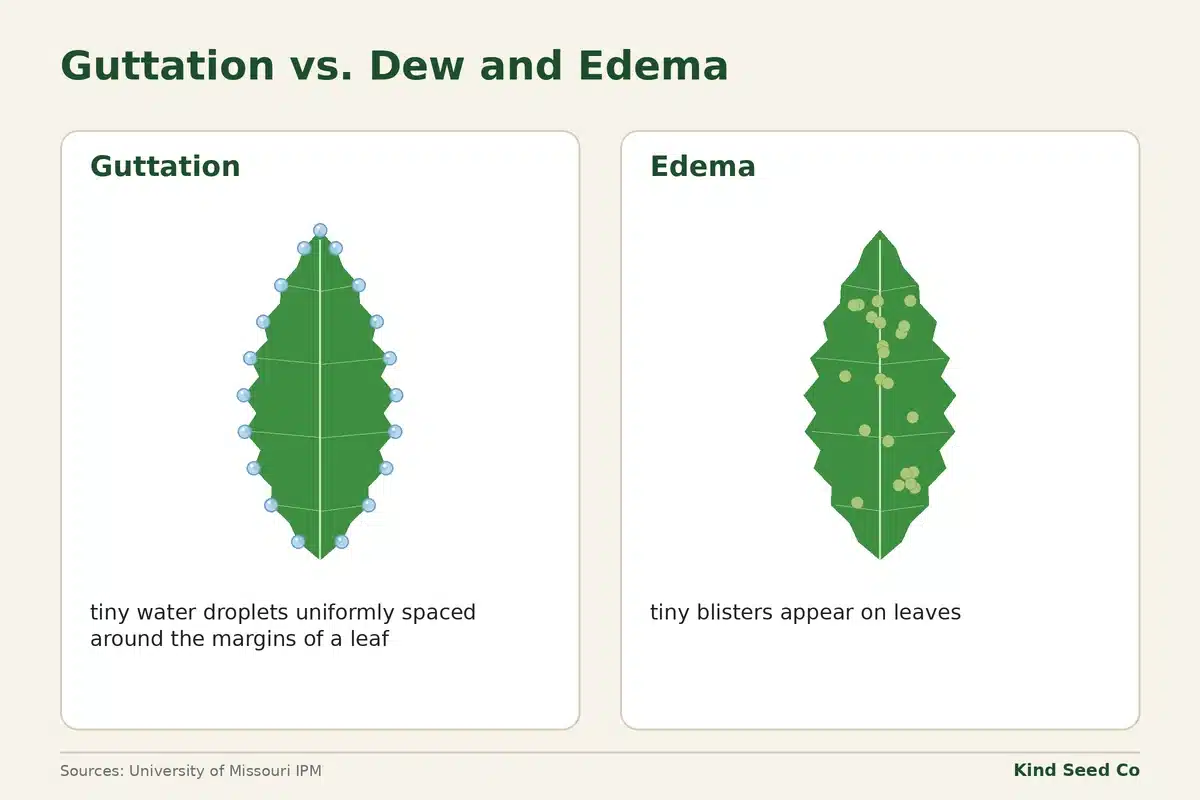
Guttation drops are easy to mistake for dew, but they form in a regular pattern. The University of Missouri describes them as tiny water droplets uniformly spaced around the margins of a leaf.
Edema is different. It’s a non-infectious disorder in which tiny blisters appear on leaves during long periods of humid air and excess soil moisture. The University of Missouri notes that guttation may even reduce the incidence of edema. The e-GRO authors also note that angular leaf discoloration linked to guttation can be confused with foliar nematode infestation.
Is Guttation Bad for Cannabis?
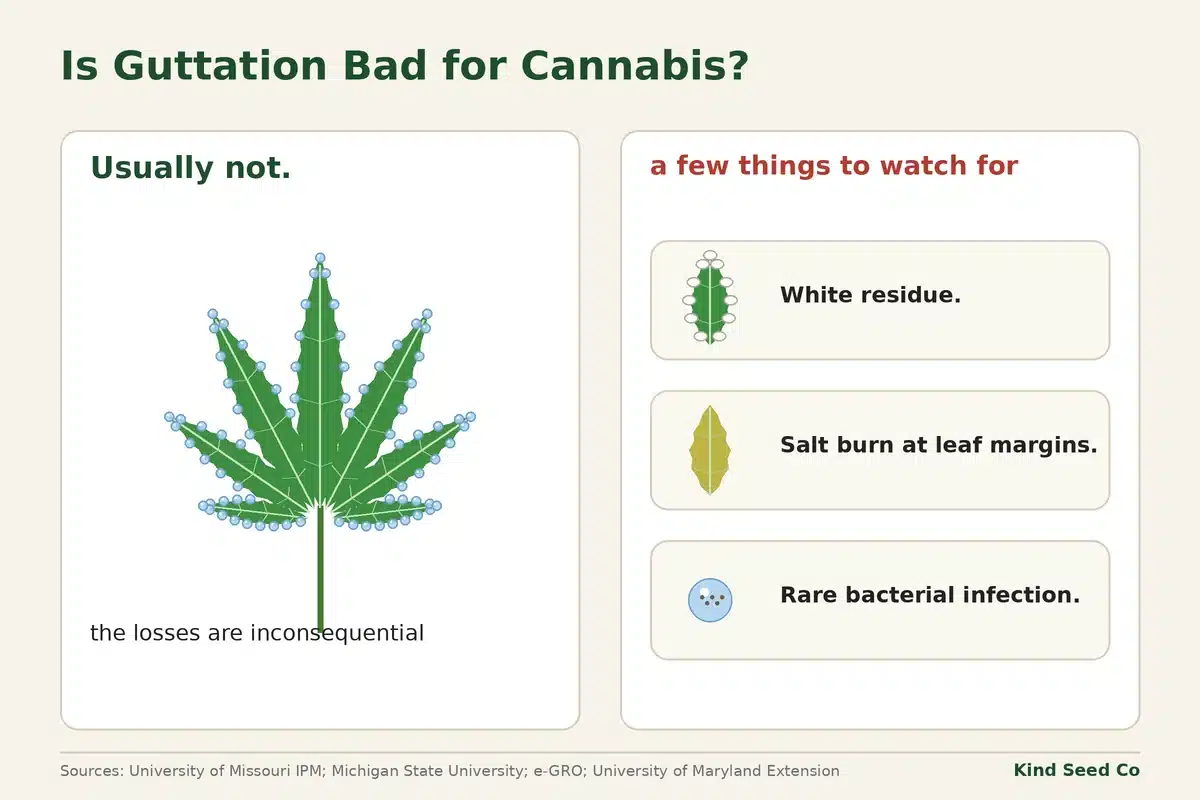
Usually not. Even though water lost to guttation contains minerals and sugars, the losses are inconsequential, according to the University of Missouri. Michigan State University says guttation is not harmful to grapevines.
There are a few things to watch for, though:
- White residue. After the water evaporates, the nutrients it carried can leave a white residue on the leaf.
- Salt burn at leaf margins. Over time, compounds left behind at the leaf edge can show up as a marginal yellowing called salt burn.
- Rare bacterial infection. In rare cases, bacteria can grow in guttation droplets and be pulled back into the leaf.
What the White Residue on Leaf Tips Means
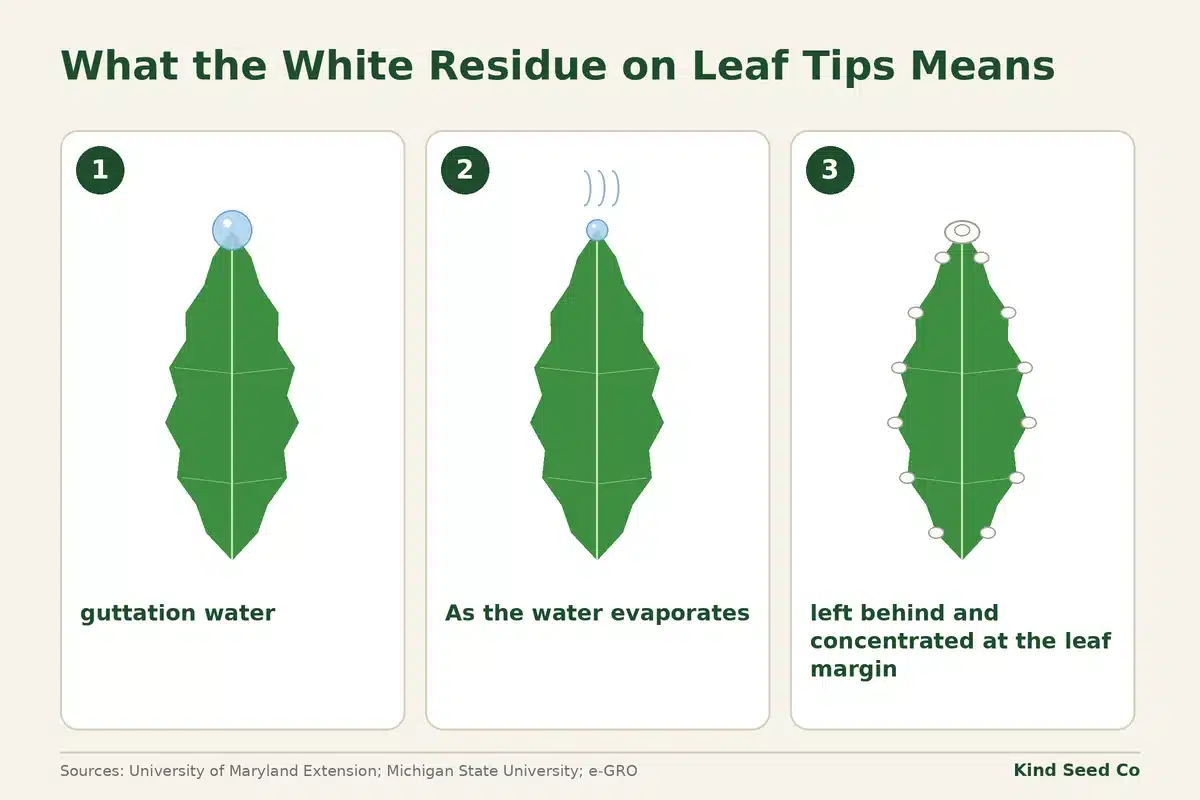
University of Maryland Extension explains that guttation water often contains organic and inorganic compounds and mineral nutrients, especially potassium. As the water evaporates, these compounds are left behind and concentrated at the leaf margin. Michigan State University describes the same thing as salt deposits on the leaf margins.
Our feeding schedule guide covers feeding in general. Brown or yellow leaf edges can have other causes, so compare them with cannabis leaf symptoms.
How to Reduce Guttation on Cannabis
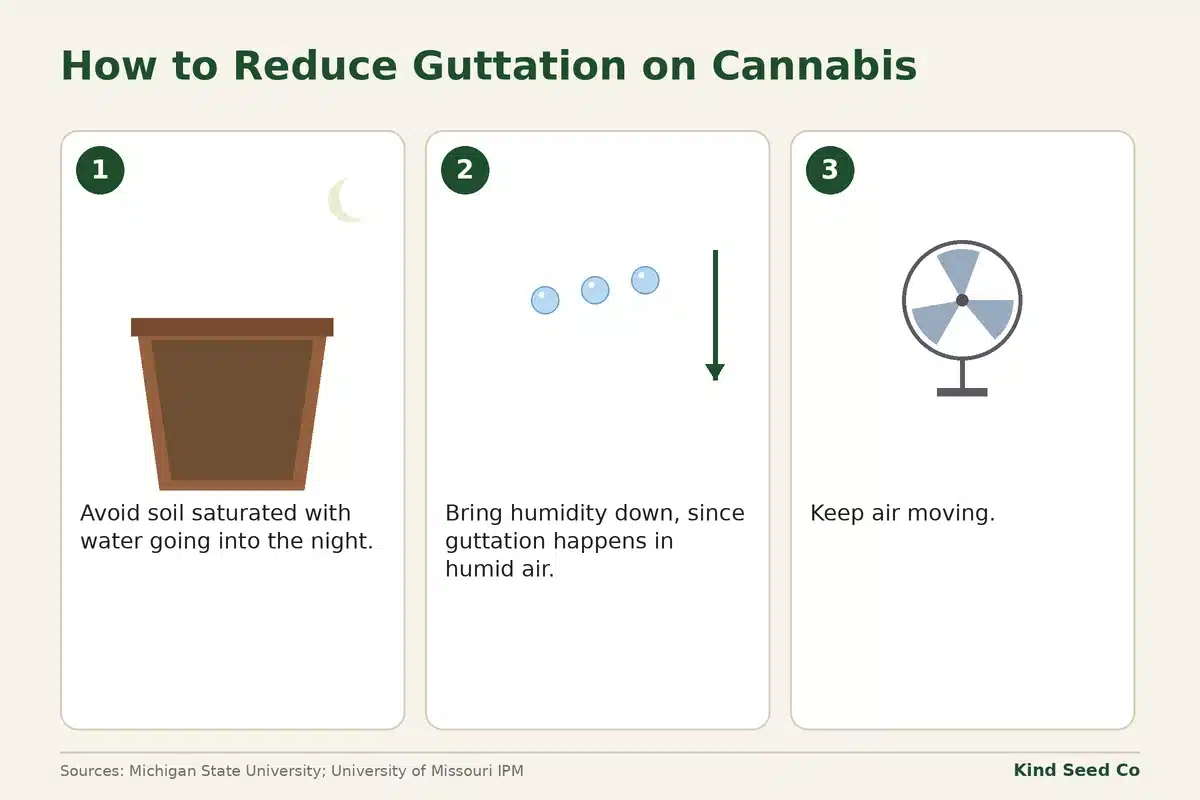
You don’t have to stop it. In most cases no control measures are needed, according to University of Maryland Extension. If drops show up every morning and you’d like fewer, work on the conditions that cause them:
- Avoid soil saturated with water going into the night.
- Bring humidity down, since guttation happens in humid air.
- Keep air moving. Michigan State University notes that humid, calm weather minimizes evaporation from leaf surfaces.
For watering habits that avoid saturated soil, see watering marijuana plants and our guide to overwatering.
Frequently Asked Questions
Is Guttation a Sign of Overwatering?
Not on its own. Guttation happens when roots keep pushing water up while the stomata are closed, so it shows up with soil saturated with water, humid air and calm nights. Wet soil is only one of those conditions. If the mix also stays soggy, look at your watering.
Is Guttation the Same as Dew?
No. Guttation drops come from inside the plant, out of hydathodes on the margins or tips of leaf blades. The University of Missouri describes them as tiny water droplets uniformly spaced around the margins of a leaf, a regular pattern that sets them apart from dew drops, even though they’re easy to mix up.
What Is the White Residue on My Leaf Tips?
It’s often what guttation leaves behind. University of Maryland Extension says the water often contains organic and inorganic compounds and mineral nutrients, especially potassium, which are left behind and concentrated at the leaf margin as it evaporates. Over time this can show up as a marginal yellowing called salt burn.
Can Guttation Spread Disease?
Only rarely. The University of Missouri notes that in rare cases, bacteria can grow in guttation droplets and be pulled back into the leaf when the sun comes up, leading to infection. For most plants, guttation is simply a pressure release, and the minerals and sugars lost with the water are inconsequential.
Does Guttation Hurt Cannabis Plants?
Usually not. The University of Missouri says the losses are inconsequential, and Michigan State University calls guttation not harmful to grapevines. University of Maryland Extension adds that in most cases no control measures are needed. Keep an eye on white residue and yellowing at leaf edges, which can point to salts left behind.
Sources
- University of Missouri IPM, Guttation: A Pressure Relief for Plants
- e-GRO Alert (NC State University and University of Kentucky), Coleus Physiological Disorder Guide
- Michigan State University Horticulture, Guttation (grape scouting guide)
- University of Maryland Extension, Yellowing of Cantaloupe Leaf Edges


