Autoflower nutrients schedule
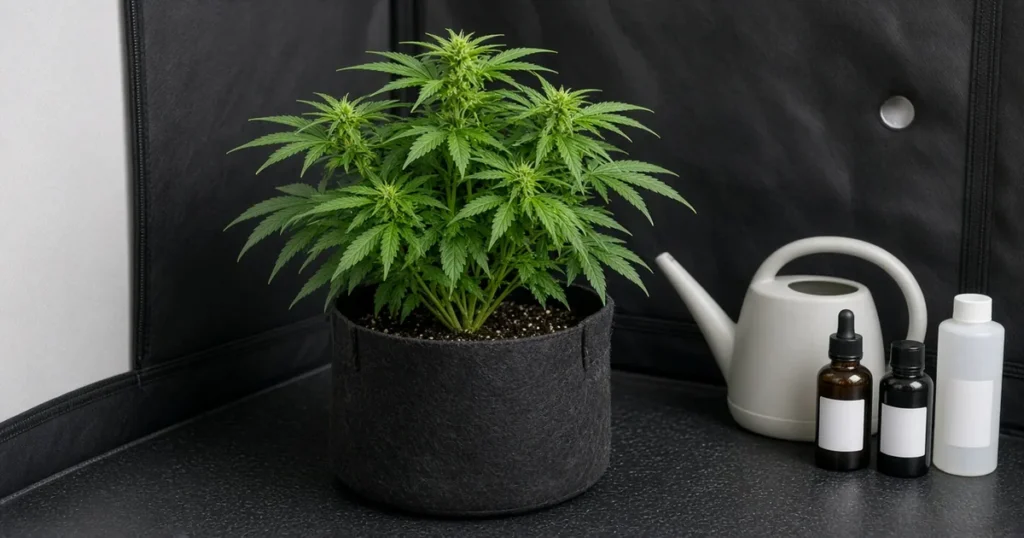
The best autoflower nutrients schedule is light and simple: little or no feed in the seedling stage, a gentle nitrogen focused feed during the short veg stage, a switch to bloom nutrients with more phosphorus and potassium once pre flowers appear, then a taper toward harvest. Autoflowers are smaller and faster than photoperiods, so most need less food than the label suggests. Many growers start at a quarter to half of the bottle strength and adjust based on how the plant looks. This guide works for any of our autoflower seeds, and it is for adults 21 and older growing where it is legal.
Why autoflowers need a lighter feed
Autoflowers flower based on age rather than day length, and they have a short life from seed to harvest. That changes how you feed them:
- Smaller plants, smaller appetites. A compact plant uses less food than a large photoperiod.
- No time to recover. If you burn an autoflower with too much feed, it has little time to bounce back before flowering starts.
- Stress costs size. Overfeeding stress can lead to a smaller harvest.
The rule of thumb is to underfeed slightly and add more only when the plant asks for it.
Know your medium first
- Amended or super soil. Many living soils carry enough food for much of an autoflower’s life. You may need only water and a light bloom feed later.
- Light potting mix. Seedling friendly mixes have little food, so you start feeding sooner.
- Coco coir. Coco has almost no nutrients, so you feed lightly from early on, often with most waterings.
For more on picking a mix, see our guide to the best soil for growing autoflowering cannabis.
The stage by stage autoflower feeding plan
Seedling stage
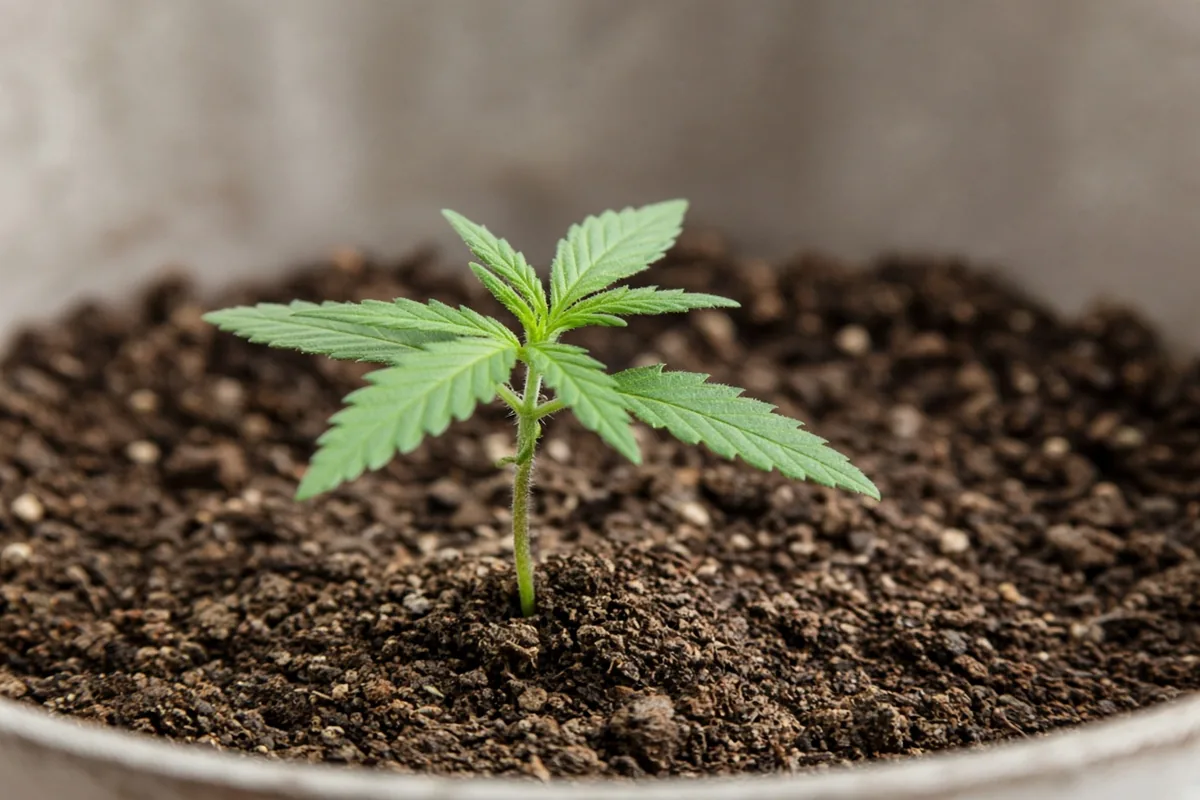
What is happening: the plant is building roots and its first sets of true leaves.
What to feed: usually nothing in soil. The seed and the mix provide what the seedling needs. In coco, use a very weak feed.
Watch for: droopy leaves from overwatering. Seedlings need small amounts of water often.
Early veg
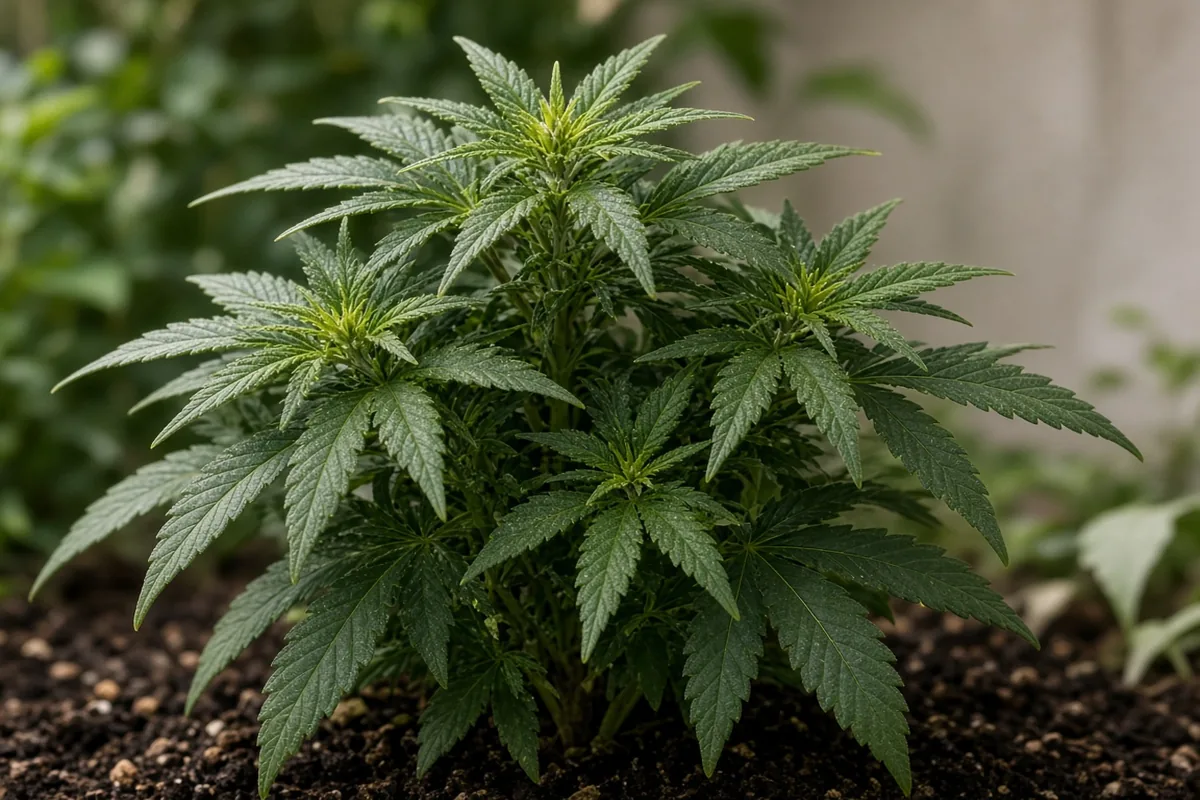
What is happening: fast leaf and root growth.
What to feed: a gentle grow nutrient with more nitrogen than phosphorus or potassium, at a reduced strength. Add calcium and magnesium if you use coco or soft water.
Watch for: pale lower leaves that may mean the plant is hungry, or dark, clawing leaves that may mean too much nitrogen.
Transition to flower
What is happening: pre flowers appear and the plant starts its stretch. Autos usually show this early in life.
What to feed: begin blending in bloom nutrients while slowly reducing grow nutrients. The plant still needs some nitrogen during the stretch.
Watch for: rapid growth. Keep feeding steady but light.
Early to mid flower
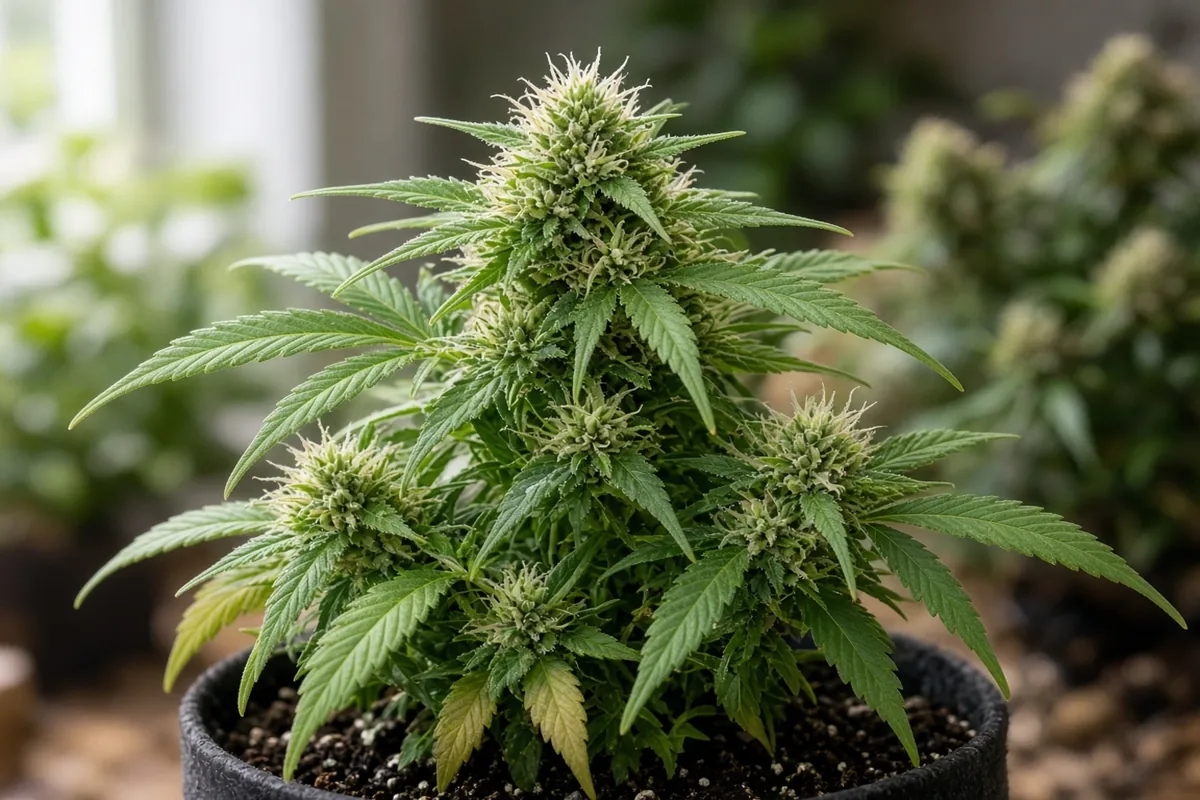
What is happening: buds form and bulk up.
What to feed: a bloom nutrient with more phosphorus and potassium. Keep calcium and magnesium in the mix if needed. Reduce nitrogen.
Watch for: burnt leaf tips, which often mean the feed is too strong.
Late flower
What is happening: buds ripen, trichomes mature and older leaves begin to fade.
What to feed: taper nutrients. Many growers reduce feed strength as harvest nears. Some yellowing of fan leaves is normal at this stage.
Watch for: heavy yellowing early in flower, which may mean the plant ran out of food too soon.
Before harvest
Many growers give plain water for a short period before harvest. Opinions vary on how much this matters. Read everything you need to know about flushing cannabis to decide what works for you.
Simple autoflower feeding tips
- Start at reduced strength. A quarter to half of the bottle’s recommended dose is a common starting point.
- Feed, water, water. In soil, many growers alternate nutrient waterings with plain water.
- Check runoff in coco. Feed to a little runoff to avoid salt buildup.
- Keep pH in range. Nutrients are only available when pH is right for your medium. Follow the guidance for soil or coco.
- Watch the plant, not the calendar. Leaves tell you more than any chart.
Common autoflower feeding mistakes
- Feeding seedlings. Young roots burn easily. Let the mix do the work early on.
- Following the bottle chart exactly. Most charts are written for large photoperiod plants.
- Transplanting into hot soil. Strong, amended soil can burn a small auto. Start in a light mix or plant directly into a mild final container.
- Chasing every spot. One odd leaf is not a crisis. Look for patterns before changing your feed.
- Cutting nitrogen too early. Autos still grow during the stretch and need some nitrogen.
- Ignoring water quality. Very hard or very soft water changes how your nutrients behave. Test it once so you know what you are working with.
Organic vs mineral nutrients
- Organic nutrients feed soil life, which then feeds the plant. They are forgiving and work well in soil.
- Mineral or synthetic nutrients are available to the plant right away and give precise control. They work well in coco and hydro.
Both work for autoflowers. Pick one system and learn it well.
Reading your plant
| What you see | What it might mean | What to try |
|---|---|---|
| Burnt, brown leaf tips | Feed too strong | Lower strength, water plain once |
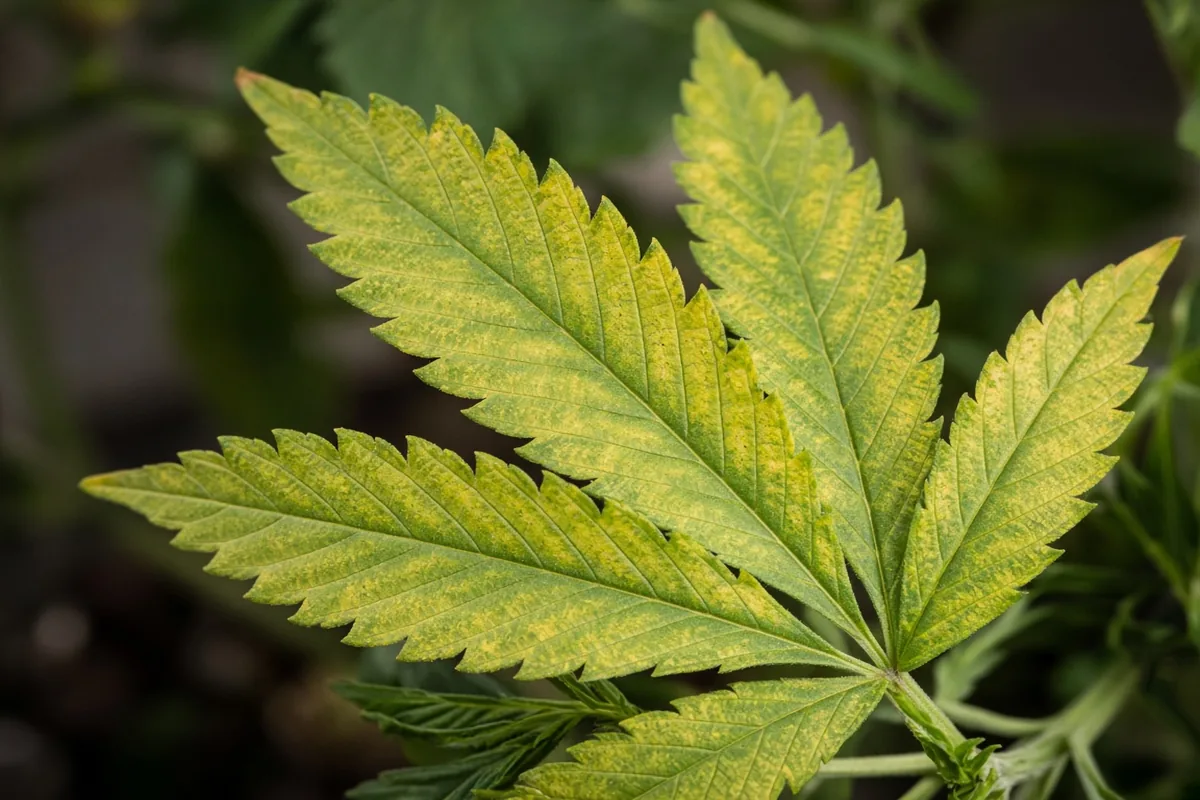
| Pale, yellow lower leaves early | Hungry, often nitrogen | Increase feed slightly |
| Dark green, clawing leaves | Too much nitrogen | Lower grow nutrients |
| Rusty spots on leaves | Possible calcium or pH issue | Check pH, add cal mag |
| Yellow between veins | Possible magnesium or pH issue | Check pH, add cal mag |
Always check pH before adding more nutrients. Many problems that look like deficiencies are pH lockout.
Autoflowers that are easy to feed
These in stock autos are forgiving for beginners:
- Northern Lights Auto Fem
- Blueberry Auto Fem
- White Widow Auto Fem
- Gelato Auto Fem
- Amnesia Haze Auto Fem
Frequently asked questions
When should I start feeding an autoflower?
In soil, many growers wait until the plant has a few sets of true leaves. In coco, a very light feed starts early.
How much nutrient should I give an autoflower?
Start at a quarter to half of the label dose and adjust by watching the leaves.
When do I switch to bloom nutrients?
When pre flowers appear, blend in bloom nutrients and gradually reduce grow nutrients.
Do autoflowers need cal mag?
Often in coco or with soft or filtered water. In rich soil, they may not.
Should I flush autoflowers?
Many growers give plain water for a short time before harvest. Opinions vary.
Grow happy autoflowers
Feed lightly, follow the stages and let your plant guide you. Find your next strain in our autoflower seeds collection or browse the whole Kind Seed Co shop. For a full walkthrough, read our autoflowering cannabis grow guide. Kind Seed Co sells only to adults 21 and older. Grow only where it is legal under your state’s law.