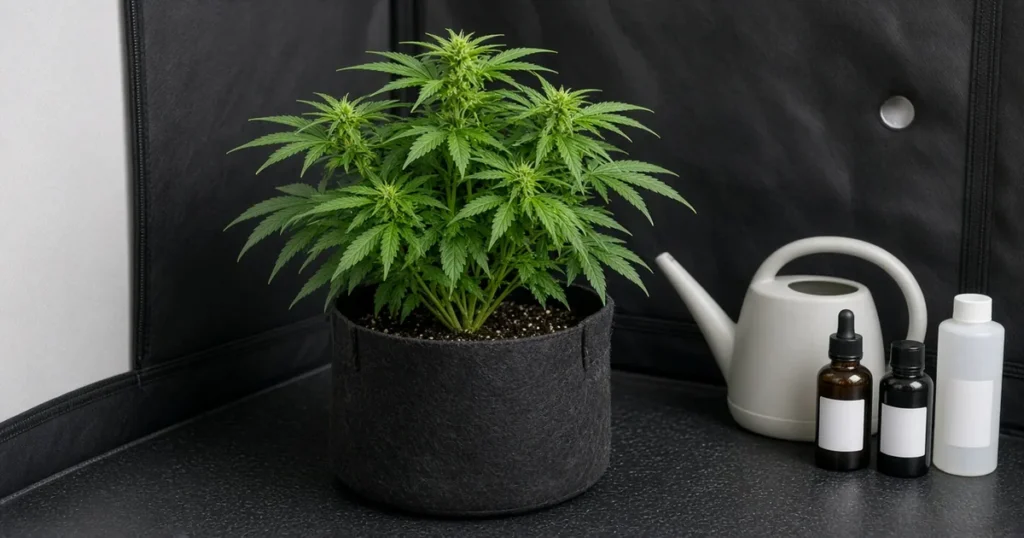
Defoliating autoflowers safely
You can defoliate an autoflower safely by removing only a few large fan leaves at a time, focusing on leaves that block bud sites or crowd the center, and spacing small cleanups across the plant’s life instead of one heavy strip. Autoflowers have a short life and little time to recover, so heavy defoliation, like the big strip some photoperiod growers do, can stunt them. A light touch improves airflow and light penetration while keeping enough leaves to power growth. Find a strong plant in our autoflower seeds collection. This guide is for adults 21 and older growing where it is legal.
What is defoliation?
Defoliation means removing some leaves, usually large fan leaves, to let more light and air reach the lower and inner parts of the plant. It is a common technique with photoperiod plants. For a full overview, read a guide to cannabis defoliation.
Why autoflowers need a lighter touch
Fan leaves are the plant’s solar panels. They capture light and store energy and nutrients. On a photoperiod, you can extend veg to help the plant recover from heavy leaf removal. On an autoflower, the clock keeps running. Every leaf you remove is energy the plant cannot replace quickly.
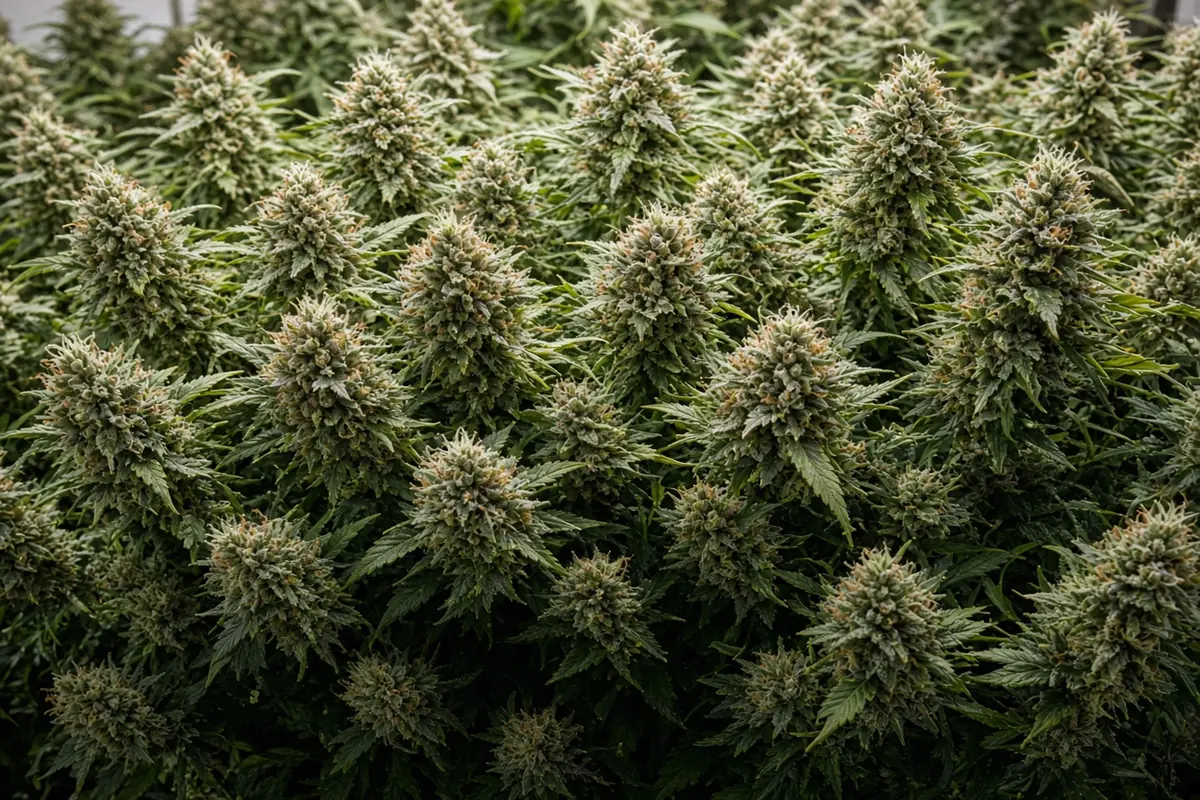
Autos are also smaller. A large photoperiod may have dozens of fan leaves to spare. A compact auto does not.
Benefits of light defoliation
- Better light at lower bud sites. More of the plant gets direct light.
- Improved airflow. Less dense foliage means lower humidity inside the canopy.
- Lower mold and pest risk. Air moving through the plant helps keep problems away.
- Easier inspection. You can see buds, stems and pests more clearly.
Risks of heavy defoliation
- Stunting. Too much leaf removal can slow growth during a critical window.
- Smaller buds. Fewer leaves can mean less energy for flowers.
- Stress. Combined with other stress, it can cause problems that are hard to fix in time.
Which leaves to remove
Focus on:
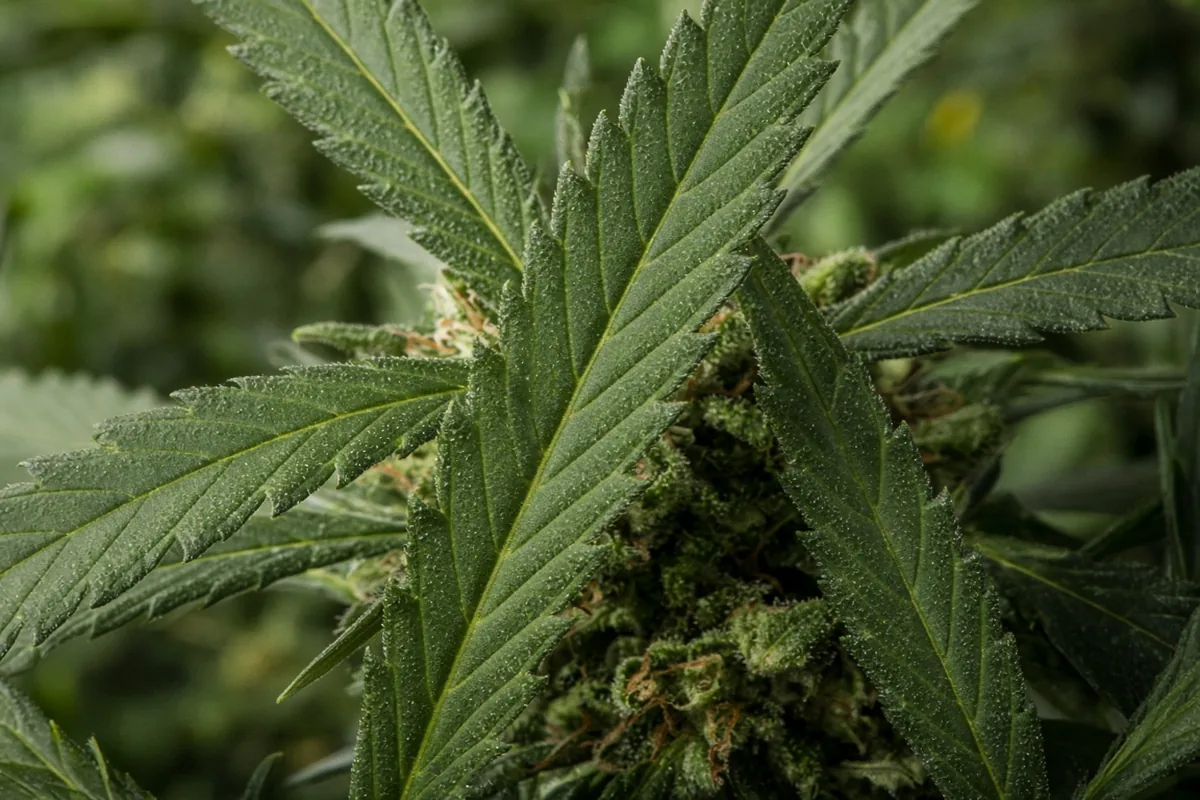
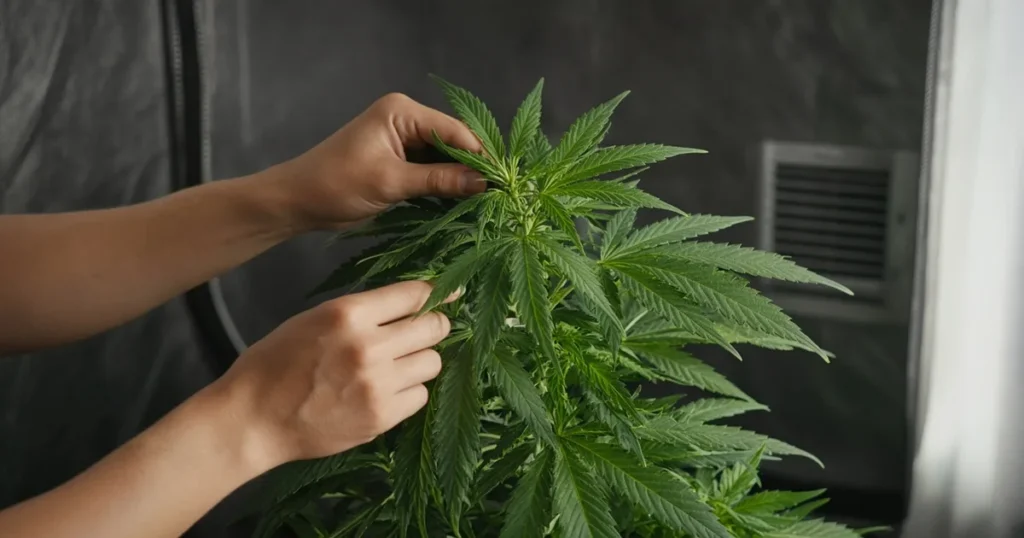
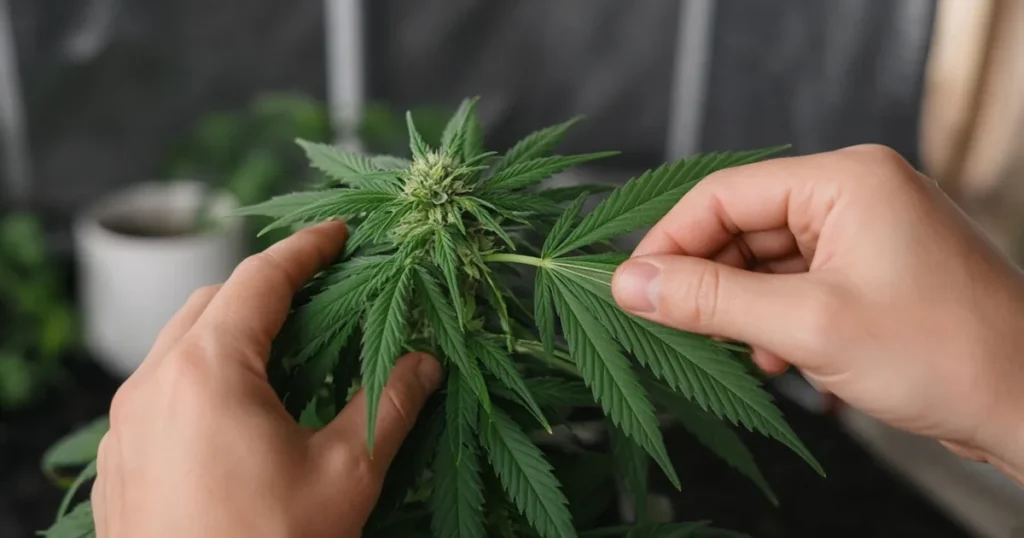
- Large fan leaves that completely shade a bud site.
- Leaves crowding the center of the plant, where air does not move well.
- Lower leaves that get little light and will not contribute much.
- Yellowing, damaged or dying leaves.
- Leaves touching the soil, which can invite mold and pests.
Leave alone:
- Small leaves near the top of the plant.
- Sugar leaves growing from buds.
- Healthy leaves receiving full light.
To learn how fan leaves and sugar leaves differ, see cannabis leaf anatomy.
When to defoliate an autoflower
Seedling stage
Do not defoliate. The plant needs every leaf.
Late veg
Once the plant is growing vigorously, you can remove a few fan leaves that block lower growth or crowd the center.
Early flower
This is a common time for a light cleanup. Remove leaves blocking bud sites and some lower growth that will not get good light. This is sometimes called lollipopping when done on the lower part of the plant.
Mid to late flower
Remove only yellow or dying leaves and leaves that trap moisture around dense buds. The plant is now pulling stored energy from its leaves, so let it keep them.
How to defoliate an autoflower, step by step
- Check plant health. Only defoliate a plant that looks healthy and vigorous.
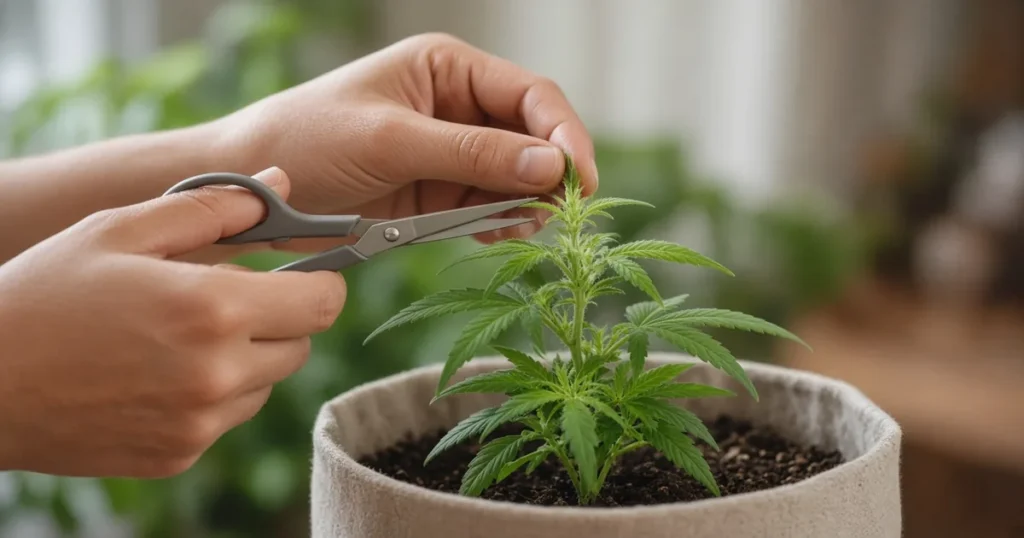
- Clean your tools. Use clean scissors or pinch leaves gently by hand.
- Start low and inside. Remove leaves from the lower and inner parts of the plant first.
- Take a little at a time. Remove only a few leaves per session.
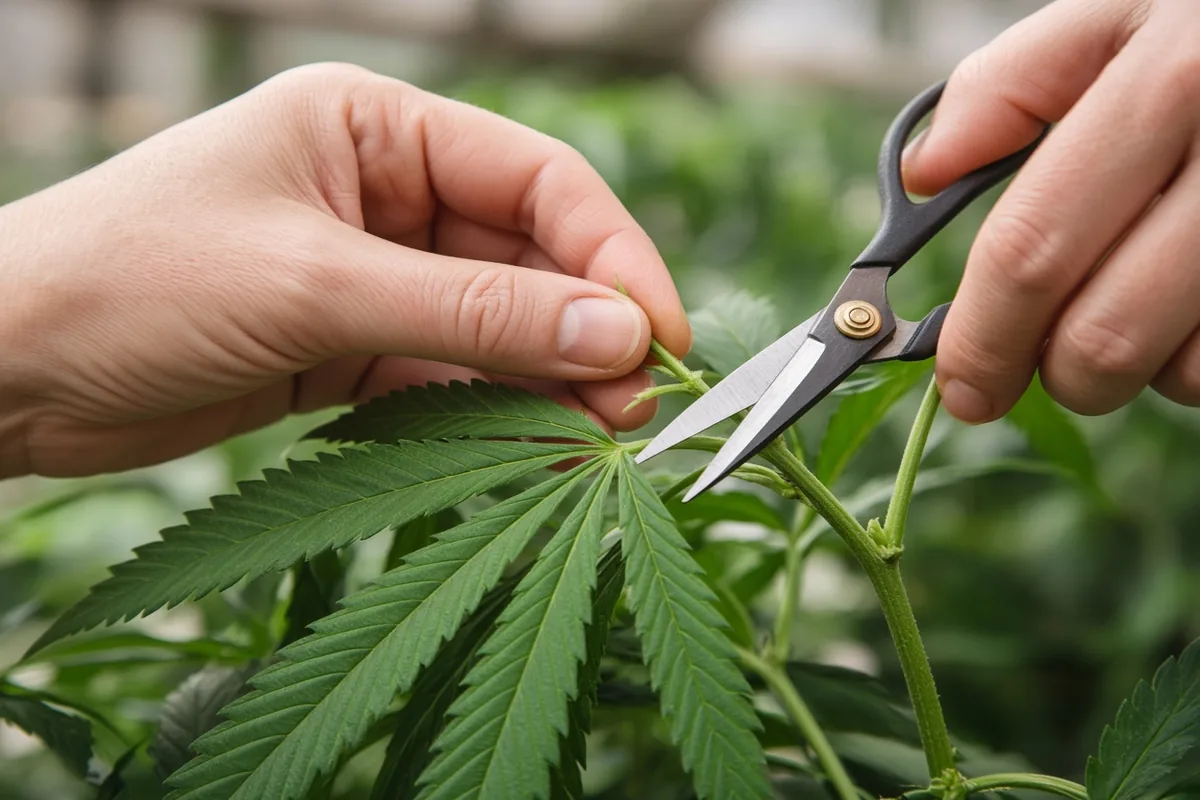
- Cut at the leaf stem. Snip near the branch without damaging buds or nodes.
- Give time between sessions. Wait several days and watch how the plant responds before removing more.
- Keep conditions steady. Avoid feeding changes or transplanting right after.
Defoliation and your environment
How much leaf removal an autoflower needs depends a lot on your grow space. In a humid room with weak airflow, opening the canopy matters more, because dense foliage traps moist air around buds. In a dry room with strong fans, the plant may need very little thinning at all. Start by fixing the environment. Add a small oscillating fan below the canopy, keep humidity moderate, and give plants enough space so their leaves do not overlap. Often that alone solves the problems growers try to fix with heavy defoliation.
Light matters too. Under a strong, even light, more of the plant’s leaves are working, so each one you remove costs more energy. Under a weaker light, the lower leaves may be shaded and contributing little, which makes them better candidates for removal.
Outdoor autoflowers
Outdoor autos face rain, dew and pests, so a little extra airflow helps. Remove leaves that touch the soil and a few from the dense center, especially before a stretch of wet weather. Leave the outer, sun facing leaves in place. Outdoors, those leaves also shield buds from harsh afternoon sun and protect them from heavy rain.
Combine defoliation with LST
Low stress training spreads branches out and opens the canopy, which reduces the need for defoliation. Many growers find that a combination of LST and a few well chosen leaf removals gives the best results on autos.
Signs you removed too much
- Growth slows noticeably.
- Remaining leaves yellow faster than expected.
- Buds look thin or stall.
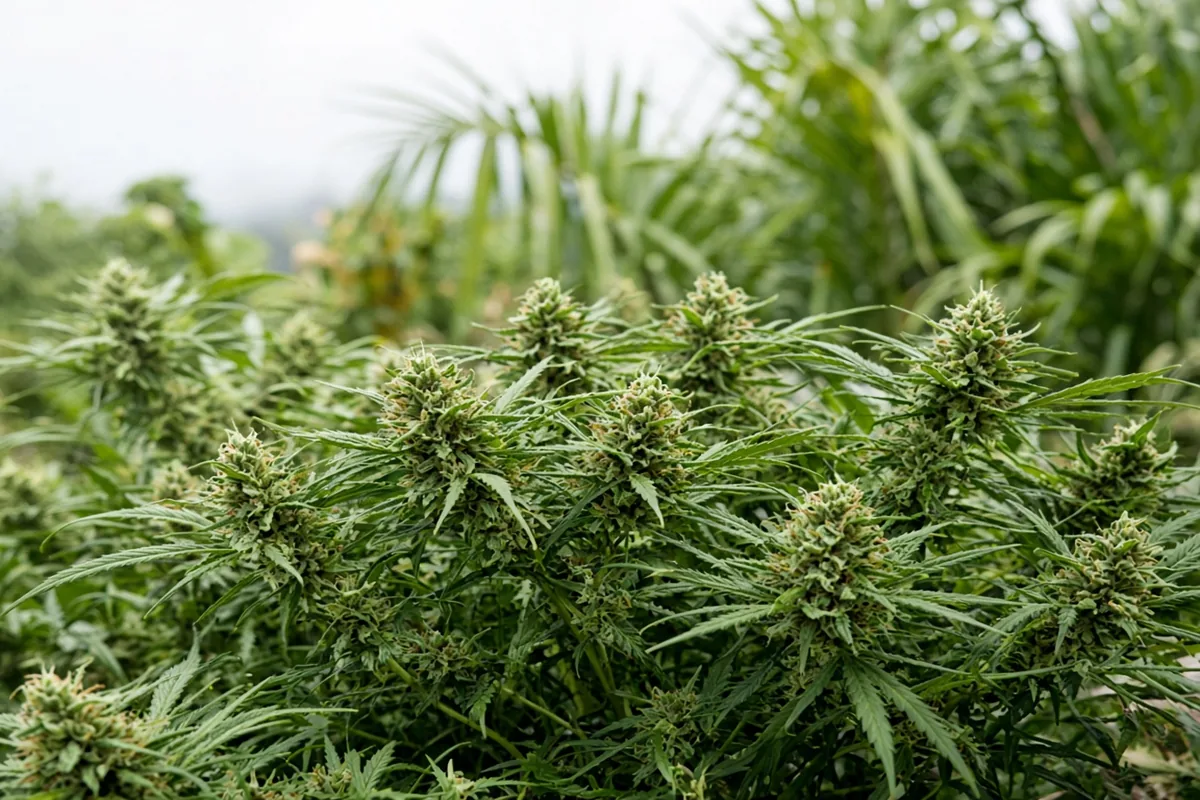
If you see these signs, stop defoliating, keep conditions steady and let the plant recover.
Strains that are easy to manage
Some autoflowers grow bushy, dense canopies that benefit from light cleanup. Others stay airy and need little or no defoliation. These in stock autos are popular:
- Northern Lights Auto Fem, a compact, leafy indica style auto.
- Blueberry Auto Fem, a bushy auto with a sweet berry aroma.
- Gelato Auto Fem, a modern hybrid with dense buds.
- Super Silver Haze Auto Fem, an airier, sativa style auto that needs less leaf removal.
Frequently asked questions
Should you defoliate autoflowers?
Lightly, yes. Remove a few leaves at a time that block bud sites or crowd the center.
When is the best time to defoliate an autoflower?
Late veg and early flower are the most common times for a light cleanup.
Can I defoliate an autoflower in late flower?
Only remove yellow or dying leaves and leaves that trap moisture.
How many leaves can I remove from an autoflower?
Only a few at a time. Watch how the plant responds before taking more.
What is lollipopping?
Removing small, lower growth that gets little light, so the plant focuses energy on the top.
Does defoliation help prevent mold?
It can help by improving airflow through dense parts of the plant, especially in humid rooms. Good fans and moderate humidity matter just as much.
Grow healthy autoflowers
A light, careful defoliation helps your autoflower breathe without slowing it down. Find your next strain in our autoflower seeds collection or browse the whole Kind Seed Co shop. For a full walkthrough, read our autoflowering cannabis grow guide. Kind Seed Co sells only to adults 21 and older. Grow only where it is legal under your state’s law.