Basement Grow Rooms: Moisture and Cold
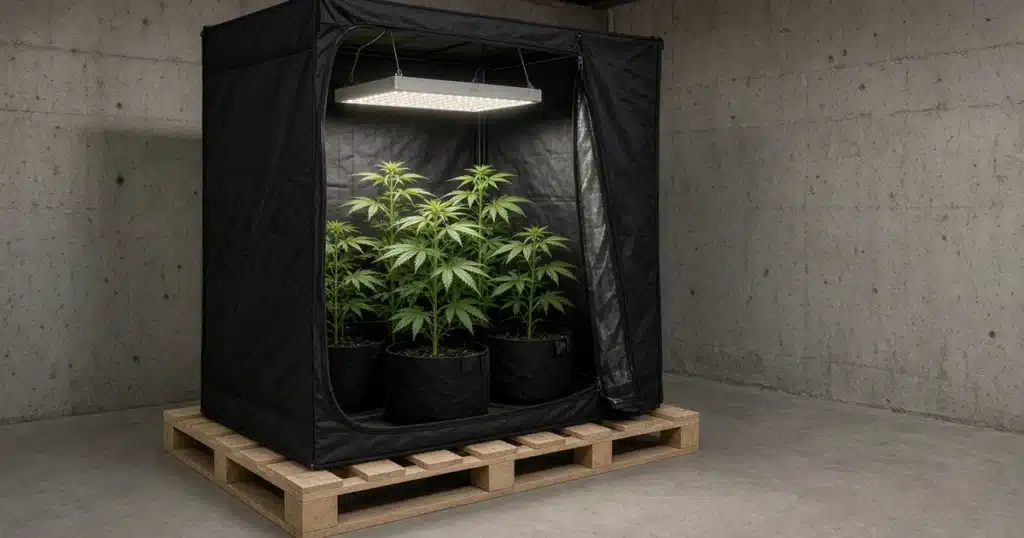
Quick answer: Basements bring two problems to a grow room. Moisture can enter from outside through the walls and floor, and cold concrete surfaces make humid air condense. Minnesota Extension explains that basement moisture comes from rain and groundwater, from activities inside the house and from humid outside air condensing on cool surfaces. Fix outside water first, keep the grow off the floor and away from cold walls, and use a dehumidifier to manage the air. The same guide warns that a dehumidifier alone is not a permanent fix for a basement that leaks.
Why Are Basements Hard for Grow Rooms?
They sit in the ground. Soil stays cooler than the air in summer and holds water after rain. The UMN Extension guide to basement moisture names three sources of basement moisture: liquid water from rain or groundwater, interior sources such as humidifiers, dryers, bathrooms and cooking, and humid outside air that condenses on cooler surfaces.
A grow room adds a fourth source. Plants release water through their leaves, and every watering adds more. A dry, well built basement can handle that. In a damp one, the plants and the building both add to the same problem.
Cold is the other half. Concrete walls and floors stay cool for most of the year, and a UMass Extension greenhouse humidity guide explains that condensation forms first on the coldest surfaces as air cools to its dew point. That guide was written for greenhouses, but cool basement walls follow the same physics.
How Does Moisture Get Into a Basement?
UMN Extension describes four ways moisture moves from outside to inside: liquid water flow, capillary suction, vapor diffusion and air movement. Capillary suction pulls water upward through small pores in footings and slabs and sideways through walls. UMN says that wicking is why so many block walls show a damp band along the bottom.
The guide also lists warning signs. They include water trickling from walls, standing water on the floor, a damp ring at the base of block walls, humid air, condensation on cold walls and floors in summer, musty odor, mold and mildew. Check for these before you set up a grow, since each one gets worse once plants and watering add their moisture.
UMN also points to the outside of the house. It says many problems trace back to ground that does not slope away from the foundation, missing or poor gutters and downspouts, or drain tile systems that do not work. Those fixes belong to the house, not the grow, but they decide how dry the space can ever be.
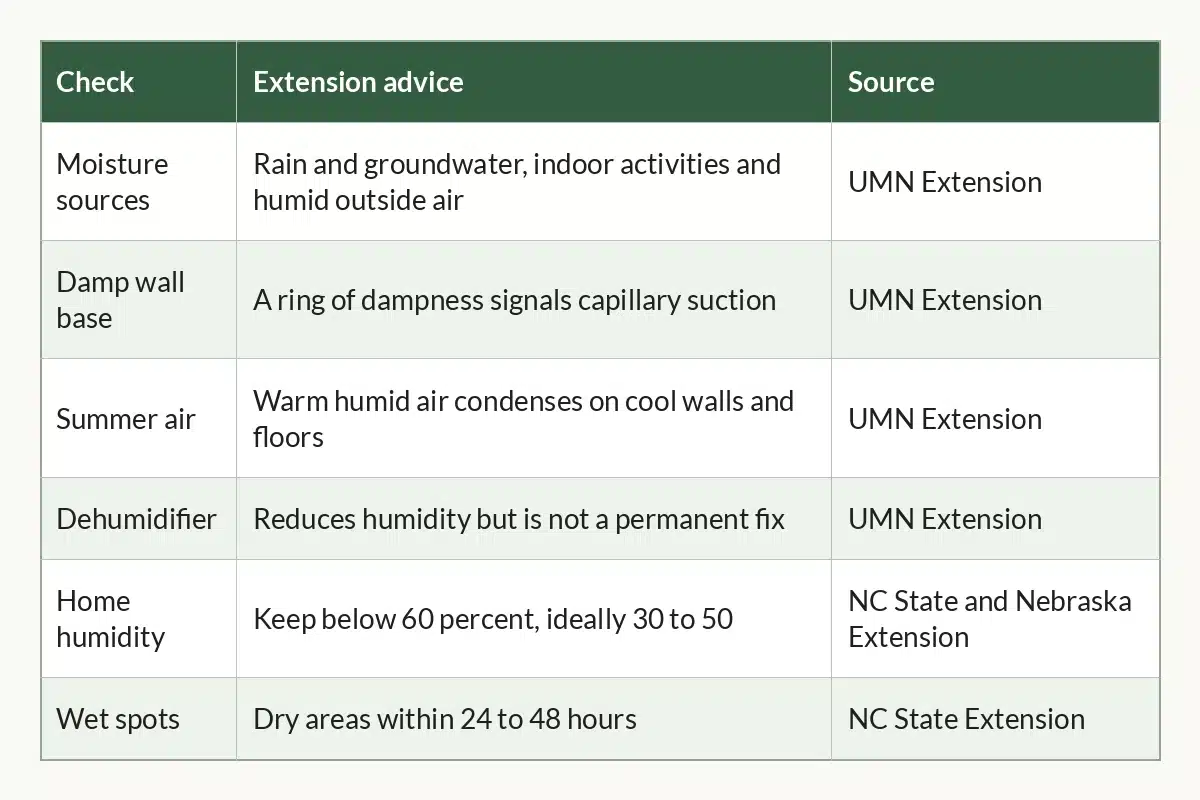
Basement Moisture Checks at a Glance
| Check | Extension advice | Source |
|---|---|---|
| Moisture sources | Rain and groundwater, indoor activities and humid outside air | UMN Extension |
| Damp wall base | A ring of dampness signals capillary suction | UMN Extension |
| Summer air | Warm humid air condenses on cool walls and floors | UMN Extension |
| Dehumidifier | Reduces humidity but is not a permanent fix | UMN Extension |
| Home humidity | Keep below 60 percent, ideally 30 to 50 | NC State and Nebraska Extension |
| Wet spots | Dry areas within 24 to 48 hours | NC State Extension |
Why Do Basement Walls Get Wet in Summer?
Often it is condensation, not a leak. Writing for Minnesota homes, UMN explains that when basement windows are opened for fresh air in summer, warm, humid outside air condenses on the cool wall and floor surfaces. It notes that many homeowners see this water and believe the walls are leaking, when the moisture actually came from the air.
That matters for grow room ventilation. Pulling warm summer air into a cool basement can make walls and floors wetter. UMN advises against ventilating a basement directly with warm, humid air when summer condensation is the problem. It recommends running ventilation through an air conditioning system or a desiccant heat exchanger instead.
Inside the tent, the lesson is to pay attention to where your intake air comes from. Air drawn from inside the house is usually drier in summer than air pulled straight from an open window.
The same logic applies to any duct that exhausts the tent. Venting moist tent air into the basement simply moves the water from the tent to the walls. If you cannot send exhaust outdoors, a dehumidifier in the room has to remove that water instead, and it needs to be sized for both the basement and the plants.
Can a Dehumidifier Fix a Damp Basement Grow Room?
It helps with the air, not the cause. UMN says dehumidification can reduce humidity and odor in a basement but is not a permanent or complete solution. It goes further and warns that in a basement with moisture problems, drying the air can pull moisture in through the walls more quickly, damaging concrete and finishes.
So fix leaks and drainage first. Then a dehumidifier becomes a tool for managing the water your plants release, rather than a pump drawing groundwater through the foundation. Our dehumidifier guide for grow rooms covers sizing and placement.
The NC State Extension mold and moisture checklist adds a maintenance point. Anyone using a dehumidifier, it says, should empty and clean the drip pan regularly. A neglected pan in a grow room becomes one more damp surface.
Which Basement Grow Layout Works Best?
- Inspect first. Walk the space for the warning signs UMN lists, from damp wall bases to musty odor.
- Fix outside water. Check grading, gutters and downspouts, as UMN advises, before adding plants.
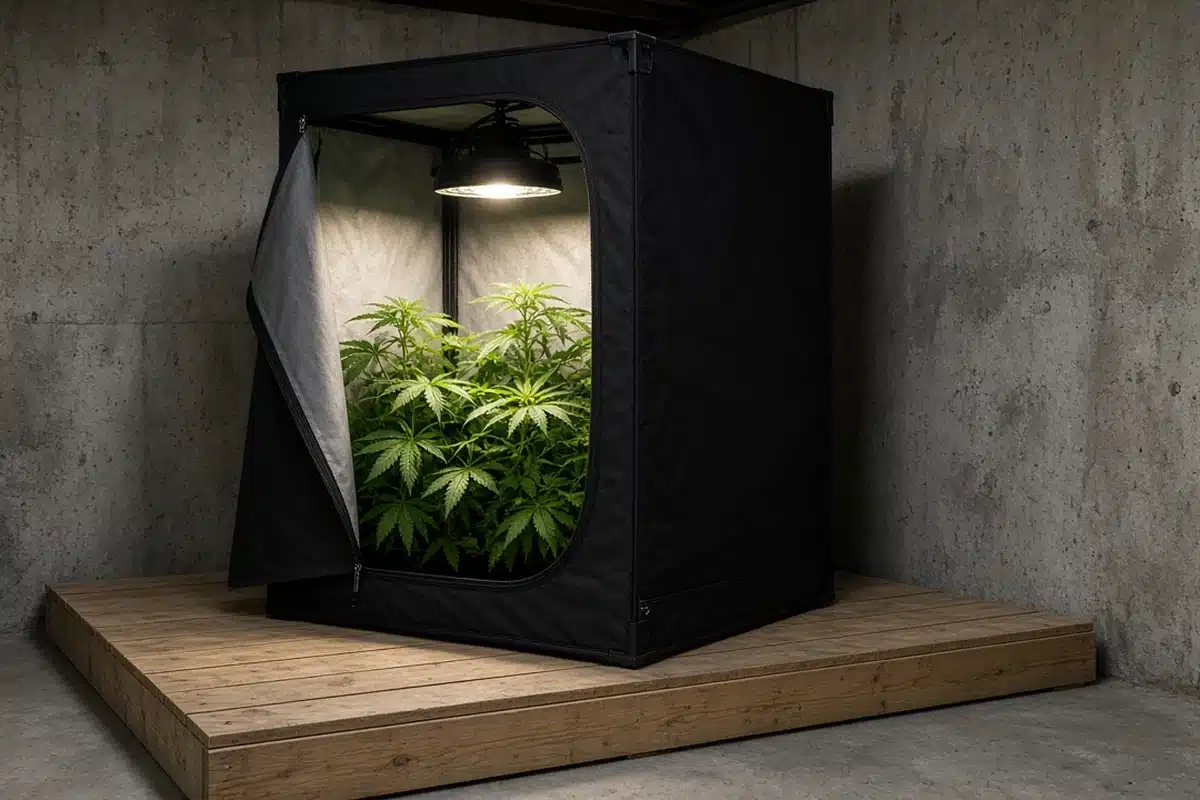
- Raise the grow off the floor. A platform keeps the tent base away from capillary moisture and cold concrete.
- Leave a gap at the walls. Air space between the tent and cold walls reduces the cold surfaces your air touches.
- Choose your intake air carefully. In summer, avoid pulling warm, humid outside air straight in, as UMN warns.
- Run a dehumidifier sized for the space. Empty and clean its pan, as NC State recommends.
- Dry any wet spots fast. NC State says to dry damp areas within 24 to 48 hours.
- Keep the whole basement in range. NC State says home humidity should stay below 60 percent, with 30 to 50 percent ideal.
How Do You Deal With Basement Cold?
Cold floors and walls cool the air touching them. Your grow tent sits in that cool air, especially at lights off. Our guide to the best grow room climate lists the temperature ranges to aim for.
Raising the tent and leaving a gap at the walls helps here too. Concrete pulls heat out of anything resting on it, so a tent sitting directly on the slab loses warmth through its floor all night. Warm air in the tent is less likely to meet a cold surface and condense. A room that stays cold all winter may need added heat, but keep heaters clear of the tent and plug them straight into the wall.
The Nebraska Extension checklist for moisture and mold sources asks whether insulation is keeping condensation off exterior walls, pipes and vents, and whether the house stays at moderate temperatures through the heating season. Those points were written for homes, but they apply to any basement space that holds plants.
If your basement is too damp or cold to manage, a detached space may work better. Our guide to building a detached garage or shed grow room covers that option.
Troubleshooting Basement Grow Rooms
Walls are wet every summer morning. That is likely condensation. UMN says warm humid air condenses on cool basement surfaces.
A damp ring shows at the base of the wall. UMN links that pattern to capillary suction through the concrete.
The dehumidifier runs nonstop and the walls stay damp. UMN warns that drying a leaky basement can pull moisture in faster. Fix the water source.
The floor under the tent stays cold and damp. Raise the tent on a platform to break contact with the slab.
A musty smell lingers. UMN lists odor among basement moisture warning signs. Look for the source before adding more plants.
Sources
- University of Minnesota Extension, Moisture in Basements: Causes and Solutions: https://extension.umn.edu/garden-and-home/home-maintenance/caring-for-a-home/moisture-in-basements-causes-and-solutions
- UMass Extension, Reducing Humidity in the Greenhouse: https://www.umass.edu/agriculture-food-environment/greenhouse-floriculture/fact-sheets/reducing-humidity-in-greenhouse
- NC State Extension, Mold and Moisture Checklist: https://content.ces.ncsu.edu/mold-and-moisture-checklist
- Nebraska Extension, Identifying Moisture and Mold Sources in Houses (G1832): https://extensionpubs.unl.edu/publication/g1832/2008/html/view
FAQ
Is a basement a good spot to grow?
It can be, if the space is dry. Check for the moisture signs UMN Extension lists before you set up.
Will a dehumidifier stop basement dampness?
UMN says dehumidifiers reduce humidity but are not a permanent fix for a basement that lets water in.
Why are my basement walls sweating?
Warm, humid air is condensing on cool concrete. UMN says this often happens in summer.
What humidity should the basement itself stay at?
NC State and Nebraska Extension both suggest home humidity below 60 percent, ideally 30 to 50.
Should I open basement windows for fresh air?
UMN advises against ventilating with warm, humid outside air when summer condensation is a problem.