Cleaning a Grow Tent Between Grows
Quick answer: Clean a grow tent between grows in two stages. First remove everything and physically clear out plant debris, spilled growing media, dust and algae, working from the top down. Then, only after surfaces are clean, apply a product labeled for the job if you choose to disinfect. UMass Extension and UConn Extension both explain that organic matter left on surfaces blocks disinfectants from working, so the scrubbing step matters most. Clean as soon as a grow ends rather than right before the next one, so pests have less time to settle in.
Why Clean a Grow Tent Between Grows?
Leftover debris gives problems a head start. A UMass Extension greenhouse cleaning and disinfecting guide explains that over the course of a crop, microbes build up and algae flourish on moist surfaces, where they shelter fungus gnats and shore flies. Its advice rests on a simple idea: keeping pests out costs far less effort than removing them later.
UConn Extension makes a similar case in its Start Clean and Stay Clean fact sheet. It explains that clearing out old plant material that carries disease or insects keeps both from spreading as easily to the next crop. Weeds growing low to the floor hold moisture and encourage fungus gnats, UConn adds. A tent has no weeds, but fallen leaves and spilled media do the same job.
Both fact sheets address commercial greenhouses. A grow tent is a small, enclosed growing space, so the same sanitation steps still apply, just in less space.
Cannabis growers face the same pests those guides describe. Fungus gnats breed in damp media, and spider mites and thrips can linger in old plant debris. A tent also traps humidity, which keeps residue moist long after the plants are gone. Cleaning breaks that chain before the next set of plants arrives.
When Should You Clean a Grow Tent?
As soon as the last plants come out. UMass observes that many growers put the job off until days before a greenhouse reopens. It argues for cleaning much sooner, so pests lose their places to wait out the gap. UConn gives the same timing advice for spring seedlings, recommending cleaning before crops arrive so there is time to reach the spots where insects and mites hide.
Writing for Connecticut growers, UConn adds that pests are more likely to survive the off season in unheated greenhouses, particularly when winters run mild. A tent left standing in a cold garage or shed between grows fits that picture, so an early clean matters even more there.
UMass also points to the gap between crop cycles, when the space is totally empty, as the best time for a thorough clean. For a tent, the ideal moment is the day after harvest or the day the last plants move out, before new seedlings or clones go in.
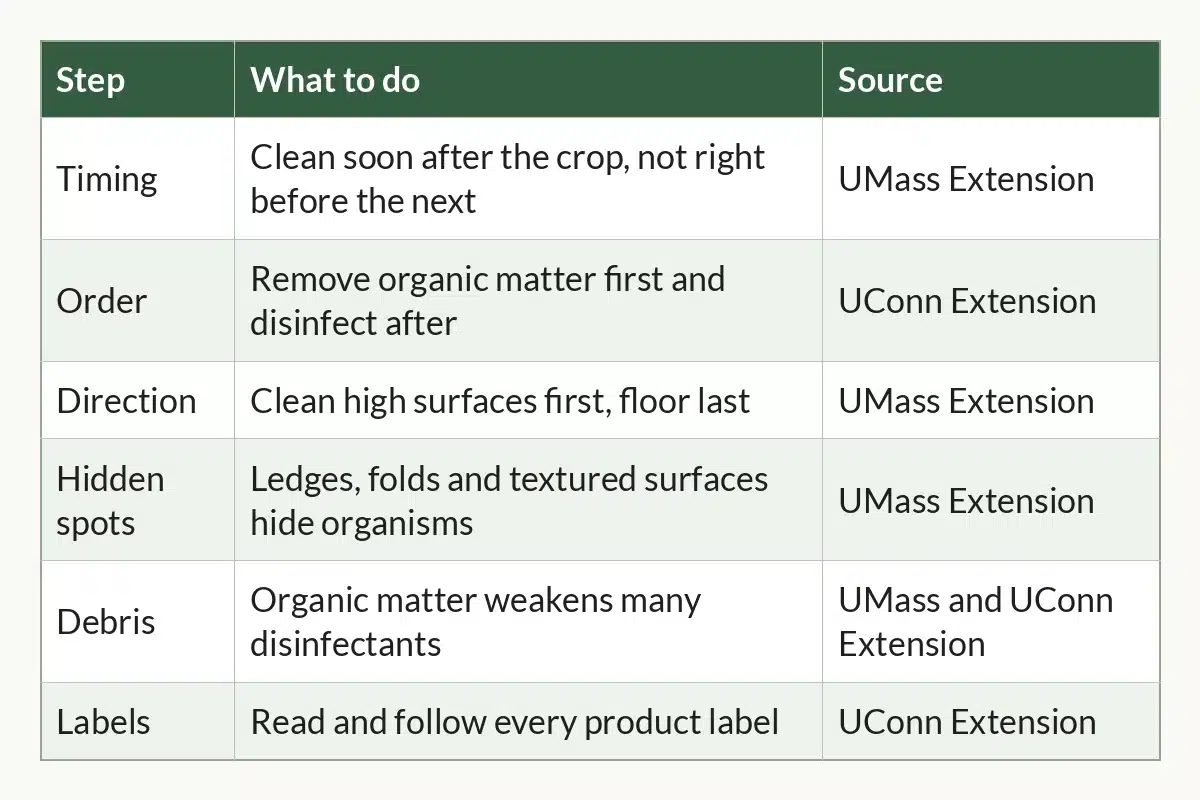
Tent Cleaning Steps at a Glance
| Step | What to do | Source |
|---|---|---|
| Timing | Clean soon after the crop, not right before the next | UMass Extension |
| Order | Remove organic matter first and disinfect after | UConn Extension |
| Direction | Clean high surfaces first, floor last | UMass Extension |
| Hidden spots | Ledges, folds and textured surfaces hide organisms | UMass Extension |
| Debris | Organic matter weakens many disinfectants | UMass and UConn Extension |
| Labels | Read and follow every product label | UConn Extension |
How Do You Clean a Grow Tent Step by Step?
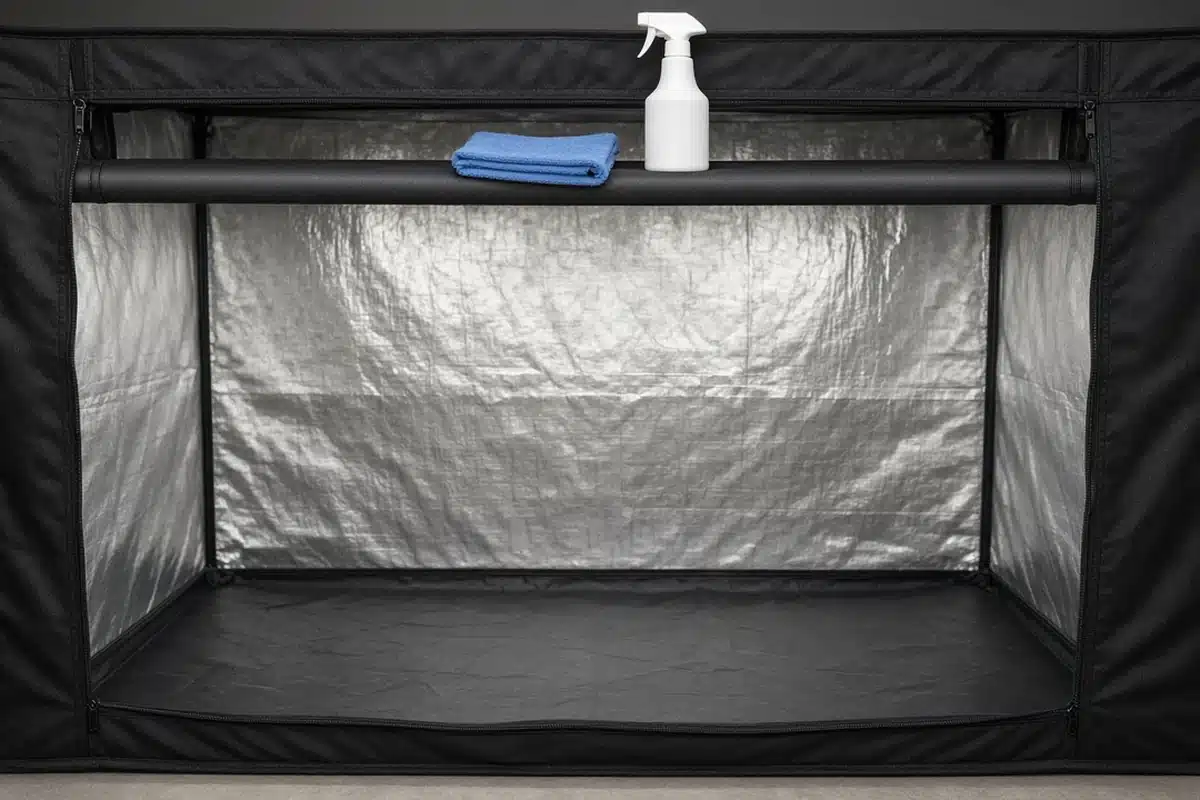
- Empty the tent completely. Take out pots, trays, fans, lights and hangers so every surface is reachable.
- Remove all plant debris. UConn says to sweep up and remove organic crop debris first. Pick up fallen leaves, stems and roots.
- Clear spilled growing media and dust. A small shop vacuum works well on the tent floor. UMass mentions growers using one on greenhouse floors.
- Start at the top. UMass tells growers to clean high surfaces first and finish at the floor, so dirt falls onto areas you have not cleaned yet.
- Clean the frame, poles and corners. UMass notes that organisms can lodge on rafters, ledges, piping and folds in plastic. In a tent, check the top bars, zipper tracks and floor seams.
- Wash the walls and floor. UMass lists washing with soap and water as an option and says to rinse thoroughly, since soap residue can interfere with some disinfectants.
- Let everything dry. Algae and gnats both favor damp surfaces, so leave the tent open until it is fully dry.
- Disinfect only after cleaning. If you choose to disinfect, UConn says to read the label carefully and follow all safety precautions. Use only products labeled for your crop and state.
Why Does Cleaning Come Before Disinfecting?
Because dirt shields what you are trying to remove. UMass explains that leftover soil, plant residue and media weaken disinfectants. Any debris left behind can also act as a shield, keeping the solution from reaching the organisms underneath.
UConn frames cleaning as a two step process. First comes removal of organic matter, then application of a product labeled for greenhouse use. It notes that organic matter inactivates many disinfectants and that microbes can live in the debris itself.
UMass adds one more caution. Disinfectants are not protectants. They may remove some pathogens from a surface, but they leave little lasting protection. So a clean tent stays clean only if the next grow keeps debris and standing water under control.
What About Pots, Trays and Tools?
Handle them as part of the same job. UMass advises against reusing containers if a crop had a disease problem. It says any containers you do reuse should be scrubbed free of soil and plant bits first, even when the last crop showed no trouble. UConn says plug trays can be hard to clean and recommends new trays each season for seedlings prone to root problems.
Our guide to cleaning and disinfecting pots for cannabis walks through containers in detail. Pruning tools need their own routine, and our guide to sanitizing pruning shears covers that.
Fans, filters and ducts collect dust too. Wipe fan blades and housings while the tent is empty. Check intake filters and replace any that are clogged.
Do not forget the smaller items. Hangers, clips, plant ties, trellis netting and saucers all touch plants or water during a grow. UMass warns that organisms can hide in debris lodged on any surface, so anything that held soil or leaves deserves a scrub. Netting is often cheaper to replace than to clean thoroughly. Reflective walls should be wiped gently so the surface is not scratched.
How Do You Keep a Tent Clean During a Grow?
Several habits slow algae, UMass says. It recommends avoiding overwatering, letting the surface of the media dry between waterings and avoiding puddles on floors and benches. It also says the floor should be level and drain properly so water does not pool.
Inside a tent, the same habits look like emptying saucers, wiping up spills and keeping the floor liner dry. Pick up fallen leaves as they drop rather than at the end. These small steps make the next deep clean much faster. For the layout side of a tidy tent, read our guide to setting up a grow tent.
Troubleshooting Grow Tent Cleaning
Green film keeps coming back on the floor. That is likely algae on damp surfaces. UMass ties algae to moisture and puddling, so keep the floor dry.
Gnats show up right after a new grow starts. Debris or damp media may have been left behind. UConn links moist conditions to fungus gnats.
A cleaner seems to do nothing. Organic residue may be in the way. Both UMass and UConn say to remove debris and wash surfaces before any disinfecting step, since leftover dirt shields what lives underneath.
The floor seams still look dirty. UMass notes that folds and textured surfaces hide organisms. Clean them with extra care.
Soap streaks remain on the walls. Rinse again. UMass warns that soap residue can interfere with some disinfectants.
Sources
- UMass Extension, Cleaning and Disinfecting the Greenhouse: https://www.umass.edu/agriculture-food-environment/greenhouse-floriculture/fact-sheets/cleaning-disinfecting-greenhouse
- UConn Extension, Start Clean and Stay Clean: https://extension.uconn.edu/publication/start-clean-and-stay-clean/
FAQ
How often should I clean my grow tent?
Do a full clean between every grow and keep up with spills and fallen leaves during each grow.
Do I have to disinfect a grow tent?
Cleaning is the essential step. If you also disinfect, UConn says to follow the label exactly. Use only products labeled for your crop and state.
Can I just wipe the tent without emptying it?
UMass recommends a thorough clean when the space is totally empty, so every surface can be reached.
Should I reuse pots after a problem grow?
UMass advises against reusing containers after a disease problem.
Where do pests hide in a tent?
In folds, seams and corners. UMass notes that ledges, folds and textured surfaces can hide organisms.