Best inline fans for cannabis grow tents
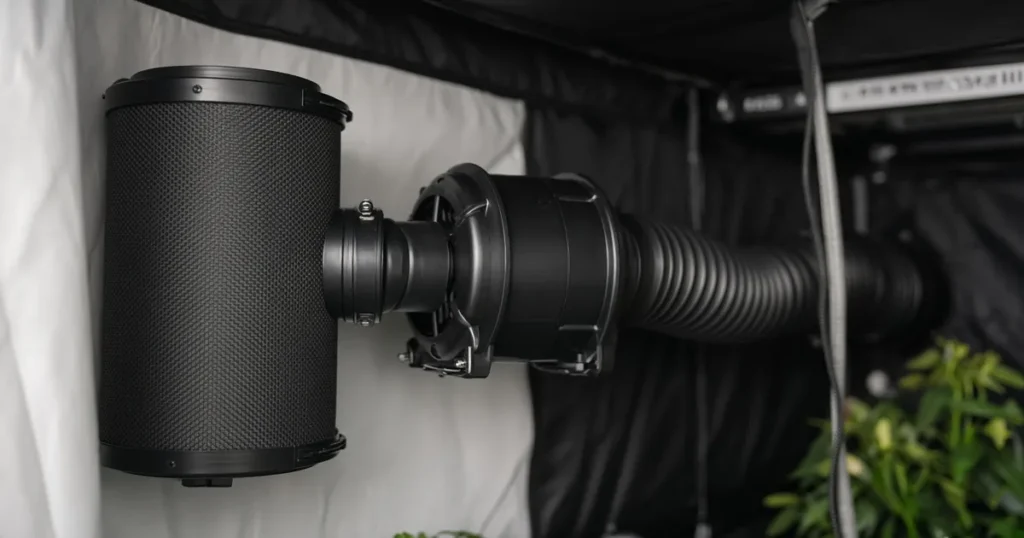
An inline fan is the lungs of a grow tent. It pulls stale, warm, humid air out and lets fresh air flow in. It also pushes air through a carbon filter to control odor. Without good airflow, tents get hot, humidity climbs and plants struggle. This guide explains how to size an inline fan, what features matter and how to set one up. It is written for adults 21 and older growing where home cultivation is legal.
What an inline fan does
An inline fan mounts along a duct, usually at the top of the tent. It exhausts air out through ducting, often to another room or a window vent. As air leaves, fresh air enters through passive vents or an intake fan. A carbon filter attached to the fan scrubs odor from the air before it leaves the tent.
Sizing a fan for your tent
Fans are rated in cubic feet per minute, or CFM. A common starting point is to calculate your tent volume and aim to exchange that air about once a minute.
- Multiply length by width by height in feet. A 4 by 4 by 7 tent is 112 cubic feet.
- Add a buffer for the carbon filter, ducting and heat from lights. Many growers add 25 to 50 percent or more.
- Choose a fan with a rated CFM above that number, and use a speed controller to dial it down.
| Tent size | Volume | Common fan size |
|---|---|---|
| 2x2x5 | 20 cu ft | 4 inch |
| 2x4x6 | 48 cu ft | 4 inch |
| 4x4x7 | 112 cu ft | 6 inch |
| 5x5x7 | 175 cu ft | 6 or 8 inch |
These are rough guides. Hot climates, strong lights and long duct runs all call for more capacity.
Features that matter
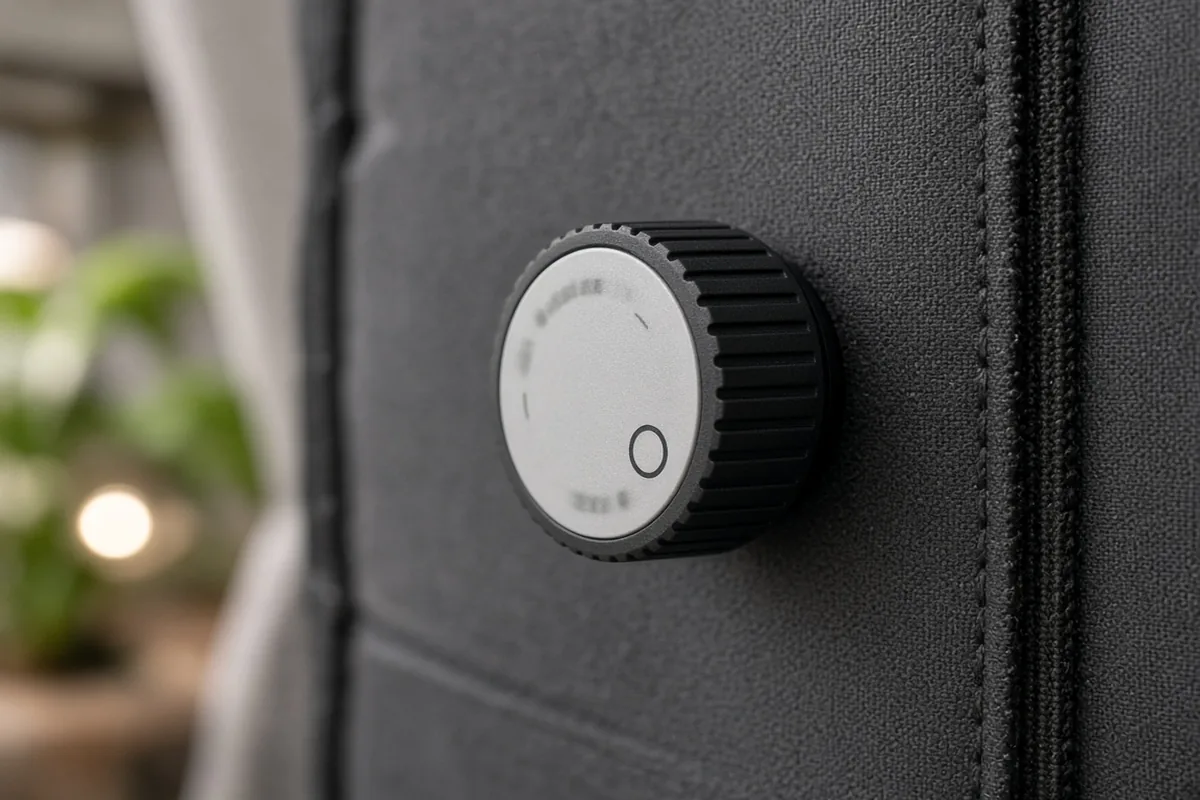
- Speed control. A controller lets you run the fan slower and quieter most of the time.
- EC motors. Many modern fans use EC motors, which tend to be quieter and more efficient.
- Smart controllers. Some fans can adjust speed based on temperature and humidity.
- Noise. Check reviews for noise, especially for a bedroom or apartment grow.
- Duct size match. Fan, filter and ducting should use the same diameter.
Setting up an inline fan
- Hang the carbon filter near the top of the tent, where warm air collects.
- Connect the fan to the filter, either inside or just outside the tent.
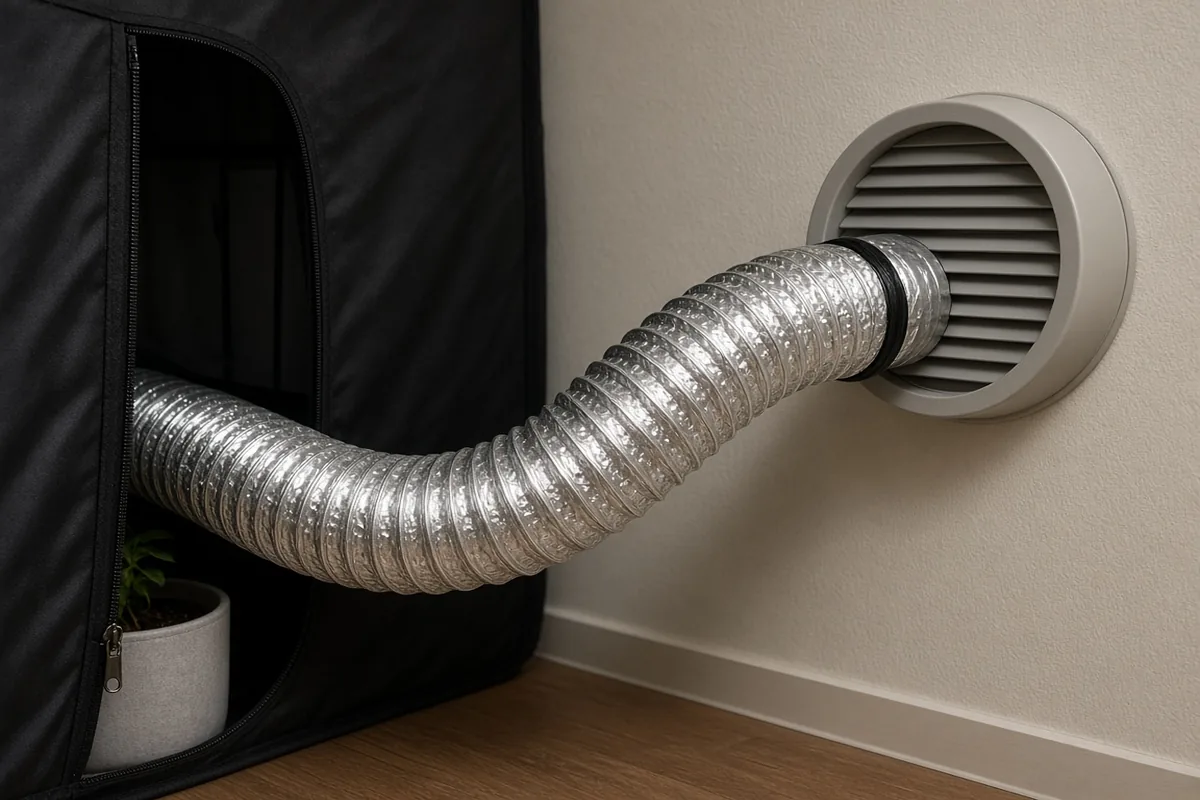
- Run ducting out to the exhaust point, keeping it short and straight.
- Open passive intake vents low on the tent, or add a smaller intake fan.
- Set the speed so the tent walls pull in slightly. That shows negative pressure, which helps keep smells inside.
Reducing noise
- Use a speed controller and run the fan at the lowest speed that keeps conditions in range.
- Hang the fan with straps instead of bolting it to a hard surface.
- Use insulated ducting to quiet air noise.
- Add a duct silencer if needed.
Fan vs clip fans
An inline fan moves air in and out of the tent. Small clip fans move air around inside the tent. You need both. Clip fans keep air moving across leaves, which helps prevent hot spots and damp pockets. Point them across the canopy, not straight at plants.
Maintenance
Clean dust from fan blades every few months. Check that ducting has no kinks or tears. Replace the carbon filter when odor control drops, often every year or so depending on use.
Matching airflow to your grow stage
Seedlings need gentle airflow and steady humidity, so run the fan on a low setting early on. In veg, as plants grow and drink more, raise the speed to keep humidity from climbing. In flower, many growers aim for lower humidity to protect dense buds, which often means more airflow. A smart controller can handle these changes for you, but a simple dial works fine if you check your hygrometer daily.
Heat from lights
Lights are the biggest heat source in most tents. LED lights run cooler than older HID lights, but a strong LED still adds heat. If your tent runs hot even at full fan speed, check that the exhaust is not dumping hot air back into the same small room. Venting to a larger space or outdoors often solves the problem.
Carbon filter pairing
The carbon filter and fan should be sized together. A filter rated for more airflow than your fan is fine. A filter rated for less than your fan will restrict airflow and wear out faster. Check the filter’s CFM rating and flange size before you buy. Prefilters, the cloth sleeves on the outside of many filters, catch dust and extend filter life. Wash or replace them when they look dirty.
Power use and running costs
An inline fan often runs all day, every day, so efficiency matters. EC motor fans usually use less power than older AC fans at the same airflow, and they run cooler and quieter at low speed. Running a fan at partial speed through a controller also saves power. Check the rated wattage and estimate your monthly cost before you choose.
Signs your fan is too small
- The tent stays hot even with the fan on full.
- Humidity climbs fast after watering or at lights off.
- Odor escapes even with a fresh carbon filter.
- Tent walls do not pull in at all.
If you see these signs, check ducting for kinks first. A long, bent duct run can cut airflow a lot. If ducting is fine, a larger fan may be the answer.
Choosing plants for your tent
Good airflow helps any plant, but compact genetics make tent growing easier. See our indoor seeds for strains that fit common tent sizes, and the full shop for more.
Final thoughts
Size your inline fan for your tent volume with room to spare, add a speed controller and pair it with a carbon filter. Then use clip fans inside the tent to keep air moving. Steady airflow is one of the easiest ways to keep a tent healthy.
Grow legally and responsibly
Home cultivation is only legal in some states, and each state sets its own plant limits, locking rules and rules about whether plants can be visible from a public place. You must be 21 or older to buy seeds from Kind Seed Co, and you should grow only where your state and city allow it. Check your state rules in our guide to the legal requirements for growing weed plants in your state before you plant. Federal treatment of cannabis seeds is also changing, so read our December 11 2026 seed rule explainer before you order. Keep plants and harvested flower locked away from children, pets and visitors, and never drive after using cannabis. This article is general information about gardening. It is not legal advice and it is not medical advice.
Frequently asked questions
What size inline fan do I need for a 4×4 tent?
Many growers use a 6 inch fan for a 4×4 tent, run through a speed controller.
Should the fan be inside or outside the tent?
Either works. Inside keeps noise contained. Outside saves space.
Do I need an intake fan?
Often passive vents are enough. Add an intake fan if the tent walls collapse too much or air feels stale.
How do I make an inline fan quieter?
Run it slower with a controller, hang it with straps and use insulated ducting.
Ready to start
Browse the full range in the Kind Seed Co shop or go straight to indoor seeds. Kind Seed Co sells only to adults 21 and older. Always follow the home grow laws where you live.