Drying Buds in a Paper Bag
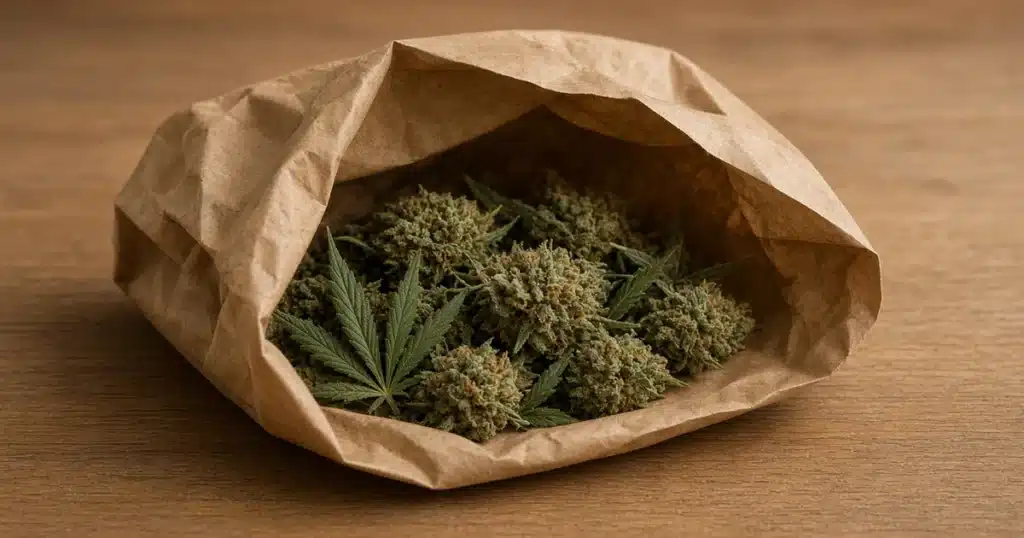
Quick answer: The paper bag method can work for a small batch of buds or loose pieces. It comes from Extension herb drying guides, not cannabis research. Those guides suggest punching holes in a clean paper bag, putting a small bunch inside, closing the top and hanging it where air moves. The bag catches anything that falls and keeps dust off. The catch is mold. Keep the load small, keep the room dry and check the buds every day.
Does the Paper Bag Method Work for Buds?
For small amounts, yes. The method is well known for kitchen herbs. The National Center for Home Food Preservation suggests hanging tender herbs, or herbs with seeds, inside paper bags to dry. It says to tear or punch holes in the sides, hang a small bunch inside and close the top. Leaves and seeds that fall off are caught in the bottom of the bag.
The University of Maryland Extension describes the same approach. It adds that the bag keeps dust and pests off herbs while they dry indoors. Maryland uses the bag for sturdy herbs like rosemary, sage and thyme as well as tender ones like basil and oregano, and it ties the small bunch together at the cut stem ends before it goes in.
Those guides were written for herbs like basil and oregano, not cannabis buds. No source here has tested paper bag drying on cannabis. The National Center also explains why herb growers reach for a bag in the first place. It says tender herbs like basil, oregano and the mints hold a lot of moisture and will mold unless they dry quickly. Sturdier herbs such as rosemary and thyme can simply hang in small bundles. The bag is a tool for small, delicate loads, not a way to dry a whole harvest.
The basic idea still fits a small batch of buds: a little shelter, good air through the holes and a catch basin for anything that drops.
What the bag does not do is replace room conditions. NC State Extension says hemp dries well when growers keep good airflow and humidity at 60 percent or less. The room around the bag still has to meet that. The National Center also points out that indoor drying usually preserves color and flavor better than drying outdoors, which suits a bag hung inside.
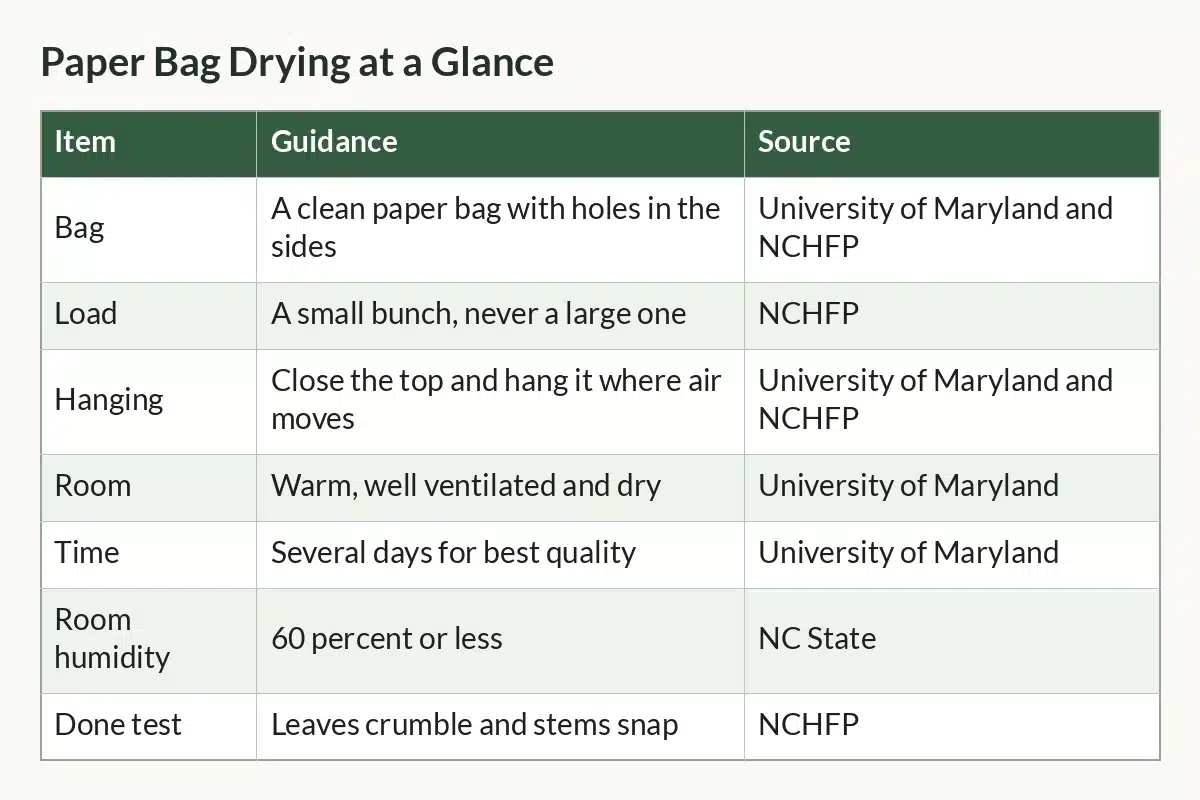
Paper Bag Drying at a Glance
| Item | Guidance | Source |
|---|---|---|
| Bag | A clean paper bag with holes in the sides | University of Maryland and NCHFP |
| Load | A small bunch, never a large one | NCHFP |
| Hanging | Close the top and hang it where air moves | University of Maryland and NCHFP |
| Room | Warm, well ventilated and dry | University of Maryland |
| Time | Several days for best quality | University of Maryland |
| Room humidity | 60 percent or less | NC State |
| Done test | Leaves crumble and stems snap | NCHFP |
How to Dry Buds in a Paper Bag
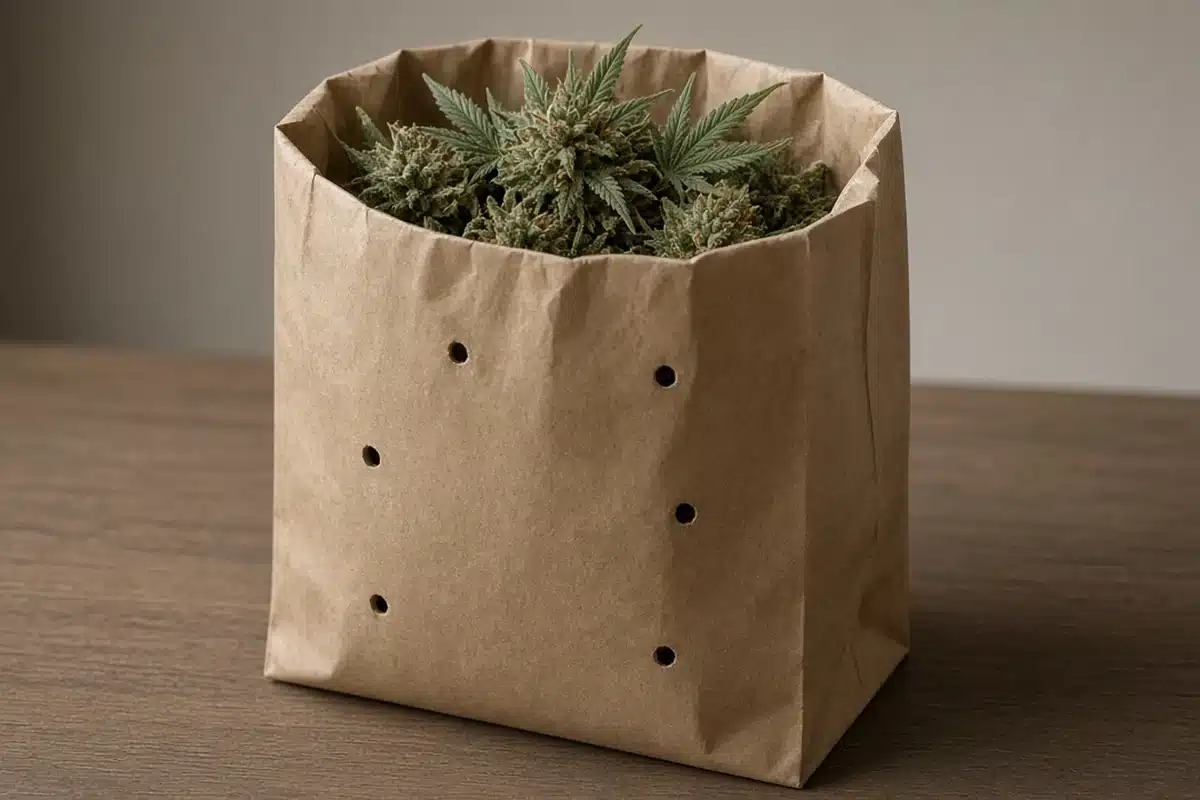
- Start with a clean paper bag. Maryland calls for a clean bag. It also asks for clean tools at harvest, with washed scissors or clippers and a washed bowl.
- Punch holes in the sides. Maryland says the holes increase air flow so the herbs dry. The National Center for Home Food Preservation says to tear or punch holes in the sides.
- Use a small bunch. Tie a few small branches together by the cut ends, or drop in a handful of loose buds. Maryland warns that a large bunch can cause molding. The National Center says large amounts will mold.
- Close the top. Maryland ties the bag closed with string. The National Center uses a rubber band.
- Hang it where air moves. The National Center says to place the bag where air currents will circulate through it. Maryland ties the string to a fixed point so the bag hangs.
- Keep the room dry. Maryland advises a warm, well ventilated, dry indoor room. NC State sets 60 percent humidity as the upper limit for drying hemp.
- Check every day. Open the top, look at the buds and close it again. Use the herb test to judge doneness, as both herb guides describe it: crumbly leaves and stems that break when you bend them.
Loose trim and small buds suit this method best. They fit in the bag without crowding. Whole branches are better on a line.
How Long Do Buds Take in a Bag?
Plan on several days, and likely about a week. Maryland says indoor air drying of herbs takes several days for best quality. For cannabis, the best timing data comes from the University of Vermont drying trial. Its bucked buds dried under a fan at room temperature and finished in roughly four to six days.
Herb bundles can take longer still. The Iowa State University Extension guide says hung bundles of herb stems take 2 to 4 weeks, with temperature and humidity setting the pace. Small, loose buds in a well vented bag should land closer to the Vermont range.
A bag adds a layer between the buds and the moving air, so expect the slow end of that range or a little longer. Big buds take longer than small ones. The North Carolina A&T hemp program says drying time depends on starting moisture, bud size and density.
Use the herb test to know when you are done. The National Center for Home Food Preservation says herbs are ready when their leaves crumble and their stems break rather than bend. When small stems snap cleanly, the buds are ready to go into jars. Our guide to curing and storing cannabis flowers covers what to do next.
When a Paper Bag Is the Wrong Choice
When the batch is big. Every herb source here warns that large bunches mold. A bag stuffed with buds holds moisture in the middle.
When buds are wet from rain. Soaked buds bring extra water into a closed space. Start with our guide on how to deal with wet weed before you dry them.
When the room is humid. The bag can’t lower room humidity. If your room sits above the 60 percent NC State limit, fix the room first.
When buds are very dense. NC A&T ties drying time to bud density. Tight buds in a bag may sit damp too long. A rack or a line gives them more air.
When you want close control. You can’t see the buds without opening the bag. Hanging branches in the open lets you watch every bud as it dries.
Troubleshooting Paper Bag Drying
The bag feels damp. Either the bag is overloaded or the room air holds too much humidity. Split the batch into more bags and bring the humidity down.
Gray fuzz appears on a bud. Remove it and check the rest. The National Center for Home Food Preservation warns that herbs with high moisture content will mold if they are not dried quickly. Vermont saw slight mold on its room temperature buds early in the trial, so check the bag most often during the opening days.
Buds are still soft after a week. Air isn’t moving through the bag. Add more holes or move the bag closer to a fan. Maryland describes air drying in a bag as a method that takes several days for best quality. NC A&T adds that a bud’s starting moisture, size and density all change how long it takes.
Buds dried too far and crumble. The room is very dry or warm. Vermont notes that buds dried too far drop bits of leaf and trichome as they are handled. If buds are too crisp, our guide on why you may need to rehydrate cannabis explains the options.
Bits of leaf collect in the bottom of the bag. That is the bag doing its job. Both herb guides point out that anything that falls off is caught in the bottom instead of landing on the floor.
The bag smells musty. Mold may be starting. Empty the bag, inspect every piece and use a fresh bag.
Sources
- National Center for Home Food Preservation (University of Georgia), Drying Herbs: https://nchfp.uga.edu/how/dry/herbs
- University of Maryland Extension, Harvesting and Preserving Herbs: https://extension.umd.edu/resource/harvesting-and-preserving-herbs
- NC State Extension, Hemp Harvest Timing and Drying: https://hemp.ces.ncsu.edu/hemp-harvest-timing-and-drying/
- University of Vermont, 2021 Hemp Cannabidiol Drying Trial: https://www.uvm.edu/d10-files/documents/2024-08/2021_Hemp_Cannabidiol_Drying_Trial.pdf
- Iowa State University Extension, Growing, Harvesting and Drying Herbs: https://yardandgarden.extension.iastate.edu/how-to/growing-harvesting-and-drying-herbs
- North Carolina A&T, Hemp harvest and post harvest considerations: https://ncat.edu/caes/agricultural-research/industrial-hemp-program/hemp-conference/files/ivey.pdf
FAQ
Can you dry buds in a paper bag?
Yes, for small batches. The method comes from Extension herb drying guides.
Should the bag have holes?
Yes. Maryland and the National Center for Home Food Preservation both say to punch holes in the sides for air flow.
How full should the bag be?
Only a small bunch. Both guides warn that large amounts can mold.
How long does paper bag drying take?
Several days for herbs, based on Maryland. Expect about a week for small buds.
Do I need a fan for paper bag drying?
Moving air helps. The National Center says to hang the bag where air currents circulate through it, and every Vermont drying setup used a fan.
Is a paper bag better than hanging?
Not for big harvests. It suits small batches and loose pieces.