
Garden Lime for Cannabis: Raising Soil pH
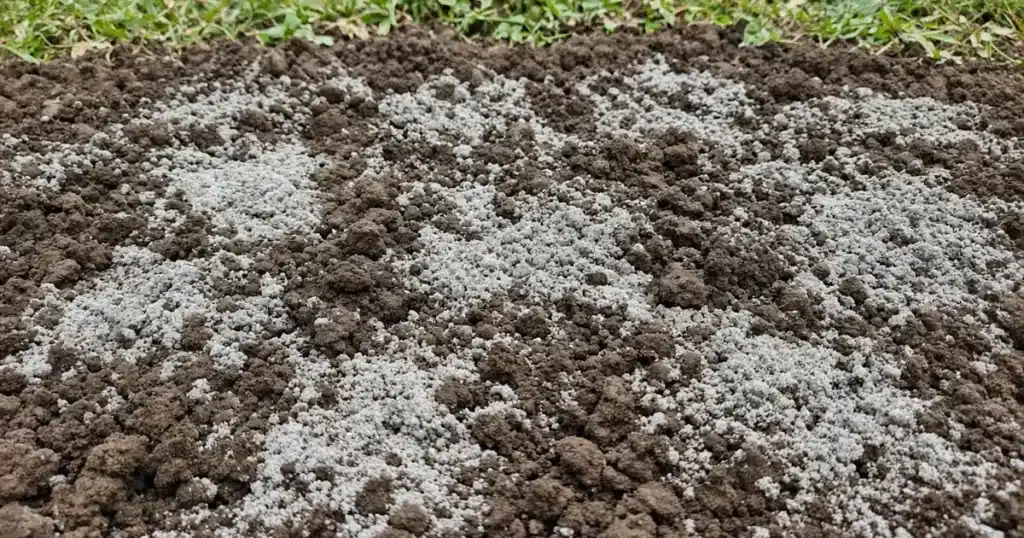
Garden lime raises soil pH for cannabis by neutralizing acidity. Oregon State says hemp grows best at pH 6.0 to 7.5 and advises testing soil several months before planting, then liming as needed. Penn State notes even finely ground lime needs several months to react, so apply it well before planting and base the amount on a soil test.
What pH Does Hemp Prefer?
Oregon State gives a pH of 6.0 to 7.5 for hemp (Oregon State EM 9239), and UF/IFAS sets a target of 6.25 to 7.5 for hemp grown for fiber, seed or flower (UF/IFAS EDIS). Our pH guide explains how pH affects nutrient uptake.

How Does Lime Raise Soil pH?
Penn State explains that most agricultural lime is calcium or magnesium carbonate, and that it is the carbonate, oxide or hydroxide part that neutralizes acidity (Penn State). Gypsum and Epsom salts contain calcium or magnesium but are not liming materials. Lime quality depends on its calcium carbonate equivalent and its fineness.
Target soil pH for hemp
Sources: UF/IFAS EDIS SL521 and Oregon State EM 9239 (hemp).
| Source | Target pH | Crop |
|---|---|---|
| UF/IFAS EDIS SL521 | 6.25 to 7.5 | Hemp for fiber, seed and flower |
| Oregon State EM 9239 | 6.0 to 7.5 | Hemp |
Source: Penn State Extension, Soil Acidity and Aglime. Finer material reacts faster. Aglime coarser than 20 mesh reacts extremely slowly.
Aglime fineness Penn State calls generally adequate
| Sieve | Minimum passing | Source |
|---|---|---|
| 20 mesh | 95% | Penn State Extension |
| 60 mesh | 60% | Penn State Extension |
| 100 mesh | 50% | Penn State Extension |
Calcitic vs Dolomitic Lime: What Is the Difference?
UGA Extension notes calcitic limestone (calcium carbonate) is more reactive than dolomitic limestone, which also contains magnesium (UGA). It adds that very fine lime raises pH fast in container mixes but can be used up within weeks. Penn State says ground calcitic and dolomitic limestone make up about 99% of aglime used in Pennsylvania (Penn State). Check the product label and local rules.
When Should You Apply Lime Before Planting?
Penn State says even finely ground liming materials need several months to react, so apply lime well ahead of acid-sensitive crops and mix it into the soil where possible (Penn State). Oregon State advises testing hemp ground several months before planting (Oregon State EM 9239). For outdoor soil prep, see the best soil for growing outdoors and outdoor fertilizer and compost.
With the soil ready, the next step is choosing from our outdoor seeds.
Sources
Some sources below studied hemp or other crops rather than drug-type cannabis, and their findings are reported as results for those crops.
- Oregon State EM 9239: Soil, Seedbed Preparation and Seeding for Hemp
- UF/IFAS EDIS SL521: Nutrient Management Recommendation Series, Hemp
- Penn State Extension: Soil Acidity and Aglime
- UGA Extension B1256: Essential pH Management in Greenhouse Crops
Kind Seed Co’s lime guide is general growing information, and the sources above are where it comes from.
FAQ
Why test soil months before planting?
Oregon State advises testing soil for hemp several months before planting so lime and fertilizer can be applied as needed. Penn State adds that even finely ground lime needs several months to react with the soil, and it advises applying aglime well in advance of acid-sensitive crops to allow time for it to neutralize soil acidity.
Does lime work quickly?
Not in field soil. Penn State Extension says even finely ground liming materials require several months to react, so lime should go on well in advance of acid-sensitive crops. In container mixes, UGA notes that very fine lime can raise pH quickly and then be used up within a few weeks.
Does gypsum raise pH?
No. Penn State Extension says calcium sulfate, or gypsum, and magnesium sulfate are not liming materials even though they contain calcium and magnesium, because they cannot neutralize soil acidity. Only materials with carbonate, oxide or hydroxide, such as ground limestone, raise pH by neutralizing acid in the soil.
How much lime should you add?
Base it on a soil test. Penn State says soil test lime recommendations are usually given as an amount of calcium carbonate equivalent per acre, and the actual material needed depends on the lime's quality, moisture content and depth of incorporation. Lime quality depends on neutralizing value and fineness.


